Notice: Function _load_textdomain_just_in_time was called incorrectly. Translation loading for the acf domain was triggered too early. This is usually an indicator for some code in the plugin or theme running too early. Translations should be loaded at the init action or later. Please see Debugging in WordPress for more information. (This message was added in version 6.7.0.) in /home/evelyntest/public_html/wp-includes/functions.php on line 6260
Notice: Function _load_textdomain_just_in_time was called incorrectly. Translation loading for the webp-converter-for-media domain was triggered too early. This is usually an indicator for some code in the plugin or theme running too early. Translations should be loaded at the init action or later. Please see Debugging in WordPress for more information. (This message was added in version 6.7.0.) in /home/evelyntest/public_html/wp-includes/functions.php on line 6260
Notice: Function _load_textdomain_just_in_time was called incorrectly. Translation loading for the updraftplus domain was triggered too early. This is usually an indicator for some code in the plugin or theme running too early. Translations should be loaded at the init action or later. Please see Debugging in WordPress for more information. (This message was added in version 6.7.0.) in /home/evelyntest/public_html/wp-includes/functions.php on line 6260
Notice: Function _load_textdomain_just_in_time was called incorrectly. Translation loading for the rocket domain was triggered too early. This is usually an indicator for some code in the plugin or theme running too early. Translations should be loaded at the init action or later. Please see Debugging in WordPress for more information. (This message was added in version 6.7.0.) in /home/evelyntest/public_html/wp-includes/functions.php on line 6260
Notice: Function _load_textdomain_just_in_time was called incorrectly. Translation loading for the wordpress-seo domain was triggered too early. This is usually an indicator for some code in the plugin or theme running too early. Translations should be loaded at the init action or later. Please see Debugging in WordPress for more information. (This message was added in version 6.7.0.) in /home/evelyntest/public_html/wp-includes/functions.php on line 6260
Warning: Cannot modify header information - headers already sent by (output started at /home/evelyntest/public_html/wp-includes/functions.php:6260) in /home/evelyntest/public_html/wp-includes/feed-rss2.php on line 8 Test.EvelynThu, 22 Jun 2023 12:01:38 +0000en-US
hourly
1 https://wordpress.org/?v=7.1.3https://test.evelynlearning.com/wp-content/uploads/2023/05/cropped-Site-logo-32x32.pngTest.Evelyn3232Redefining Employment: The Rise of AI and Job Markets?
https://test.evelynlearning.com/redefining-employment-the-rise-of-ai-and-job-markets/
https://test.evelynlearning.com/redefining-employment-the-rise-of-ai-and-job-markets/#respondThu, 22 Jun 2023 11:26:36 +0000https://test.evelynlearning.com/?p=15664AI has indeed been advancing rapidly and is increasingly being used in various industries and job sectors. While AI and automation have the potential to streamline processes, increase efficiency, and improve productivity, they also have implications for the workforce. Certain jobs that involve repetitive, rule-based tasks are more susceptible to automation. For example, jobs in […]
]]>AI has indeed been advancing rapidly and is increasingly being used in various industries and job sectors. While AI and automation have the potential to streamline processes, increase efficiency, and improve productivity, they also have implications for the workforce.
Certain jobs that involve repetitive, rule-based tasks are more susceptible to automation. For example, jobs in manufacturing, data entry, customer service, and transportation are being affected by AI and automation technologies. In these cases, AI can perform tasks faster and with greater accuracy than humans.
However, Artificial Intelligence (AI) has a significant impact on employment, both in terms of job displacement and job creation. Here are some key points regarding the impact of AI on employment:
The Influence of Artificial Intelligence on Employment Patterns
Job Displacement:
AI and automation technologies have the potential to replace certain jobs that involve repetitive, rule-based tasks. Jobs in industries such as manufacturing, customer service, data entry, and transportation are being affected as AI can perform these tasks faster and with greater accuracy. This displacement can lead to short-term job losses and challenges for individuals whose skills are directly replaceable by AI.
Job Transformation:
While some jobs may be displaced, AI also leads to the transformation of job roles. Many tasks that can be automated are taken over by AI systems, freeing up human workers to focus on more complex, creative, and higher-value tasks. This shift requires workers to develop new skills and adapt to new job responsibilities.
Job Creation:
The advancement of AI technology also creates new job opportunities. Roles such as AI researchers, machine learning engineers, data scientists, and AI ethicists are in high demand as organizations seek expertise in developing, implementing, and managing AI systems. These emerging job roles require specialized skills and knowledge related to AI technologies.
AI cannot fully replace humans, but it can partially substitute them to a certain extent.
According to a BBC report, the influence of AI will differ across various sectors. It suggests that 46% of tasks in administrative roles and 44% in legal professions have the potential to be automated. However, the figures decrease significantly to only 6% in the construction sector and 4% in maintenance occupations.
New Industries and Opportunities:
AI is enabling the emergence of entirely new industries and business models. As AI technologies continue to evolve, new sectors like autonomous vehicles, healthcare informatics, personalized marketing, and smart home technologies are expanding. These industries require a skilled workforce to develop, maintain, and operate AI-based systems.
AI is transforming last-mile delivery through the use of autonomous vehicles.
Skills Shift:
The adoption of AI necessitates a shift in the required skill sets for the workforce. Skills such as creativity, critical thinking skills, complex problem-solving, emotional intelligence, and the ability to work alongside AI technologies become increasingly valuable. Lifelong learning and adaptability become essential as workers need to continuously update their skills to remain relevant in the evolving job market.
Ethical and Governance Roles:
As AI systems become more pervasive, the need for ethical considerations and responsible AI governance becomes crucial. Jobs related to AI ethics, policy development, and regulatory compliance are emerging to ensure that AI technologies are used ethically, responsibly, and with accountability. It’s important to note that AI is not solely taking away jobs but rather transforming them. While some job roles may diminish, new job opportunities are emerging as a result of AI. These opportunities often involve tasks that require human creativity, critical thinking, emotional intelligence, and complex problem solving—areas where AI currently struggles to match human capabilities.
AI, despite its capabilities, cannot fully match human performance due to its limitation in exercising judgment.
The Influence of Artificial Intelligence on Employment in Call Centers
AI is increasingly impacting the roles of employees working in call centers. AI technologies, such as chatbots and virtual assistants, are being used to automate and handle routine customer inquiries and support. This automation can reduce the need for human call center agents to handle basic queries and tasks.
AI powered chatbots can interact with customers, answer frequently asked questions, and assist with common issues, providing immediate and consistent responses. Virtual assistants can also gather customer information and provide personalized recommendations or solutions. This automation improves efficiency, reduces wait times, and enables 24/7 support.
Artificial Intelligence proving to be far more effective and efficient in customer support than humans.
As stated in a comprehensive report by the Wall Street Journal, the AI assistant handles an astounding volume of 11,400 calls per day, a task that is unachievable for any human. Additionally, the AI agent supports human employees in their daily tasks, including scheduling repair appointments, processing claims, and numerous other responsibilities.
As AI systems become more advanced, they can handle more complex interactions and even mimic human-like conversational abilities. However, there are still limitations to the capabilities of AI when it comes to handling complex or sensitive customer inquiries that require empathy, emotional intelligence, and nuanced understanding. Human call center agents are still needed to handle such interactions and provide the personalized support that AI may struggle to replicate.
Is AI Taking Over Jobs In Data Entry and Processing?
As AI technology advances, it has the potential to replace or reduce the need for manual data entry and processing jobs.
AI is revolutionizing data entry by leveraging advanced technologies to automate and streamline the process. OCR technology, powered by AI, can extract data from physical or digital documents, eliminating the need for manual data entry.
Through automation, AI algorithms can extract relevant information from various sources like invoices, forms, or receipts, thereby reducing human involvement in data entry tasks. Additionally, AI-driven NLP algorithms enable computers to understand and process human language, thereby extracting valuable data from unstructured text sources such as emails, customer feedback, or social media posts.
Robotic systems demonstrate superior efficiency and accuracy compared to human counterparts in the domain of data entry.
AI also plays a vital role in data validation and cleaning, automatically identifying and rectifying errors, inconsistencies, or missing values. By streamlining data transformation tasks, AI can automatically reformat, normalize, or structure data according to predefined rules, minimizing manual efforts in data manipulation. Data entry automation tools, powered by AI and machine learning, learn from human input and offer suggestions or automatically complete data entry fields based on patterns and historical data.
As a result, AI-driven data entry systems exhibit increased speed and accuracy, processing large volumes of data swiftly and precisely and, in this way, reducing human errors and enhancing overall data entry efficiency. These advancements in AI-powered data entry not only minimize manual effort but also contribute to improved productivity and data quality.
The Impact of Artificial Intelligence on the Roles of Coding Professionals
AI has made significant advancements in the field of coding and software development, leading to changes in the roles and responsibilities of professionals in this industry. While AI is increasingly being used to automate certain aspects of coding, it is important to understand the nuanced impact it has on coding jobs.
AI tools and technologies, such as automated code generation, code completion, and code analysis, have emerged to streamline the development process and improve productivity. These tools can assist developers by suggesting code snippets, identifying potential bugs, and automating repetitive coding tasks. They can also help with tasks like code refactoring, documentation generation, and software testing.
Certain coding tasks can be automated by AI, but it does not replace the need for skilled human coders. AI technologies currently lack the creativity, problem-solving, and critical thinking skills abilities that human developers possess. Coding involves more than just writing lines of code. It requires understanding complex requirements, designing systems, and making architectural decisions, which still heavily rely on human expertise.
Curriculum Development to Mitigate Job Displacement by AI
Moreover, as AI technology advances, new opportunities are emerging in the field of AI itself. Professionals can focus on developing and improving AI algorithms, designing AI systems, and addressing the ethical implications of AI. The demand for individuals with expertise in machine learning, data science, and AI engineering is growing, creating new job prospects.
To address the potential impact of AI on job automation and help individuals adapt to the changing workforce, here are some curriculum developments that can be considered:
Impact of AI on Curriculum Development
AI Literacy:
Provide foundational knowledge about artificial intelligence, its capabilities, and its impact on various industries. This includes understanding different AI technologies, terminology, and their potential applications.
Data Literacy:
Teach data analysis and interpretation skills to help individuals make informed decisions based on data. This includes understanding how data is collected, processed, and used to train AI systems.
Critical Thinking and Problem Solving:
Emphasize the development of critical thinking skills to solve complex problems that require human judgment, creativity, and strategic thinking. This involves encouraging students to approach challenges from different perspectives and think outside the box.
Will AI Replace Humans?
AI technology itself requires development, implementation, and maintenance, which creates new job roles in fields like data science, machine learning, AI engineering, and ethical AI governance.
To adapt to the changing job market, individuals need to acquire and enhance skills that are less easily automated. Skills such as creativity, adaptability, complex problem-solving, emotional intelligence, and lifelong learning will become increasingly valuable in the age of AI.
Overall, while AI is affecting the job market and may lead to job displacement, it is also creating new opportunities and holds the potential to enhance productivity, improve products and services, and drive economic growth. Society needs to focus on upskilling and reskilling the workforce to ensure that individuals can leverage the benefits of AI and remain relevant in the changing job landscape.
]]>https://test.evelynlearning.com/redefining-employment-the-rise-of-ai-and-job-markets/feed/0Why Ed-Tech Industry
https://test.evelynlearning.com/why-ed-tech-industry/
https://test.evelynlearning.com/why-ed-tech-industry/#respondWed, 14 Jun 2023 11:45:18 +0000https://test.evelynlearning.com/?p=15346It has never been better than today to be involved in the ed-tech space. The learners and institutions have realized the growth potential of this sector with comprehensive technologies, innovative learning styles and systems, institutional transformations, and so on. According to Fortune Business Insights, the market size of global ed-tech and classrooms was valued at […]
]]>It has never been better than today to be involved in the ed-tech space. The learners and institutions have realized the growth potential of this sector with comprehensive technologies, innovative learning styles and systems, institutional transformations, and so on.
According to Fortune Business Insights, the market size of global ed-tech and classrooms was valued at USD 88.82 billion in 2021 and is expected to increase to USD 319.65 billion by 2029. This growth forecast is exceptional.
Throughout the world, States and institutions are investing heavily in educational infrastructure to leverage the holistic potential of the sector. Technology advancement has eased education delivery, curriculum development, and assignment/homework management.
Distance learning has improved with technology integration and has helped students in remote areas to access course knowledge. Ed-tech is helping learners and educators consummate the real purpose of education.
Today, with the inundation of ideas due to the increased usage of artificial intelligence in education, the ed-tech space will only advance. It will look forward to an improved learning experience where customized learning will break the gaps of teacher-student interaction, curriculum management will be an easy task and whatnot.
Education is one of the spaces where technology is vastly and amicably accepted and implemented.
With investors brewing their thoughts to invest in education, this industry is brimming to expand in a blink of an eye.
]]>https://test.evelynlearning.com/why-ed-tech-industry/feed/0Why AI Ethics is Not a Choice But a Necessity
https://test.evelynlearning.com/why-ai-ethics-is-not-a-choice-but-a-necessity/
https://test.evelynlearning.com/why-ai-ethics-is-not-a-choice-but-a-necessity/#respondWed, 14 Jun 2023 08:29:13 +0000https://test.evelynlearning.com/?p=15331The journey of AI is nothing but a roller coaster ride filled with remarkable advancements but also occasional pitfalls. These dynamic shifts have brought about a series of consequential outcomes, both good and bad, especially in education. AI ethics is crucial in education as it ensures the rights and well-being of students. The ongoing wave […]
]]>The journey of AI is nothing but a roller coaster ride filled with remarkable advancements but also occasional pitfalls. These dynamic shifts have brought about a series of consequential outcomes, both good and bad, especially in education. AI ethics is crucial in education as it ensures the rights and well-being of students.
The ongoing wave of AI innovations has been building up for quite a while. Amidst the mix of excitement and concern surrounding these developments, it is important to acknowledge that, when used ethically, these technologies hold immense potential for driving remarkable academic progress in education.
Ethical AI and Ed-Tech
AI ethics in educational institutions are crucial as they safeguard students’ privacy and well-being as well as the protection of their personal data.
It is important to regularly monitor and reassess the AI algorithms employed in education to promote fairness and avoid biases for all students.
However, educators and students should be well informed about the uses of ethical AI as it has the potential to greatly contribute to the students’ accomplishments when used thoughtfully.
How AI Be Utilized Ethically Within Educational Institutions
Generative AI for school homeworks and assignments
As AI tools like ChatGPT become increasingly powerful, professors are starting to worry about the future of education. At the same time, college students are left pondering whether AI can assist them with their school assignments, and if it does, would it be considered cheating?
In a survey conducted by BestColleges of 1000 students, including both undergraduate and graduate students, more than 51% of students agreed that taking help from ChatGPT, Google Bard, etc is considered cheating.
On the other hand, 20% disagreed for the same and the rest remained neutral.
51% of students agreed that using AI tools for school purposes is considered cheating
Most people believe that one should not entirely ban ChatGPT from their studies. While it cannot fully capture the essence of a human’s unique views and way of thinking, it can still be used for ideas and knowledge.
Generative AI itself follows ethical procedures and does not allow or motivate students to use AI tools for their schoolwork as it is considered plagiarism. We tested ChatGPT by asking it to provide us with some tips and tricks to cheat on our homework, and here are the results.
ChatGPT considered cheating and copying for school work an unethical practice
But that’s not it. When used in a manipulative or indirect manner, generative AI can produce ethically problematic responses.
It might provide a technically correct answer, but how would it know the intentions or context of the person seeking information?
This particular problem highlights the limitations of AI in replacing human judgment and perception.
AI Ethics for Educators
Teachers play a crucial role in harnessing the power of AI in the classroom, keeping in mind the ethical implications and potential biases that may come with these tools.
Things that Educators Must Know About the Use of Ethics in AI in Classrooms
Safeguard Student Privacy
With AI’s ability to process vast amounts of student data, including sensitive information like demographics and learning disabilities, teachers must grasp how this data is collected, stored, and utilized. This knowledge empowers teachers to protect student privacy with the utmost care.
Promote Fairness
AI systems can influence students’ outcomes, from grades to college admissions. Teachers have the ability to remain unbiased, promote fairness, and not favor or discriminate against any particular group of students.
Nurture Digital Citizenship
In an increasingly AI-driven world, it is essential for teachers to educate students about ethical considerations surrounding AI, including bias and privacy concerns. By empowering students with this knowledge, teachers can help students make informed decisions about technology usage.
In our 5th episode of Ed-Insights by Evelyn Learning Systems, we got the pleasure of having an insightful discussion with Marisa Zalabak.
Marisa Zalabak is the founder of Open Channel Culture, an AI ethicist, an educational psychologist, and a TEDx keynote speaker.
Marisa Zalabak, AI ethicist, in conversation with Evelyn Learning Systems on using AI ethically
We asked her if students are getting away from doing hard work by using AI tools such as ChatGPT, Google Bard, and Microsoft Bing.
She replied with an enlightening insight. She said, “There are many professors in many prestigious universities that require students to write their articles and essays with ChatGPT. The twist is that they have to write these things three times for three different answers”.
“This will lead them to compare those three answers and write one article of their own. This process will engage the student and develop their critical thinking skills”.
We also asked Marisa Zalabak about how AI is shaping the social development of young learners. She raises an intriguing example to illustrate the social consequences of biases in AI.
She asked us to imagine a young child interacting with virtual assistants like Alexa and Siri, who respond with an adult woman’s voice. This interaction would somehow fit into a young child’s mind that women are servants.
Child Interacting with Virtual Assistants such as Alexa and Siri
This highlights the importance of being mindful and deliberate in the choices made by edtech companies regarding the voices and interactive methods used in their products.
By actively considering these factors, edtech companies can create more engaging and empowering experiences for young learners, ensuring that technology plays a positive role in shaping their perspective and values, and ethics in AI is an important step in this direction.
Additional Concerns Regarding AI in Other Fields
Mental Privacy and Cognitive Liberty
Recent studies have unveiled the extraordinary capabilities of combining neuroimaging technology with artificial intelligence. This amazing union enables the decoding of mental states, visual experiences, hidden intentions, and even dreams with accuracy.
Does this pose a threat to our “Right to Mental Privacy”? Who would guard us against unauthorized access to our brain data, ensuring that all our thoughts and dreams remain solely ours?
Does Artificial Intelligence Pose a Threat to our “Right to Privacy”?
A TedTalk by Nita Farahany uncovers the reality of brain trackers and how, without any privacy protection, they can lead to the exploitation of our thoughts and desires.
Employees are often subject to brain surveillance in the workplace to track their attention and fatigue, and governments create brain biometrics to interrogate people at borders.
We must do something to safeguard our right to privacy and cognitive liberty from the risks of getting our brains manipulated or hacked.
Healthcare
Did you know that information generated by AI can sometimes be misleading or inaccurate? This can be risky, particularly when it comes to health.
While the World Health Organization (WHO) is excited about using technologies in healthcare, they are also concerned about using these technologies in a safe and efficient manner.
Generative AI itself Suggests not Relying on Auto-Generated Tools When it Comes to Health
When you interact with an AI model, it may seem like the answers it provides are reliable. However, there’s a chance that these answers could be completely wrong or contain serious errors, especially when it comes to medicine and disease-related questions.
WHO suggested taking all these concerns into consideration before the widespread usage of generative AI in health and medicine.
Policies to Regulate Generative AI
From 2021 to 2023, there was a surge in proposed legislation regarding artificial intelligence. But these proposals couldn’t make it to the president’s desk. Now, there is a lot of fascination with generative AI, and it has caught the attention of policymakers in Washington.
A report from the MIT Technology Review listed some AI-related bills to keep an eye on:
Algorithmic Accountability Act
This bill was introduced in the year 2022, before the upsurge of ChatGPT. The bill aims to tackle the real-life consequences of automated decision-making systems. There are some situations where people were harmed due to the results of these AI tools, such as the wrong medications.
The Algorithmic Accountability Act seeks to address these harms and ensure accountability for the decisions made by these algorithms.
American Data Privacy Protection Act
This act aims to establish regulations governing the collection and processing of data by companies. In the coming years, this act would not only prohibit generative AI companies from engaging in discriminatory data collection practices but also empower users by giving them the authority to check how their data is being utilized.
]]>https://test.evelynlearning.com/why-ai-ethics-is-not-a-choice-but-a-necessity/feed/0How China is Trying to Outpace the World in AI
https://test.evelynlearning.com/how-china-is-trying-to-outpace-the-world-in-ai/
https://test.evelynlearning.com/how-china-is-trying-to-outpace-the-world-in-ai/#respondFri, 09 Jun 2023 06:43:44 +0000https://test.evelynlearning.com/?p=14994When a new idea or technology becomes available and shows promising usage, powerful governments run to grasp the technology and take advantage of being early adopters. And why not? World economics works that way. The more resources and technological advancement a country has, the more influential and rich it becomes. Today, it is about AI. […]
]]>When a new idea or technology becomes available and shows promising usage, powerful governments run to grasp the technology and take advantage of being early adopters.
And why not? World economics works that way. The more resources and technological advancement a country has, the more influential and rich it becomes.
Today, it is about AI. Artificial intelligence, in its various forms, has promised an overall cost-benefit despite the high initial investment. It is why only wealthy countries can afford to bring AI into their systems, which can potentially widen the gap between richer and poorer countries.
For instance, AI adoption in automobiles is a big bet. It won’t be long before we see the widespread commercialization of self-driving or flying cars.
Artificial Intelligence in Education
The Ed-Tech industry has agreed with artificial intelligence amiably. The use of artificial intelligence to make learning more accessible, engaging, and advanced is our personal favorite.
Students are already comfortable with technology, and they are more curious to make friends with anything more advanced that might come up.
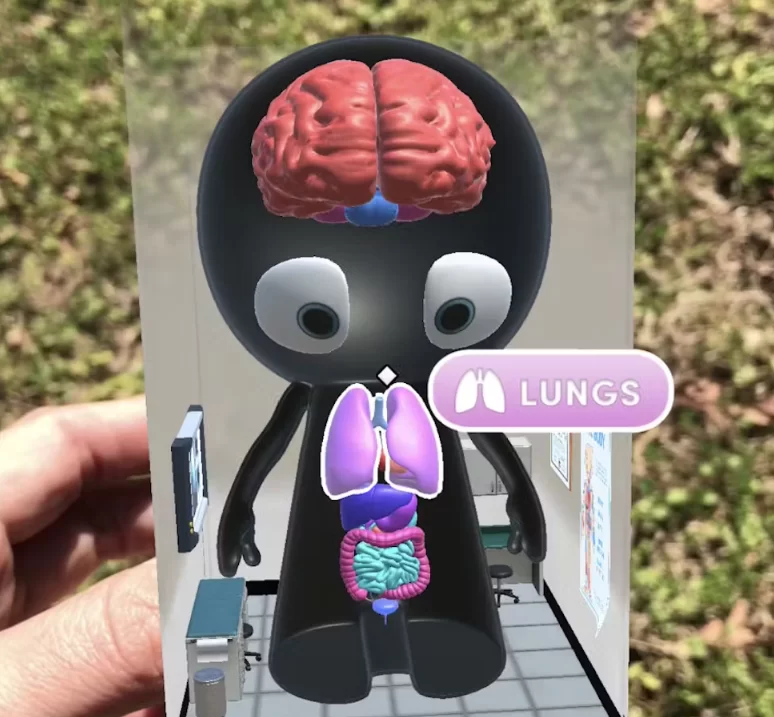
The Ed-Tech space is so vast that it can encapsulate almost every aspect of education, including curriculum development, lesson delivery, and assessments. The VR sets, merge cubes, augmented reality mobile apps, etc., all give amazing augmented reality and learning experiences.
A merge cube showing parts of the human body through the Mr. Body app. Source.
Students can learn about the universe and solar system using a virtual reality set.
China, Technology, and AI
It is no news that countries have used various methods to come up as the top power in the world. Earlier it was only muscle power with higher investments in manpower, arms, and ammunition. Now, technology is the new power weapon in this new era of computers and robots. So, countries have been leveraging this soft power to make themselves global power leaders, making other countries reliant on them.
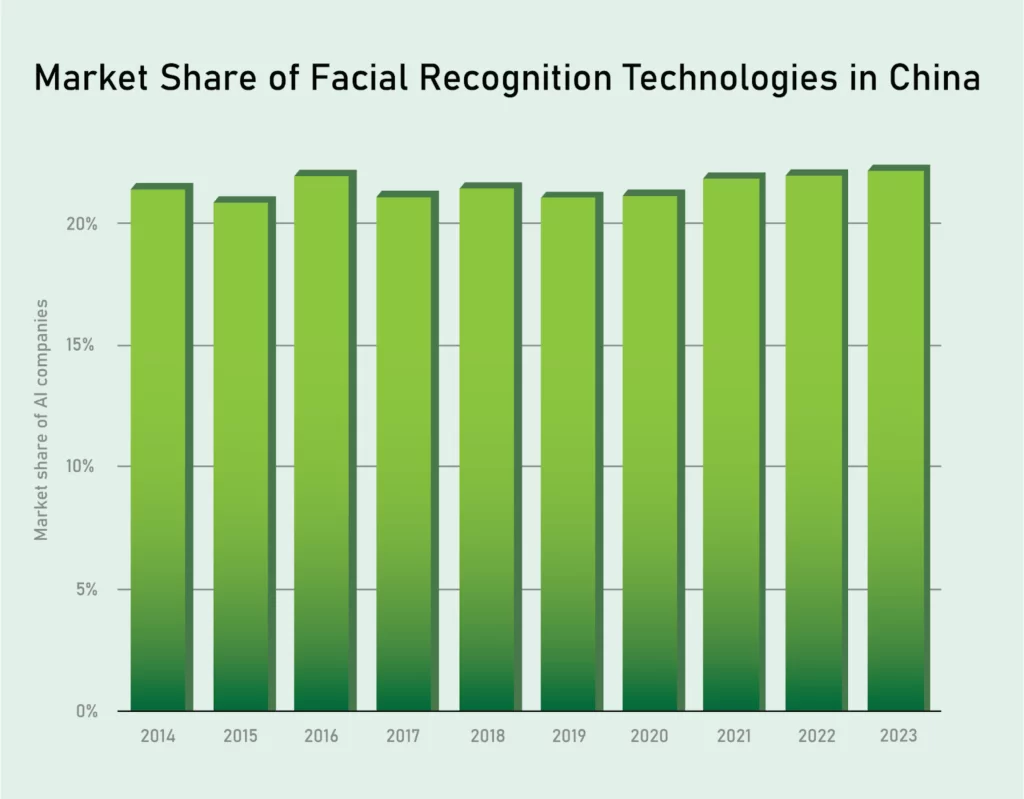
Harvard Professor of Economics, David Yang, recently enlightened us about the US ranking of the top companies with the most accurate technology in facial recognition. Out of nearly 50 companies, the top five were Chinese companies.
The graph demonstrates the percentage distribution of Facial Recognition Technologies in China.
China has been making tremendous and aggressive investments in digital technology, focusing on creating outstanding AI infrastructure to compete with other more significant economies like the US.
China is already ahead in many areas, which is a no-brainer. The most used app in the world is TikTok, and the Chinese are the majority of smartphone users worldwide.
China-based TikTok has been the most used application in the United States.
A renowned think tank, the Australian Strategic Policy Institute, discovered that China leads in 37 out of 44 technologies, including hypersonics and electric batteries, and also leads the US in AIgorithms, machine learning, and many more.
China and Ed-Tech Lead
Like any other sector, China also wants to lead in implementing education technology. They want to upskill their citizens with the latest and best knowledge to take a global lead in economic development.
Many recent developments point toward this thought. China’s Zhejiang has already introduced artificial intelligence into school curriculums and made it a compulsory subject. It is also learned that the city plans to create nearly a thousand AI experimental schools by 2025.
The Chinese have also been experimenting with various tech-based products in classrooms, like the brain wave tracker, which tracks distractions. In 2019, a primary school experimented with the product and faced backlash as the headband was used to track the engagement levels of students. The report was directly used to go on the computers of teachers.
The Chinese have also been experimenting with students’ engagement levels and their behaviors, like checking phones or yawning in classrooms. This has been done with parents’ consent to research the use of AI in education.
A still from the video that shows AI experimentation in Chinese classrooms.
With these research exercises, China’s way to leading into the Ed-Tech space with the advanced use of AI is clear.
Indulging in Artificial Intelligence to Improve Education
China seems ahead and determined to improve its educational space by leveraging AI, big data, and cloud computing. We have been reading about how China has set up vocational training schools that use AI to capture students’ behavior and teachers’ teaching styles. This information is later used to improve the teaching styles of educators.
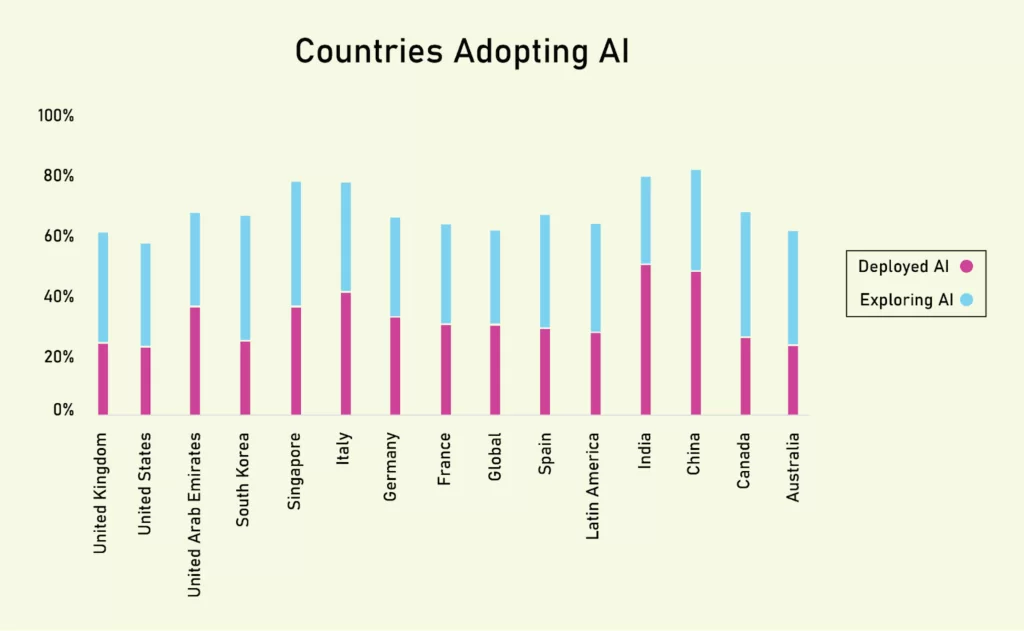
The integration of AI has occurred progressively in different countries, with China leading the way, followed by India and Singapore. Information Source: IBM
An article published last year talks about how China uses AI to reduce the educational gap within the country. It also mentions that over half the Chinese labor force needs a high school degree.
You may also like to read:Influencing the Future of Education with AR/VR
The country has boosted many AI-based technology startups to aid the education sector. The country’s major focus on building AI infrastructure, as disclosed by the Chinese State Council, is to become the world’s top AI innovation center by 2030.
Why China may lead in AI Implementation in Education
The Chinese government is authoritarian and may not think twice before using AI technology that might compromise the privacy of the citizens. So, it has been open to widely experimenting with AI products like AI-based cameras that capture student behavior in classrooms and help teachers and parents to improve student grades.
According to The Guardian, 48.49% of the world’s high-impact research papers were published in China in the past five years. Source.
The government has supported the firms bringing AI-based products that can disrupt education or promote them with financial incentives, infrastructure, research grants, resources, etc. China may lead in AI implementation in education because:
China is a competitive economy and has made an aggressive moves in almost all sectors to assert its world dominance. China holds the manufacturing units of many high-worth companies. It has pushed its country’s sportspersons to train from a very young age and bring as many Olympic medals for the country as possible. AI would be no exception as well. The country has been leading in publishing AI-based research papers.
The Chinese education system is organized at the centralized nature of policy-making. It is unlike free democracies, where privacy concerns and citizen discretion are given prime importance and can be questioned. Therefore, it is also about the country’s overall development rather than success in merely one sector.
All that Glitters is not Gold
Just because China has been vastly open to accepting AI implementation and experimentation in its country does not guarantee that it is leading the world. The country still faces a shortage of qualified teachers and established AI labs.
The pace of including AI in education is more straightforward in China because the country already collects a large pot of citizen data. One of the concerns shared by David Yang, Associate Professor of Economics at Harvard, is that this AI technology that might develop in China to understand people’s behavior may be exported heavily and used by other countries to accelerate their autocratic rule.
‘AI is fundamentally a technology for prediction”, he says.
Therefore, autocratic countries would always be the first ones to grab hold of these technologies that allow them to have maximum control over their citizens.
Recently, many leaders have echoed concerns about the potential unethical use of AI without proper regulations. We hope that responsible governments make conscious efforts to leverage technology, but not at the expense of citizens’ privacy or safety.
]]>https://test.evelynlearning.com/how-china-is-trying-to-outpace-the-world-in-ai/feed/0All the Information You Require Regarding Australian Curriculum
https://test.evelynlearning.com/all-the-information-you-require-regarding-australian-curriculum/
https://test.evelynlearning.com/all-the-information-you-require-regarding-australian-curriculum/#respondFri, 09 Jun 2023 06:22:47 +0000https://test.evelynlearning.com/?p=14986The Australian Curriculum is said to be the national curriculum in Australia, which is followed by all primary and secondary schools. Its main purpose is to provide the best education to the students by introducing skills, understanding, and knowledge needed to work in this modern time. Whenever needed, the curriculum is updated continuously to teach […]
]]>The Australian Curriculum is said to be the national curriculum in Australia, which is followed by all primary and secondary schools. Its main purpose is to provide the best education to the students by introducing skills, understanding, and knowledge needed to work in this modern time.
Whenever needed, the curriculum is updated continuously to teach students what is valid and accurate. Moreover, the curriculum delivers education with the help of learning areas and general capabilities.
Aim of the Curriculum
The Australian Curriculum is focused on catering the needs of every student globally. It strongly advocates for inclusive education and firmly believes in the following principles:
Every student can learn; their individual needs are equally important and hold significant value.
Each student has the right to access knowledge as well as skills that serve as the building blocks for successful and continuous learning.
It is important to establish high expectations for every student.
The curriculum should be adjusted in a way that it can accommodate and recognize the diverse needs of students from different cultures.
The Australian Curriculum is designed to meet the needs of students worldwide
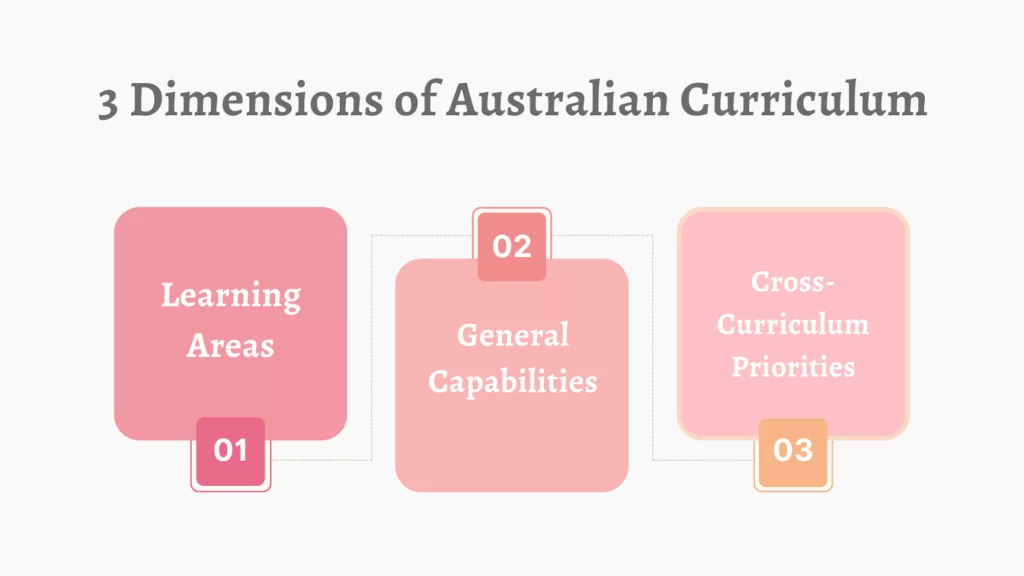
Three Dimensions of the Australian Curriculum
There are three dimensions in the Australian Curriculum:
Learning Areas
General Capabilities
Cross-Curriculum Priorities
1. Learning Areas
The Australian Curriculum is divided into learning areas and subjects. The learning areas include humanities as well as social sciences. They include history, geography, civics, citizenship, economics, and Business. Apart from this, the arts include dance, drama, media arts, music, and visual arts. Moreover, the curriculum also includes technologies such as design and digital technologies. Lastly, you can choose from a diverse range of fifteen languages in order to enhance your knowledge and proficiency in a specific language that is different from your mother tongue.
2. General Capabilities
The Australian Curriculum contains a total of seven general capabilities, which aims to provide necessary skills and abilities to the younger generation of Australia in order to survive in the 21st century.
These general capabilities include:
Literacy
Critical and Creative Thinking
Numeracy
Personal and Social Capabilities
Information and communication technology (ITC) capabilities
Ethical Understanding
Intercultural Understanding
3. Cross-Curriculum Priorities
In the Australian Curriculum, there are three priorities that are critical to Australia’s future. This specific dimension of the learning areas allows students to experience diverse contents of learning areas.
Aboriginal and Torres Strait Islander’s Histories and Culture
Australia’s Engagement with Asia
Sustainability
The Three dimensions offer teachers the flexibility to engage in personalized learning to meet the needs of individual students
Structure and Format
Typically, the students commence their learning journey by enrolling in kindergarten first. This marks the beginning of their 13-year educational journey that concludes with the attainment of the Higher School Certificate (HSC) upon the completion of Year 12. This prestigious certification enables students to seek admission to educational institutions worldwide.
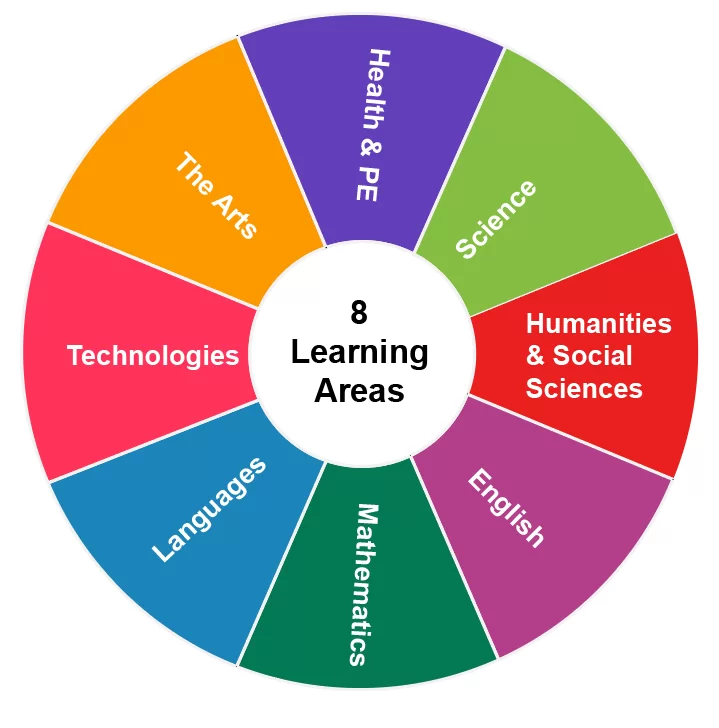
The educational curriculum is structured around Eight Key Learning Areas (KLAs), which encompass English, mathematics, science, health and physical education, humanities, and social sciences, the arts, technologies, and languages.
1 English
English is an important language considered for young Australians. It includes subjects such as additional language or dialects, essential English, and literature.
3 Mathematics
Mathematics equips students with essential skills and knowledge for their development in their early years of education. It includes subjects such as specialist mathematics, general mathematics, mathematical methods, and essential mathematics.
3 Science
Science develops an understanding of practical concepts and processes among students and it includes subjects such as biology, chemistry, Earth and environmental science, and physics.
4 Humanity and Social Sciences
Humanity and social sciences includes 5 subjects. HASS (Australian Humanities and Social Science Curriculum), civics and citizenship, economics and business, geography, and history.
5 Arts
The arts have the ability to inspire and motivate students to think out of the box and embrace creativity . It includes dance, drama, media arts, music, and visual arts.
6 Technologies
In the Australian Curriculum, technologies play an important role in ensuring that all students benefit from understanding how technology works. It includes design and technologies and digital technologies.
7 Health and Physical Education
The curriculum of health and physical education provides certain types of learning opportunities that are contemporary, engaging, and relevant. It aims to equip students with the necessary skills, knowledge, and understanding of their physical health as well as mental health.
8 Languages
Languages are included in the Australian Curriculum to ensure that all students can actively participate in learning a language other than English. They include Arabic, German, Spanish, French, Japanese, Korean, Chinese, Hindi, and many more.
The Eight Key Learning Areas outline the specific knowledge that each student would gather in each subject area.
VCE and WACE Certifications in Australia
The Victorian Certificate of Education (VCE) and the Western Australian Certificate of Education (WACE) are certification programs in Australia that are awarded to students who complete their senior secondary education. However, these certificates are specific to the states of Victoria and Western Australia, respectively.
VCE (Victorian Certificate of Education)
The VCE is granted to the students who successfully complete their secondary education in the state of Victoria. The certificate is administered by the Victorian Curriculum and Assessment Authority (VCAA).
The VCE is undertaken over a two-year period in Years 11 and 12. When the students complete their schooling, they receive an Australian Tertiary Admission Rank (ATAR) based on their performance, which further helps them for university entrance purposes.
WACE (Western Australian Certificate of Education)
The WACE is granted to the students who successfully complete their secondary education in the states of Western Australia. This certificate is administered by the School Curriculum and Standards Authority (SCSA).
The WACE is undertaken over a period in Years 11 and 12. Unlike VCA, WACE candidates need to meet literacy and numeracy requirements and complete at least one senior secondary course examination. After their schooling, students receive ATAR based on their performance, which is used for further education and entrance in their preferred universities.
Australian Curriculum 9.0
The Australian Curriculum, Assessment and Reporting Authority (ACARA) released version 9.0 of the Australian Curriculum in May 2022. Schools have started implementing this new version in 2023 term 1.
Version 9.0 of the Australian Curriculum offers a more practical approach for teachers regarding crucial knowledge that students must acquire
What Modifications have been Implemented in the Updated Curriculum?
The curriculum development in the updated version are decreased content, improved coordination between achievement standards and content descriptions, enhanced connections between learning areas, general capabilities, and cross-curriculum priorities.
The changes embraced by the updated curriculum are as follows:
The Australian Curriculum is being modified to ensure a more thorough understanding and education, with a 21% reduction in descriptions regarding the learning objectives of students and what should be taught.
There will be a greater emphasis on phonics in English and more focus on students mastering the fundamentals of mathematics, such as its different concepts, skills, and facts.
The importance of developing proficiency in foundational skills and the ability to perform mathematical computations without a calculator will be emphasized.
The sequencing of content in mathematics will be revised, particularly in areas such as telling time, introduction to fractions, recalling multiplication facts, and solving equations.
Higher standards for mathematics will be set up for Year 1 regarding addition and subtraction and include multiplication facts in Year 2.
In Years 9 and 10, priority will be given to Australian history, including the impact and perspectives of First Nation Australians upon the arrival of British settlers and their contributions to modern Australian society.
ACARA is also working on mental health development among Australian youth. This will be taken into account in the upcoming versions of Australian Curriculum.
]]>https://test.evelynlearning.com/all-the-information-you-require-regarding-australian-curriculum/feed/0Why the Education Expenses are Rising and How to Deal with it?
https://test.evelynlearning.com/why-the-education-expenses-are-rising-and-how-to-deal-with-it/
https://test.evelynlearning.com/why-the-education-expenses-are-rising-and-how-to-deal-with-it/#respondWed, 07 Jun 2023 12:35:43 +0000https://test.evelynlearning.com/?p=14919A point raised by the National Center for Education Statistics states that an average student’s decision on whether they want to attend college or not is entirely up to their family finances. The education expenses are the biggest concern for freshers, which puts them in a dilemma “Should I go to college or not”? Providing […]
]]>A point raised by the National Center for Education Statistics states that an average student’s decision on whether they want to attend college or not is entirely up to their family finances. The education expenses are the biggest concern for freshers, which puts them in a dilemma “Should I go to college or not”?
Providing college education to their children is still a utopia for many American families. College affordability is the most important yet scariest factor faced by these families when their child completes their high school graduation.
When making a decision about which college to attend, there are numerous factors to take into account, such as tuition fee, available courses, extracurricular activities, and more. However, many students find themselves stuck on the cost and perceive it as the primary determinant of their access to education.
Now, what can be done to eliminate the financial barrier to the path of acquiring an education? It appears that there may be a shortage of available resources to obtain accurate information regarding the diversity of universities, their tuition fee, and the process of applying for scholarships and grants at these universities.
Reasons for Hike in Education Expenses
According to the 2017 research report of College Board, tuition fee in colleges at four-year private and public colleges have increased by 36%.
Here are a few factors responsible for this problem of rising education costs, which are taking away the rights of students and making education a luxury.
Rising Demand
The cost of education and students enrolling into universities are two sides of the same coin.
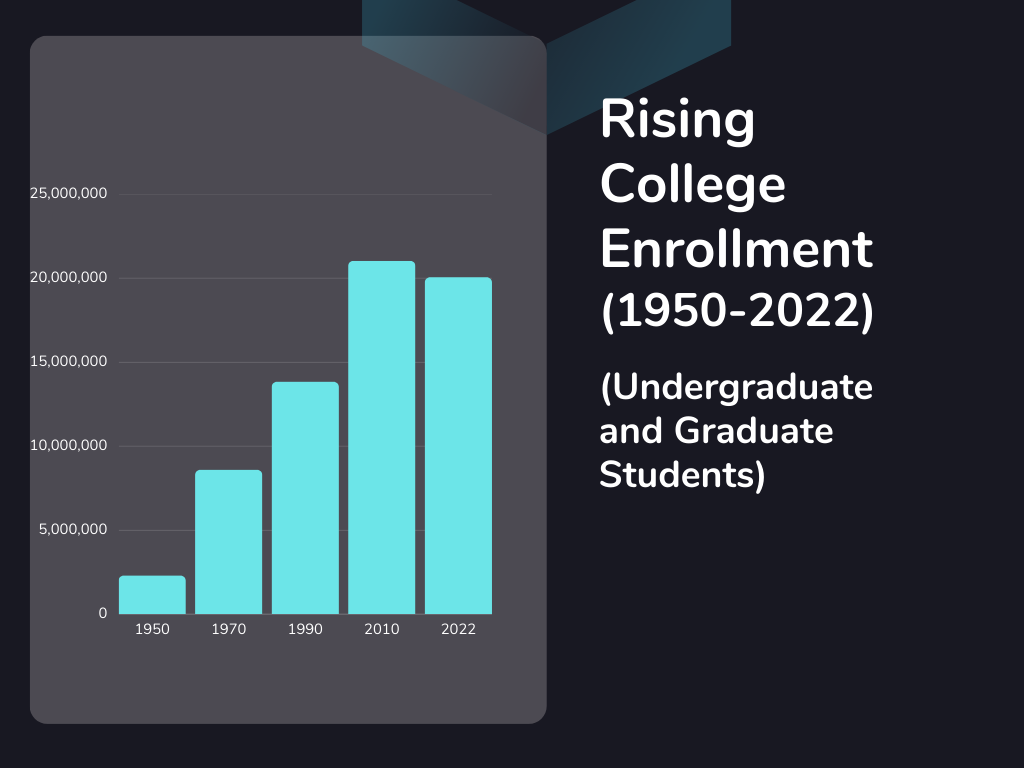
According to the Education Data Initiative, enrollment peaked in the year 2010 at 21.02 million students. Since then, education has gotten more expensive, with tuition fee increasing every year.
Rise in Education Expenses are Associated with the Cycle of Demand and Supply
In the above graph, we can see a slight decrease in enrollment numbers in the year 2022. This is because of the shift in thinking of students, who are losing trust in college education.
Is a College Degree Worth It?
Our society is divided into two parts. One believes in the education system, and the other believes that it is a waste of money and effort. We have some really great examples of billionaires and geniuses who do not have a college degree.
Bill Gates dropped out of college at the age of 20 and made a revolutionizing company, “Microsoft”. Walt Disney ended his schooling in the 8th grade and moved on to open the world’s eyes to see animation at its best.
Today’s generation is inclining more toward becoming social media influencers, stock market traders, etc. They are finding it fun and a way to make money with minimal effort.
People Losing Trust in College Degrees
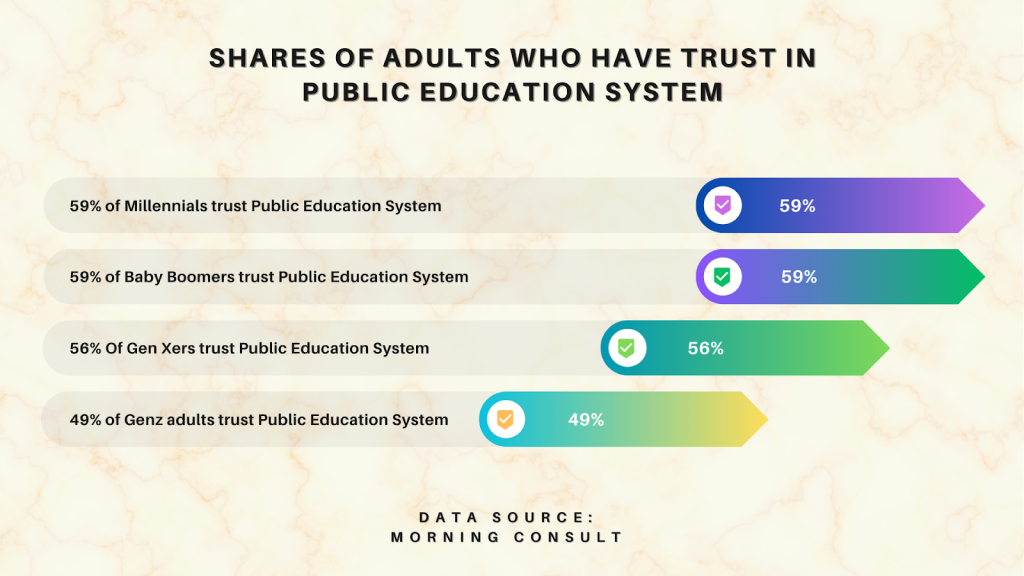
According to the data collected by Morning Consult, Gen Z has the lowest trust in the education system of public colleges or universities. They also revealed that in October 2020, 62% of adults supported the public education system, and now, as of May 2023, the numbers have decreased to 52.5%.
Lower State Funding
Another reason for increased tuition fee is the decreasing financial support from the states. According to the data from the College Board, there is a correlation between the state’s funding and education costs. In the academic year 2015-16, the state’s funding was reduced by 11% as compared to the last 10 years, which is the result of a hike in education expenses.
Lack of State Funding Means the Burden of High Education Expenses Is Shifted to Students and Their Parents
At the same time, state funding is only related to public universities, as these colleges and universities are affiliated with the government. So, a reduction in state funding would have little impact on private universities but more on public universities and scholarships for college students.
Operational Cost
Gone are the days when the things required to impart education were just different subject books, a professor, a blackboard, chalk, desks, and students. Now, the time has changed. Universities and colleges are no longer just institutions of learning and teaching. A classroom has become an e-classroom, with tablets on each and every desk.
Online learning is now the primary focus, with learning resources readily accessible on the internet, surpassing the significance of traditional learning methods.
High-Quality Education Comes With High Education Costs
Many institutions now have full facilities and services like healthcare, technological devices, counseling, research, dormitories, and institutional support. These facilities and services take a major chunk of money from the university’s budget, which in turn leads to skyrocketing tuition fee. Moreover, universities provide quality education, so they have to hire highly educated people, which means high salaries.
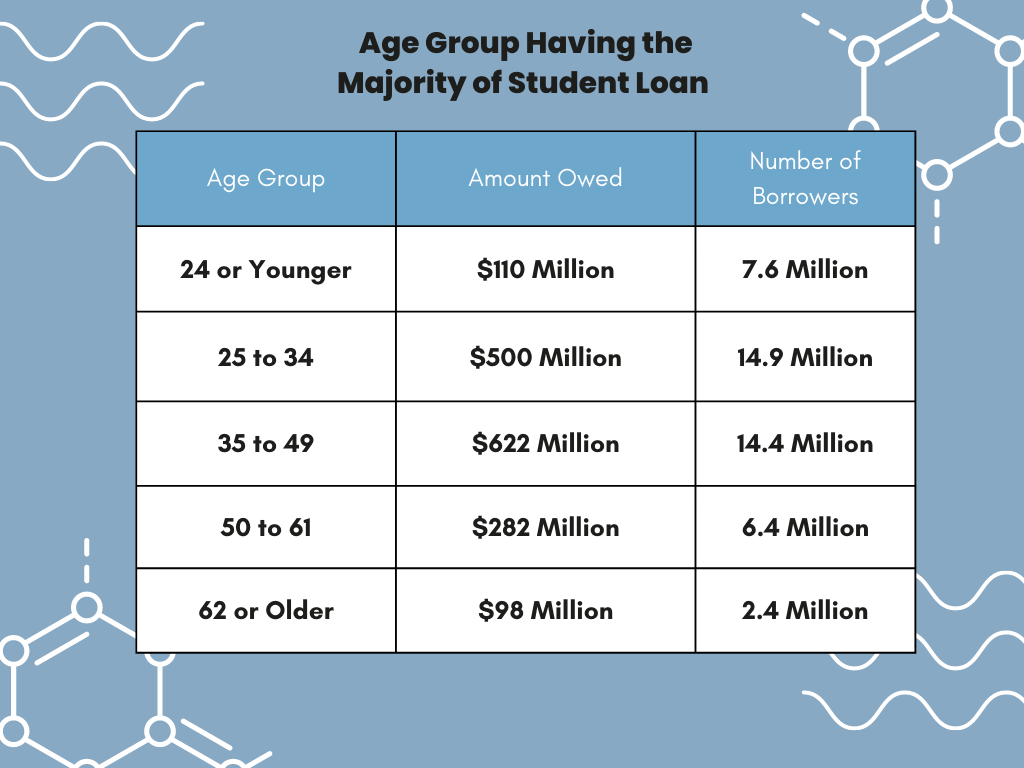
The ballooning education costs and student loans go hand in hand. According to Forbes Advisor, there is around $1.75 trillion student loan debt as of now, including federal and private loans. On average, one borrower owes $28,950. Moreover, 55% of public university students have educational debt, whereas 57% of private non-profit institution students take loans.
If we look at the statistics, student loan borrowers aged between 24 and 35 years owe around $500 billion to federal banks. Unfortunately, for some people, these loans do not leave the borrower’s side even after middle age. Not only this, people feel the pressure of repaying loans even after retirement.
Taking out a student loan is inevitable unless you have a scholarship or come from a financially strong family.
“Borrowing to pay for college used to be an exception; now it’s the rule.” – Arne Duncan, Formal United States Secretary of Education.
The Burden of Student Loan Remains With Individuals Even Beyond Their Retirement.
Federal Aid for Student Loan
In the year 2007, the Federal Government introduced the Public Service Loan Forgiveness Program (PSLF) under the act of College Cost and Reduction. Under the PSLF program, people who make 120 loan repayments while working for a non-profit organization or public service institution can get a portion of their student loans excused or forgiven.
According to the U.S. Department of Education, as of May 2023, more than 6,15,000 borrowers had successfully had their loans forgiven. PSLF has approved a total of $42 billion since October 2021.
The Public Service Loan Forgiveness Program is one of the most brilliant programs established by the government. It supports public employees, including professors, doctors, and policemen, as well as members of nonprofit organizations, by giving them relief from the headache of the installments of student loans.
How to Make Education Affordable?
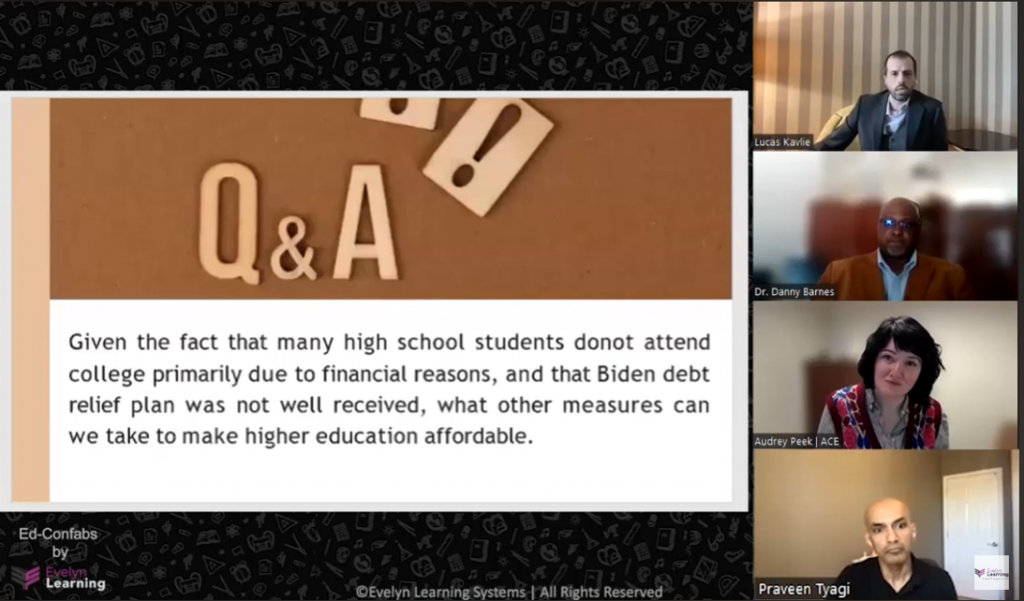
In our January’s Industry Discussion, “How to Make Education Equitable and Affordable”, we got an amazing opportunity to invite and interact with brilliant speakers, Dr. Danny Barnes, Dr. Audrey Peek, and Lucas Kavlie.
Dr. Danny Barnes is a renowned Data Scientist and Cybersecurity Professor from Augusta University. Dr. Audrey Peek is a Senior Government Policy and Data Analyst from ACE University. Last but not least, Lucas Kavlie is a Vice President of Western Governors University.
All of these speakers made some really interesting points about how to make education affordable.
Dr. Danny Barnes. Dr. Audrey Peek, and Mr. Lucas Kavlie during an industry discussion co-hosted by Evelyn Learning’s CEO and Founder Praveen Tyagi and Content Analyst Tavleen Kour
Dr. Danny Barnes gave a great idea about opening a corporate education construct in a college where students can go to work as well as to classes. So, when they graduate, they’ll have a degree as well as work experience.
“A lot of problems are going around related to social-economic aspects, historical aspects, digital divide, etc. These problems are impacting the cost of education. There are two ways to overcome this situation. Schools should focus on e-books more which will help to cut down the cost of books from the cost of tuition. We can also guide students to take their early courses or generic courses at community colleges”.
On the other hand, Dr. Audrey Peek pointed out that there is an affordable college that’s right for every student. There are colleges that put students first and make sure they have minimal debt.
“We have to help future students to avoid taking debt and struggling to repay it and that’s where we have to be innovative as well. The Federal Student Loan Program is broken and we need to fix it. There are some areas where a lot of improvement is needed like lowering student rate and improving student loan services. On the other hand, we want our states to increase funding to colleges or universities so that the education expense is reduced”.
Lucas Kavlie addressed that the problem of public relations is more than the problem with people being able to go to college, and there is always an ability to pursue tertiary or post-secondary education.
“When it comes to financial reasons, it should never be finance that eliminates somebody’s access to post secondary education. Individuals, who want money to attend colleges, there is money available but we’ve not done a good job of helping to guide them. We’ve figured out a way to reduce the tuition fee many decades ago in the United States by subsidizing primary and secondary education. But, tertiary and post secondary education are subsidized to a certain extent”.
Can We Afford Universities With Skyrocketing Education Costs?
How to Deal With the Problem of Cost of Education?
The increasing tuition costs and fees cannot be attributed to a single reason. There are a lot of factors that are responsible for this spiraling problem. Technological advancements, increasing inflation, reducing state funds, and certain economical challenges are causing this inevitable problem of the rising cost of education.
Now that we have somewhat understood the problem, it is important to find some backup plans and other options.
As said by Audrey Peek, students have to make their research game strong and find some colleges or universities providing scholarships, grants, or cheaper tuition fee. There is always an affordable college available for every student that fits right into their budget. Try finding resources online and gain as much information as you can.
According to Lucas Kavlie, there is always the ability to pursue education in a way that is either minimal or at no cost.
Also, if someone is ready enough to take a student loan, there are many schemes and programs started by the U.S. government to reduce the burden of repayment of loans. The information is out there, and you just have to grab it and seize the opportunity.
Lastly, a college degree is not the only criterion for judging whether a person will be successful in their career or not. If you’re interested in acting, singing, painting, designing, etc., you can make a career out of these fields too. You just need to be passionate about the career path that you’re choosing.
]]>https://test.evelynlearning.com/why-the-education-expenses-are-rising-and-how-to-deal-with-it/feed/0Reassessing Curriculum Development: Top 3 Factors to Consider
https://test.evelynlearning.com/reassessing-curriculum-development-top-3-factors-to-consider/
https://test.evelynlearning.com/reassessing-curriculum-development-top-3-factors-to-consider/#respondMon, 15 May 2023 05:50:07 +0000https://test.evelynlearning.com/?p=14745Curriculum Development is the process of developing a course that is taught at a school. Every school or university has a unique approach to its design. However, the basic structure of the design remains the same, which includes researching, building, execution, and judgment. This article discusses, in detail, the points that influence the decision of […]
]]>Curriculum Development is the process of developing a course that is taught at a school. Every school or university has a unique approach to its design. However, the basic structure of the design remains the same, which includes researching, building, execution, and judgment.
This article discusses, in detail, the points that influence the decision of its development, such as:
Role of technology in curriculum
Reassessing curriculum development as per new age requirements
Factors to consider when redesigning the curriculum
A curriculum is important for both teachers and students. It helps teachers adopt reasonable teaching approaches and it helps students study and learn in an organized manner.
As technology is infusing more and more into education and students are being introduced to different learning styles, there is a need to reassess the curriculum with regard to new age requirements.
It is also important to focus on making students career ready. There is indeed a new school of thought, which says that learning should be such that it can help students be job-ready right after high school graduation. It can be beneficial for those students who might not want to pursue higher education or may not have a financial background to support them.
Introducing technology in education is another trend that is on the rise. Everything is becoming tech-enabled. So, why not education?
Many institutions and schools are indeed welcoming technology with open arms, but many are still a bit skeptical about using educational technology.
Technology and Curriculum Development: Correlation
Redesigning Curriculum and Inclusion of Technology: Relationship
Technology and education go hand in hand. With the help of technology, many people have access to education. If we look back at past years, we find that there were fewer opportunities for people to learn something new. Now, thanks to edtech, we can learn an endless number of things with just a click.
In our industry discussion webinar, we had the opportunity to talk to the edtech specialist at PowerSchool, Jessica Aurilio. She shared her insightful opinions about integrating technology in education and the need to redesign the course.
According to her, “When reassessing the curriculum development, it is important to make sure to take into account that every student is not the same. I saw students who are performing great and getting good grades in online learning as well as those students who used to get straight A’s, but now, are not getting technology”.
Reevaluating the Curriculum by Incorporating Technology in Education
Increasing Importance of AI Education in Curriculum
According to Forbes, 2023 is the year of AI Education. AI has entered into K-12 education. There has been a rise in AI programs with books and courses exclusively focusing on elementary and high-school students.
As science projects, students are building robots and apps involving machine learning.
AI driven technologies are helping students develop skills and succeed in the job market. Infusion of technology in education is making sure that every student receives quality education, which would help them become career ready.
Assessing the Curriculum as per the New Age Requirements
Currently, a lot of moderation can be seen in the education sector. Educators are brainstorming on different methods and styles to be added to make teaching and learning more interactive and engaging.
The biggest change that has happened in a long time is that the focus on what to teach has now shifted to how to teach. Moreover, we can also see a push in certain schools and universities towards conducting career-related sessions for students to succeed in their future professions.
Experts’ Opinions Regarding Redesigning the Curriculum Development to Make Students Career Ready
Alex Lochoff and Jessica Aurilio during an industry panel discussion co-hosted by Evelyn Learning Founder and CEO Praveen Tyagi and Content Analyst Tavleen Kour
In our industry discussion webinar, we had another guest speaker, Alex Lochoff, director of Edpuzzle. He too shared his brilliant perspectives on developing the module according to new age requirements.
Alex said that the biggest change he has seen is not in the topics we’re teaching, but rather how it’s been taught and this is now formalized in many of the newer standards which come under the Common Core.
The Common Core used to cover content standards only. Now, it covers practice standards too. Content standards include all the topics that should be taught to students, whereas practice standards include everything other than lecturing. Practice standards include exercises such as explaining, reasoning, debating, and critiquing.
These standards help students develop skills for their prospective future profession and get them ready to seize all career opportunities.
Top Three Factors to Consider When Redesigning the Curriculum
Considering restricted and banned content as per policy standards
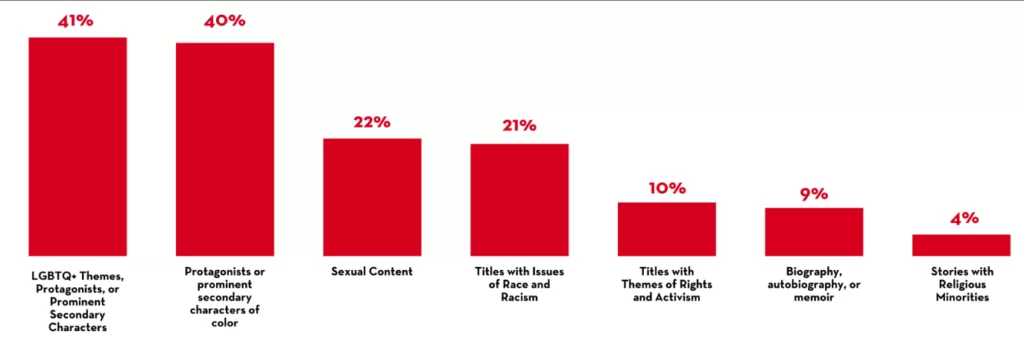
In the session 2021-22, some state and national groups protested to ban and remove some books from the school courses. The books that were targeted for removal included topics such as sex education, LGBTQ+ rights, racism in American history, and more.
According to PEN America, 674 banned books had LGBTQ based titles and protagonists who belonged to this community. Moreover, 358 banned books include the topic of sex education and 357 books address the issue of racism.
Data from PEN America
PEN America considered this movement of banning books deeply undemocratic. It is taking away rights from students who want to learn a diverse range of opinions and perspectives. Moreover, it is unfair to all those parents who want their children to gain knowledge, be more curious, and have a freedom to read.
Many teachers and parents are raising their voice against the book bans and asking to include the restricted content back into the classrooms.
Emerging Technology in Education
In one of our industry discussion webinars, Alex Lochoff said that both teachers and technology have important roles in education. However, there are some areas where edtech fits better in the curriculum. He gave a really nice example of his students.
“I asked two of my students to make a square. One draws it quickly and the other takes out his ruler and draws it perfectly. These two types of students want edtech, so they can study at their own pace”, says Alex.
There has been an increase in the usage of AR/VR and AI in education. According to Education Week, expenditure in edtech has increased after the pandemic. Many schools are inclining more towards online learning.
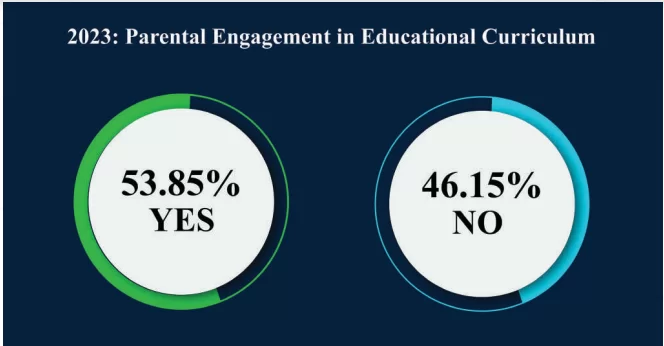
53.85% of experts agree that the role of parents is essential in classroom decisions and curriculum development. Also, 46.15% of experts believe that educators have experience and they have a deeper understanding of the wants and needs of their students.
Involvement of Parents: Different Opinions
When talking about parental involvement in the industry panel discussion, Jessica said that educators want parents to be involved in the decision-making process. Both parents and teachers are a team who want nothing, but the best for their children. However, she thinks that curriculum development is not an area where parents should have opinions.
Insights of Edtech Experts from the Industry Discussion on Curriculum Development
As edtech is placing its foot in the education industry, educators and developers must not forget that teaching and learning is a human activity. It is multifaceted and important for child development.
“Although in some ways, technology can do better than a teacher, in some ways, a teacher could do better. ” – Alex Lochoff, Curriculum Director at Edpuzzle.
Every student is different and has a different approach to learning. The task is to add different learning styles in the course to support each and every student.
“There are different learning styles for different people and nationalities. The task of developers is to hit all the different modalities of these styles to engage the students’ ‘ – Jessica Aurilio, edtech specialist at PowerSchool.
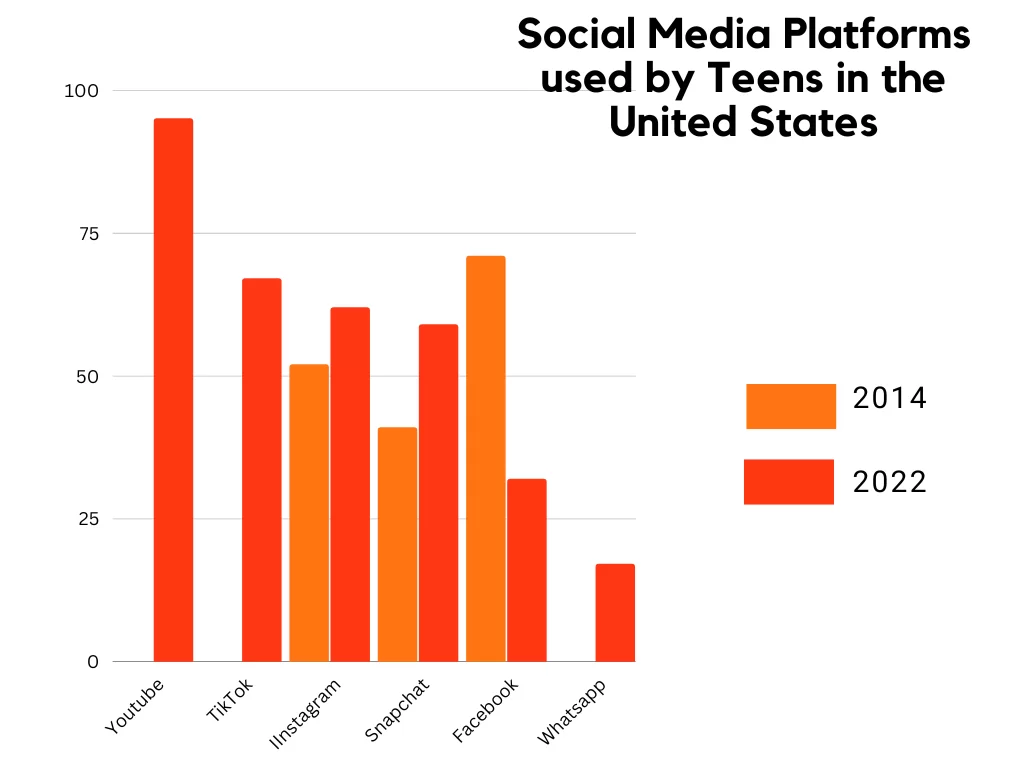
A Space to Think : Is Inclusion Of Technology in Curriculum Responsible for Distraction? Students use laptops, but not for studying entirely. According to Pew Research Center, more than half of US teens claim that they are online almost every time. Moreover, the most famous social media platforms among teens are TikTok, Instagram, and YouTube.
In this survey, many teenagers agreed that they use social media platforms too much and claimed that it would be very tough to give it up.
Apart from this, many parents and educators are concerned about their child’s excessive screen time, which is not good for their mental as well as physical health. In our previous newsletter, Edtech Industry’s Health 2023, we addressed the issue of excessive screen time among children and teenagers.
Changing Focus From ‘What To Teach’ to ‘How To Teach’
Every profession, teaching, engineering, graphic designing, etc. is a valid and valuable career path. What educators can do in creating or developing the curriculum is that they can prepare students to succeed in any of the professions they choose.
As the focus is inclining more and more towards how to teach rather than what to teach, teachers must adopt different learning styles in their teaching methods.
For visual learners, teachers must include pictures, diagrams, and educational videos in their teaching methods. For auditory learners, it is important to add educational podcasts in the classroom. They can also record their lectures for better results. Teachers must conduct question and answer sessions as a classroom activity. It is important to add different learning and teaching styles to engage students in studies and make them feel comfortable at whatever they are doing.
Reassessing curriculum is not an easy task. Developers work very hard to create a particular design that is enough to cover different topics and a wide variety of learning styles. A course needs to have a set number of goals and objectives. This will help learners make progress and achieve nothing, but success in their careers.
]]>https://test.evelynlearning.com/reassessing-curriculum-development-top-3-factors-to-consider/feed/0Top Trends And Challenges That Define EdTech Industry’s Health In 2023
https://test.evelynlearning.com/top-trends-and-challenges-that-define-edtech-industrys-health-in-2023/
https://test.evelynlearning.com/top-trends-and-challenges-that-define-edtech-industrys-health-in-2023/#respondTue, 25 Apr 2023 07:00:30 +0000https://www.evelynlearning.com/?p=10676Over the past two years, the edtech Industry has seen many uncertainties. The year 2022 has proven to be both challenging as well as brimming with opportunities. At the end of 2022, we got a sneak peek of upcoming technologies, such as artificial intelligence, AR/VR, etc. At one point, we saw tremendous growth in the […]
]]>Over the past two years, the edtech Industry has seen many uncertainties. The year 2022 has proven to be both challenging as well as brimming with opportunities.
At the end of 2022, we got a sneak peek of upcoming technologies, such as artificial intelligence, AR/VR, etc. At one point, we saw tremendous growth in the edtech industry, while at another, rising tuition fees and excessive screen time of students got us in a dilemma.
Now that we are into the first quarter of 2023, we are here to talk about the educational trends that are having a positive as well as negative impact on the edtech industry.
We will also take help from Evelyn’s industry report, “Trends and Forecasts on Learning Effectiveness in 2023”. In this report, many educational pundits, who have a rich experience of more than 15 years in the education industry, answered some questions regarding concerns affecting the e-learning industry and opportunities coming in 2023 to look forward to.
Edtech Industry Trends in 2023
During and after the pandemic, e-learning and blended learning started catching the limelight. They became more of a necessity rather than a luxury, as the pandemic refused physical contact completely.
In 2023, both these learning styles proved to have the biggest impact on the ed-tech industry.
Apart from this, AI has been in the news for the last few years. Just last November, OpenAI surprised us with ChatGPT and DALL-E 2. Let’s have a deeper look at all of these trends.
Artificial Intelligence
ChatGPT and DALL-E 2 have been in the news a lot since last year. OpenAI announced that more than a million people signed up for experimenting with this sensational chatbot. This chatbot has the potential to generate long-form content, extend longer conversations and compose, write song lyrics and educational content too.
According to Grandview Research, the real boost in the AI market was experienced after the year 2021. At that time, the size of the AI market was around $93.5 billion (USD).
During the last quarter of 2022, the AI market reached $136.65 billion, which is around a 50% increase from the previous year.
It is also estimated that by the year 2030, the market size of AI would reach $1,810 billion. A few decades ago, artificial intelligence was just a thought in progress. Now, we have robotics, machine learning, natural language processing, artificial neural networks, and whatnot.
Are robots going to replace humans as teachers?
In the next few years, it is believed that robots might have a certain level of self-awareness.
Some robots are humanized to some extent, like Sophia, the human-robot. Self-awareness means that there is no difference between a robot and human, which can also be concerning.
Sophia is a human-robot created by Hanson Robotics. Sophia uses some very advanced technologies, such as Natural Language Processing to understand human speech and Machine Learning to respond to human speech and gestures. This invention is the future of AI and one of the most advanced till date.
University and Startup Collaboration
Talking about industry-academia partnerships, in recent news, Jolly Good, a Japan-based startup has collaborated with Brigham and Women’s Hospital, which is affiliated with Harvard University. Together, they developed emergency care virtual reality content (VR).
Jolly Good medical VR solution will provide a more realistic experience than computer graphics. It will enable medical professionals to create their own live-action VR images.
Blended Learning
Coming to blended learning, this type of learning trend has not gained popularity only because of its sensationalism, but essentialism. Blended learning has become the most loved teaching method because it increases efficiency as well as student achievement by making them learn at their own pace. Apart from this, blended learning is also economical as well as time saving.
On the other hand, many people believe that hybrid learning leads to demotivation and procrastination. Also, it increases the screen time of students, making them feel lethargic all the time.
According to a report by NPR, 53% of children have their own smartphone at the age of 11.
In the year 2019, Common Sense Media found out that children aged 8-12 years spend almost 5 hours a day looking at the screen of their smartphones, tablets, and laptops. Moreover, teens aged 13-17 years spend around 7 hours a day doing the same.
Addressing the Challenges of the Education Industry in 2023
After talking about the useful trends in 2023, let’s move on to the concerns that we could be facing in the near future. The education industry has seen both bright and dull days.
“It cannot be denied that virtual technology is the future of education, but we also cannot agree that it would replace a physical presence”.
Are More Teachers Switching Professions?
During the pandemic, we saw teachers struggling with online teaching. They were feeling dejected, disrespected, and drained. The covid outbreak took a toll on most people’s mental health and online teaching did nothing, but added more mental fatigue to the already stressful life of teachers.
In the session 2022-23, many teachers stopped working. They either moved into non-teaching positions or switched schools.
School districts are unable to retain their teachers. Almost 50% of teachers transfer to new schools or worse, leave the teaching profession altogether. High school students as well as college freshmen have lost interest in teaching as a profession.
The above graph is a question from a research by Langer Research Associates asking parents if they want their children to pursue teaching as a profession. This question was first asked in 1969.
According to the U.S. Department of Education, 50 states in the United States reported a scarcity of teachers in the session 2022-23. There is a widespread shortage of special education teachers in 48 states, science teachers in 46 states, and math teachers in 44 states.
However, many education experts have also stated that the pandemic is just an excuse, and the problem of teacher shortage has been going on for more than a decade.
Teachers switching professions: The real reason
Cost of Education
Education is mandatory, but unaffordable. Many students who are willing to study opt not to continue their education because of the skyrocketing cost involved.
This concern was also highlighted in Evelyn’s industry report. Many experts highlighted this problem and agreed that the cost of education would continue to increase in the coming years too. As online learning is becoming more popular, the cost of education is also increasing.
“While we cannot deny the fact that technology has become an integral part of education, rising tuition fee is also a concern that the average American family is facing a lot”.
Cost of Education skyscraping higher than the previous sessions
The report of the College Board shows an immense increase in the average tuition fee of the private schools in the United States, such as Princeton University, Stanford University, etc.
The above graph shows the education cost, from the session 1992-93 to 2022-23. Although the tuition fee of public schools has declined slightly, keeping in mind the inflation, it is still expensive for lower-middle class families.
Reasons of Hike in Education Cost
In 2022, the cost of education was touching the sky. There are some reasons for this high cost of education . The important one is reduced state funding. In the academic year 2015-16, state funding declined by 11% compared to the last 10 years, which led to increased tuition fees.
This year, the trend has unfortunately continued and is now a big concern for students with poor pecuniary support. Students as well as parents are having second thoughts about pursuing a college degree.
According to the latest Forbes report, the number of students registering for college after high school has declined a lot. This year, college enrollment has decreased by 7% in comparison to the year 2017.
The reason is the sky touching tuition fee. Parents are thinking if taking a high debt for college education is worth it or not.
They are being skeptical regarding the value of a college degree. Students are starting to believe that colleges are overpriced and overrated.
Parental involvement is the participation of parents or guardians in a child’s education at home as well as in school.
Recently, we saw a lot of people inclining toward the idea of parental involvement in influencing school curriculums. They believed that this involvement leads to the growth and advancement of student.
Parental involvement in education is still a questionable thought.
In Evelyn’s 2023 ed-tech trends report, more than 50% of experts were in favor of the idea that parents should get involved in the decision making process regarding school curriculums.
However, other experts think that parents’ involvement leads to biased decision making. They consider that parents make decisions emotionally and not practically.
It is also believed by some pundits that educators make decisions by taking each and every student into consideration. On the other hand, a parent’s opinion might only be restricted to their child only.
Education Experts’ Opinions
In our recent Industry Discussion: Assessing New Age Curriculum Requirements with Jessica Aurilio and Alex Lochoff, we enquired if the involvement of parents in curriculum designing is valid or not. Their response to the question had some interesting points.
Jessica Aurilio is an edtech specialist at PowerSchool whereas Alex Lochoff is the director of curriculum at Edpuzzle.
Jessica said that curriculum development is not the area of parents to have a voice on. According to her, the idea should come from educators and people who are in the classroom.
On the other hand, Alex Lochoff was of the opinion that it might be okay to take suggestions from parents, but the parents should not have the decision-making power.
Watch the Full Webinar:
Conclusion
While we cherish the boost of artificial intelligence, AR/VR, and e-learning, we are also confused if this elevation is harmful for children. Students are having second thoughts about attending college, which is believed to be a foundational step towards career building. Increased screen time is not only harmful for physical health, but mental health too.
Parents must take measures to limit their children’s usage of technology. State should look into the matter of rising tuition fees. Awareness regarding scholarships and grants is required to provide education to every deserving student.
We have come a long way with technology. Many people are in support of e-learning. However, some think that traditional learning is still the most impactful way of learning. Both are correct in their own ways.
Everything has its pros and cons. Technology, if used correctly can turn out to be the best thing that ever happened to mankind. We should always look at the bright side of things.
]]>https://test.evelynlearning.com/top-trends-and-challenges-that-define-edtech-industrys-health-in-2023/feed/0Emerging Technology is an Intersection of Humanity and Technology: Brad Waid on AR/VR
https://test.evelynlearning.com/brad-waid-on-ar-vr/
https://test.evelynlearning.com/brad-waid-on-ar-vr/#respondTue, 11 Apr 2023 12:31:15 +0000https://www.evelynlearning.com/?p=10640“Embrace the technology and use it. Whether you’re a teacher or a student, or you’re in the industry, try to use technologies like virtual and augmented reality in a way that will benefit humanity”. This is how Brad Waid is encouraging everyone to utilize digital technology to its best advantage. In recent years, virtual and […]
]]>“Embrace the technology and use it. Whether you’re a teacher or a student, or you’re in the industry, try to use technologies like virtual and augmented reality in a way that will benefit humanity”.
This is how Brad Waid is encouraging everyone to utilize digital technology to its best advantage.
In recent years, virtual and augmented reality have gained popularity in education. Students have shown interest in learning because of AR/VR.
A report conducted by ResearchGate and drafted by E. Demirtas, “Reality Technologies and Use in Education” mentioned some exciting facts about virtual reality.
According to this report, the market for VR reached $5.5 billion in the year 2019. However, it is expected that, by the end of 2026, the VR market will reach approximately $18.6 billion.
Students and teachers are inclining more towards online learning than traditional ones, as tech-based learning provides students with an opportunity to understand difficult concepts in a fun and interactive way.
Since the pandemic, there has been an immense increase in the usage of technology in education. This fact has been highlighted by another research report published by Research Gate in the year 2022.
The report features a graph representing the AR/VR users in the United States. There were nearly 60 million users of AR and 35 million users of VR in the year 2018. But, during and after the pandemic hit the entire world, there was a drastic increase in the number of AR/VR users. By the end of the year 2022, AR users had crossed the mark of 95 million, while virtual reality users were more than 60 million.
Graph Representation of AR/VR Users in the United States 2018-2022
We had the pleasure of speaking with Brad Waid in our series “Ed-Insights by Evelyn.” He discussed the changes in student learning that have occurred in recent years due to the inclusion of technology in education.
Brad is an award-winning emerging technology leader, international keynote speaker, educator, and author. He is a visionary who specializes in AR/VR/XR, machine learning, and artificial intelligence.
Brad is recognized as one of the top 20 global futurists and keynote speakers by TAFFD. Furthermore, he is also recognized as the #14 influencer in augmented reality (AR) by Onalytica worldwide.
Brad Waid appeared on our 4th episode of Ed-Insights By Evelyn. Watch the Full Interview here.
The blend of technology and education has increased in recent years. Can you give us some examples of the fundamental changes in student learning due to the inclusion of AR/VR in education?
I’ve seen two radical changes in student learning. One of the changes came around 2011-12 when the iPad was introduced. The introduction of the iPad threw a wrinkle in education. We got access to tools, which have now completely changed what we are doing. The second and most important change is the expectation that students will use technology in education. They are using online learning platforms such as phones, tablets, and laptops as part of their online learning sessions. Nowadays, students don’t know a world without devices. They don’t know a world without technology.
The inclusion of AR and VR in education has made students more engaged in their learning. Traditionally, teachers used to lecture to share all the information about a particular topic. Eventually, students had to memorize that information and respond.
Now, we have a lot more integration of technology in education. The method of teaching has also changed. Teachers share an idea and then students have to research and investigate it. The change that we are seeing is a jump from simple memorization to an active approach to research and coming up with unique ideas.
Do you think it is a concern that we might replace actual books sometime in the future?
I don’t believe that AR/VR is going to replace all books because nothing can replace a classic book. But at the same time, what an ordinary book is used for might change. Reading something motivational, informative, fiction, etc., would still be done with a traditional book.
What augmented reality in education can do is add a digital representation. Imagine you’re reading about a museum in a textbook. Now, with the help of AR, instead of just reading about that museum, you can look at the artifacts in the museum, check its size for scale, and also read a little history about it. augmented reality is not going to replace a book, but it can enhance the classic books we use in education.
What is your idea about what lies beyond 2022? Are we looking forward to some exciting newer trends or better technology in 2023?
AR/VR is starting to take a foothold and it’s being used all over the world. The two big things that are coming shortly are artificial intelligence and metaverse. Both AI and metaverse will come under a blanket of Industry 4.0.
Industry 4.0 will defeat the traditional way of learning and teaching. This change would inculcate curiosity among students by shifting the responsibility of learning from teachers to them.
Inclusion of Technology in Education is Inevitable and the Key to Moving Forward
AI and metaverse are starting to cause some more wrinkles in modern education, but I’m always going to look at their benefits. Students would use AI as a tutorial that will help and assist them. Moreover, metaverse is going to have an impact on students’ learning. However, it’s not going to give them an environment where they can explore. Still, it’s also going to be a new place for students where they can meet people from all over the world.
AI and metaverse are the two big things that we will see in the future. They are already here but will be further developed for better use in education.
Would you like to give a message to our audience?
I want to encourage everyone to use technology in a way that will benefit humanity. Automobiles, airplanes, computers, etc. are built for the welfare of humankind. Teachers should be open to new technology and try to understand it more with the help of their students.
“Embrace the technology and use it. Whether you’re a teacher or a student, or you’re in the industry, try to use technologies like virtual and augmented reality in a way that will benefit humanity”.
Students can play a big role in helping us understand emerging technology and also assist us in moving forward. They are the ones who took us into this new world. We are living in a great time where modern technologies like AR/VR can help all humankind.
]]>https://test.evelynlearning.com/brad-waid-on-ar-vr/feed/0Gauging Student Knowledge Using Bloom’s Taxonomy and DOK
https://test.evelynlearning.com/gauging-student-knowledge-using-blooms-taxonomy-and-dok/
https://test.evelynlearning.com/gauging-student-knowledge-using-blooms-taxonomy-and-dok/#respondMon, 27 Mar 2023 07:10:21 +0000https://www.evelynlearning.com/?p=10443One approach that has become increasingly popular over the years is using Bloom’s Taxonomy and Depth of Knowledge (DOK) to gauge student learning. Teachers can test students’ knowledge with multiple assessment tools and testing techniques. Educators must use the most effective teaching pedagogies and types of assessments to help the students learn and succeed. Comparison […]
]]>One approach that has become increasingly popular over the years is using Bloom’s Taxonomy and Depth of Knowledge (DOK) to gauge student learning. Teachers can test students’ knowledge with multiple assessment tools and testing techniques.
Comparison of Bloom’s Taxonomy and Depth of Knowledge.
Bloom’s Taxonomy and Depth of Knowledge are theories that guide ways to assess student learning. These are like standards that help teachers worldwide assess students on common parameters.
Bloom’s Taxonomy is a framework for categorizing educational goals and objectives based on their level of complexity and specificity. It was first introduced by Benjamin Bloom in 1956 and has since been updated and modified by other educators.
Bloom’s Taxonomy levels
There are six levels of bloom’s taxonomy
Level 1: Remember
Assessments in the remembering level are intended to check the student’s knowledge of the recently learned concepts and to know if they can recall what they have learned.
Level 2: Understand
Assessments in the second level of Bloom’s Taxonomy take recalling what was learned to the next level. It evaluates if the student can describe the learned concepts in more detail and in different ways.
Level 3: Apply
In the next level of Bloom’s Taxonomy, the teachers can gauge the students’ knowledge through their ability to practically apply it in real-life situations and solve problems using the concepts.
Level 4: Analyze
In the fourth level of Bloom’s Taxonomy, teachers can assess the student’s understanding of the various variables within the concept. The students are asked to analyze, classify and explain the relationship among the different parts of the learned concept.
Level 5: Evaluate
At the evaluation level, the assessment is based on the idea of understanding the students’ ability to make decisions and judgments based on the problems and situations of a learned concept. The student should be able to evaluate the lesson’s thoughts and uniquely critique their understanding.
Level 6: Create
In the last level of Bloom’s Taxonomy of learning , a student is assessed on the ability to create something new out of the learned concept. For example, a student can be asked to create a thesis statement or a new music composition, draw, organize, or produce a new piece of art.
Each level builds upon the previous one and represents a different level of thinking and cognitive complexity.
Levels in Depth of Knowledge
Depth of Knowledge, or DOK, is a framework that categorizes the complexity of cognitive processes that students must use to answer questions or complete tasks. DOK ranges from level 1, which requires simple recall of facts or information, to level 4, which requires students to engage in complex reasoning and analysis.
The four levels of Depth of Knowledge are:
Level 1: Recall
The first level assesses the student’s ability to recall information and lessons learned in classrooms.
Level 2: Skills and Concepts
In the second level of DOK, the teacher assesses the deeper understanding of the concept by asking them to answer various questions which use the knowledge of the learned concept. The students can be asked to do basic reasoning using the concept and compare the information.
Level 3: Strategic Thinking
In the third level of DOK, a student’s advanced skills of conceptual understanding are used to create situations, critical thinking, and problem-solving.
Level 4: Extended Thinking
In the extended thinking level, the student has the knowledge to use the concept to create a different idea, prove a situational impasse, critique the idea, and apply the concepts.
Concept: Webb, Norman L. and others. “Web Alignment Tool” 24 July 2005. Wisconsin Center of Educational Research. University of Wisconsin-Madison. 2 Feb. 2006.
Guidelines to use Bloom’s Taxonomy and Depth of Knowledge for creating Assessments
Using both Bloom’s Taxonomy and DOK together can help teachers create more effective lesson plans and assessments, as they can more accurately gauge the levels of thinking required of their students. For example, a level 1 question might ask students to recall a fact or definition, while a level 4 question might ask them to analyze, evaluate, and synthesize information from multiple sources.
Evelyn has created several assessment sheets and worksheets to help gauge student knowledge.
Evelyn developed the following worksheet, which is drafted so that teachers can check the memory of the lesson taught in the class. The questions in the worksheet are created to assess the remembering power of the students.
The Math worksheet below is an assessment that helps to gauge the student’s understanding of the concept. The stage from Bloom’s taxonomy concept is ‘understanding’; the worksheet is a level 1 question from the DOK’s concept.
Incorporating Bloom’s Taxonomy and Depth of Knowledge into Classroom Learning
One way to incorporate Bloom’s Taxonomy and DOK into classroom instruction is through learning objectives. Teachers can understand what a classroom wants and draft the learning objectives accordingly. These objectives can guide a teacher on how they want to pursue their lessons and how they would assess the students’ learning.
Learning objectives should be clear and specify the needs they are intended to meet. A well-written learning objective should be specific, measurable, achievable, relevant, and time-bound (SMART).
By incorporating Bloom’s Taxonomy and DOK into the learning objective, teachers can create goals targeting specific thinking and cognitive levels of complexity.
Assessment is another area where Bloom’s Taxonomy and DOK can be helpful. Teachers can use both frameworks to create assessments that measure students’ knowledge and understanding at different levels. This helps teachers identify areas where students may need additional instruction or support.
Another way to use Bloom’s Taxonomy and DOK in the classroom is through open-ended questions and tasks. Open-ended questions allow students to engage in higher-level thinking and can help them develop critical thinking skills. Similarly, open-ended tasks require students to use various cognitive processes to complete them successfully.
Conclusion
Incorporating Bloom’s Taxonomy and DOK into classroom instruction can help teachers create effective lesson plans and assessments and gauge student knowledge and understanding at different levels. Using both frameworks, teachers can ensure they provide their students with opportunities to engage in higher-level thinking and develop critical thinking skills. Ultimately, this can lead to better student academic outcomes and a more effective and rewarding teaching experience for educators.