The post Challenges in Education System: PJ Caposey interview appeared first on Test.Evelyn.
]]>An accomplished educator and motivational speaker, PJ has written around eight books, and his work has been featured in several notable spaces, including Washington Post, NPR, CBS This Morning, ASCD, Edutopia, the Huffington Post, etc.
It was enlightening and an honor speaking with PJ Caposey about the challenges in education. PJ gave us a glimpse of the ways how we can change the education system for the good of the students.
You have often talked about teachers reaching out to children for effective learning; how do recent teaching restrictions and salary concerns affect teacher morale?
The issue with teacher morale is both overstated and understated. We are in a time with a dramatic teacher shortage, particularly in the United States.
You may like to read: Things That We Should Know About the Teacher Shortage in America
Many people point to teacher morale as both a result of that and a precursor to that, and both can be true. The issue is that this is not a new or pandemic-related issue.

The teacher shortage is a decades-old problem and not a new concern
Multiple studies show that a cliff like that happened in 2008 when teacher responses to questions like, ‘Hey, I like my job’, or ‘I’m very likely to recommend’; all of that kind of fell off a cliff in 2008. So, it’s been on this downward spiral for a while. When I say this is not a new problem, I mean, this is literally a decades-old problem.
Morale, to me, is almost always like a climate issue that’s dictated by culture. So, when someone says hey, the morale is low, my question is, so let’s define the culture. Are we recognizing, appreciating, honoring, Valuing, or collaborating with?
If you’re doing those things, even if morale is low, it’s most likely to bounce back, if you’re not doing those things, and the morale is low, then we’ve got a serious problem that we need to address.
Your book ‘Students Voice-from Invisible to Invaluable.’ discusses the importance of students’ voices in learning. Do you think post-covid, the student approach to learning has changed?
I think that people are changing. Students are reflective of society. And I think, in some ways, they are demanding a greater voice in their learning, and there are positives and negatives to that.
I believe, every school wants to create community contributors that can communicate and able to think critically. I think that’s pretty universal, whether in Country A, Country B, or whatever.
If we want to create people that will make society better and be able to think critically, there is such a thing as experts, and I believe most of our teachers and leaders have expertise.

Students’ voices in learning is important for effective learning
So, for lack of a better term, even though I don’t know if one exists like a democratic model of education, it might not be what’s best.
That doesn’t mean that students shouldn’t have some choice in how they demonstrate their knowledge or the things they may study to practice the skills we say they need to master.
One of my all-time best examples of this is- we had a foreign exchange student early in my career that came from Bosnia.
And we were discussing the antecedents and causes of war, and the teacher wanted the class to focus on the United States Civil War. This person, a foreign exchange student, came from a war-torn country that had just experienced war and wanted to practice and master all the same skills but with a different prompt.
In my view, if we don’t listen to student voices in a case like that, that’s almost educational malpractice. But, that said, those types of examples are only sometimes there, which means that if we want students to research a classic novel and they want to do it on our recent publication in a magazine, those are two different things.
So, there’s this ray spectrum between trying to maximize and emphasize students’ voices. And then also saying there’s a right and wrong way to do things.
What do you think is the biggest gap in classroom teaching today: access technology, teacher shortage, classroom environment, or any other?
The most significant gap still exists between what is being measured in terms of how schools are reported. Some countries are considered successful in terms of education and what is likely to put kids in the best position to succeed tomorrow. So, for instance, in our district, we are very fortunate to have a lot of students that go to Ivy League schools and go to the most prestigious schools.
We also have many students in our area that enter directly into the workforce, the military, or whatever. Our desire to remediate any possible gap so that our test scores would look great sometimes run counterintuitive to what we could best provide for kids.
The second gap for me is geography. To explain, we are a small rural school, which means that my students live 60 miles to the East. They would have a much, much larger variety of offerings to take both on this-the advanced academic side and the excellent education side, simply because the schools are bigger and the volume of money that flows through, and the number of classes that can be offered are dramatically different.
Correspondingly, if you go 20 miles north, we have an urban center where education is much further because the school environment is different, where, you know, we might have a fight or two a year, they might have a fight or two an hour.
These students are having these vastly different experiences, So, when I look at education holistically, the biggest concern is that there’s just inequity by geography.
Would you like to give a message to our readers?
It’s to make sure that we’re doing meaningful work. If you ever find yourself in the throes of the day, the week, or the month and you’re wondering ‘why’, don’t ever lose that question of’ why’. If we lose that question, then the status quo is just going to be pervasive.
If we keep asking ‘why’, finding better solutions, and trying to make meaningful use of every hour of every day. We can do really good work on behalf of kids and our communities.
Watch the Full Interview:
The post Challenges in Education System: PJ Caposey interview appeared first on Test.Evelyn.
]]>The post Challenges in the Current US Education System appeared first on Test.Evelyn.
]]>A recent survey by Morning Consult showed that only 60% of baby boomers held their trust in the public education system, and only 43% of Gen Zs parked trust in it. Now the Gen Zs are asking ‘Should I Go to College?’
Is this report trying to convey something to us? Should we not do anything about this trend of falling trust in the education system?
It looks as if the people feel let down by the US education system. The pandemic had its toll, but there are also manufactured issues that plague the American public education system.
This year 2022, saw a quake in the education world. It broke some things while it created opportunities for other things like education technology to facilitate newer instructional styles. We learned during the pandemic that education is inequitable due to geographic differences and resourcefulness.
At the beginning of 2022, it was a school and educators’ priority to recover from the loss of time and curriculum gaps that occurred during the pandemic.
We saw a rising distrust among parents for the school curriculum and educators’ teaching styles. This year, there was also a significant hue and cry about teachers’ shortage in schools and teachers leaving the profession. In addition, there were cases of gun violence in schools. Phew! 2022 was not easy!
Experts’ view on the Challenges to Education System
We asked some exceptional industry experts to give us a penny for their thoughts on what is scuttling the current US education system.
Erin Dowd, a curriculum development consultant and global education specialist, was on point when she discussed the issues with the education system:
I think there are two main challenges to education, and these are mostly global. The first one is ‘access’. Access encapsulates getting kids to schools, quality teachers, training teachers. It also includes having a quality curriculum, funding, and resources.
The second challenge is policies and government. As a former educator, this issue was always in my way. It was bothersome when people made decisions about education who are not educators. These decision-makers have no idea about what is going on in schools, rather, have an agenda to pursue.
It was bothersome when people made decisions about education who are not educators. These decision-makers have no idea about what is going on in schools, rather, have an agenda to pursue.
-Erin Dowd
I believe that the education policies of a country reflect a lot about the country. So before any decision is made, everyone should take a step back and ask themselves, ‘what is the purpose of education?’ The answer to this question can show the right behavior and reflect through our policies.
Erin’s concern about access is not just an American problem but a global issue. Access to schools, quality teachers, quality curriculum, and technology is a privilege and a fundamental right of every child on this planet.
But students also need parental involvement and guidance when it comes to making decisions about learning and education. This concern was highlighted by Brian South, Educational coach and author of ‘Demystifying College Admission.’
There is a lack of strong guidance and mentorship for students to help them flourish. If students do not get this support from their parents, they often turn to their peers who are only as good as them. This phenomenon can lead them to fall victim to a life of drugs or crime. Students need mentorship and appropriate teacher or parental guidance to help them do good in their lives.
Students need mentorship and appropriate teacher or parental guidance to help them do good in their lives.
-Brian South
Questioning the System’s efficiency?
There have been education specialists talking about various ways in which our schools sabotage a student’s creativity.
One of those education experts was Sir Ken Robinson, whose idea of manufacturing of learning process was echoed by Lucas Kavlie, VP of academic engagement and compliance accreditation at Western Governors University.
Sir Robinson was right to say that our school system is manufacturing students into a particular type of individuals, and our American education system is following that. It has coded this idea in the form of laws and regulations.
It has become so ingrained into our society that it has become difficult to go away from it. As a society, we ought to understand that every student has different learning needs, and one standard teaching method will not work for all students. Personalization of learning is essential, as we realize that even twins might need to be educated in different ways.
Personalization of learning is essential, as we realize that even twins might need to be educated in different ways.
-Lucas Kavlie
Working on Solutions is the only Solution
Discovering an issue is the first step in working on a solution.
Student counselors can help and guide school students on treading the path that is right for them. In addition, appropriate guidance from parents, teachers, and professional counselors can help prevent students from falling prey to the world of drugs and crime.
Governments, parents, and schools can work together to decide what curriculum is best for students. Curriculum designers are experts and should be able to justify to parents why teaching students a particular subject is essential.
With technology, students can now learn in newer and better ways. In addition, technology has increased student engagement and helps students learn in ways that best serve their cognitive understanding.
The sooner we listen to experts and make better decisions to improve the education system, the better our society will be.
The post Challenges in the Current US Education System appeared first on Test.Evelyn.
]]>The post Influencing the Future of Education with AR/VR appeared first on Test.Evelyn.
]]>Likewise, teachers try hard to make their teaching lessons interactive, exciting, and engaging. The teachers do that so that they are well-received by their students.
Generation Y was easier. They have grown up seeing technology transitions. But, on the other hand, Generation Z has taken birth in the lap of technology, while generation alpha has been talking about technology since infancy!
This is the age of augmented reality and virtual reality. We are all over the notion of building a super Ed-Tech system that breaks the ordinary. Our parents learned from books, we learned from e-books, pdfs, and now kids learn from an environment that blends the virtual world with the real world.
What is Augmented Reality Vs. Virtual Reality
It is a phenomenon where the imagination or elements pop out to the real world and give a real-life experience to an individual.

Source: Google
Like a fish can be seen in a person’s garden through digital technology by overlaying the fish(digital world) onto the person’s garden(real world). Likewise, virtual reality can be experienced by putting a VR device on the eyes.

Virtual reality is the concept of incorporating oneself into a digital world. It is a virtual world far away from reality. Augmented reality is reality going one step further, while virtual reality is a step into a different world.
How AR/VR can affect Education
Research shows that the Ed-tech industry is growing annually by approximately 18%.
This means that people are thinking about education in ways that could only have been expected almost a decade ago.
Learning about the human body through an augmented human body structure that can be seen from all sides is way more interesting than learning from a 2-D image in a book. Every body part can be extracted, magnified, and understood precisely.
Students in a design class can see which decor piece can look good in a particular corner by superimposing different digital decor pieces in a real corner on a digital device.

Bringing computer-generated graphics into reality can give students a real yet highly immersive experience. In fact, it can break their effort to imagine how something would look.
Virtual reality can take learning to another level. It can prevent the effort to go anywhere and learn simply through an eye-wear device.
Virtual reality does not bring a fish out of the ocean into our garden like augmented reality. Instead, it takes the person into the sea to see all the fish.
You may also like Virtual Reality Widening the Scope of Education
The extent of technology can go so far; we could only imagine it as kids. AR/VR can help students in a small town see the world virtually without going anywhere.
Why AR/VR is the answer to teaching the Next-Gen
Attention span is already compromised. Students can focus less on the text and carry shorter spans on visuals. AR/VR makes learning more colorful and closer to reality. Students like to learn through experiences rather than memorization.
Also Read How to Make Content for Students with Short Attention Spans
They would love to see how a man used to walk in the early days and write perfect answers on tests. On the other hand, they would detest learning how an early man looked and then describing it in detail.
Visual memory is considered better and longer than verbal memory. So, for the students, especially the Gen alpha, AR/VR is one of the best ways to teach.
Tools for students to incorporate AR/VR in their learning
Students can choose from various tools from the digital libraries that can help them get an immersive experience in education.
Apps like Quiver help students color objects and see object animation. Tools like Arloon Chemistry help to arrange and rearrange the molecules to understand chemical reactions and formulae.
Certain apps can induce an augmented reality experience for students, like the Blippar app. This app allows students to bring an object in a picture alive digitally.
Medical students can benefit from HoloAnatomy, the application that helps to learn medical circumstances through AR simulation. It allows the students to understand the human body in depth with the visual experience.
Investment in AR/VR
There are specific free tools that students can conveniently use in their classes. However, some devices come with costs, and every student might be unable to afford these apps. However, a school might be able to invest in some of these AR applications, which enhance the learning and teaching experience. Schools can think of this as an investment. A teacher’s job would become less complicated as it would become more accessible for teachers to explain concepts to students and have all their attention.
It would only come to reason when the school districts and the administration care to unleash the power of technology and make it accessible to students to improve teaching methods.
The post Influencing the Future of Education with AR/VR appeared first on Test.Evelyn.
]]>The post What is Homeschooling and other FAQs appeared first on Test.Evelyn.
]]>Kirk Cameron is an actor, filmmaker, and the maker of the documentary. He says, ‘this movie is a deep dive into the normal lives of American homeschool families who are on the mission of putting faith, family, and freedom back into learning.’
Now that sounds serious and like an upcoming movement!
Homeschooling gained traction during the pandemic for obvious reasons. But what intrigues us is that it has still not gone back to the pre-pandemic levels. This means that parents are not backing out of homeschooling. They are still unsure about sending their children back to school. They actually like it this way!
It has been this way for quite some time, except that the reasons may differ now. For example, parents in earlier cases may have homeschooled their children for religious or pecuniary reasons. However, they prefer Homeschooling now, even when they can afford to send their children to these schools.
What is Homeschooling?
Homeschooling is not a new concept, but it is demanding the limelight now. To homeschool children is to educate them at home with tutors or parents, without sending them to public or private schools. It is an exciting notion to keep your children away from school. Parents can teach them whatever they feel is good and important for their children.
The idea of Homeschooling was put forth approximately in the 1970s by John Holt, an educational theorist. He had an ideology of teaching children at home for the first few years of their academic life. This ideology came from the traditional school system fatigue, a system where memory and stressful learning were common. He urged the parents to ditch the regular school system and homeschool their children. His ideology spelled that the automobile of education can be chosen, but the paths of schooling can be different.
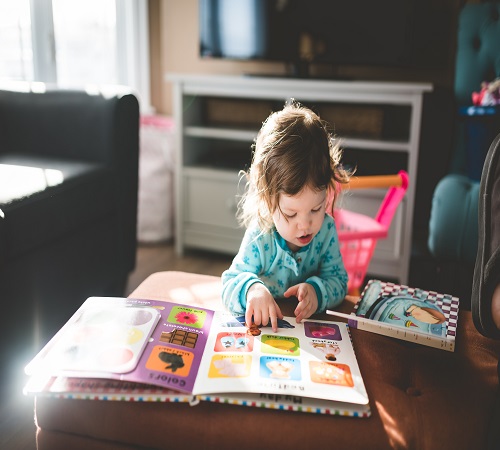
Homeschooling for children can be self-paced and stress-free.
Why do people homeschool their children?
The US Census revealed that the number of parents who homeschool their children increased by 63% in 2020-2021. Data finds that some of the parents who had homeschooled their children during the pandemic are considering continuing it even after the reopening of schools.
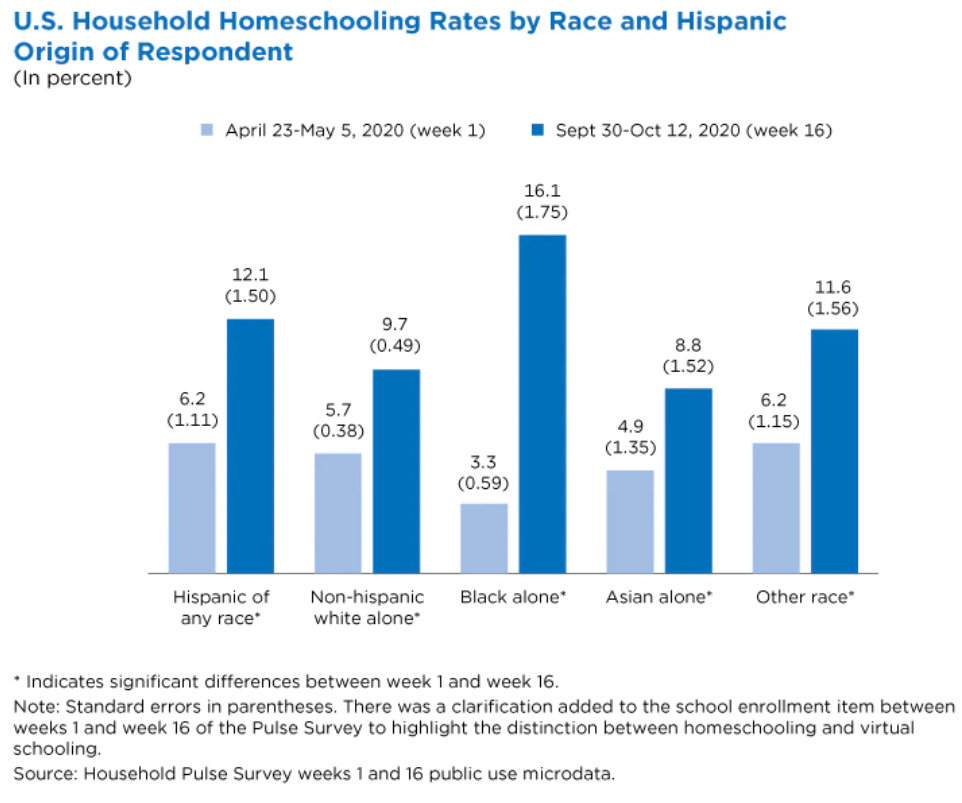
Source: US Census
The trend shows that not all parents are happy with their children’s schooling. Be it sex education, SEL education, or any other part of the general curriculum, parents want to take control of what their children learn in their lives, including knowledge about their faith and history.
Homeschooling parents keep their children out of typical school life for multiple reasons, some of which are:
- Disliking the school curriculum and teaching methods
- Financial burden of expensive schools
- A desire to spend more time with kids and get travel flexibility too
- Keeping kids away from bullying or discrimination at school
- Religious reasons
What homeschool programs can parents use to teach children?
Homeschool families consider the world to be their children’s school and life to be their curriculum.

Parents can also give social values to their children effectively
Homeschooling parents need to be aware of the state laws before they can start teaching their children at home. They can consider what kind of curriculum they want for their children. For example, biblical learning like Bob Jones homeschool curriculum or a free, online one like Easy-Peasy curriculum.
Parents can find homeschool coops to interact with families with similar homeschool interests and take help from one another.
Some parents can teach their children, and others can hire dedicated homeschool educators. Families can either purchase or create a homeschool curriculum through different resources. Some agencies and online platforms act as resource pools having the courses and curriculum for grades ranging from kindergarten to high school.
Ed-tech companies also play a pivotal role in homeschooling children from remote areas. Online Ed-tech platforms like Study.com help provide tutors, online courses, and video lessons that help in distance learning.
Are Homeschooled children less social?
Kirk Cameron, through ‘Homeschool awakening,’ advocates that homeschooling is not just reasonable but also healthy for children. He believes that there is nothing a child cannot learn at home in the presence of their family.
Pro-homeschool parents feel that their children are not learning in a restricted campus environment, as it is in everyday schools, but in a real-world environment.

Homeschool co-ops are becoming popular and help students to socialize
They interact with members of their families, neighbors, friends, and other people, and the question of becoming antisocial is practically irrelevant to them.
Learning Pods
Learning pods are like micro-schools. Homeschool families create small groups of their own to share learning experiences and cross-teach or hire a facilitator to teach their students the same subjects. It relieves the parents of the burden of teaching all subjects to their children, increases their socialization time with same-age groups, and helps kids learn from subject experts.
Is Homeschooling the Best for Our child?
When it comes to children, everyone wants to have the best school, the best food, and the best life for them. This is a natural parental desire. Parents are beginning to realize what they want their children to learn and not what the government-recommended syllabus is.
On the other hand, many parents feel that what the public schools teach is suitable for their children and their guidance. They do not have the time or the influence to take the entire school education of their children into their own hands. These parents believe that if they did well after learning in school, their children would too.
Which way of schooling should be given depends on multiple factors. As we said before, there is not just one way to education!
The post What is Homeschooling and other FAQs appeared first on Test.Evelyn.
]]>The post What is SEL (Social Emotional Learning) and How Does it Help Students? appeared first on Test.Evelyn.
]]>Social emotional learning provides a foundation for good, long-term benefits on kids, adults, and communities by teaching effective problem-solving, self-discipline, impulse control, emotion regulation, and more. This is significant since people do not come into this world knowing how to regulate their emotions, solve problems, or interact with others. Pupils must acquire these talents, and schools can assist them in doing so. It is also worth noting that some pupils may require individualized support in order to properly benefit from social emotional learning.
What is Social Emotional Learning?
Social emotional learning (SEL) is a teaching strategy that teaches students of all ages how to better understand their emotions, feel them fully, and show empathy for others. These taught behaviors are then used to assist students in making positive, responsible decisions, establishing frameworks for achieving their objectives, and forming positive relationships with others.
Creating learning environments that create healthy interactions between students and teachers leads to enhanced communication skills, motivation, and exam results. SEL, on the other hand, is not just vital in the classroom. It is a lifelong practice that extends into adulthood. Effective collaboration and communication need the development of SEL skills and abilities.
Components of Social Emotional Learning
Social emotional learning involves five core components that can be applied in the classroom, at home, and in students’ communities, according to the Collaborative for Academic, Social, and Emotional Learning (CASEL). It is an organization dedicated to students and educators to help achieve positive outcomes for PreK-12 students. These are the five core competencies:
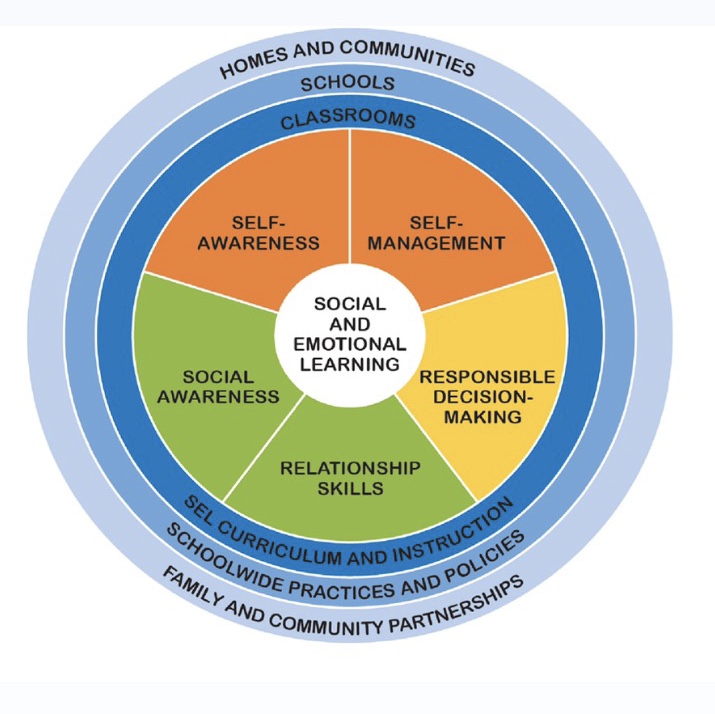
- Self-Awareness
Students learn to recognize their own strengths and limitations, as well as the impact of their actions on others. Coaching and simulation sessions are an example of this in practice, where students notice how various acts influence others so that they can learn how to perceive their own feelings as well as what other people are feeling. - Self-Management
Students learn to control their emotions and actions, which includes stress and time management, motivation, and academic/personal goal setting, all of which are critical skills for youngsters as they grow and need to manage their own schedules and businesses. Older, more experienced students can teach kids about these types of actions.By pairing students in a mentor-mentee relationship, the mentee will learn about vital academic skills as well as how to improve self-esteem and confidence, while the mentor will offer skills learned from experience. This will help the mentee navigate common challenges like imposter syndrome and insecurity. - Social Awareness
Students learn to detect other people’s emotions, grasp social behavioral norms, and empathize with people from various origins and cultures. Introduction and inclusion exercises, in which participants share their favorite interests, fascinating facts about themselves, and so on, are an example of an activity that strengthens this skill. - Relationship Skills
Students learn how to build healthy relationships and communicate clearly with one another and in groups. Participating in a range of activities, such as team sports, games, and group projects, can help them practice this. Active listening, team building, and conflict resolution are all abilities that are useful both inside and beyond the classroom. - Responsible Decision-Making
When it comes to behavior and speech, students learn how to make their own autonomous decisions, whether personal or academic. Students will be able to make polite and well-thought-out judgments by considering societal norms and differences, potential consequences, and safety issues. Students can solve qualitative problems in a number of ways to learn diverse strategies and ways of thinking. This is one way to actively practice responsible decision-making.
Social Emotional Learning Activities
Many schools have begun to teach students how to deal with emotions, make objectives, and get along with others. Parents can also assist their youngster practice these abilities at home.
Here are a few socio-emotional learning activities to assist children regulate emotions and improve social skills while also having fun. These low-tech social-emotional learning activities are really effective. And they are all made to fit into one’s regular routine.
-
Starfish and Tornadoes
The idea is to teach kids how to recognize how much energy they have inside. When they realize they have too much energy, they can either apply self-calming techniques or seek help from a trustworthy adult.
Playing Instructions: Draw a thermometer on a piece of paper. At the bottom, draw a starfish, and at the top, draw a tornado. Inquire whether the youngster is quiet and tranquil, like a starfish, or frantic and agitated, like a tornado. When a youngster is very energetic, mentors can discuss with him or her ways to make him or her feel more like a starfish. For instance, bouncing a ball can assist in the release of some of that energy.Mentors can help the mentee define their energy levels by playing this game at different times of the day.
Points to remember: Self-awareness can aid in the development of a skill called self-regulation in children. It is all about managing one’s own energy when it comes to self-regulation. It aids children in controlling their emotions and body movements in stressful situations. Moreover, it aids their ability to pay attention and learn.
-
Turtle Time
The idea is to assist children in developing their ability to see what is happening around them. Picking up on social signs allows children to get their needs satisfied while also understanding the viewpoints of others.
Playing Instructions: When the mentor and mentee arrive at the playground or other location, they must look around slowly and exaggeratedly like a turtle. They should take turns describing what they see: “All the swings have been taken.” “For the slide, there is a short line.”
The mentor must assist the child in making the connection between his or her observations and the behavior choices he or she makes.Points to remember: Mentors are not required to dress up as turtles. To aid their vision, they may use their pretend binoculars or a special pair of spectacles. A mentor could also participate in a game of “I spy with my little eye.” The mentor and the youngster can take turns observing and reporting social encounters until the other participant finds what they are looking for.
-
“Who am I right now?”
The idea is to help the child develop self-awareness and identify his or her strengths. These abilities can also aid in decision-making and understanding others’ viewpoints.
Playing instructions: The mentor can get some index cards and start playing. Draw drawings of the child doing something positive, such as being a good helper or a good teacher, with them. Consider what additional cards the youngster could create.
Mentors can comment on their child’s positive behaviors to encourage them to come up with ideas: “You just offered to teach your sister a nursery rhyme.” Let us talk about what kind of person you are right now for a second.”
Points to remember: Mentors must remember that many families attempt to teach social-emotional skills by criticizing undesirable behavior. But they must not forget to praise the youngster when he or she does something good. Praise for good behavior frequently leads to more of the same.
Mentors can also purchase these cards or they can find templates online. Children, on the other hand, could enjoy crafting their own cards.
-
Let us Make a Deal
The idea is to assist children in learning to compromise. Practicing how to perceive things from someone else’s point of view will assist the youngster consider the needs of others.
Playing instructions: When the mentor and the youngster cannot agree, the mentor can sing these words to the tune of ‘This Old Man.’ “You want this. That is something I would want. How can we both get what we want?” Then come up with a few ideas and pick the best one for now.
Points to remember: The child may have problems letting go of a notion. Mentors can combine their efforts to select the best of the runner-up ideas and place them in a unique container.
-
Take turns Taking Charge
The idea is to aid in the development of self-awareness, decision-making, and seeing things from other people’s perspectives.
Playing instructions: Mentors can start a custom where they and the child take turns preparing a fun night once a week. They might choose a topic, such as what meal to eat, what movie to watch, or what game to play. Alternatively, they can leave everything open and let the person in control choose.
Points to remember: Making a chart with categories like “Waiting my turn” and “Staying cool when doing something I do not like” might be helpful. The mentor can have everyone rate themselves after the exercise. Then they discuss what has been working well and what they would like to improve.
The Importance of SEL
In today’s ever-diversifying world, the classroom is frequently the first location where children are exposed to people from a variety of backgrounds, hold differing ideas, and possess unique abilities.
Social emotional learning aims to help students — both children and adults — better understand their thoughts and emotions, become more self-aware, and develop more empathy for others in their community and the world around them. Mentors must do this in order to account for these differences and help put all students on an equal footing to succeed.
Students can become better, more productive, self-conscious, and socially aware citizens outside the classroom if these attributes are developed in the classroom.
Image Sources: Daycare vector created by vectorjuice at Freepik
For more information on social emotional learning, visit our blog.
Create. Engage. Inspire.
The post What is SEL (Social Emotional Learning) and How Does it Help Students? appeared first on Test.Evelyn.
]]>The post Adult Learning Theory: Its Need and Impact appeared first on Test.Evelyn.
]]>Adult learners are students who are over the age of 18 and do not begin postsecondary education the same year they graduate from high school. One may adapt business training programs to take advantage of attributes adult learners possess. This could include their eagerness to learn relevant material, their desire to connect with experience, and their urge to develop themselves, all by understanding how adults learn.
Adult education is very popular in the United States. Various colleges and institutions frequently refer to these students as “non-traditional students”. Most adults pursue education for a variety of reasons, including self-improvement, the necessity to learn specific skills, and the desire to better career prospects.
If an adult is ready to continue their education, they must first comprehend how they learn differently. Adult Education Theories and practices assist millions of adult students in achieving success as they continue their growth and education. In this article, readers will learn about the ideas underpinning Adult Learning Theory and how it can help one achieve their higher education goals.
What is Adult Learning Theory?
Corporate training circles frequently use the term “Adult Learning Theory”.
First, let us debunk a myth: There is no SINGLE Adult Learning Theory. There are several popular hypotheses that describe how adults learn from various perspectives. It is a concept or study of how adults learn and how it differs from how children learn. Additionally, its main goal is to discover the learning styles that are most appropriate for adults.
Andragogy, action learning, experiential learning, self-directed learning, and transformational learning are only a few examples of adult learning theories. All of these theories aim at assisting one in creating effective learning experiences for adult learners.
Components of Adult Learning Theories
Adult Learning Theory is a branch of study that focuses on figuring out how to make ‘training’ something adults desire to undertake and how to make it effective. To put it simply, if you want the finest outcomes, you must integrate four vital components in your training and development for adults.
Motivation
When creating training content, the first constituent educators must know about is motivation. Adult learners will not learn if they do not have a strong desire to do so. That’s all there is to it. There are a variety of approaches that can be used to elicit a sense of motivation. Here are a few examples:
- Firstly, educators must clearly define how the learning curriculum will have a concrete and immediate impact on the learner’s job. When creating learning content, one should not leave it up to the student to figure out why the information is being offered; instead, one must explain to them why they are supposed to study the material up front.
- It is necessary to establish learning chances that will allow the learner to improve personally. In a corporate setting, for instance, learners are more interested in the process if they believe it will help them get a promotion or progress their career in some way.
- Extrinsic competitiveness can encourage learners. This is why learning that incorporates gamification and social aspects is becoming increasingly popular right now.
Essentially, it boils down to a simple principle: Adults will desire to learn when they believe it would benefit or add value to their life. That is what motivates people.
Reinforcement
Reinforcement can either be positive or negative. Positive reinforcement in Adult Learning Theory refers to providing something that fosters excellent conduct. For instance, one can predicate development-based learning on the premise that learning a new skill could lead to a pay raise.
Negative reinforcement, on the other hand, entails taking actions to correct negative behavior, such as safety training to reduce workplace errors.
Retention
When creating corporate learning material, one must consider not just if the learner will absorb the material at first, but also if he or she will retain it. One should create courses that are tailored to the target audience’s needs. Educators can deploy these courses utilizing the most effective approaches that encourage participation.
Interactivity, quizzes throughout the learning modules, and the opportunity to instantly put what has been learned into practice are all fantastic strategies to enhance the retention of material.
For instance, after each piece of information is provided, educators can invite participants to take a quick quiz to see how much they have retained. In many cases, simply informing learners that the instructor will be assessing them on the content is a good retention tool in and of itself. Case studies and scenarios are also quite helpful. These are all simple things to incorporate into learning, thanks to the tools available with a learning management system.
Transference
This stage of Adult Learning Theory is when the learners can put what they have learned into practice in a real-world setting.
When the learners reach this stage, the educator will know if the information was effective and how well they can interpret and apply it. Moreover, transference is frequently monitored in a corporate environment against a set of preset standards in order to coincide with overall performance and organizational objectives.
Educators can consider incorporating social elements into the process to increase transference inside the corporate learning environment.
Different Types of Learning Theories
When it comes to adult learners, there are numerous learning theories, each with its own set of applications and methodologies. Depending on their primary learning style, different ideas and practices will resonate better with adult learners. The following are some of the most popular Adult Learning Theories:
Andragogy
Andragogy, coined by Malcolm Knowles in 1968, is defined as “the art and science of assisting adults in learning”. It is opposed to pedagogy, which is defined as the “art and science of assisting children in learning”. Adult learners vary from children in numerous respects, according to Knowles and the andragogy theory.
The andragogical approach is based on four principles:
- Adults learn more effectively through experience (even if they make mistakes).
- They prefer a practical approach to learning and must be able to apply what they have learned to address a specific problem.
- Adults are most interested in learning things that are immediately applicable to their lives.
- They must participate in the design and evaluation of their own education.
Case Study: Farm Bureau, a rural service organization, employs an andragogic strategy to train volunteer leaders and Board of Director candidates. Through mutual agreement with each student, the training programme diagnoses learning needs and establishes goals. Participants must actively participate in activities, debate the practical worth of their learning. Moreover, they must apply what they have learned to their leadership roles.
Transformational Learning
Transformative learning theory, developed by Jack Mezirow in 1978, asserts that all learners make meaning of the world around them by employing a variety of assumptions, predictions, and perceptions.
- Through a process of problem-solving, procedural tasks, and self-reflection, transformational learning seeks to help learners modify — or transform — their existing frames of reference.
- Secondly, individuals experience learning transformations when educators confront them with a “disorienting predicament”. This causes them to question their previous beliefs and critically reflect on what has happened.
- It can change an individual’s viewpoint on how to behave, interact, or solve problems. Hence, educators often regard it as one of the “stickiest” types of learning.
Case Study: Workforce Council financed a group of 12 worker-learners to attend an Australian university’s Graduate Certificate in Executive Leadership program. Three teams were formed from the group. To impact improvements in their organizational processes and systems, each team engaged in transformational learning.
Learning materials were available on the university’s website. Face-to-face consultations on the job site and regular emails were also part of the training program. All the learning lessons were designed to foster a critical and reflective thinking culture. This would help shift existing viewpoints and habits. Additionally, it allowed the students to break free from their “habits of thinking.”
Action Learning
Action learning, coined by Reg Revans in 1982, is a problem-solving strategy. It entails taking action and then reflecting on the outcomes.
- It aims to improve problem-solving processes while also simplifying the solutions that follow.
- This method approaches challenges by first asking questions to define the issue. Following this, they reflect and identify potential solutions, and finally take action.
- Questions boost learning outcomes by fostering group dialogue and cohesion, as well as developing inventive and systematic thinking.
- The ability to take action on the problem the group is working on is a necessity for action learning. The group loses its vitality, inventiveness, and passion if learners merely give recommendations.
- Lastly, a coach should be there to assist the group in learning and working more efficiently.

Case Study: In 1990, Florida Power and Light (FPL), a power utility company, was the first company in the United States to receive the Deming Prize for Quality. But before that, it had faced problems with its power producing systems and could not effectively convert energy to electricity. This issue had been present for quite some time.
Eventually, they gathered a team of people from various FPL departments to rectify the problem. The team members improved their problem-solving and teamwork skills by working together. As a result, they were able to identify and resolve the cause of the problem.
Experiential Learning
Experiential learning was developed in the 1970s by David Kolb. It is based on the work of John Dewey, Kurt Lewin, and Jean Piaget. This Adult Learning Theory involves a hands-on approach that places the learner at the center of the learning process.
- Active involvement is very important. However, learning occurs only when the individual reflects on what they are doing, according to the theory.
- Secondly, continued participation, reflection on practice, interpretation of the experience, and application of knowledge obtained from experience are the four pillars of experiential learning.
Case Study: Capital One teamed up with the College of St. Bernard/St. John’s University to mentor students enrolled in an advanced global strategy course. Students faced real-world business difficulties and worked to address them by actively participating in the research and hands-on work processes. Mentors solely offered expert assistance and counsel.
Self-Directed Learning (SDL)
Self-Directed Learning is based on Malcolm Knowles’ Adult Learning Theory, with self-management elements added by D.R. Garrison in 1997.
- Individuals evaluate learning requirements, develop learning goals, find resources, implement a learning plan, and analyze their own results using Self-Directed Learning.
- Professors, mentors, resources, and peers frequently aid SDL.
- It is necessary for the learner to have access to and pick relevant learning.
- All learning decisions are under the control of the learner.
Case Study: Tahiya Alam, a University of Manchester Junior e-learning Support Specialist, needed to publish the findings of a scientific research study online. Ms. Alam met with e-learning colleagues and investigated her choices once she discovered her learning requirements. She upskilled herself using Self-Directed Learning principles and was able to create interesting and robust e-learning modules.
For a more effective training program, combine Science with Adult Learning Theory
When knowledge is relevant and beneficial to adults, they remember it better. As a result, it is critical to understand why one is studying about a particular theme. Adults are frequently better at generating answers to real-life problems than they are at memorizing knowledge because they have a mature attitude. Adult learning is built on the foundations of problem-solving, rapid application, and performance-based activities.
Understanding diverse adult learning theories and practices might help an adult learner be even more successful as he or she prepares to seek higher education. Recognizing one’s learning style, knowing adult learners’ strengths and limitations, and preparing for their specific strengths can all assist an adult learner succeed.
Image Sources: Shutterstock and Unsplash
For more information on Adult Learning Theory, visit our blog.
Create. Engage. Inspire.
The post Adult Learning Theory: Its Need and Impact appeared first on Test.Evelyn.
]]>The post Doodling: An Innovative and Effective Way of Teaching appeared first on Test.Evelyn.
]]>It turns out that both pupils and teachers are unaware of the educational benefits that doodling can provide. It does not have to be a hindrance to learning.
Teachers and parents always view doodling as a frivolous activity that diverts attention from the learning process. Doodling, however, stimulates creativity, intellectual engagement, and attention retention in pupils. Continue reading to learn the role of doodling as an effective learning tool and how it can help you study more effectively.
Advantages of Doodling as an Effective Learning Tool
To begin with, doodling can keep the brain engaged when there is not enough stimulation to keep it interested. Consider doodling as a way to fill in the blanks in your stimulation. Yes, it could be a student’s approach of dealing with uninteresting material. However, it does not imply that the learner is tuning out. In fact, studies demonstrate that doodlers remember material better than non-doodlers.
However, there is another approach to use doodling as an effective learning tool to encourage children to become more active learners.
Educators can encourage pupils to doodle or sketch what they are learning
We already know that the more senses we use, the more we learn. For instance, if students are studying photosynthesis, they may take notes to keep the material verbal. They could, however, make diagrams of the procedure. This would aid their verbal and visual learning of the knowledge by allowing them to listen to what the teacher is saying and create drawings of the process. The drawing process would also aid in their assimilation of the knowledge, resulting in effective learning.
• Encourages the Use of Imagination
The very first benefit of using doodling as an effective learning tool is that it can help students who struggle with verbal reasoning and text-based classes come up with new ideas and kick-start the creative process. It is a low-risk practice that allows pupils to experiment with new material without having to worry about being judged or failing.
Doodling avoids the mistake of critiquing as you go, which every poet or writer knows is the easiest way to stifle the creative process. Students who doodle recruit deeper brain connections than those who only use words, resulting in a stronger bond with the content.
• Maintains Brain Activity
Even the best teachers will not be able to keep all of their students’ attention at all times. Individualized education has recently attracted a lot of attention since varied presentations appeal to various students. Doodling can keep the mind active and on task for kids who are not engaged by a lesson. It also allows doodlers to customize the session’s meaning.
When the student does not stimulate the brain enough, it creates its own content, diverting thoughts into fantasy. Doodling helps to keep the mind focused on the present moment and the activity at hand.
• Additional Senses are Recruited
Doodling counts as a visual learning tool, and educators have long recognized the benefits of multimodal learning. For instance, it can aid in the rapid and concise capture of extremely complex and subtle information. Drawing an animation of mitosis, for example, might be more beneficial to a biology student than reading about it for hours.
Similarly, studies demonstrate that the more senses used in learning, the better the concept is remembered. Doodling helps to engage the brain by activating the senses of sight and sound. Although doodling still has a negative reputation in schools, attitudes are changing. The scientific evidence in favor of doodling in the classroom is substantial. It has numerous benefits ranging from improved memory to increased attention span.
• Improves the Recollection of Memories
Numerous studies show that doodling boosts the memory of the subject a student is learning while drawing. This is an additional advantage of using doodling as an effective learning tool. The University of Plymouth, for instance, had participants listen to a long, tedious voicemail message detailing the names of those attending a party. On an unanticipated memory quiz, the group told to doodle while listening remembered 29 percent more than the group that merely listened.
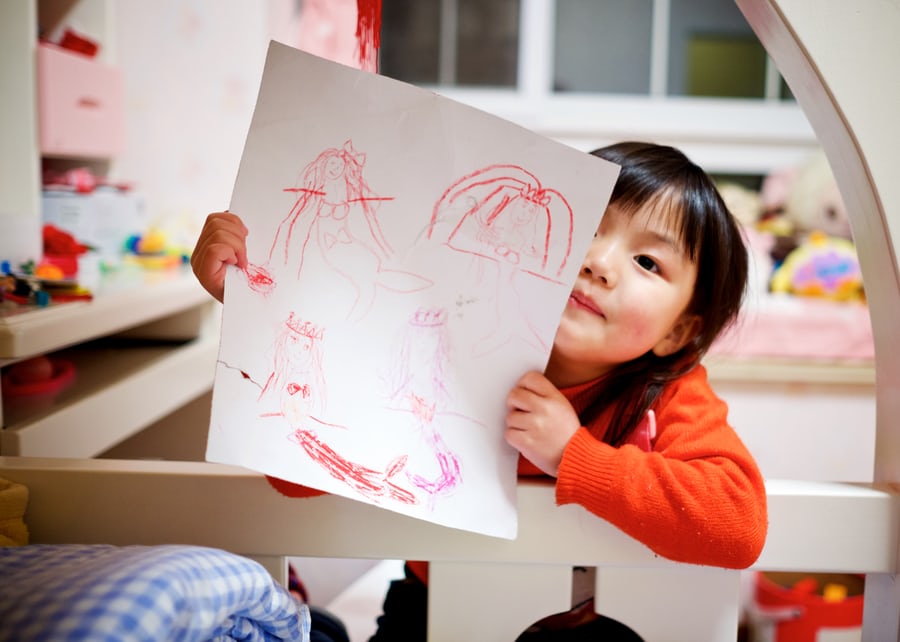
Academic Benefits of Doodling
The investigation is not through yet. As per a Huffington Post article, Jackie Andrade, a psychology professor at Plymouth University who researched doodlers, “Doodling uses the brain’s executive resources – processes that help us strategize, multi-task, and focus.”
While we are listening to a lecture or are on the phone, using drawings to engage our executive resources ensures that they do not wander off to ponder about the shopping list or our plans for the weekend. Encouraging pupils to doodle while taking notes may really help them remember more.
Jesse Prinz, a philosophy professor at City University of New York Graduate Center who examined doodling in the context of art study, discovered that the technique is best suited for oral learning, according to the same article. Doodling, he claims, allows people to be in a condition of “pure listening.” That appears to be knowledge that teachers should be aware of and employ.
Concluding Remarks
You will discover a flood of diaries and sketch pads in your neighborhood gift or bookshop that promise to help stressed-out individuals reconnect with their creative side. People are more overwhelmed than ever before in the modern world. There is a wealth of information and opportunities available. This abundance, on the other hand, might contribute to tension and a lack of focus.
Doodling, according to research, can help us relax, process information, and solve problems creatively. Serious doodling affects your physical and neurological states in measurable ways.
This brings to mind a phrase from Pablo Picasso: “All children are artists. The issue is how to stay that way as we get older.” Doodling is one technique for everyone, whether or not they are artistically inclined, to stay visual thinkers. A blank sheet can act as an extension of the brain’s playing field. It allows people to rewrite and develop their creative ideas and thoughts.
Image Sources: Shutterstock and Unsplash
For more information on doodling as an effective learning tool, visit our blog.
Create. Engage. Inspire.
The post Doodling: An Innovative and Effective Way of Teaching appeared first on Test.Evelyn.
]]>The post Pedagogical Practices To Suit Various Learning Styles appeared first on Test.Evelyn.
]]>To Begin, what exactly are Learning Styles?
Almost all educators would be familiar with the concept that everyone has a preferred method of absorbing knowledge. Students will learn more easily if an educator teaches them in their chosen style. This concept has been around since the 1970s and well-intentioned teachers and dedicated students who want to learn effectively still carry it forward. It is no wonder that everyone wants to learn faster and more efficiently.
Unfortunately, there is no convincing proof that there are different learning styles.
In truth, the best evidence points in the opposite direction. The notion that people perform best when trained in a way that corresponds to their unique “learning style” — Auditory, Kinesthetic, Visual, or a combination of the three — is generally dismissed. According to multiple studies, learners do not profit from their own learning style. Teachers and students have different ideas about what learning styles work best for them, and we have no insight into how much we learn from various approaches.
The Myth of Learning Styles
Every student will differ in terms of skill, interest, and prior experience, but not in terms of learning styles. According to research, when people have a favorite style of presentation, it is typically for a task or topic in which they have a high level of talent and already feel good.
One may think they are an Auditory learner if they are good at music, or a Visual learner if they are creative. While one can prefer a certain method of learning, there is no proof that it can help them learn more effectively.
The myth of learning styles appears to be as widespread as ever. The learning styles paradigm can also be harmful to education in a variety of ways, according to various previous studies. Even though all students will profit from learning by multiple methods, educators expend time and money tailoring lessons to specific learning styles for different students. Even if it will not help them excel, students study in ways that correspond to their perceived learning style.
However, it is not obvious why educators want to believe in them. It is possible that the theory is heavily reinforced during teacher training; it is also possible that teachers are dealing with their students in the same way that their teachers interacted with them. Alternatively, it is possible that efforts to dispel the theory have become close to zero, struggling to reach educators.
Best Teaching Practices to Suit Various Learning Styles
Educators are well aware that no two students are alike, and that there is a wide range of learning styles. As a result, an educator’s teaching style may have a significant effect on a student’s ability to understand and comprehend. This is why teachers must be familiar with a variety of learning styles.
Is Shawn’s preferred method of learning pictures and graphics? It is possible that he is a Visual learner.
Is it true that Kevin learns best by attending seminars, asking questions, and engaging in group discussions? He may be an Auditory learner.
Is it more convenient for Jack and Katie to collect knowledge by reading, taking notes, and writing reports or essays? They may be Reading/Writing learners.
What about Joel, for instance? She is very hands-on and seems to love disassembling and reassembling items in order to learn by doing. It is possible she is a Kinesthetic learner.
That is one common breakdown of the learning styles continuum, but it is by no means the only one. Most teaching types fall into one of two categories: Teacher-Centered or Student-Centered. Here is a breakdown of the differences between teacher-centered and student-centered instruction:
• Teacher-Centered Approach:
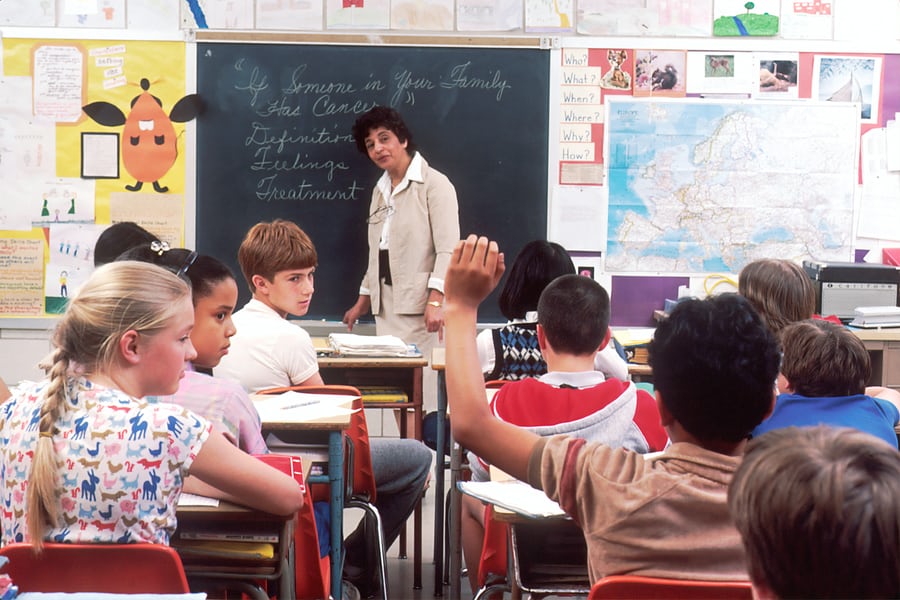
The Teacher-Centered approach to education is a teaching style that views the teacher as the authority in charge of imparting information to students through lectures or direct instruction. Students are passive actors or “empty vessels” in this approach (also known as “sage on the stage”). They listen and absorb information.
This Teacher-Centered approach to teaching is the most common, but it is not always the strongest. And, as educators learn more about how to involve students of all learning styles, the teacher-centered approach is becoming less common.
• Student-Centered Approach:
The Student-Centered approach is a teaching style that fosters greater harmony between the instructor and the student by allowing both to participate in the learning process. The instructor is often referred to as the “guide on the side” in this strategy.
While the teacher retains authority, he or she is more likely to serve as a facilitator, coaching and assisting students in their studies. This method promotes student autonomy while also allowing students to engage with one another. Under the student-centered approach to teaching, there are a few styles to consider:
• Approach Based on Inquisitiveness
Students lead the way and receive instruction from their teachers in this Student-Centered learning style. Moreover, this approach promotes flexibility, autonomy, and hands-on learning.
• Approach Based on Co-operation
Cooperative learning is a Student-Centered method of instruction that emphasizes group work and social development. The cooperative model, like the inquiry-based style, promotes individuality and hands-on learning, but places a premium on peer-to-peer collaboration and culture.
Many teaching resources categorize the best teaching styles into the five key categories mentioned below:
1) Authoritative or Lecturer Style
The Authoritative teaching style is based on the conventional Teacher-Centered approach. This includes lecture sessions and one-way presentations. Students are expected to pay attention, process information, take down notes, and ask questions in this approach (also known as the “chalk and chat” style).
2) Coach or Demonstrator Style
The Demonstrator style, which is common in math, science, and music, emphasizes “showing” rather than “telling,” with teachers more likely to back up their points with examples, tests, demos, or multimedia presentations.
3) Activity Style or Facilitator
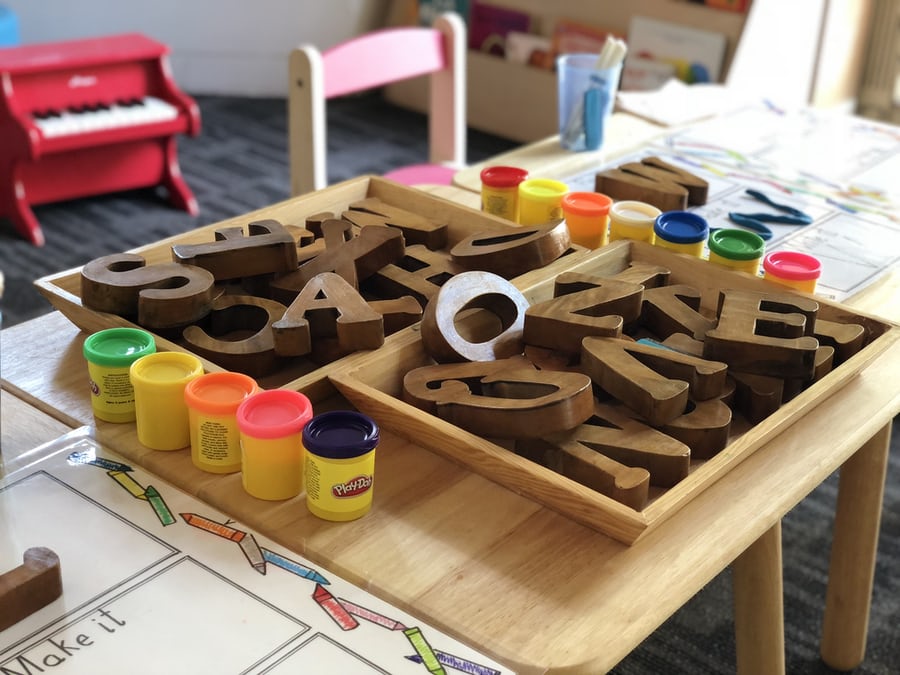
The facilitator/teacher is focused on encouraging students to learn for themselves and assisting them in developing critical thinking and learning skills. It is a Student-Centered approach that entails designing learning plans. It includes classes that enable students to explore and discover course material in unique and innovative ways.
4) Group or Delegator Style
The Delegator style of teaching is well-suited for curricula that include or emphasize group activities, as it places much of the responsibility for learning on the students, who are motivated to collaborate on projects related to the lesson themes (think science labs, debates, etc.). The instructor is an involved spectator in this style, guiding students in the right direction.
5) Blended or Hybrid Style
The Hybrid approach combines elements of the above-mentioned models, often blending the teacher’s personality and interests with the students’. While this method is considered inclusive because it allows teachers to adapt their teaching styles to the needs of their students within the subject matter, some educators claim it risks diluting the learning process by putting less emphasis on in-depth research than a single, concentrated approach.
Final Thoughts
The aim of the discourse above is not to categorize the organic practice of classroom teaching into tidy categories. We do not wish to label educators as one “type” of teacher or another, but rather to investigate various methodologies in order to improve our collective understanding of the teaching experience.
It all comes down to getting to know the students and using the respective skills and intuition to figure out the best ways to involve individual students and whole classes with the curriculum. What works for one student or community may or may not work for another.
That is why, in order to be the most successful instructor possible, educators must have a clear understanding of the various student learning styles. They must have a solid grasp of the various teaching styles and strategies available.
Image Sources: Shutterstock and Unsplash
For more information on different teaching practices, visit our blog.
Create. Engage. Inspire.
The post Pedagogical Practices To Suit Various Learning Styles appeared first on Test.Evelyn.
]]>The post Online Teaching V/S Traditional Teaching appeared first on Test.Evelyn.
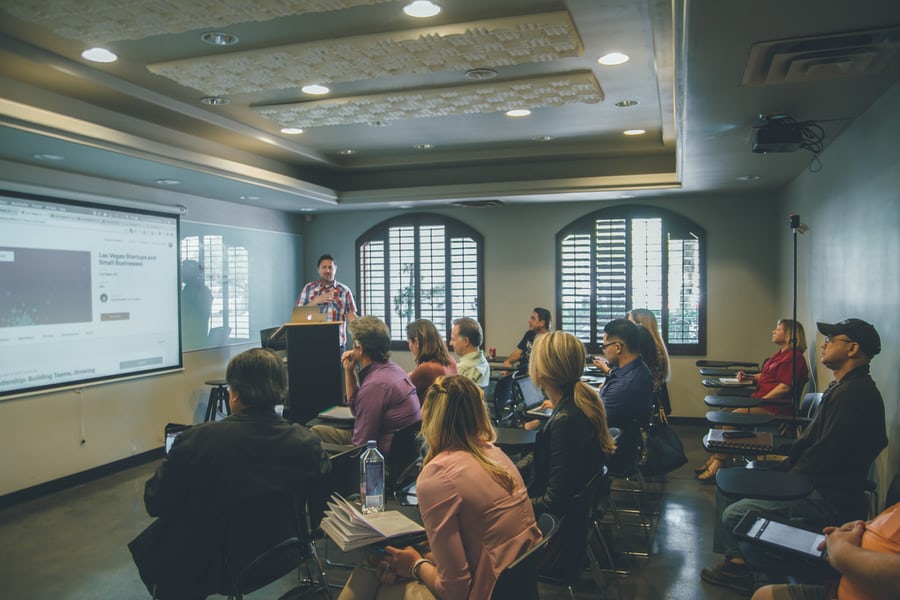
]]>Online teaching for overall learning has become exceedingly common in recent years, with an increasing number of institutes and businesses offering it. Despite the prevalence of online education, a sizable portion of the population actively avoids it, mostly due to misunderstanding. The aim of the online education model is to solve the drawbacks of conventional education while also offering additional benefits. Students in a typical teaching model listen to long lectures, take notes, and memorize information by rote.
In the classroom, this leaves little to no space for constructive participation. On the other hand, online education promotes classroom engagement and peer-to-peer communication. Students can communicate with their courseware and acquire information in a far more engaging manner now that numerous types of online study tools are accessible.
While the current choices are limitless, let us face it: not all of them are appropriate for all students. As a result, in this article, we will compare the benefits and drawbacks of online and conventional teaching so that each of you can choose the choice that best suits your needs.
Benefits of Online Teaching For Overall Learning
- Lessons are usually taught in small groups and on an individual basis. This strategy, which is becoming increasingly popular, allows the teacher to learn about their students’ strengths and weaknesses in order to maximize class time. This is a means for students to establish their own learning pace and discover a safe area to connect with the instructor openly and freely.
- Distance education gives you the freedom to attend classes whenever and wherever you desire. The schedule is adaptable, allowing students to build a personalized study plan that meets their specific needs. There is no reason to sacrifice anything due to a lack of time.
- Online learning systems have a large range of courses to choose from. There is a course for everyone, from university to high school. Students can even earn a degree without ever visiting a university. Online teaching for overall learning also has a wide range of approaches to fulfill the demands of all types of students.
- In traditional education, every lesson requires the student to be present in the classroom. As a result, individuals must commute from one location to another, which takes time and money.
- There is no need to waste time commuting. Students can create a relaxing environment in their homes where they can concentrate. A classroom is no longer necessary. It is up to us to build the ideal environment for studying quietly and without distractions.
- The pedagogic resources for the lessons are accessible at any time and from any location. They can be accessed at any time, thanks to the digital format. These costs are eliminated with online education, and there is no need to waste resources.
Drawbacks Of Online Teaching
- It is insufficient to have a notebook and a pencil case on hand. A computer with a webcam, headphones (ideally), and a good internet connection are all students will need.
- In online teaching, there are more stimuli that can cause distractions: this can happen if the study location is inadequate. The student’s education is in his or her hands, thus it is critical to have a good area away from any potential distractions. The virtual environment is insufficient to keep the student’s entire concentration.
- Some students struggle to find time to study without a predefined schedule. Although self-discipline can be taught, some students are born with it. Online teaching for overall learning necessitates a compromise with the tasks.
- Not every subject can be taught online. A few subjects, primarily those requiring practice, are better learned in person. Nevertheless, there is a way to mix the two for the best outcome.
Online teaching for overall learning is a cost-effective and underappreciated option that allows students to study at their own speed. It also allows you to balance your studies and personal life. All of this comes from a single commodity: a house. Without sacrificing your education, you can learn while traveling throughout the world.
Furthermore, it saves you both time and money. There is no need to pay for transportation, the courses are generally more economical, and there are no geographical constraints.
Benefits Of Traditional Or Conventional Teaching
- Conventional education allows for group projects and student contact in general. As a result, they can learn from one another and share their problems and uncertainties. These social links can aid in the generation of new ideas and the stimulation of creativity.
- Traditional schooling can help students feel less lonely by instilling a sense of sociability and togetherness. The student may feel less alone in their academic struggles and may gain confidence as a result.
- Pupils who struggle with self-discipline appreciate a study plan that is both reliable and simple to follow. Traditional education requires students to attend class and study when necessary.
Drawbacks Of Traditional Or Conventional Teaching
- Traditional education’s pedagogical formats are more constrained. Pictures, movies, and forums are not always available 24 hours a day, seven days a week. This feature may impede learning and make it difficult to stick to a study schedule.
- There is no way to design a personal calendar that allows you to balance your education with your personal or professional life.
- It is difficult for a teacher to create a personalized study schedule that meets the needs of each student in the class.
- As previously said, commuting is an economic cost. Time is also a consideration if the classroom is a long distance away. You must decide whether or not the trip is worthwhile.
Traditional education dates back thousands of years. We do not advocate closing schools and colleges and simply providing online teaching for overall learning. The traditional technique provides advantages such as face-to-face connection, interpersonal skills development, and group learning, all of which are important abilities for a student’s overall growth.
However, it is impossible to deny that, when used properly, technology may play a significant role in education. Instead of substituting online education for traditional education, you can combine the two to provide a more effective, efficient, and engaging learning environment.
Parting Note
There is no right or wrong solution when it comes to online teaching for overall learning vs. traditional or conventional teaching. Much of it boils down to personal preference and understanding your preferred learning style. Regardless of your learning style or environment, any of these learning forms can be quite effective.
In the end, the decision is yours to make. It is critical to consider carefully what you require and desire from your schooling. Make a decision based on what is most essential to you.
Image Sources: Shutterstock and Unsplash
For more information on traditional and online teaching, visit our blog.
Create. Engage. Inspire.
The post Online Teaching V/S Traditional Teaching appeared first on Test.Evelyn.
]]>The post Universal Design for Learning: A Practical Guide appeared first on Test.Evelyn.
]]>Universal Design for Learning is based on three principles:
- Engagement (taking advantage of learners’ interests and motivations);
- Representation (giving content in a variety of formats);
- Action and expression (offering learners with a variety of ways to express themselves)
Universal Design for Learning is a paradigm for reducing physical and emotional barriers to learning and ensuring that all students have an equal opportunity to succeed. Educators provide information in a variety of ways with UDL. This includes lectures, dialogues, demonstrations, resources, and more. Automatic doors and closed captioning are two instances of how Universal Design for Learning has influenced daily living outside of the classroom.
What is Universal Design for Learning?
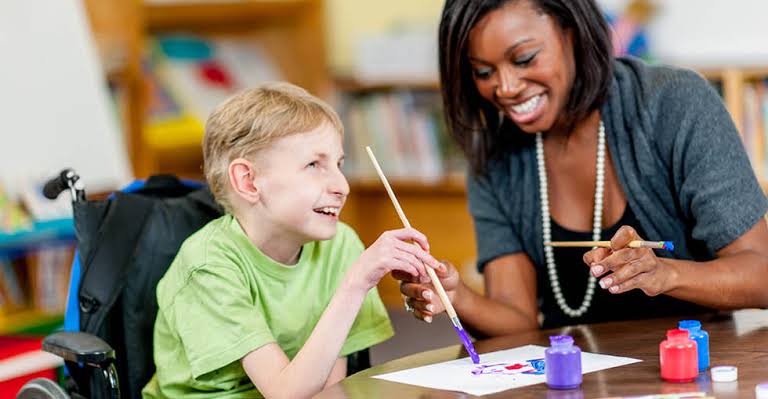
Universal Design for Learning is a style of thinking about teaching and learning that aims to provide all students with an equal chance at success. This method allows students to access, engage with, and demonstrate their knowledge in a variety of ways. This method of creating lesson plans benefits all children, but it may be particularly beneficial to children with learning and thinking disabilities.
The purpose of Universal Design for Learning is to eliminate any obstacles to education and provide all students with equal opportunities to succeed. It’s all about incorporating flexibility that may be tailored to each student’s unique skills and needs. That is why this approach is beneficial to all children.

This kind of instruction does not specifically cater to students who learn and think in different ways. However, it can be especially beneficial for the 1 in 5 children who suffer from these problems, even those who have not yet been formally identified. It can also be extremely beneficial to English language students.
Even if one has never heard of the term “Universal Design,” they’ve almost certainly seen examples of it in their daily life. Closed captioning on televisions, for instance, allows those with hearing problems to read the text of what is being said on screen. In the classroom, Universal Design for Learning offers the same level of adaptability. Teachers can effectively teach a diverse set of students by implementing UDL principles. They do so by allowing learners to acquire material in a variety of ways and allowing them to demonstrate their understanding in a range of methods.
Methodology of Universal Design for Learning
Rather than laying out a common approach for teaching everyone, Universal Design for Learning provides an adaptive framework for connecting each student to the learning process. All of this may seem intimidating, and the UDL hypothesis is undoubtedly ambitious. Thankfully, it has broken down its standards into three simple categories that instructors may work with. These are the following:
-
Representation:
Students must first be able to access the resources in order to participate in the learning process. The Universal Design for Learning suggests that information be made available in multiple formats. Textbooks, for one, rely heavily on images. Providing text, audio, video, and hands-on learning, on the other hand, allows all children to access the content in the manner that best suits their learning abilities.
Everyone would have a choice for whatever format they want to study in. Others may prefer a combination of formats to properly cement the concept.
-
Action and Expression:
According to Universal Design for Learning, children should be given multiple opportunities to interact with the material and demonstrate what they’ve learnt. Students can have the option of taking a pencil-and-paper examination, giving an oral presentation, or working on a group project, for instance.
-
Engagement:
UDL urges teachers to explore a variety of approaches to motivate their pupils. Teachers can maintain students’ interest by allowing them to make choices and offering them assignments that are relevant to their life.
Educators accomplish this mostly through connecting themes and activities to the interests of students and allowing them to infuse their excitement into projects. Gamification and clearly defined levels of achievement and challenges are also effective ways to engage pupils in their study. Making skill improvement feel like a game and providing opportunities for pupils to get up and walk around the classroom are two other typical tactics.
Effectiveness of Universal Design for Learning
Moving on, what are the main advantages of implementing Universal Design for Learning in a class, institution, or town?
-
Making Learning more Pertinent:
Universal Design for Learning actively targets students’ desire and drive to learn. It does this by making knowledge more relevant to students’ interests and daily activities. This can assist learners become more engaged in the learning process. At the same time, this also reinforces their knowledge and inspires them to continue studying throughout their lives.
-
Accessibility:
The flexibility and variety of UDL are its most major advantages. It is possible to alter activities and materials to account for everyone’s strengths and weaknesses. As a result, learning becomes more accessible and pleasant for everyone.
-
UDL Supports Various other Research-based Learning Methodologies:
Universal Design for Learning is not incompatible with other methodologies and practices. It incorporates and supports many modern research-based techniques to teaching and learning. This includes collaborative learning, blended learning, multisensory teaching, and student-centered learning, to mention a few.
-
Low Cost:
A UDL curriculum is designed from the start to match the needs of the entire class. This eliminates the need for costly, time-consuming, and after-the-fact curriculum changes.
-
Empowerment:
Universal Design for Learning empowers both teachers and students. It provides a framework for teachers to adapt material to the learner rather than forcing the learner to adapt to the material. This is a significant result since it allows the entire classroom to take control of the instructional format and, as a result, be more effective.
-
Taking Control over your Education:
UDL gives students the expertise and technologies they need to select the best learning options for themselves. There is little spoon feeding, and educators encourage pupils to take care of their own learning. This also allows children to evaluate their individual learning needs and figure out how they absorb information most effectively. This is critical for academic and professional success.
Concluding Remarks
Educators know that their learners have a diverse range of interests, backgrounds, and talents in any class. They can approach the subject in a variety of ways if they plan with this range in mind. Information is frequently delivered in multiple media with Universal Design for Learning, including text, audio, and hands-on activities.
Universal Design for Learning is a viable approach as it helps you foresee and plan for all the students from the beginning of the class. It can assist an educator in ensuring that all students, not just a select few, have access to and participate in learning. To acquire a more accurate picture of what students know, it urges teachers to give a variety of examination forms, such as oral presentations and group projects. It also seeks for new ways to keep students engaged.
Image Sources: Shutterstock and Unsplash
For more information on Universal Design for Learning, visit our blog.
Create. Engage. Inspire.
The post Universal Design for Learning: A Practical Guide appeared first on Test.Evelyn.
]]>