The post Challenges in Education System: PJ Caposey interview appeared first on Test.Evelyn.
]]>An accomplished educator and motivational speaker, PJ has written around eight books, and his work has been featured in several notable spaces, including Washington Post, NPR, CBS This Morning, ASCD, Edutopia, the Huffington Post, etc.
It was enlightening and an honor speaking with PJ Caposey about the challenges in education. PJ gave us a glimpse of the ways how we can change the education system for the good of the students.
You have often talked about teachers reaching out to children for effective learning; how do recent teaching restrictions and salary concerns affect teacher morale?
The issue with teacher morale is both overstated and understated. We are in a time with a dramatic teacher shortage, particularly in the United States.
You may like to read: Things That We Should Know About the Teacher Shortage in America
Many people point to teacher morale as both a result of that and a precursor to that, and both can be true. The issue is that this is not a new or pandemic-related issue.

The teacher shortage is a decades-old problem and not a new concern
Multiple studies show that a cliff like that happened in 2008 when teacher responses to questions like, ‘Hey, I like my job’, or ‘I’m very likely to recommend’; all of that kind of fell off a cliff in 2008. So, it’s been on this downward spiral for a while. When I say this is not a new problem, I mean, this is literally a decades-old problem.
Morale, to me, is almost always like a climate issue that’s dictated by culture. So, when someone says hey, the morale is low, my question is, so let’s define the culture. Are we recognizing, appreciating, honoring, Valuing, or collaborating with?
If you’re doing those things, even if morale is low, it’s most likely to bounce back, if you’re not doing those things, and the morale is low, then we’ve got a serious problem that we need to address.
Your book ‘Students Voice-from Invisible to Invaluable.’ discusses the importance of students’ voices in learning. Do you think post-covid, the student approach to learning has changed?
I think that people are changing. Students are reflective of society. And I think, in some ways, they are demanding a greater voice in their learning, and there are positives and negatives to that.
I believe, every school wants to create community contributors that can communicate and able to think critically. I think that’s pretty universal, whether in Country A, Country B, or whatever.
If we want to create people that will make society better and be able to think critically, there is such a thing as experts, and I believe most of our teachers and leaders have expertise.

Students’ voices in learning is important for effective learning
So, for lack of a better term, even though I don’t know if one exists like a democratic model of education, it might not be what’s best.
That doesn’t mean that students shouldn’t have some choice in how they demonstrate their knowledge or the things they may study to practice the skills we say they need to master.
One of my all-time best examples of this is- we had a foreign exchange student early in my career that came from Bosnia.
And we were discussing the antecedents and causes of war, and the teacher wanted the class to focus on the United States Civil War. This person, a foreign exchange student, came from a war-torn country that had just experienced war and wanted to practice and master all the same skills but with a different prompt.
In my view, if we don’t listen to student voices in a case like that, that’s almost educational malpractice. But, that said, those types of examples are only sometimes there, which means that if we want students to research a classic novel and they want to do it on our recent publication in a magazine, those are two different things.
So, there’s this ray spectrum between trying to maximize and emphasize students’ voices. And then also saying there’s a right and wrong way to do things.
What do you think is the biggest gap in classroom teaching today: access technology, teacher shortage, classroom environment, or any other?
The most significant gap still exists between what is being measured in terms of how schools are reported. Some countries are considered successful in terms of education and what is likely to put kids in the best position to succeed tomorrow. So, for instance, in our district, we are very fortunate to have a lot of students that go to Ivy League schools and go to the most prestigious schools.
We also have many students in our area that enter directly into the workforce, the military, or whatever. Our desire to remediate any possible gap so that our test scores would look great sometimes run counterintuitive to what we could best provide for kids.
The second gap for me is geography. To explain, we are a small rural school, which means that my students live 60 miles to the East. They would have a much, much larger variety of offerings to take both on this-the advanced academic side and the excellent education side, simply because the schools are bigger and the volume of money that flows through, and the number of classes that can be offered are dramatically different.
Correspondingly, if you go 20 miles north, we have an urban center where education is much further because the school environment is different, where, you know, we might have a fight or two a year, they might have a fight or two an hour.
These students are having these vastly different experiences, So, when I look at education holistically, the biggest concern is that there’s just inequity by geography.
Would you like to give a message to our readers?
It’s to make sure that we’re doing meaningful work. If you ever find yourself in the throes of the day, the week, or the month and you’re wondering ‘why’, don’t ever lose that question of’ why’. If we lose that question, then the status quo is just going to be pervasive.
If we keep asking ‘why’, finding better solutions, and trying to make meaningful use of every hour of every day. We can do really good work on behalf of kids and our communities.
Watch the Full Interview:
The post Challenges in Education System: PJ Caposey interview appeared first on Test.Evelyn.
]]>The post STEM Education as a Comprehensive Tool of Development appeared first on Test.Evelyn.
]]>As part of the study by the US Department of Commerce, STEM occupations are growing at a rapid rate of 24% as compared to non-STEM occupations which have a 4% growth rate. As most occupations are directly or indirectly dependent on STEM learning, STEM Education largely contributes to the global knowledge-based economy. These compelling factors are the reasons to not only inculcate and integrate STEM learning into the school curriculum but also generate a well-trained force of skilled STEM experts to assist the students. This STEM Day, we decided to talk about the importance of STEM education, the need for skilled STEM educators, the integration of STEM in society, and more. Read on to find out more.
Integrating STEM in Early School
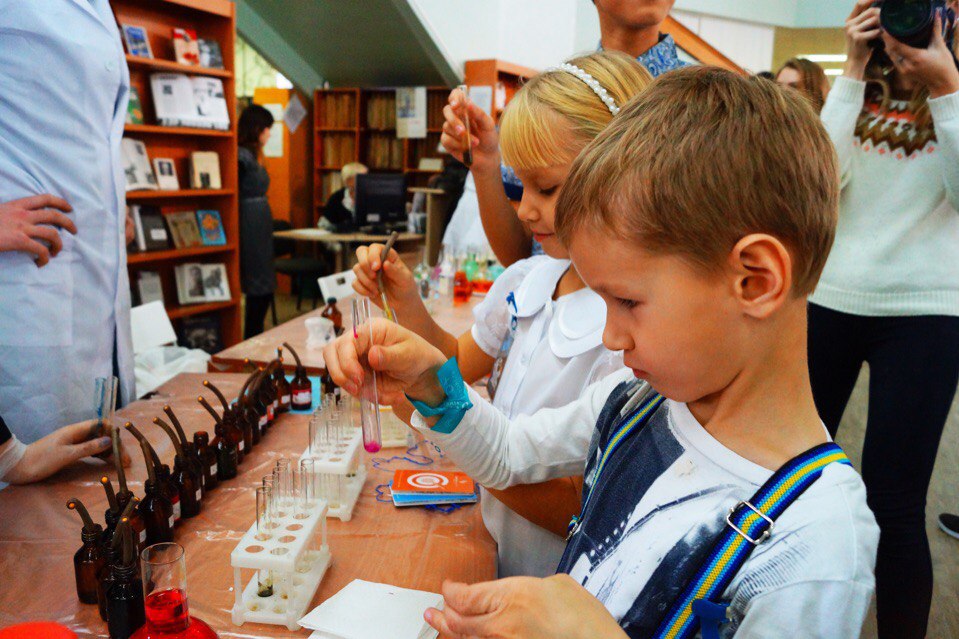
Integrating STEM Education at the earliest stage in students is of imperative importance as children are considered the future of tomorrow. And a well-rounded foundation of skills will not only help them thrive in a wide range of concepts and industries but will also help them in honing and contributing to the global knowledge-based economy index. Here’s listing a few reasons why STEM is important in schools-
-
Backbone of Civilization
As already alluded to before, STEM Education is revolutionizing the civilization and global knowledge economy, multiple steps at a time. Critical thinking and Innovation, which are the core ethics of STEM Learning, enable mental thinking and technological knowledge. This is imperative in shaping the development and evolution of the masses which ultimately elevates the status of STEM Learning in modern times.
-
Solid Intellectual Foundation
STEM Learning focuses on integrative learning and problem solving based on real-world applications which hone the intellectual foundation of the students at an early age. It also underpins the premise of multiple career opportunities for students that are as direct as engineers, scientists, inventors, etc., and as indirect as transportation, power generation, food production, and communication. All of these use advanced technology and science to function, which requires a solid intellectual appetite in the concerned workforce.
-
Better Learning Experience
The STEM approach of learning is a more hands-on and implementation way of learning rather than just textbook theories. This way is not only more fun but also increases the retention rate in students as they are more likely to remember what they have learned practically as compared to what they read in books. For example, the functioning of a pulley in Mechanics can be understood better with a demonstration of a pulley rather than by reading a few statements in the book.
-
Problem-Solving Skills
Lastly, STEM Learning sharpens the mind and whets a more analytical mindset for students because it pushes them to think. This mindset proves much more productive, especially in the future, even when a child chooses to opt out of traditional STEM subjects and resorts to other fields. For example, math skills such as geometry and ratios can also come in handy if you take up interior designing as a profession.
Need for Skilled STEM Educators
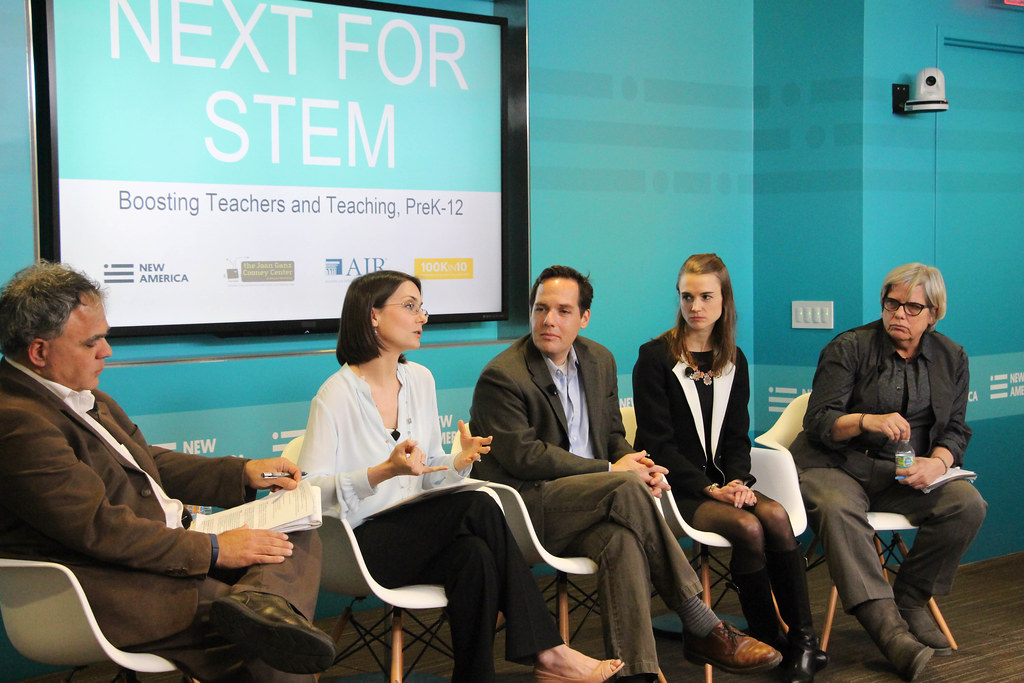
As per a recent study, the STEM sector is expected to be one of the largest employers in the world owing to the myriad jobs opportunities rapidly propping up. STEM Learning forms the base of most career domains and it plays an important role in the flourishing of the economy. As per research, there has also been a rising demand and shortage of well-trained skilled STEM Educators in the world with the rising need for STEM Education. The soaring shortage of STEM staff also means that students are unsubscribing these programs at an alarming rate owing to the inefficient teaching methodologies and lack of skilled teachers.
As per a study done by Forbes, we are rapidly losing Einsteins and similar brains as ‘too many of our students don’t experience excellent STEM learning every year, PreK-12’. This gap between the top talent and trained teachers needs to be filled immediately to ‘strengthen our STEM dependent economy and drive innovation through diversity and equity.’
Shared STEM Vision in Schools
Each school has a different vision of STEM education as it is largely dependent on the perspective of the in-house teachers, their understanding and integration of the methodologies, community engagement, and the intervention from the higher school authorities. While it is alright to explore, consider and implement the curriculum and STEM vision of other school districts, it is imperative that your school shares a singular vision of STEM education. A shared vision not only helps in the long-term sustenance of the program but also helps the teachers to contribute through their own unique experiences which further helps the students.
Having a shared STEM Vision also helps teachers in identifying their personal areas of growth and learning that they would want to explore more in-depth. Small steps to improve STEM education and enable shared vision are:
- Add a STEM template to your lesson plans.
- Include some aspects of dividing strategies to solve problems in classroom activities.
- Invest time incorporating STEM in the lessons in alignment with the learning objective.
- Help other teachers in realizing the STEM vision and discuss ways to improve the action plan.
STEM in Society
STEM Education plays a pivotal role in changing society as society is synonymous with the developing economy of a country. STEM Education not only helps in the intellectual, mental, and emotional growth of students, but lately, it is also the role of women in STEM that is leading towards better women empowerment and hence, better societies. The all-inclusive society reduces the stereotype gender and ethnic gap. Furthermore, it is producing more disciplined and smarter students. As per a study in the post of Washington, America’s public schools have had to suspend lesser students now as compared to a few years ago.
STEM Beyond Curriculum
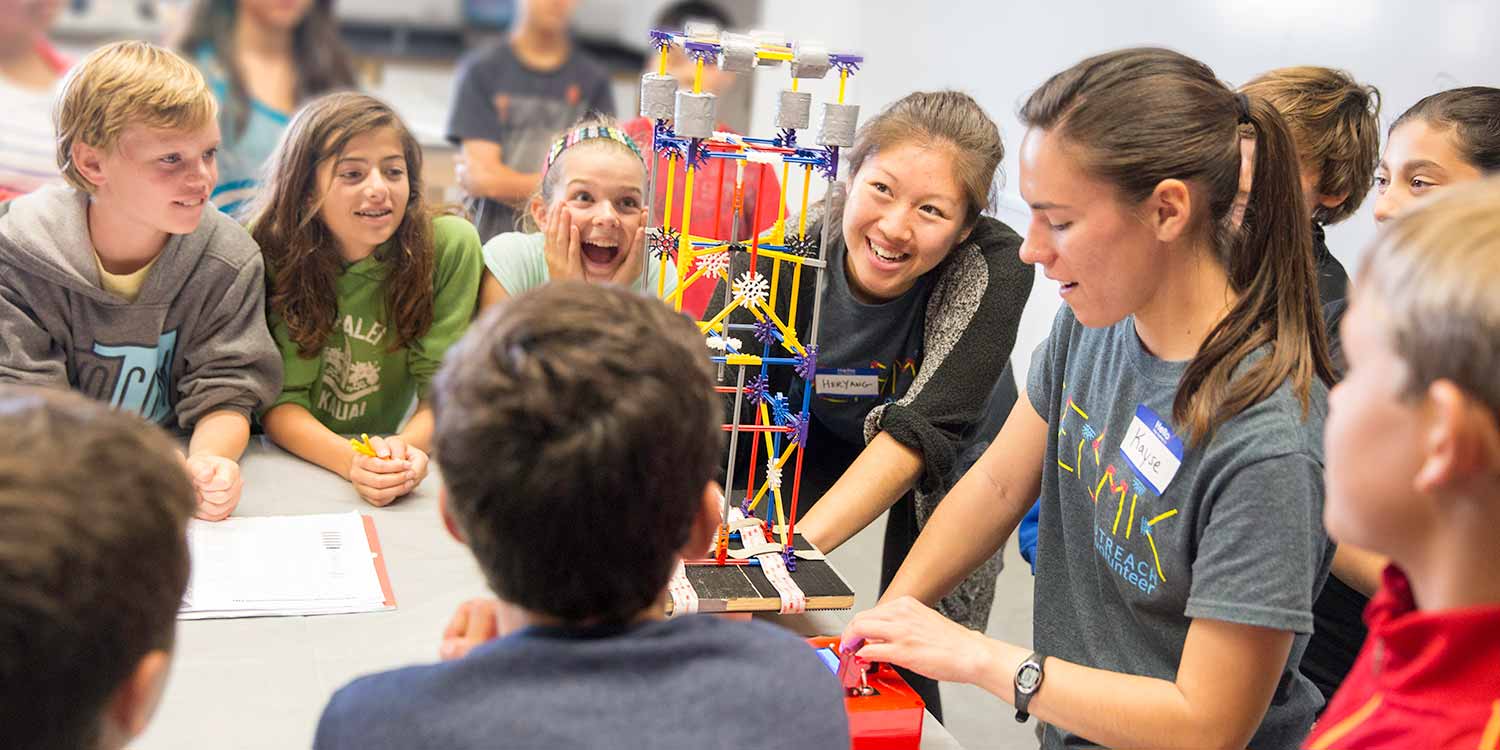
Apart from the academic aspect, STEM education also helps in the holistic development of children. Research has shown that the students educated under STEM programs turn out to be more resourceful as they possess the ability to strategize and improvise life solutions. As the program engages students into exploring and learning by doing, students learn to make the best use of the available resources in a unique and effective manner as a side skill. Let’s keep in mind that including STEM Curriculum, we are helping children learn a plethora of life skills in addition to academic skills, which include:
- Problem-solving
- Collaboration
- Critical thinking
- Creativity
- Experimenting
Conclusion
Lastly, education cannot remain divorced from the real world and it would not be an understatement to say that education is the bridge between a child’s early phase of learning and his adult life. An effective STEM program not only helps academically but also professionally, economically, and socially. A collaborative effort of the teachers, students, and parents can help in further developing STEM education and yielding better results.
To read other interesting posts about technology, education, and research, visit our blog.
Create. Engage. Inspire
The post STEM Education as a Comprehensive Tool of Development appeared first on Test.Evelyn.
]]>The post Adult Learning Theory: Its Need and Impact appeared first on Test.Evelyn.
]]>Adult learners are students who are over the age of 18 and do not begin postsecondary education the same year they graduate from high school. One may adapt business training programs to take advantage of attributes adult learners possess. This could include their eagerness to learn relevant material, their desire to connect with experience, and their urge to develop themselves, all by understanding how adults learn.
Adult education is very popular in the United States. Various colleges and institutions frequently refer to these students as “non-traditional students”. Most adults pursue education for a variety of reasons, including self-improvement, the necessity to learn specific skills, and the desire to better career prospects.
If an adult is ready to continue their education, they must first comprehend how they learn differently. Adult Education Theories and practices assist millions of adult students in achieving success as they continue their growth and education. In this article, readers will learn about the ideas underpinning Adult Learning Theory and how it can help one achieve their higher education goals.
What is Adult Learning Theory?
Corporate training circles frequently use the term “Adult Learning Theory”.
First, let us debunk a myth: There is no SINGLE Adult Learning Theory. There are several popular hypotheses that describe how adults learn from various perspectives. It is a concept or study of how adults learn and how it differs from how children learn. Additionally, its main goal is to discover the learning styles that are most appropriate for adults.
Andragogy, action learning, experiential learning, self-directed learning, and transformational learning are only a few examples of adult learning theories. All of these theories aim at assisting one in creating effective learning experiences for adult learners.
Components of Adult Learning Theories
Adult Learning Theory is a branch of study that focuses on figuring out how to make ‘training’ something adults desire to undertake and how to make it effective. To put it simply, if you want the finest outcomes, you must integrate four vital components in your training and development for adults.
Motivation
When creating training content, the first constituent educators must know about is motivation. Adult learners will not learn if they do not have a strong desire to do so. That’s all there is to it. There are a variety of approaches that can be used to elicit a sense of motivation. Here are a few examples:
- Firstly, educators must clearly define how the learning curriculum will have a concrete and immediate impact on the learner’s job. When creating learning content, one should not leave it up to the student to figure out why the information is being offered; instead, one must explain to them why they are supposed to study the material up front.
- It is necessary to establish learning chances that will allow the learner to improve personally. In a corporate setting, for instance, learners are more interested in the process if they believe it will help them get a promotion or progress their career in some way.
- Extrinsic competitiveness can encourage learners. This is why learning that incorporates gamification and social aspects is becoming increasingly popular right now.
Essentially, it boils down to a simple principle: Adults will desire to learn when they believe it would benefit or add value to their life. That is what motivates people.
Reinforcement
Reinforcement can either be positive or negative. Positive reinforcement in Adult Learning Theory refers to providing something that fosters excellent conduct. For instance, one can predicate development-based learning on the premise that learning a new skill could lead to a pay raise.
Negative reinforcement, on the other hand, entails taking actions to correct negative behavior, such as safety training to reduce workplace errors.
Retention
When creating corporate learning material, one must consider not just if the learner will absorb the material at first, but also if he or she will retain it. One should create courses that are tailored to the target audience’s needs. Educators can deploy these courses utilizing the most effective approaches that encourage participation.
Interactivity, quizzes throughout the learning modules, and the opportunity to instantly put what has been learned into practice are all fantastic strategies to enhance the retention of material.
For instance, after each piece of information is provided, educators can invite participants to take a quick quiz to see how much they have retained. In many cases, simply informing learners that the instructor will be assessing them on the content is a good retention tool in and of itself. Case studies and scenarios are also quite helpful. These are all simple things to incorporate into learning, thanks to the tools available with a learning management system.
Transference
This stage of Adult Learning Theory is when the learners can put what they have learned into practice in a real-world setting.
When the learners reach this stage, the educator will know if the information was effective and how well they can interpret and apply it. Moreover, transference is frequently monitored in a corporate environment against a set of preset standards in order to coincide with overall performance and organizational objectives.
Educators can consider incorporating social elements into the process to increase transference inside the corporate learning environment.
Different Types of Learning Theories
When it comes to adult learners, there are numerous learning theories, each with its own set of applications and methodologies. Depending on their primary learning style, different ideas and practices will resonate better with adult learners. The following are some of the most popular Adult Learning Theories:
Andragogy
Andragogy, coined by Malcolm Knowles in 1968, is defined as “the art and science of assisting adults in learning”. It is opposed to pedagogy, which is defined as the “art and science of assisting children in learning”. Adult learners vary from children in numerous respects, according to Knowles and the andragogy theory.
The andragogical approach is based on four principles:
- Adults learn more effectively through experience (even if they make mistakes).
- They prefer a practical approach to learning and must be able to apply what they have learned to address a specific problem.
- Adults are most interested in learning things that are immediately applicable to their lives.
- They must participate in the design and evaluation of their own education.
Case Study: Farm Bureau, a rural service organization, employs an andragogic strategy to train volunteer leaders and Board of Director candidates. Through mutual agreement with each student, the training programme diagnoses learning needs and establishes goals. Participants must actively participate in activities, debate the practical worth of their learning. Moreover, they must apply what they have learned to their leadership roles.
Transformational Learning
Transformative learning theory, developed by Jack Mezirow in 1978, asserts that all learners make meaning of the world around them by employing a variety of assumptions, predictions, and perceptions.
- Through a process of problem-solving, procedural tasks, and self-reflection, transformational learning seeks to help learners modify — or transform — their existing frames of reference.
- Secondly, individuals experience learning transformations when educators confront them with a “disorienting predicament”. This causes them to question their previous beliefs and critically reflect on what has happened.
- It can change an individual’s viewpoint on how to behave, interact, or solve problems. Hence, educators often regard it as one of the “stickiest” types of learning.
Case Study: Workforce Council financed a group of 12 worker-learners to attend an Australian university’s Graduate Certificate in Executive Leadership program. Three teams were formed from the group. To impact improvements in their organizational processes and systems, each team engaged in transformational learning.
Learning materials were available on the university’s website. Face-to-face consultations on the job site and regular emails were also part of the training program. All the learning lessons were designed to foster a critical and reflective thinking culture. This would help shift existing viewpoints and habits. Additionally, it allowed the students to break free from their “habits of thinking.”
Action Learning
Action learning, coined by Reg Revans in 1982, is a problem-solving strategy. It entails taking action and then reflecting on the outcomes.
- It aims to improve problem-solving processes while also simplifying the solutions that follow.
- This method approaches challenges by first asking questions to define the issue. Following this, they reflect and identify potential solutions, and finally take action.
- Questions boost learning outcomes by fostering group dialogue and cohesion, as well as developing inventive and systematic thinking.
- The ability to take action on the problem the group is working on is a necessity for action learning. The group loses its vitality, inventiveness, and passion if learners merely give recommendations.
- Lastly, a coach should be there to assist the group in learning and working more efficiently.

Case Study: In 1990, Florida Power and Light (FPL), a power utility company, was the first company in the United States to receive the Deming Prize for Quality. But before that, it had faced problems with its power producing systems and could not effectively convert energy to electricity. This issue had been present for quite some time.
Eventually, they gathered a team of people from various FPL departments to rectify the problem. The team members improved their problem-solving and teamwork skills by working together. As a result, they were able to identify and resolve the cause of the problem.
Experiential Learning
Experiential learning was developed in the 1970s by David Kolb. It is based on the work of John Dewey, Kurt Lewin, and Jean Piaget. This Adult Learning Theory involves a hands-on approach that places the learner at the center of the learning process.
- Active involvement is very important. However, learning occurs only when the individual reflects on what they are doing, according to the theory.
- Secondly, continued participation, reflection on practice, interpretation of the experience, and application of knowledge obtained from experience are the four pillars of experiential learning.
Case Study: Capital One teamed up with the College of St. Bernard/St. John’s University to mentor students enrolled in an advanced global strategy course. Students faced real-world business difficulties and worked to address them by actively participating in the research and hands-on work processes. Mentors solely offered expert assistance and counsel.
Self-Directed Learning (SDL)
Self-Directed Learning is based on Malcolm Knowles’ Adult Learning Theory, with self-management elements added by D.R. Garrison in 1997.
- Individuals evaluate learning requirements, develop learning goals, find resources, implement a learning plan, and analyze their own results using Self-Directed Learning.
- Professors, mentors, resources, and peers frequently aid SDL.
- It is necessary for the learner to have access to and pick relevant learning.
- All learning decisions are under the control of the learner.
Case Study: Tahiya Alam, a University of Manchester Junior e-learning Support Specialist, needed to publish the findings of a scientific research study online. Ms. Alam met with e-learning colleagues and investigated her choices once she discovered her learning requirements. She upskilled herself using Self-Directed Learning principles and was able to create interesting and robust e-learning modules.
For a more effective training program, combine Science with Adult Learning Theory
When knowledge is relevant and beneficial to adults, they remember it better. As a result, it is critical to understand why one is studying about a particular theme. Adults are frequently better at generating answers to real-life problems than they are at memorizing knowledge because they have a mature attitude. Adult learning is built on the foundations of problem-solving, rapid application, and performance-based activities.
Understanding diverse adult learning theories and practices might help an adult learner be even more successful as he or she prepares to seek higher education. Recognizing one’s learning style, knowing adult learners’ strengths and limitations, and preparing for their specific strengths can all assist an adult learner succeed.
Image Sources: Shutterstock and Unsplash
For more information on Adult Learning Theory, visit our blog.
Create. Engage. Inspire.
The post Adult Learning Theory: Its Need and Impact appeared first on Test.Evelyn.
]]>The post Ways To Boost Your E-Learning Course appeared first on Test.Evelyn.
]]>Technology used to be flat and one-sided, and it could not efficiently communicate subjects. New innovations now make it possible to reach and engage learners. However, these latest developments have also revealed new challenges.
Courseware is frequently overly complicated, with confusing text, pictures, links, and graphics, a lack of continuity and clarity in the learning message, and navigation that is much more complicated than appropriate. All of this makes it difficult for students to concentrate, understand, and learn what they want. Students become disengaged, unmotivated, and uninterested in their online learning as a result.
When careful attention is paid to the seemingly minor details that are too easy to overlook, the standard of online learning courses has boundless potential for development and evolution. Educators can follow these basic and effective rules to quickly boost their e-Learning courses and build the best e-Learning courseware.
1) One idea, one screen
Since the course designer incorrectly assumes that fancy design contributes to more successful e-Learning, some e-Learning course screens seem to be a jumble of ideas and concepts. In reality, it is the polar opposite. A course’s screens can only express one concept at a time. This Rule of One keeps the student centered on the most critical concepts one at a time and helps boost the e-Learning Course.
2) Keep it simple (visually)
One must remove any unnecessary graphics, photographs, and text from their online learning materials, restricting them to just a few pieces that are well-structured, appropriate, high-quality, and neatly organized. When classes become difficult, visual aids such as graphs and charts provide the opportunity to choose more over less. Otherwise, choosing white space over needless and distracting clutter is a reasonable rule of thumb to boost ab e-Learning course. One may use headings, bullet points, and short paragraphs for a clean visual structure that allows online learners to easily locate important things within the document.
3) Make it easy to navigate
Learners should be able to work through a course independently. Arrows, icons, and buttons are examples of navigational aids that must be thoughtful, practical, and easily recognizable. Navigating a course should be similar to navigating a road: it should be straightforward and easy to follow so that one can concentrate on the task at hand.
4) E-Learning video teasers
Consider how much a trailer for a film excites us. A teaser attracts the viewer by showing clips from the film’s most entertaining or noteworthy scenes. This straightforward approach can also be used to promote e-Learning and boost one’s e-Learning course. Educators can create a video teaser that focuses on what the e-Learning course will be like and how it will help learners boost their results.
5) Include self-assessment.
Teachers must enable students to self-assess their learning by providing opportunities for them to do so. Allowing students to score their own discussion posts or contribute to their own grade for course participation can be rewarding since it encourages students to take ownership of their learning and hence helps educators boost their e-Learning course.
6) Providing incentives and rewards
Who does not want to be rewarded? Here is an example of how one can use incentives to boost their e-Learning course: instructors can build a fast learning game or prepare a quiz based on the e-Learning course. They can inform the workers that the first fifteen employees who sign up and play the game will earn prizes, discounts, or vouchers. This method of rewarding students also promotes word-of-mouth publicity.
7) Setting time constraints rather than slide constraints.
Or, to put it another way, quality over quantity. The total number of slides in a course does not imply usefulness if the content on those slides is poor. Instead of a slide quota, one can build a course with a time limit. Learners can become disengaged if educators use slides that have no meaning. Setting a time limit will help one to boost their e-Learning course as it allows people to get down to the point and stay on task.

8) Importance of social interaction
E-Learning allows students to communicate on a variety of social media channels. To involve the students and boost their e-Learning Course, educators can use social media. To help create a sense of classroom community, one can add a Twitter badge to their course homepage. They can also use a hashtag to push tweets with course-relevant content to their students.
In order to socially engage users, educators can consider using embedded audio and video, chat rooms, instant messaging, broadcast text messaging, and homepage announcements. Furthermore, creating explanatory screencast videos has become increasingly simple and inexpensive, providing yet another communication platform.
9) Rather than text, use visuals
Teachers can transform a long, complicated text into a visual representation of the data. Could one, for instance, use a flow chart, video, or infographic to illustrate a process that is described in the text? Visuals promote thought and assist in the solidification of ideas that might be lost in vast blocks of text.
10) Corporate Newsletters
A newsletter is a good way to boost an e-Learning course and raise awareness about the training one is providing. The good news is that no matter what, every employee has access to the weekly/monthly/bi-monthly/quarterly/annual newsletter, which makes it a good place to advertize. One may provide information on the upcoming training in a given location in the newsletter. The promotional material for the e-Learning course in the newsletter, including posters and infographics, should walk a fine line between text and visuals so that workers can scan it easily.
Concluding Remarks
We have designed these online learning tips to increase online learners’ participation and inspire them to get the most out of their courses. Although some of them can seem obvious, they are often the overlooked—but crucial—’small’ or ‘simple’ specifics that make or break a course’s performance. Focusing on increasing interaction rather than only providing content transactionally would improve the consistency of a course’s message. This will ensure engagement and, eventually, retention.
We cannot overstate the importance of marketing and spreading the word about the advantages of online learning to students. Well-designed promotional campaigns attract more students to enroll in the course, ensuring long-term sustainability and profitability for the company. So, one must keep these ten simple e-Learning promotion strategies in mind in order to boost their e-Learning course. Educators can tell learners what they are getting into and how online learning will help them perform better, and their e-Learning enrollment rates will skyrocket.
Image Sources: Shutterstock and Unsplash
For more information on boosting and marketing an e-Learning course, visit our blog.
Create. Engage. Inspire.
The post Ways To Boost Your E-Learning Course appeared first on Test.Evelyn.
]]>The post Universal Design for Learning: A Practical Guide appeared first on Test.Evelyn.
]]>Universal Design for Learning is based on three principles:
- Engagement (taking advantage of learners’ interests and motivations);
- Representation (giving content in a variety of formats);
- Action and expression (offering learners with a variety of ways to express themselves)
Universal Design for Learning is a paradigm for reducing physical and emotional barriers to learning and ensuring that all students have an equal opportunity to succeed. Educators provide information in a variety of ways with UDL. This includes lectures, dialogues, demonstrations, resources, and more. Automatic doors and closed captioning are two instances of how Universal Design for Learning has influenced daily living outside of the classroom.
What is Universal Design for Learning?
Universal Design for Learning is a style of thinking about teaching and learning that aims to provide all students with an equal chance at success. This method allows students to access, engage with, and demonstrate their knowledge in a variety of ways. This method of creating lesson plans benefits all children, but it may be particularly beneficial to children with learning and thinking disabilities.
The purpose of Universal Design for Learning is to eliminate any obstacles to education and provide all students with equal opportunities to succeed. It’s all about incorporating flexibility that may be tailored to each student’s unique skills and needs. That is why this approach is beneficial to all children.

This kind of instruction does not specifically cater to students who learn and think in different ways. However, it can be especially beneficial for the 1 in 5 children who suffer from these problems, even those who have not yet been formally identified. It can also be extremely beneficial to English language students.
Even if one has never heard of the term “Universal Design,” they’ve almost certainly seen examples of it in their daily life. Closed captioning on televisions, for instance, allows those with hearing problems to read the text of what is being said on screen. In the classroom, Universal Design for Learning offers the same level of adaptability. Teachers can effectively teach a diverse set of students by implementing UDL principles. They do so by allowing learners to acquire material in a variety of ways and allowing them to demonstrate their understanding in a range of methods.
Methodology of Universal Design for Learning
Rather than laying out a common approach for teaching everyone, Universal Design for Learning provides an adaptive framework for connecting each student to the learning process. All of this may seem intimidating, and the UDL hypothesis is undoubtedly ambitious. Thankfully, it has broken down its standards into three simple categories that instructors may work with. These are the following:
-
Representation:
Students must first be able to access the resources in order to participate in the learning process. The Universal Design for Learning suggests that information be made available in multiple formats. Textbooks, for one, rely heavily on images. Providing text, audio, video, and hands-on learning, on the other hand, allows all children to access the content in the manner that best suits their learning abilities.
Everyone would have a choice for whatever format they want to study in. Others may prefer a combination of formats to properly cement the concept.
-
Action and Expression:
According to Universal Design for Learning, children should be given multiple opportunities to interact with the material and demonstrate what they’ve learnt. Students can have the option of taking a pencil-and-paper examination, giving an oral presentation, or working on a group project, for instance.
-
Engagement:
UDL urges teachers to explore a variety of approaches to motivate their pupils. Teachers can maintain students’ interest by allowing them to make choices and offering them assignments that are relevant to their life.
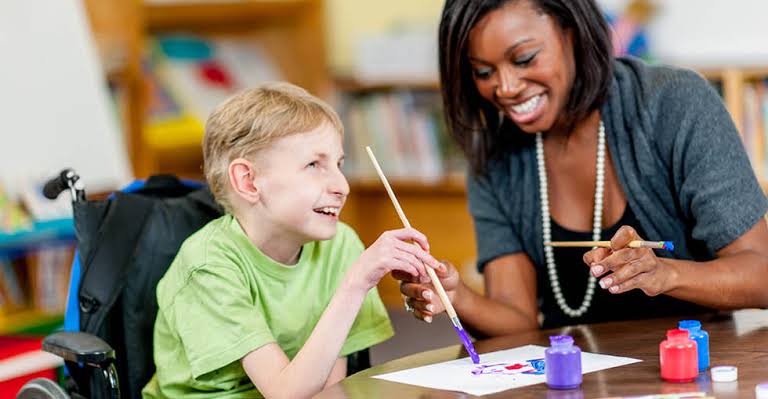
Educators accomplish this mostly through connecting themes and activities to the interests of students and allowing them to infuse their excitement into projects. Gamification and clearly defined levels of achievement and challenges are also effective ways to engage pupils in their study. Making skill improvement feel like a game and providing opportunities for pupils to get up and walk around the classroom are two other typical tactics.
Effectiveness of Universal Design for Learning
Moving on, what are the main advantages of implementing Universal Design for Learning in a class, institution, or town?
-
Making Learning more Pertinent:
Universal Design for Learning actively targets students’ desire and drive to learn. It does this by making knowledge more relevant to students’ interests and daily activities. This can assist learners become more engaged in the learning process. At the same time, this also reinforces their knowledge and inspires them to continue studying throughout their lives.
-
Accessibility:
The flexibility and variety of UDL are its most major advantages. It is possible to alter activities and materials to account for everyone’s strengths and weaknesses. As a result, learning becomes more accessible and pleasant for everyone.
-
UDL Supports Various other Research-based Learning Methodologies:
Universal Design for Learning is not incompatible with other methodologies and practices. It incorporates and supports many modern research-based techniques to teaching and learning. This includes collaborative learning, blended learning, multisensory teaching, and student-centered learning, to mention a few.
-
Low Cost:
A UDL curriculum is designed from the start to match the needs of the entire class. This eliminates the need for costly, time-consuming, and after-the-fact curriculum changes.
-
Empowerment:
Universal Design for Learning empowers both teachers and students. It provides a framework for teachers to adapt material to the learner rather than forcing the learner to adapt to the material. This is a significant result since it allows the entire classroom to take control of the instructional format and, as a result, be more effective.
-
Taking Control over your Education:
UDL gives students the expertise and technologies they need to select the best learning options for themselves. There is little spoon feeding, and educators encourage pupils to take care of their own learning. This also allows children to evaluate their individual learning needs and figure out how they absorb information most effectively. This is critical for academic and professional success.
Concluding Remarks
Educators know that their learners have a diverse range of interests, backgrounds, and talents in any class. They can approach the subject in a variety of ways if they plan with this range in mind. Information is frequently delivered in multiple media with Universal Design for Learning, including text, audio, and hands-on activities.
Universal Design for Learning is a viable approach as it helps you foresee and plan for all the students from the beginning of the class. It can assist an educator in ensuring that all students, not just a select few, have access to and participate in learning. To acquire a more accurate picture of what students know, it urges teachers to give a variety of examination forms, such as oral presentations and group projects. It also seeks for new ways to keep students engaged.
Image Sources: Shutterstock and Unsplash
For more information on Universal Design for Learning, visit our blog.
Create. Engage. Inspire.
The post Universal Design for Learning: A Practical Guide appeared first on Test.Evelyn.
]]>The post Tips for Creating Effective Assessments appeared first on Test.Evelyn.
]]>There are a variety of formal and informal methods available to assess student progress. These methods include observation, discussions, group interactions, projects, questionnaires, assignments, and so on. Moreover, Project-Based Learning is one of the most effective instructional techniques and an accurate method of assessment.
Although teachers are free to make use of any technique they find suitable for the assessment of their learners, there are certain things of note while designing these assessments.
Some Tips for Creating Effective Assessments
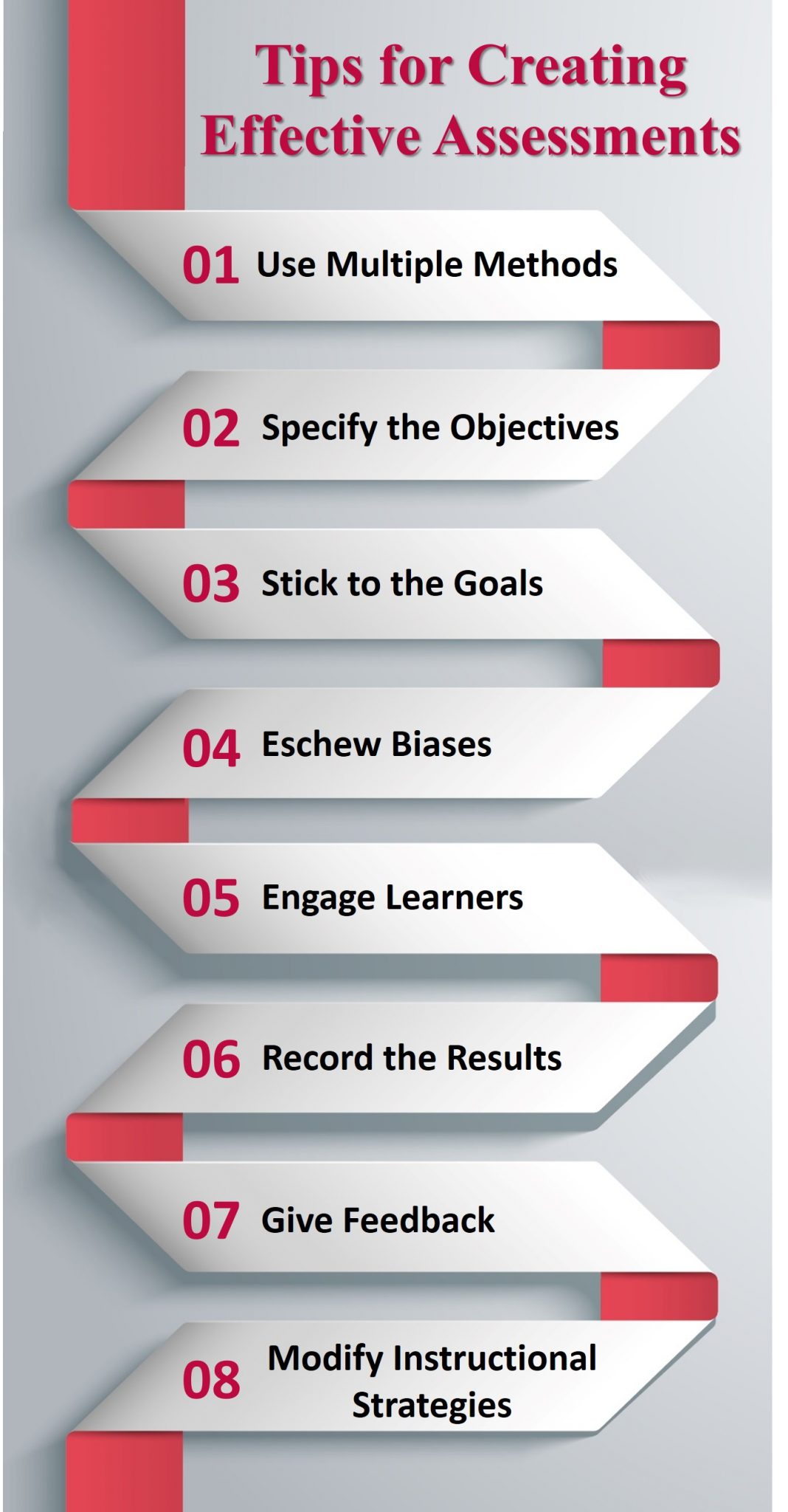
1. Use Multiple Methods
A single method is not enough to provide a complete picture of the knowledge and skills acquired by the students. Thus, a teacher must use multiple methods to assess the students for their capabilities in different fields.
Various activities such as projects, questionnaires, surveys, and others help in the assessment of different skills. These activities are conducted in the form of either formative or summative assessment.
(Refer to our blog on Formative vs Summative Assessments for more information.)
2. Specify the Objectives
Learning aims to inculcate a certain type of skill. Any form of learning has some necessary objectives for acquiring the required skills and knowledge. Moreover, these objectives determine the efforts of the learners and their contribution to the learning process as they participate in various activities. Therefore, specifying the objectives at the beginning of an assessment test helps students identify the skills they must demonstrate. Also, it motivates them to perform better as they are aware of what they are doing.
3. Stick to the Goals
An assessment is nothing without a goal. Effective assessment activities are completely goal-oriented. Thus, teacher as well as students should be aware of the goals and objectives of learning and should stick to them.
Additionally, teachers must ensure that the activities that do not fulfill the goal requirements are avoided to avoid the sheer waste of time.
4. Eschew Biases
Biases create hindrances in the process of development. They develop a sense of insecurity among the learners that often affects their performance. Therefore, teachers should work on creating a free and healthy environment where the students can display their abilities without the fear of judgment.
As a result, the students develop a sense of self-awareness and become progressive as they express themselves better. Moreover, unbiased assessments contribute to the development of their overall personality.
Additionally, the assessments that are not related to the skills/knowledge of the target group of students must be avoided.
5. Engage Learners
Learner engagement is a fundamental requirement for learning. The assessment of learning produces more accurate results when the learners actively participate in the classroom. Also, participation inculcates self-confidence in students as they learn to take initiative.
Moreover, the students learn many social skills as they collaborate with peers in group activities. Therefore, assessment activities involving more learner interaction and participation must be prioritized.
6. Record the Results
Keeping a record of the assessment results is important. It helps to assess the levels of improvement in the learners and also gives a clear picture of their potential.
Also, it helps the teachers identify areas where the learner requires assistance and practice. Accordingly, teachers can then design lessons and choose a teaching methodology that serves the purpose.
Moreover, students get to know where they stand, and a sense of healthy competition develops among them. This motivates the students to compete for better results.
7. Give Feedback
Feedback is what helps students to move further in learning. It gives them insights into their current performance and the areas they need to improve upon. Also, it helps teachers identify potential threats to learning and encourage the students to overcome their fears.
Moreover, feedback initiates an interaction between students and teachers. This creates a healthy classroom environment that leads to the development of communication skills. Also, the overall development of the students’ personality takes place within the classroom.
8. Modify Instructional Strategies
Choosing the right instructional strategy determines the effectiveness of the assessment and the overall course. Thus, the teacher must give clear instructions and should not refrain from modifying the instructional strategy.
Incorporating Gamification in assessments is a strategy that works to engage students while they have fun developing their skills. Apart from this, Blended Learning and Flipped Classroom are two other effective instructional strategies to use.
Furthermore, experimenting with instructional strategies helps to cater to the individual learning needs of the students and renders better performance results in assessments.
Creating effective assessments can be challenging sometimes. The above-mentioned tips for creating effective assessments can help the teachers to fulfill the requirements of learning and assessment to give the students an enriching learning experience.
Research Articles: Getting Smart and Brave in the Attempt
Images: Shutterstock
For more information, visit Evelyn Learning blog.

Create. Engage. Inspire
The post Tips for Creating Effective Assessments appeared first on Test.Evelyn.
]]>The post 8 Tips to Set-Up a Blended Learning Classroom appeared first on Test.Evelyn.
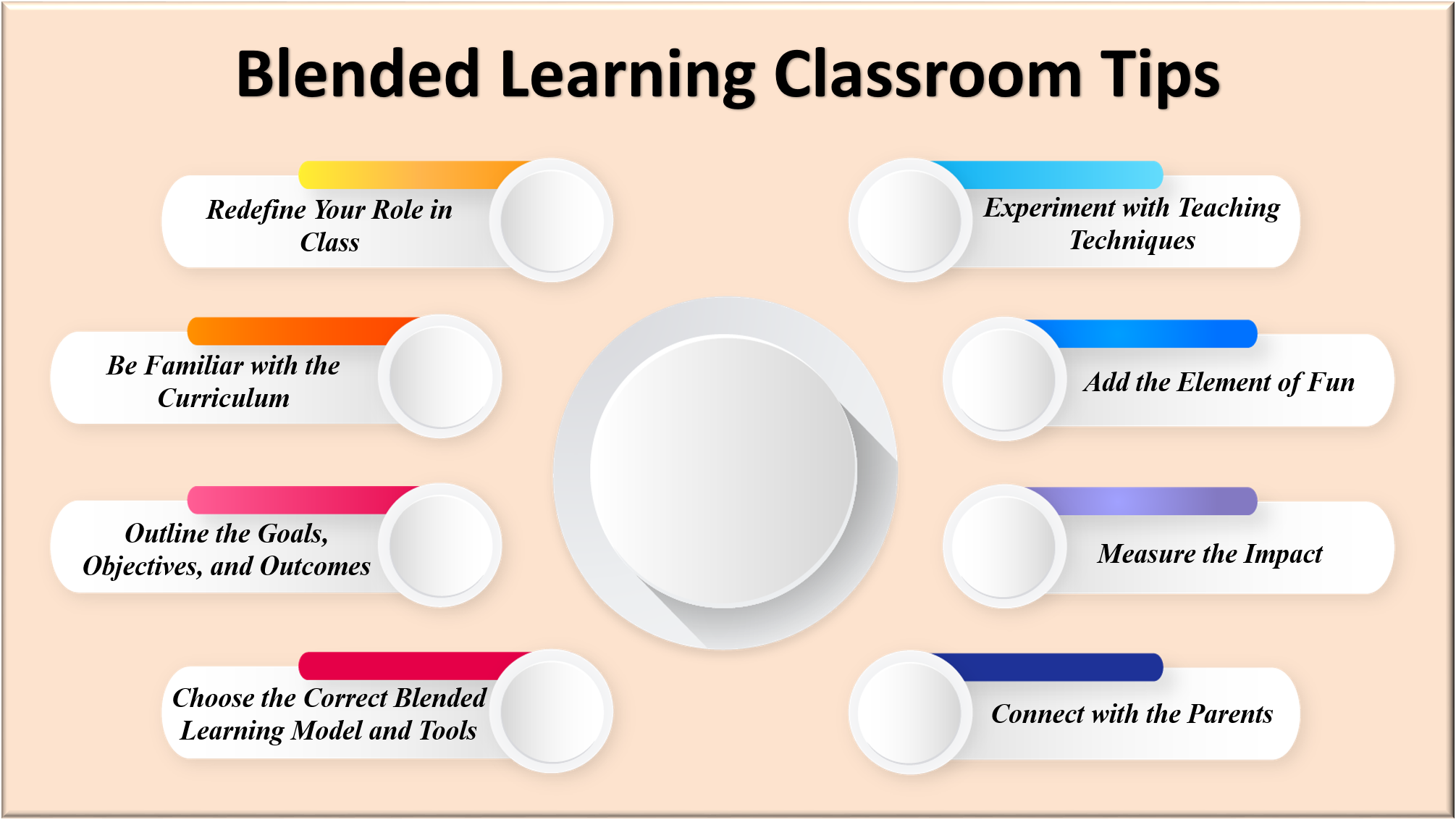
]]>Moreover, this method makes it easy to achieve the desired aims and objectives of learning with appropriate Blended Learning Strategies. However, the task of setting up a blended learning classroom can sometimes be challenging for a teacher. Here are 8 tips to set up a blended learning classroom that works well for most learning situations.
1. Redefine the Teacher’s Role
A teacher’s role in a blended learning classroom is not limited to teaching. Rather, a teacher acts as a guide who facilitates learning and assigns value to the course through various activities. Moreover, the responsibility of assessing the learners’ performance through the course also rests on the teacher’s shoulders.
Additionally, the blended learning method requires more interaction between the teacher and learners in comparison to the traditional teaching method. Therefore, teachers must create a conducive environment for the active participation of learners. To do so, the use of the right tools and technology is important. Thus, a teacher’s role expands to cover a wider range of responsibilities in a blended learning environment.
2. Familiarity with the Curriculum
The curriculum lays the foundation for learning in a classroom. It defines a set of subjects and areas of learning in the scholastic and co-scholastic realms for the holistic development of the learners. Thus, it acts as a guide for the teachers. It helps them create lessons and activities for learners which the students utilize to acquire the skills specified in the curriculum.
The proper implementation of the curriculum requires a set of pre-defined tasks that the learners must perform. Therefore, teachers must be familiar with the curriculum and choose the tools and resources that can best serve to fulfill the learning areas prescribed in the curriculum.
3. Outline the Goals, Objectives, and Outcomes
Well-defined goals and objectives are easy to achieve. They help lay a clear focus on the targets. Thus, it is important to define the goals and objectives of a lesson beforehand. Moreover, defining the objectives helps assign value to the goals and paves the way for better outcomes.
Defining the outcomes of learning along with the goals and objectives is crucial. These help teachers assess the performance of the learners. Also, defining the outcomes gives the learners an insight into how they are expected to respond to the lesson.
4. Choose the Correct Blended Learning Model and Tools
There are various models of blended learning exclusively designed to cater to different learning needs. These models work by engaging learners in different ways to achieve the desired learning outcomes. Thus, a teacher must choose the right blended learning model for the classroom that engages the learners and takes them on the right path of learning.
(Refer to this article on blended learning to know more about different models of blended learning.)
Additionally, choosing the right tools for setting up a blended learning classroom is important. The use of the right technology and tools helps a teacher deliver an effective lesson. Also, it promotes better learning and retention among learners.
5. Experiment with Different Teaching Techniques
The method of teaching impacts lesson delivery as well as the learning outcomes. The method adopted by a teacher must be in accordance with the curriculum. Thus, the teacher should use a method that works well to engage the learners and strives to achieve the aims and objectives of the course.
A blended learning classroom offers opportunities to the teachers to experiment with the teaching techniques and find what works best for their learners.
6. Add the Fun Element
Learning with fun is the ultimate formula for a better learning experience. Concepts learned while having fun induce better learning and retention. Thus, a blended learning classroom also requires the addition of an element of fun in the learning process.
Therefore, teachers must include games and activities that engage the learners and promote learning while they have fun. These practices can be introduced in the form of assessments as well. This motivates the students to perform better in the class.
(Refer to our articles on Gamification in E-Learning Part-1 and Part-2 for further reading.)
7. Measure the Impact
Learning without assessment is a waste of the collective efforts of teachers and learners. Assessments play a crucial role in the teaching-learning process. They measure the progress of the learners and determine whether the learning outcomes are achieved. Moreover, a teacher must set and clearly outline the expectations for the learners. This works as a stimulus for them and ensures that they achieve the desired learning goals and objectives. Following this, the learners must get clearly instructed assessment tasks that measure the level of learning and skills acquired by them.
8. Connect with the Parents
Parents are the first teachers. They monitor and instruct their children at home and thus can contribute to the learning process. Teachers must adopt a strategy to engage the parents in the learning process as well. Various forms of social media interactions can help initiate this process.
Additionally, parents can assist learners in certain activities and help them perform better. Informing the parents about their child’s progress also helps keep a check on the learner’s progress.
Blended learning classrooms are all about interactive and fun learning. A teacher is responsible for creating the right environment that can promote better learning. The tips mentioned in this article render a helping hand to teachers to move a step further towards setting up an effective blended learning classroom.
Reference article: Legends of Learning
Images sourced from Shutterstock and Freepik
For more such content on teaching methodologies, visit our blog.

Create. Engage. Inspire.
The post 8 Tips to Set-Up a Blended Learning Classroom appeared first on Test.Evelyn.
]]>The post Blended Learning Explained: Definition, Models, & More appeared first on Test.Evelyn.
]]>(Refer to our blog on Online Learning vs Traditional Learning: An Introduction for more information on traditional learning.)
What Is Blended Learning?
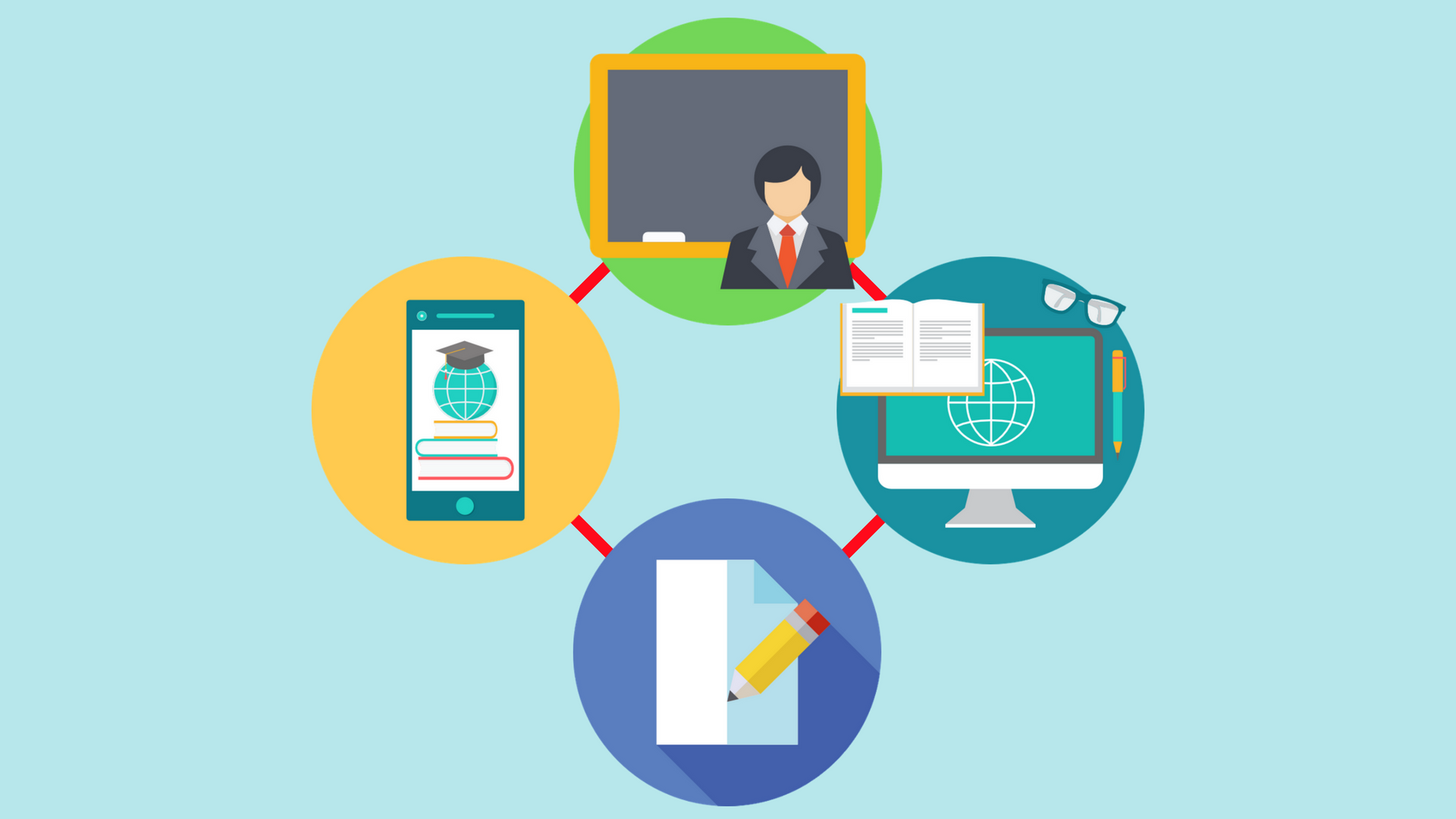
Blended Learning, as the name suggests, is an integrated form of learning in which traditional classroom learning is clubbed with eLearning to enhance learners’ experience and to engage them better. In other words, it brings technology-based learning into the brick-mortar classroom setting, where learning occurs under the supervision of an expert teacher. It is also known as Hybrid Learning.
Technology has become an inseparable part of life. Hybrid learning makes use of this technology to supplement and eventually transform the learning process. Moreover, the use of technology renders an improved learning process, promoting better learning and retention. Also, the rise of digital learning and mobile learning acts as a contributing factor in blended learning.
Taking an online course while simultaneously attending classes for the same is an instance of the blended learning process. Similarly, a student participating in a classroom discussion and preparing it in the form of a video as a home assignment is another example of hybrid learning.
Blended Learning Models
eLearning has gained a broader perspective with time. It is the culmination of various learning practices that aim to achieve different learning objectives. Blended learning is one such form. However, blended learning is an independent form of eLearning. It is categorized into various types depending upon the content, scale, technology used, and other relevant factors.
1. Station Rotation Learning
The Station Rotation Learning model allows students to rotate through stations that are a blend of traditional and online learning. The rotation occurs based on a fixed schedule. This model particularly applies to elementary schools.
2. Lab Rotation Learning
The Lab Rotation model and the Station Rotation model are alike. This model uses computer labs in schools on a rotation basis as per a fixed schedule. This model works by considering both the learning needs and the resources available.
3. Individual Rotation Learning
This is another type of rotation model where students rotate through stations at regular intervals following a schedule. But unlike other rotation models, the Individual Rotation model allows students to rotate through stations according to an individual schedule of the software algorithm or the teacher.
4. The Flipped Classroom
In a Flipped Classroom, the traditional roles of the school and home are flipped. The concept of learning occurs at home and the students practice it in the school in a supportive environment with peers and teachers.
5. Enriched Virtual Blended Learning
Enriched Virtual Blended Learning provides an enriched virtual learning experience where the students focus more on online coursework rather than attending lectures. The scheduling of lectures is occasional and depends on learners’ requirements.
6. Self-Directed Learning
The Self-Directed Learning model is a personalized learning model where the students direct their learning by switching between face-to-face learning and online learning simultaneously as per the demand of the course. Thus, the role of the teacher and online courses keep changing as per the learners’ requirements.
7. Project-Based Learning
In the Project-Based Learning model, the students make use of classroom learning as well as online learning while collaborating to design, iterate, and publish project-based learning assignments, products, and others. This type of learning is supported by various online resources that the students can use to create projects.
8. Supplemental Learning
The Supplemental Learning model provides a supplementing learning experience to the learners. The lessons achieve critical learning objectives in one place, while another platform acts as a supplement to the learning. For instance, students either attend a face-to-face learning class while online learning works as a supplement to it or vice-versa.
Advantages and Disadvantages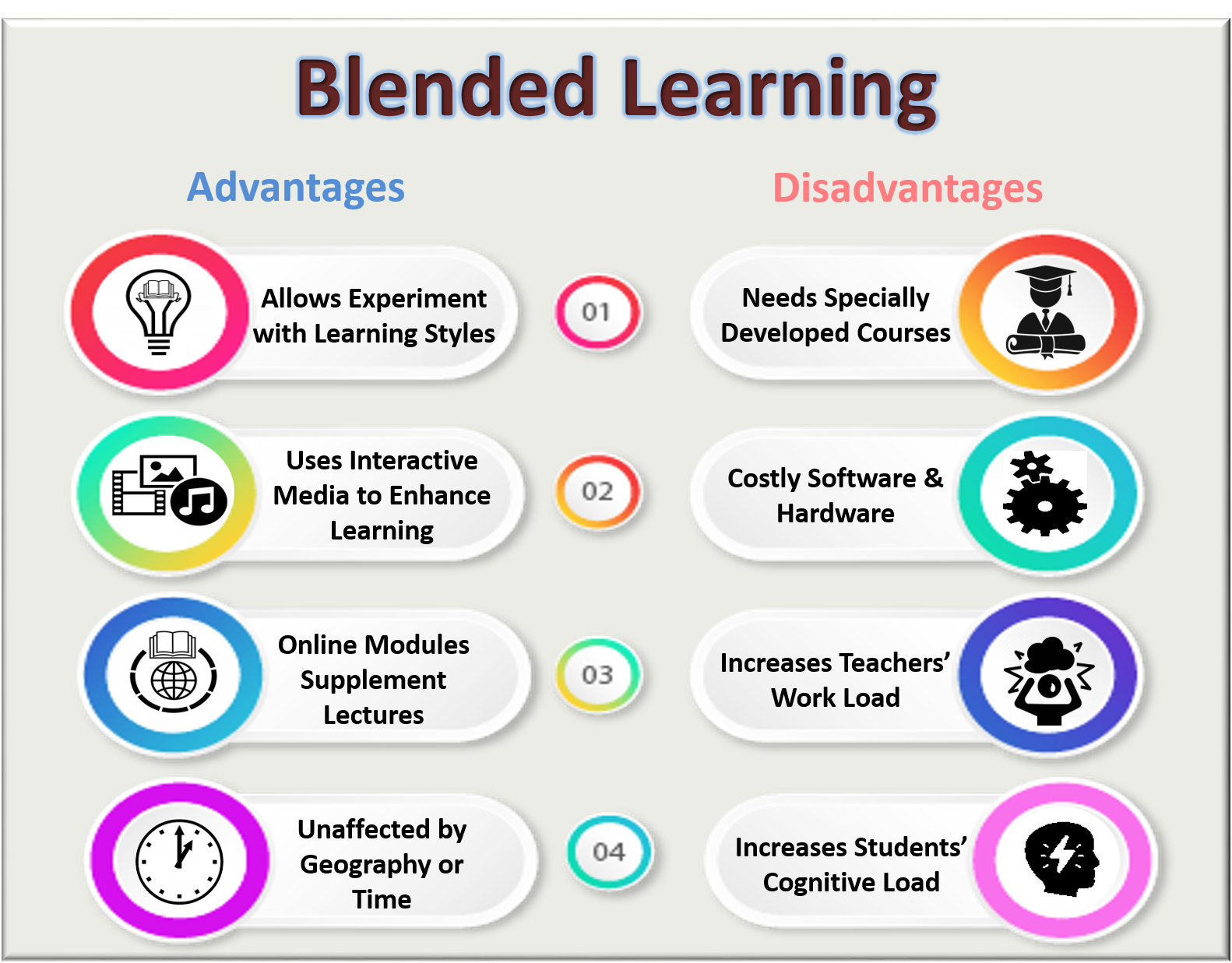
Effectiveness of Blended Learning
Blended learning is a method that engages learners by building their interests as they participate in traditional as well as online learning. Learners get a wider field of action that promotes learning and application of the knowledge gained. As a result, learners get a chance to experiment with different learning styles and produce better test scores.
Moreover, learners form stronger mental connections as they participate in two types of learning, that is, independent learning and mentored learning. Learning through a blend of traditional and online learning helps learners associate concepts with real-life situations. It also allows them to experience what they have learned, ultimately increasing the retention rate. Therefore, different pedagogical researchers have concluded that blended learning is an effective method of learning.
Read our next blog to find out about the strategies and best practices in Blended Learning.
Articles used for research: Teachthought and Lambda Solutions
Images from Shutterstock
Visit Evelyn Learning blog for more information on Blended Learning.

Create. Engage. Inspire
The post Blended Learning Explained: Definition, Models, & More appeared first on Test.Evelyn.
]]>The post Project-Based Learning as a New Tool for Learning appeared first on Test.Evelyn.
]]>Project-Based Learning as a New Methodology
With increasing innovations in the field of education, Project-Based Learning becomes an implicit feature of the teaching-learning system. Mapping the future of learning is a key aspect of understanding the massive change that the world is undergoing due to the Fourth Industrial Revolution.
- The foremost Industrial Revolution mechanized production by using water and steam.
- The second introduced mass-production of goods by using electricity.
- The third revolution automated the production process by using electronics and information technology (IT).
- Finally, the fourth wave is creating an increasingly automated reality, featuring an amalgamation of technologies that brings together digital, physical, and biological areas of living.
Data is the new social currency. Modern learners are exposed to knowledge that is arising at a startling pace. Therefore, a reconsideration of learning outcomes is mandatory. To clarify, Project-Based Learning appears to be a potent solution for the same.
A Pearson report titled Future of Skills looks at the employment landscape of 2030, a near-future for present learners. It provides refreshing insight on how megatrends (urbanization, environmental sustainability, demographics, and so on) will affect future job requirements, and it also predicts the top 10 skills that will be most in demand. Decision-making, Critical Thinking, Active Learning, Originality, and Fluency of Ideas were the skills topping the chart.
The Altered Face of Education
The near future realm of education will have the following features:
- There will be a shift of emphasis from traditional teaching methods to newer approaches, where the teacher is no longer just an instructor, but also a coach and mentor who participates in the learning process with students rather than just leading it.
- The use of blended learning will become commonplace, which features an optimal balance between teaching and technological aid. Additionally, lifelong learning would likely replace specialization.
- Personalized and project-based learning to encourage equitable learning and active participation at a pace that benefits each student uniquely will become ubiquitous.
Project-Based Learning: What and Why
PBL is a student-oriented teaching methodology in which students gain knowledge and experience by working for a prolonged period on real-world challenges and problems. PBL is part of the solution for educators looking for dynamic teaching methods. It fosters 21st-century skills such as Active Learning, Collaboration and Cooperation, Critical thinking, and Problem-solving. Ultimately, all these skills enhance employability in the future.
 Benefits of Project-Based Learning
With the advent of the Gig Economy, learners should be equipped with vital skills and relevant knowledge. The benefits of PBL as a tool for teaching are many and widespread.
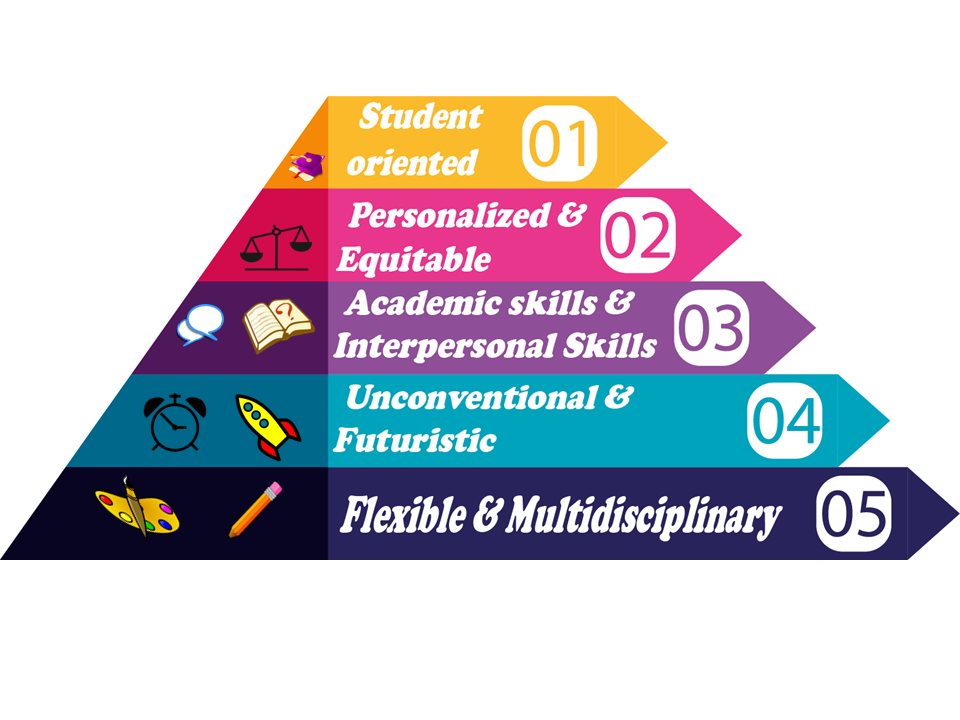
The manifold benefits of Project-based Learning are:
- Project-Based Learning is a highly personalized approach and it caters to diverse interests. Students welcome the learning experience as they get to work at their chosen pace. This eliminates the run-of-the-mill curricula of traditional classroom teaching and fosters deep interest. It accommodates varying learning patterns and difficulties, ensuring that knowledge dissemination is equitable and inclusive.
- Using the help of the PBL framework, learners can make the crucial connection between academic concepts and real-world situations. PBL also inculcates in learners valuable interpersonal skills such as conflict-resolution, resource allocation, teamwork, and cooperation.
- The PBL curriculum deals with the future of education; therefore, it involves visionary learning techniques. As an unconventional approach, it allows for maximum experimentation. This, in turn, encourages learners to invent new solutions and develop alternative approaches to the project at hand.
- Finally, PBL engages students across different academic disciplines and learning styles with its flexibility. Knowledge of a variety of disciplines typically ensures the successful completion of each project. As a result, this methodology is multidisciplinary.
Teachers’ Role in Implementing PBL
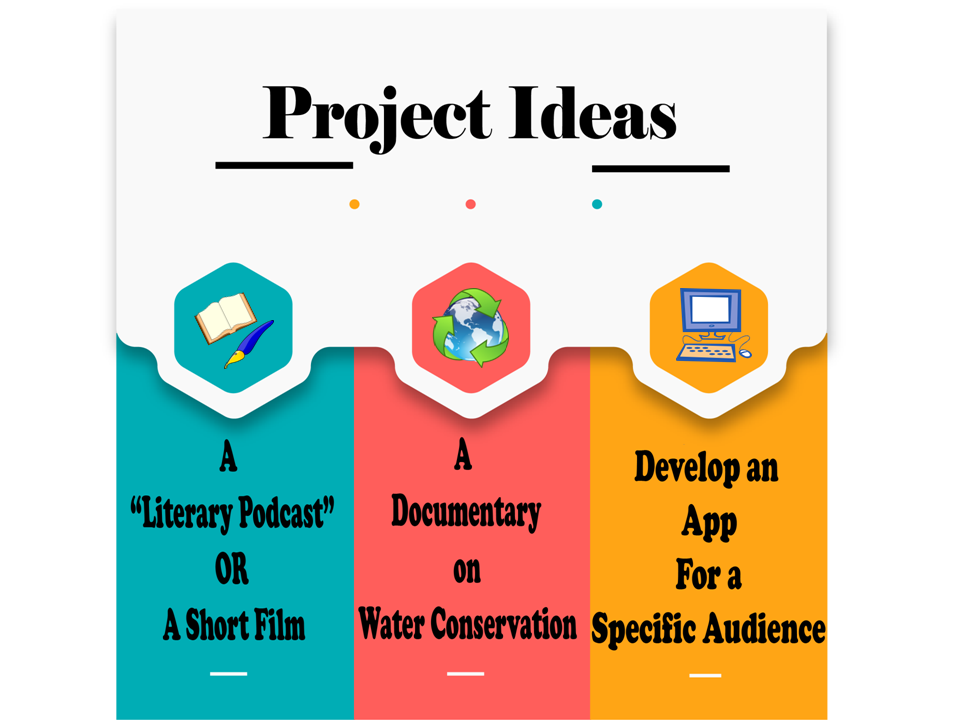
Teachers have a unique role to play in PBL. They must transition from being mere instructors to coaches or collaborators who help their students approach complex projects and problems. In the subsequent articles on PBL, we shall be discussing essential teaching resources and objectives to conduct PBL successfully and where to find them. Subsequently, PBL holds considerable promise to facilitate holistic learning of complex topics. However, it is the teachers who reserve the capability to design intellectually challenging projects and ensure deep learning by the way of probing questions.
In conclusion, teachers as coaches should give effective and specific feedback on projects designed by learners. Consequently, this helps them reach their goals and promotes competition. In addition, teachers are responsible for the assessment of projects by encouraging debates, discussions, and questioning. As a teaching methodology of a new, more technologically advanced society, PBL helps learners acquire essential skills for employability. It is through effective guidance and participation that teachers can fulfill their teaching objectives and shape capable and creative lifelong learners.
For ideas on other teaching methodologies, visit our blog.
Create. Engage. Inspire
The post Project-Based Learning as a New Tool for Learning appeared first on Test.Evelyn.
]]>