The post Redefining Employment: The Rise of AI and Job Markets? appeared first on Test.Evelyn.
]]>Certain jobs that involve repetitive, rule-based tasks are more susceptible to automation. For example, jobs in manufacturing, data entry, customer service, and transportation are being affected by AI and automation technologies. In these cases, AI can perform tasks faster and with greater accuracy than humans.
However, Artificial Intelligence (AI) has a significant impact on employment, both in terms of job displacement and job creation. Here are some key points regarding the impact of AI on employment:
The Influence of Artificial Intelligence on Employment Patterns
Job Displacement:
AI and automation technologies have the potential to replace certain jobs that involve repetitive, rule-based tasks. Jobs in industries such as manufacturing, customer service, data entry, and transportation are being affected as AI can perform these tasks faster and with greater accuracy. This displacement can lead to short-term job losses and challenges for individuals whose skills are directly replaceable by AI.
Job Transformation:
While some jobs may be displaced, AI also leads to the transformation of job roles. Many tasks that can be automated are taken over by AI systems, freeing up human workers to focus on more complex, creative, and higher-value tasks. This shift requires workers to develop new skills and adapt to new job responsibilities.
Job Creation:
The advancement of AI technology also creates new job opportunities. Roles such as AI researchers, machine learning engineers, data scientists, and AI ethicists are in high demand as organizations seek expertise in developing, implementing, and managing AI systems. These emerging job roles require specialized skills and knowledge related to AI technologies.

AI cannot fully replace humans, but it can partially substitute them to a certain extent.
According to a BBC report, the influence of AI will differ across various sectors. It suggests that 46% of tasks in administrative roles and 44% in legal professions have the potential to be automated. However, the figures decrease significantly to only 6% in the construction sector and 4% in maintenance occupations.
New Industries and Opportunities:
AI is enabling the emergence of entirely new industries and business models. As AI technologies continue to evolve, new sectors like autonomous vehicles, healthcare informatics, personalized marketing, and smart home technologies are expanding. These industries require a skilled workforce to develop, maintain, and operate AI-based systems.

AI is transforming last-mile delivery through the use of autonomous vehicles.
Skills Shift:
The adoption of AI necessitates a shift in the required skill sets for the workforce. Skills such as creativity, critical thinking skills, complex problem-solving, emotional intelligence, and the ability to work alongside AI technologies become increasingly valuable. Lifelong learning and adaptability become essential as workers need to continuously update their skills to remain relevant in the evolving job market.
Ethical and Governance Roles:
As AI systems become more pervasive, the need for ethical considerations and responsible AI governance becomes crucial. Jobs related to AI ethics, policy development, and regulatory compliance are emerging to ensure that AI technologies are used ethically, responsibly, and with accountability. It’s important to note that AI is not solely taking away jobs but rather transforming them. While some job roles may diminish, new job opportunities are emerging as a result of AI. These opportunities often involve tasks that require human creativity, critical thinking, emotional intelligence, and complex problem solving—areas where AI currently struggles to match human capabilities.

AI, despite its capabilities, cannot fully match human performance due to its limitation in exercising judgment.
The Influence of Artificial Intelligence on Employment in Call Centers
AI is increasingly impacting the roles of employees working in call centers. AI technologies, such as chatbots and virtual assistants, are being used to automate and handle routine customer inquiries and support. This automation can reduce the need for human call center agents to handle basic queries and tasks.
AI powered chatbots can interact with customers, answer frequently asked questions, and assist with common issues, providing immediate and consistent responses. Virtual assistants can also gather customer information and provide personalized recommendations or solutions. This automation improves efficiency, reduces wait times, and enables 24/7 support.

Artificial Intelligence proving to be far more effective and efficient in customer support than humans.
As stated in a comprehensive report by the Wall Street Journal, the AI assistant handles an astounding volume of 11,400 calls per day, a task that is unachievable for any human. Additionally, the AI agent supports human employees in their daily tasks, including scheduling repair appointments, processing claims, and numerous other responsibilities.
As AI systems become more advanced, they can handle more complex interactions and even mimic human-like conversational abilities. However, there are still limitations to the capabilities of AI when it comes to handling complex or sensitive customer inquiries that require empathy, emotional intelligence, and nuanced understanding. Human call center agents are still needed to handle such interactions and provide the personalized support that AI may struggle to replicate.
Is AI Taking Over Jobs In Data Entry and Processing?
As AI technology advances, it has the potential to replace or reduce the need for manual data entry and processing jobs.
AI is revolutionizing data entry by leveraging advanced technologies to automate and streamline the process. OCR technology, powered by AI, can extract data from physical or digital documents, eliminating the need for manual data entry.
Through automation, AI algorithms can extract relevant information from various sources like invoices, forms, or receipts, thereby reducing human involvement in data entry tasks. Additionally, AI-driven NLP algorithms enable computers to understand and process human language, thereby extracting valuable data from unstructured text sources such as emails, customer feedback, or social media posts.

Robotic systems demonstrate superior efficiency and accuracy compared to human counterparts in the domain of data entry.
AI also plays a vital role in data validation and cleaning, automatically identifying and rectifying errors, inconsistencies, or missing values. By streamlining data transformation tasks, AI can automatically reformat, normalize, or structure data according to predefined rules, minimizing manual efforts in data manipulation. Data entry automation tools, powered by AI and machine learning, learn from human input and offer suggestions or automatically complete data entry fields based on patterns and historical data.
You may also like to read about: Emerging Technology is an Intersection of Humanity and Technology: Brad Waid on AR/VR
As a result, AI-driven data entry systems exhibit increased speed and accuracy, processing large volumes of data swiftly and precisely and, in this way, reducing human errors and enhancing overall data entry efficiency. These advancements in AI-powered data entry not only minimize manual effort but also contribute to improved productivity and data quality.
The Impact of Artificial Intelligence on the Roles of Coding Professionals
AI has made significant advancements in the field of coding and software development, leading to changes in the roles and responsibilities of professionals in this industry. While AI is increasingly being used to automate certain aspects of coding, it is important to understand the nuanced impact it has on coding jobs.
AI tools and technologies, such as automated code generation, code completion, and code analysis, have emerged to streamline the development process and improve productivity. These tools can assist developers by suggesting code snippets, identifying potential bugs, and automating repetitive coding tasks. They can also help with tasks like code refactoring, documentation generation, and software testing.

Certain coding tasks can be automated by AI, but it does not replace the need for skilled human coders. AI technologies currently lack the creativity, problem-solving, and critical thinking skills abilities that human developers possess. Coding involves more than just writing lines of code. It requires understanding complex requirements, designing systems, and making architectural decisions, which still heavily rely on human expertise.
Curriculum Development to Mitigate Job Displacement by AI
Moreover, as AI technology advances, new opportunities are emerging in the field of AI itself. Professionals can focus on developing and improving AI algorithms, designing AI systems, and addressing the ethical implications of AI. The demand for individuals with expertise in machine learning, data science, and AI engineering is growing, creating new job prospects.
To address the potential impact of AI on job automation and help individuals adapt to the changing workforce, here are some curriculum developments that can be considered:

Impact of AI on Curriculum Development
AI Literacy:
Provide foundational knowledge about artificial intelligence, its capabilities, and its impact on various industries. This includes understanding different AI technologies, terminology, and their potential applications.
Data Literacy:
Teach data analysis and interpretation skills to help individuals make informed decisions based on data. This includes understanding how data is collected, processed, and used to train AI systems.
Critical Thinking and Problem Solving:
Emphasize the development of critical thinking skills to solve complex problems that require human judgment, creativity, and strategic thinking. This involves encouraging students to approach challenges from different perspectives and think outside the box.
Will AI Replace Humans?
AI technology itself requires development, implementation, and maintenance, which creates new job roles in fields like data science, machine learning, AI engineering, and ethical AI governance.
To adapt to the changing job market, individuals need to acquire and enhance skills that are less easily automated. Skills such as creativity, adaptability, complex problem-solving, emotional intelligence, and lifelong learning will become increasingly valuable in the age of AI.
Overall, while AI is affecting the job market and may lead to job displacement, it is also creating new opportunities and holds the potential to enhance productivity, improve products and services, and drive economic growth. Society needs to focus on upskilling and reskilling the workforce to ensure that individuals can leverage the benefits of AI and remain relevant in the changing job landscape.
The post Redefining Employment: The Rise of AI and Job Markets? appeared first on Test.Evelyn.
]]>The post Why AI Ethics is Not a Choice But a Necessity appeared first on Test.Evelyn.
]]>The ongoing wave of AI innovations has been building up for quite a while. Amidst the mix of excitement and concern surrounding these developments, it is important to acknowledge that, when used ethically, these technologies hold immense potential for driving remarkable academic progress in education.
Ethical AI and Ed-Tech
AI ethics in educational institutions are crucial as they safeguard students’ privacy and well-being as well as the protection of their personal data.
It is important to regularly monitor and reassess the AI algorithms employed in education to promote fairness and avoid biases for all students.
However, educators and students should be well informed about the uses of ethical AI as it has the potential to greatly contribute to the students’ accomplishments when used thoughtfully.
How AI Be Utilized Ethically Within Educational Institutions
Generative AI for school homeworks and assignments
As AI tools like ChatGPT become increasingly powerful, professors are starting to worry about the future of education. At the same time, college students are left pondering whether AI can assist them with their school assignments, and if it does, would it be considered cheating?
In a survey conducted by BestColleges of 1000 students, including both undergraduate and graduate students, more than 51% of students agreed that taking help from ChatGPT, Google Bard, etc is considered cheating.
On the other hand, 20% disagreed for the same and the rest remained neutral.

51% of students agreed that using AI tools for school purposes is considered cheating
Most people believe that one should not entirely ban ChatGPT from their studies. While it cannot fully capture the essence of a human’s unique views and way of thinking, it can still be used for ideas and knowledge.
Generative AI itself follows ethical procedures and does not allow or motivate students to use AI tools for their schoolwork as it is considered plagiarism. We tested ChatGPT by asking it to provide us with some tips and tricks to cheat on our homework, and here are the results.

ChatGPT considered cheating and copying for school work an unethical practice
But that’s not it. When used in a manipulative or indirect manner, generative AI can produce ethically problematic responses.
It might provide a technically correct answer, but how would it know the intentions or context of the person seeking information?
This particular problem highlights the limitations of AI in replacing human judgment and perception.
AI Ethics for Educators
Teachers play a crucial role in harnessing the power of AI in the classroom, keeping in mind the ethical implications and potential biases that may come with these tools.

Things that Educators Must Know About the Use of Ethics in AI in Classrooms
- Safeguard Student Privacy
With AI’s ability to process vast amounts of student data, including sensitive information like demographics and learning disabilities, teachers must grasp how this data is collected, stored, and utilized. This knowledge empowers teachers to protect student privacy with the utmost care.
- Promote Fairness
AI systems can influence students’ outcomes, from grades to college admissions. Teachers have the ability to remain unbiased, promote fairness, and not favor or discriminate against any particular group of students.
- Nurture Digital Citizenship
In an increasingly AI-driven world, it is essential for teachers to educate students about ethical considerations surrounding AI, including bias and privacy concerns. By empowering students with this knowledge, teachers can help students make informed decisions about technology usage.
You may also like to read about: Influencing the Future of Education with AR/VR
AI Tools for Developing Critical-Thinking Skills
In our 5th episode of Ed-Insights by Evelyn Learning Systems, we got the pleasure of having an insightful discussion with Marisa Zalabak.
Marisa Zalabak is the founder of Open Channel Culture, an AI ethicist, an educational psychologist, and a TEDx keynote speaker.

Marisa Zalabak, AI ethicist, in conversation with Evelyn Learning Systems on using AI ethically
We asked her if students are getting away from doing hard work by using AI tools such as ChatGPT, Google Bard, and Microsoft Bing.
She replied with an enlightening insight. She said, “There are many professors in many prestigious universities that require students to write their articles and essays with ChatGPT. The twist is that they have to write these things three times for three different answers”.
“This will lead them to compare those three answers and write one article of their own. This process will engage the student and develop their critical thinking skills”.
We also asked Marisa Zalabak about how AI is shaping the social development of young learners. She raises an intriguing example to illustrate the social consequences of biases in AI.
She asked us to imagine a young child interacting with virtual assistants like Alexa and Siri, who respond with an adult woman’s voice. This interaction would somehow fit into a young child’s mind that women are servants.

Child Interacting with Virtual Assistants such as Alexa and Siri
This highlights the importance of being mindful and deliberate in the choices made by edtech companies regarding the voices and interactive methods used in their products.
By actively considering these factors, edtech companies can create more engaging and empowering experiences for young learners, ensuring that technology plays a positive role in shaping their perspective and values, and ethics in AI is an important step in this direction.
Additional Concerns Regarding AI in Other Fields
Mental Privacy and Cognitive Liberty
Recent studies have unveiled the extraordinary capabilities of combining neuroimaging technology with artificial intelligence. This amazing union enables the decoding of mental states, visual experiences, hidden intentions, and even dreams with accuracy.
Does this pose a threat to our “Right to Mental Privacy”? Who would guard us against unauthorized access to our brain data, ensuring that all our thoughts and dreams remain solely ours?

Does Artificial Intelligence Pose a Threat to our “Right to Privacy”?
A TedTalk by Nita Farahany uncovers the reality of brain trackers and how, without any privacy protection, they can lead to the exploitation of our thoughts and desires.
Employees are often subject to brain surveillance in the workplace to track their attention and fatigue, and governments create brain biometrics to interrogate people at borders.
We must do something to safeguard our right to privacy and cognitive liberty from the risks of getting our brains manipulated or hacked.
Healthcare
Did you know that information generated by AI can sometimes be misleading or inaccurate? This can be risky, particularly when it comes to health.
While the World Health Organization (WHO) is excited about using technologies in healthcare, they are also concerned about using these technologies in a safe and efficient manner.

Generative AI itself Suggests not Relying on Auto-Generated Tools When it Comes to Health
When you interact with an AI model, it may seem like the answers it provides are reliable. However, there’s a chance that these answers could be completely wrong or contain serious errors, especially when it comes to medicine and disease-related questions.
Also Read: How China is Trying to Outpace the World in AI
WHO suggested taking all these concerns into consideration before the widespread usage of generative AI in health and medicine.
Policies to Regulate Generative AI
From 2021 to 2023, there was a surge in proposed legislation regarding artificial intelligence. But these proposals couldn’t make it to the president’s desk. Now, there is a lot of fascination with generative AI, and it has caught the attention of policymakers in Washington.
A report from the MIT Technology Review listed some AI-related bills to keep an eye on:
- Algorithmic Accountability Act
This bill was introduced in the year 2022, before the upsurge of ChatGPT. The bill aims to tackle the real-life consequences of automated decision-making systems. There are some situations where people were harmed due to the results of these AI tools, such as the wrong medications.
The Algorithmic Accountability Act seeks to address these harms and ensure accountability for the decisions made by these algorithms.
- American Data Privacy Protection Act
This act aims to establish regulations governing the collection and processing of data by companies. In the coming years, this act would not only prohibit generative AI companies from engaging in discriminatory data collection practices but also empower users by giving them the authority to check how their data is being utilized.
The post Why AI Ethics is Not a Choice But a Necessity appeared first on Test.Evelyn.
]]>The post How China is Trying to Outpace the World in AI appeared first on Test.Evelyn.
]]>And why not? World economics works that way. The more resources and technological advancement a country has, the more influential and rich it becomes.
Today, it is about AI. Artificial intelligence, in its various forms, has promised an overall cost-benefit despite the high initial investment. It is why only wealthy countries can afford to bring AI into their systems, which can potentially widen the gap between richer and poorer countries.
For instance, AI adoption in automobiles is a big bet. It won’t be long before we see the widespread commercialization of self-driving or flying cars.
Artificial Intelligence in Education
The Ed-Tech industry has agreed with artificial intelligence amiably. The use of artificial intelligence to make learning more accessible, engaging, and advanced is our personal favorite.

Students are already comfortable with technology, and they are more curious to make friends with anything more advanced that might come up.
The Ed-Tech space is so vast that it can encapsulate almost every aspect of education, including curriculum development, lesson delivery, and assessments. The VR sets, merge cubes, augmented reality mobile apps, etc., all give amazing augmented reality and learning experiences.
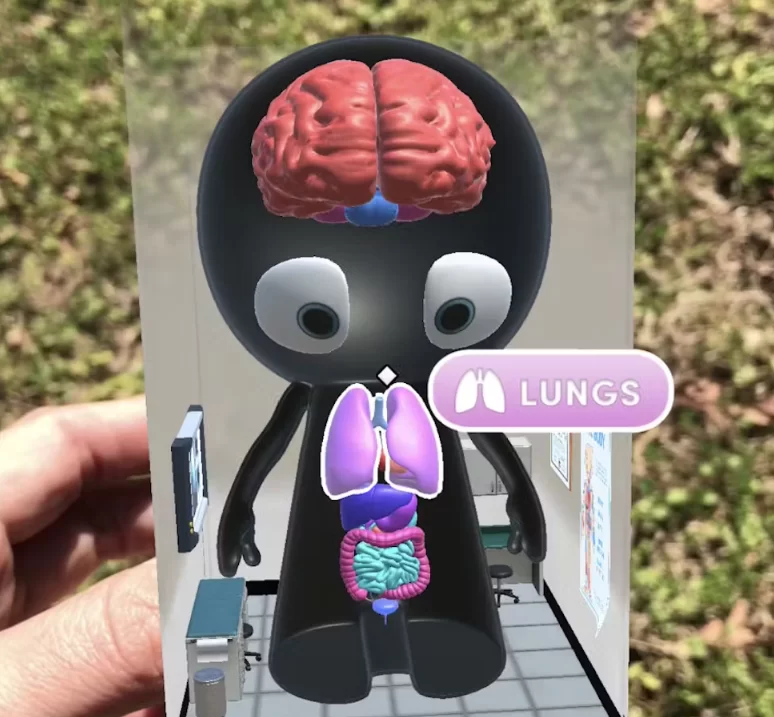
A merge cube showing parts of the human body through the Mr. Body app. Source.

Students can learn about the universe and solar system using a virtual reality set.
China, Technology, and AI
It is no news that countries have used various methods to come up as the top power in the world. Earlier it was only muscle power with higher investments in manpower, arms, and ammunition. Now, technology is the new power weapon in this new era of computers and robots. So, countries have been leveraging this soft power to make themselves global power leaders, making other countries reliant on them.
Harvard Professor of Economics, David Yang, recently enlightened us about the US ranking of the top companies with the most accurate technology in facial recognition. Out of nearly 50 companies, the top five were Chinese companies.
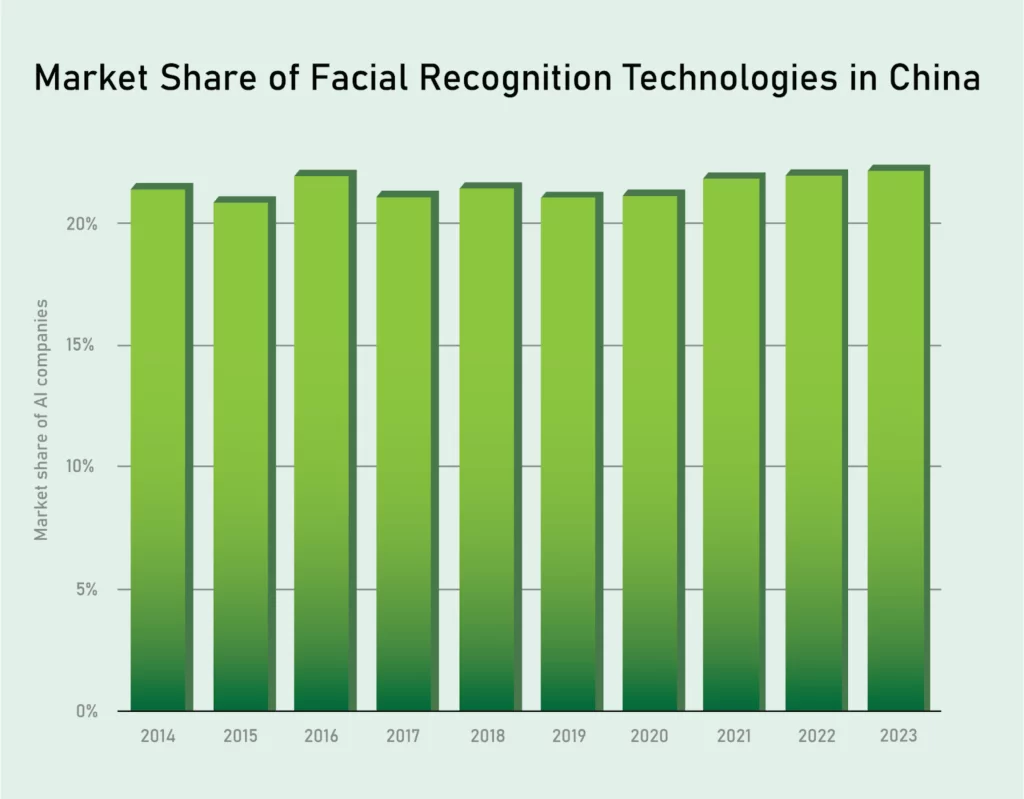
The graph demonstrates the percentage distribution of Facial Recognition Technologies in China.
China has been making tremendous and aggressive investments in digital technology, focusing on creating outstanding AI infrastructure to compete with other more significant economies like the US.
China is already ahead in many areas, which is a no-brainer. The most used app in the world is TikTok, and the Chinese are the majority of smartphone users worldwide.

China-based TikTok has been the most used application in the United States.
A renowned think tank, the Australian Strategic Policy Institute, discovered that China leads in 37 out of 44 technologies, including hypersonics and electric batteries, and also leads the US in AIgorithms, machine learning, and many more.
China and Ed-Tech Lead
Like any other sector, China also wants to lead in implementing education technology. They want to upskill their citizens with the latest and best knowledge to take a global lead in economic development.

Many recent developments point toward this thought. China’s Zhejiang has already introduced artificial intelligence into school curriculums and made it a compulsory subject. It is also learned that the city plans to create nearly a thousand AI experimental schools by 2025.
The Chinese have also been experimenting with various tech-based products in classrooms, like the brain wave tracker, which tracks distractions. In 2019, a primary school experimented with the product and faced backlash as the headband was used to track the engagement levels of students. The report was directly used to go on the computers of teachers.
The Chinese have also been experimenting with students’ engagement levels and their behaviors, like checking phones or yawning in classrooms. This has been done with parents’ consent to research the use of AI in education.

A still from the video that shows AI experimentation in Chinese classrooms.
With these research exercises, China’s way to leading into the Ed-Tech space with the advanced use of AI is clear.
Indulging in Artificial Intelligence to Improve Education
China seems ahead and determined to improve its educational space by leveraging AI, big data, and cloud computing. We have been reading about how China has set up vocational training schools that use AI to capture students’ behavior and teachers’ teaching styles. This information is later used to improve the teaching styles of educators.
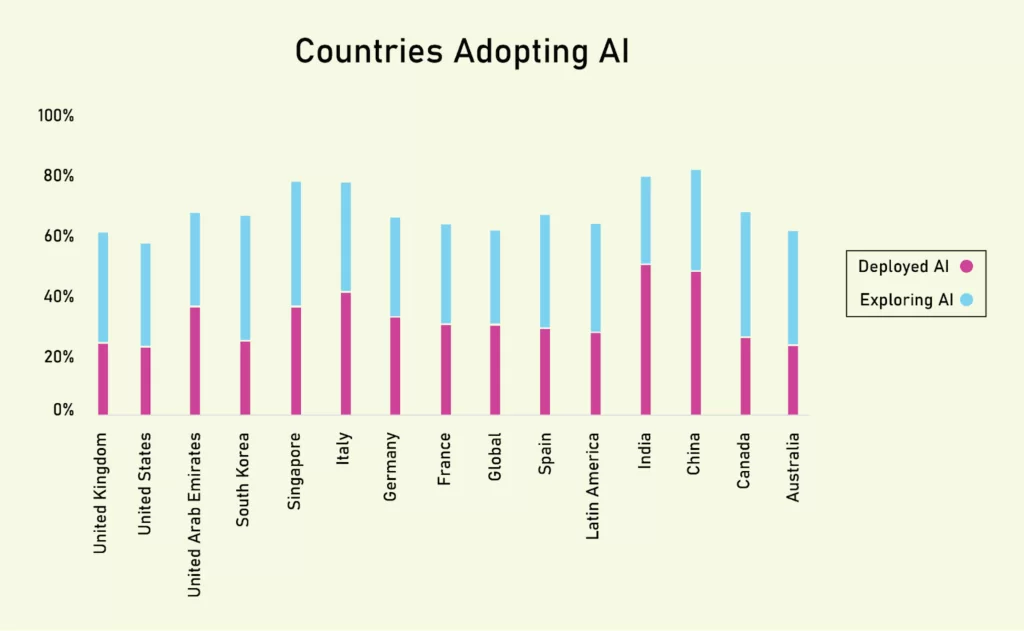
The integration of AI has occurred progressively in different countries, with China leading the way, followed by India and Singapore. Information Source: IBM
An article published last year talks about how China uses AI to reduce the educational gap within the country. It also mentions that over half the Chinese labor force needs a high school degree.
You may also like to read: Influencing the Future of Education with AR/VR

The country has boosted many AI-based technology startups to aid the education sector. The country’s major focus on building AI infrastructure, as disclosed by the Chinese State Council, is to become the world’s top AI innovation center by 2030.
Why China may lead in AI Implementation in Education
The Chinese government is authoritarian and may not think twice before using AI technology that might compromise the privacy of the citizens. So, it has been open to widely experimenting with AI products like AI-based cameras that capture student behavior in classrooms and help teachers and parents to improve student grades.

According to The Guardian, 48.49% of the world’s high-impact research papers were published in China in the past five years. Source.
The government has supported the firms bringing AI-based products that can disrupt education or promote them with financial incentives, infrastructure, research grants, resources, etc. China may lead in AI implementation in education because:
- China is a competitive economy and has made an aggressive moves in almost all sectors to assert its world dominance. China holds the manufacturing units of many high-worth companies. It has pushed its country’s sportspersons to train from a very young age and bring as many Olympic medals for the country as possible. AI would be no exception as well. The country has been leading in publishing AI-based research papers.
- The Chinese education system is organized at the centralized nature of policy-making. It is unlike free democracies, where privacy concerns and citizen discretion are given prime importance and can be questioned. Therefore, it is also about the country’s overall development rather than success in merely one sector.
All that Glitters is not Gold
Just because China has been vastly open to accepting AI implementation and experimentation in its country does not guarantee that it is leading the world. The country still faces a shortage of qualified teachers and established AI labs.
The pace of including AI in education is more straightforward in China because the country already collects a large pot of citizen data. One of the concerns shared by David Yang, Associate Professor of Economics at Harvard, is that this AI technology that might develop in China to understand people’s behavior may be exported heavily and used by other countries to accelerate their autocratic rule.
‘AI is fundamentally a technology for prediction”, he says.
Therefore, autocratic countries would always be the first ones to grab hold of these technologies that allow them to have maximum control over their citizens.
Recently, many leaders have echoed concerns about the potential unethical use of AI without proper regulations. We hope that responsible governments make conscious efforts to leverage technology, but not at the expense of citizens’ privacy or safety.
The post How China is Trying to Outpace the World in AI appeared first on Test.Evelyn.
]]>The post Emerging Technology is an Intersection of Humanity and Technology: Brad Waid on AR/VR appeared first on Test.Evelyn.
]]>This is how Brad Waid is encouraging everyone to utilize digital technology to its best advantage.
In recent years, virtual and augmented reality have gained popularity in education. Students have shown interest in learning because of AR/VR.
A report conducted by ResearchGate and drafted by E. Demirtas, “Reality Technologies and Use in Education” mentioned some exciting facts about virtual reality.
According to this report, the market for VR reached $5.5 billion in the year 2019. However, it is expected that, by the end of 2026, the VR market will reach approximately $18.6 billion.
Students and teachers are inclining more towards online learning than traditional ones, as tech-based learning provides students with an opportunity to understand difficult concepts in a fun and interactive way.
Since the pandemic, there has been an immense increase in the usage of technology in education. This fact has been highlighted by another research report published by Research Gate in the year 2022.
The report features a graph representing the AR/VR users in the United States. There were nearly 60 million users of AR and 35 million users of VR in the year 2018. But, during and after the pandemic hit the entire world, there was a drastic increase in the number of AR/VR users. By the end of the year 2022, AR users had crossed the mark of 95 million, while virtual reality users were more than 60 million.

Graph Representation of AR/VR Users in the United States 2018-2022
We had the pleasure of speaking with Brad Waid in our series “Ed-Insights by Evelyn.” He discussed the changes in student learning that have occurred in recent years due to the inclusion of technology in education.
Brad is an award-winning emerging technology leader, international keynote speaker, educator, and author. He is a visionary who specializes in AR/VR/XR, machine learning, and artificial intelligence.
Brad is recognized as one of the top 20 global futurists and keynote speakers by TAFFD. Furthermore, he is also recognized as the #14 influencer in augmented reality (AR) by Onalytica worldwide.

Brad Waid appeared on our 4th episode of Ed-Insights By Evelyn. Watch the Full Interview here.
The blend of technology and education has increased in recent years. Can you give us some examples of the fundamental changes in student learning due to the inclusion of AR/VR in education?
I’ve seen two radical changes in student learning. One of the changes came around 2011-12 when the iPad was introduced. The introduction of the iPad threw a wrinkle in education. We got access to tools, which have now completely changed what we are doing. The second and most important change is the expectation that students will use technology in education. They are using online learning platforms such as phones, tablets, and laptops as part of their online learning sessions. Nowadays, students don’t know a world without devices. They don’t know a world without technology.
The inclusion of AR and VR in education has made students more engaged in their learning. Traditionally, teachers used to lecture to share all the information about a particular topic. Eventually, students had to memorize that information and respond.
You may like to read about: Influencing the Future of Education with AR/VR
Now, we have a lot more integration of technology in education. The method of teaching has also changed. Teachers share an idea and then students have to research and investigate it. The change that we are seeing is a jump from simple memorization to an active approach to research and coming up with unique ideas.
Do you think it is a concern that we might replace actual books sometime in the future?
I don’t believe that AR/VR is going to replace all books because nothing can replace a classic book. But at the same time, what an ordinary book is used for might change. Reading something motivational, informative, fiction, etc., would still be done with a traditional book.
What augmented reality in education can do is add a digital representation. Imagine you’re reading about a museum in a textbook. Now, with the help of AR, instead of just reading about that museum, you can look at the artifacts in the museum, check its size for scale, and also read a little history about it. augmented reality is not going to replace a book, but it can enhance the classic books we use in education.
What is your idea about what lies beyond 2022? Are we looking forward to some exciting newer trends or better technology in 2023?
AR/VR is starting to take a foothold and it’s being used all over the world. The two big things that are coming shortly are artificial intelligence and metaverse. Both AI and metaverse will come under a blanket of Industry 4.0.
Industry 4.0 will defeat the traditional way of learning and teaching. This change would inculcate curiosity among students by shifting the responsibility of learning from teachers to them.

Inclusion of Technology in Education is Inevitable and the Key to Moving Forward
AI and metaverse are starting to cause some more wrinkles in modern education, but I’m always going to look at their benefits. Students would use AI as a tutorial that will help and assist them. Moreover, metaverse is going to have an impact on students’ learning. However, it’s not going to give them an environment where they can explore. Still, it’s also going to be a new place for students where they can meet people from all over the world.
AI and metaverse are the two big things that we will see in the future. They are already here but will be further developed for better use in education.
Would you like to give a message to our audience?
I want to encourage everyone to use technology in a way that will benefit humanity. Automobiles, airplanes, computers, etc. are built for the welfare of humankind. Teachers should be open to new technology and try to understand it more with the help of their students.
“Embrace the technology and use it. Whether you’re a teacher or a student, or you’re in the industry, try to use technologies like virtual and augmented reality in a way that will benefit humanity”.
Students can play a big role in helping us understand emerging technology and also assist us in moving forward. They are the ones who took us into this new world. We are living in a great time where modern technologies like AR/VR can help all humankind.
The post Emerging Technology is an Intersection of Humanity and Technology: Brad Waid on AR/VR appeared first on Test.Evelyn.
]]>The post Talent Assessment: Methodologies and Tools appeared first on Test.Evelyn.
]]>What are Talent Assessments?

If we were to describe what talent assessments are, indeed it helps companies cut through thousands of applicants and choose the right candidate for the job. Companies should implement talent assessment when they need to hire the right candidate.
Talent assessment is now a part of companies of all sizes. Companies design a pre-employment talent assessment test that candidates must specifically go through. Based on several parameters, candidates are selected for the interview process and then go through the talent assessment screening. These are the deciding factors for a company when they conduct recruitment drives.
To illustrate, some of the famous examples of companies that use talent assessment are Walmart, Sears, PetSmart, Express, Neiman Marcus, and Macy’s.
The common perception here is to test the experience and work capability of the candidate. It is as simple as it can get. Candidates who go through the tests and ace them are more likely to be the right fit.
Moving on to the criteria based on which the tests are designed, it is specifically hiring and retention case studies. Companies analyze all types of employee data to make the right kind of assessment test. How the candidates perform shows their compatibility with the job role. Alternative names for talent assessment are pre-employment tests, employment screening tests, and employment assessment tests.
How do Talent Assessments Work?
Through online assessment platforms, companies use their HR managers to conduct talent assessments. Such screening procedures truly help the recruiting managers or the HR personnel separate the unfit candidates and shortlist the fit ones.
They are conducted online on a cloud-based platform and must be secured with advanced proctoring tech. The process is automated, inclusive of interviews consequently conducted on a talent assessment platform.
Check out the step-by-step process to this test:
- Creating the tests
- Sending out the test invites to the candidates
- Proctoring intervention
- Identity verification of candidates
- Conducting tests
- Result report generated instantly
Types of Talent Assessments
Since we already know what talent assessment signifies, let’s go through its multiple forms.
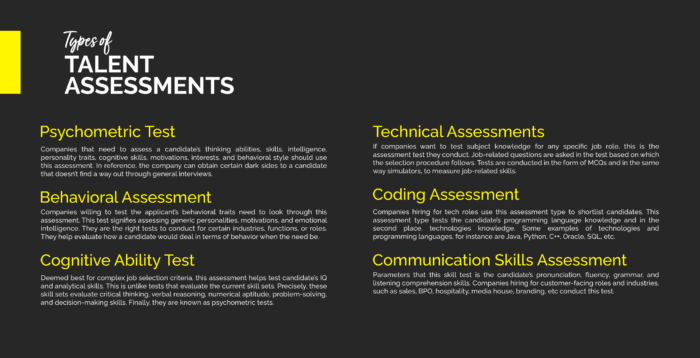
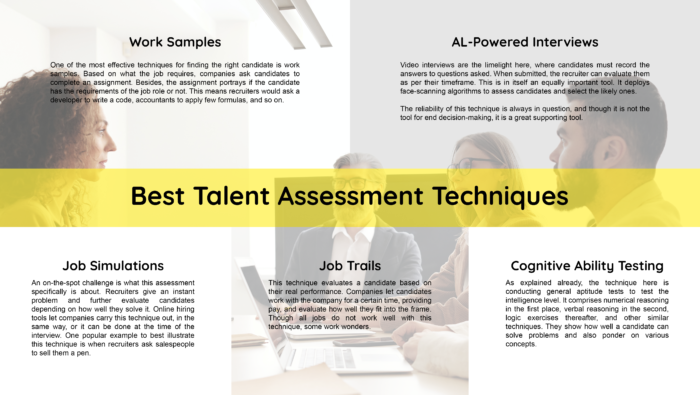
Best Talent Assessment Techniques
We have a bunch of talent assessment techniques that companies could use. They would come in handy at the time of hiring.
Top Talent Assessment Tools
If you are pleased with this form of hiring candidates, it is probably time you use this methodology for your company. Look out for these 12 tools which you can consider at the time of assessing the applicants.
- Applied
- Codility
- eSkill
- HackerRank
- HireSelect
- Interview Mocha
- Koru
- Mettl
- Plum
- Predictive Index
- Pymetrics
- Self Management Group
Talent assessment puts the shortcomings of the traditional recruitment process on hold. Talent assessment amplifies the experience for both the candidate and the recruiter. It makes bringing the best talent on board easy and reliable.
For more information on preparing for the LSAT, visit our blog.
Create. Engage. Inspire.
The post Talent Assessment: Methodologies and Tools appeared first on Test.Evelyn.
]]>The post Learning Experience Design or LXD appeared first on Test.Evelyn.
]]>What is Learning Experience Design (LXD)?

LXD is the acronym for learning experience design and best refers to the process of creating learning experiences. The focus of creating such designs is to make the approach human-specific and goals inclined so the best outcome ventures from it.
Specifying LXD, it has several design disciplines at its core with the prime objective of the field of learning. Some key design principles used in LXD are interaction design, user experience design, experience design, graphic design, and game design. Let us get a clear picture of LXD by breaking the concept into 3 parts.
Experience
Knowledge comes to us from experience and might be in multiple forms, not limited to education. Knowledge gathered from home, any outdoor areas, or work and experience obtained from any place is worthy of a shot. These experiences are what matter. Hence, LX designers need to integrate such experiences.
Design
LX design is all about the creative design discipline, the applied form of art. Research, experimentation, ideation, conceptualization, prototyping, iteration, and testing goes toward the process of LX design. Designs of the process have one objective – provide value or provide elegant solutions. Here, the design discipline denotes a design detail that teaches.
Learning
Defining LX design is about how the candidates learn, not the teaching pattern or the training schedule. The catch is to know the designs and efficient approaches of using the design that endorses learning. The end game is to curate a learning experience that works and lets the learner absorb much.
Other facets to this concept as we already know are human-centered and goal-oriented.
Elements of Learning Experience Design
The success of the eLearning courses of LXD depends on four key elements as described. Before we go through the elements, let us brush up on the basics, that is, the difference between UXD and LXD.
UXD or user experience design is used to enhance user experience and is used in the product development field. On the other end, LXD leverages the UXD principle to provide an enhanced learning experience in eLearning courses. LXD makes technology in favor of the learners.
Now, let us get started with discussing the elements.
Understanding Learners
Learners do not necessarily begin from the same origins as others do. Some learners are newbies, while others have already built up the base level and wish to go advance. The experience curve that LX designs create does not have the same origin for everyone.
LX designers, with the help of multiple tools, learn about the experience level of the candidates. Then, they get started with creating the design and add facilitation of skipping a few sections. This allows learners with some knowledge to skip past the sections they already know about.
Experiential Learning
One of the primary reasons why traditional corporate training fails is because they are inclined toward tasks and not experience. Though mainstream training seems reliable, it may not essentially be of value and fun.
LX designs leverage the traditional aspects such as functionality, usability, and convenience and add the missing parts. LX designs let learners move past the traditional offerings and engage them in a great way. The learning has the end course of action where learners find the solutions themselves.
Engagement and Motivation
Content competence apart, LX designs must indeed design a course for humans. The idea should be to create a design that learners would find entertaining, engaging, and valuable. Learners must feel they are getting a lot more in return for taking up the course and there is no compromise.
Sensory Layer
While crafting the learning course, another aspect that LX designs consider is the sensory experience of learners. Each and every aspect of the learning program must be in line with the sensory experience of learners. Designers should ensure they collect from the learner’s senses and amplify the materials and instructions accordingly.
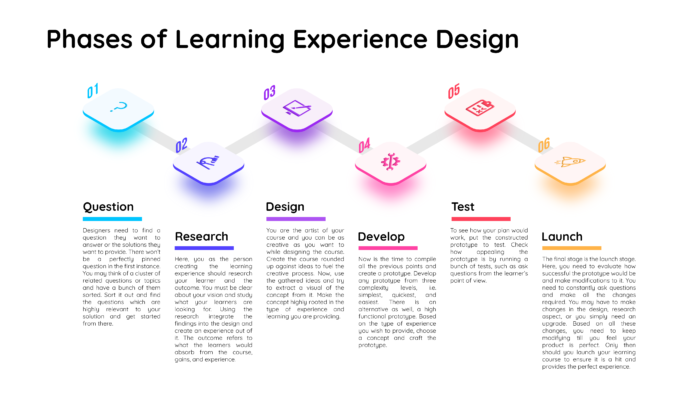
Phases of Learning Experience Design
When you want to create a learning experience design, you need to set for a journey of uncertainty and adventure. The approaches that LX designers use often reciprocate that journey and there is a streamlined process to it. There are 6 collective steps or a rough draft of how the design phases go:
Learning Design v/s Instructional Design
Confusion between LX design and instructional design is an obvious phenomenon. The look of it might be the same, but they are entirely different concepts when you dive deep into them both. Precisely, instructional design is teacher and teaching-oriented, while learning design is learning and learning outcome-oriented.
For more information on preparing for the LSAT, visit our blog.
Create. Engage. Inspire.
The post Learning Experience Design or LXD appeared first on Test.Evelyn.
]]>The post Animation Techniques For Effective Content appeared first on Test.Evelyn.
]]>A thousand words can be written to convey a message, but a short animation film is significantly more powerful. Perhaps this is why they are preferred for educational, business, and presentation purposes, among other things. However, before animators begin creating their own, it is necessary to have a fundamental awareness of the numerous animation techniques used in multimedia. After all, it is likely that a 3D approach will appeal to their audience more than a 2D approach or stop motion, or vice versa.
The goal of this article is to guide readers through the complexities of various animation styles and approaches. It also covers the fundamentals of color coding, as well as the ideal quantity of text to include in an animation.
What To Choose: 2D v/s 3D
There are several aspects animators must consider when determining whether to create a 2D video animation or a 3D animation. Although both are fantastic in their own right, there are several differences that may lead animators to prefer one over the other.
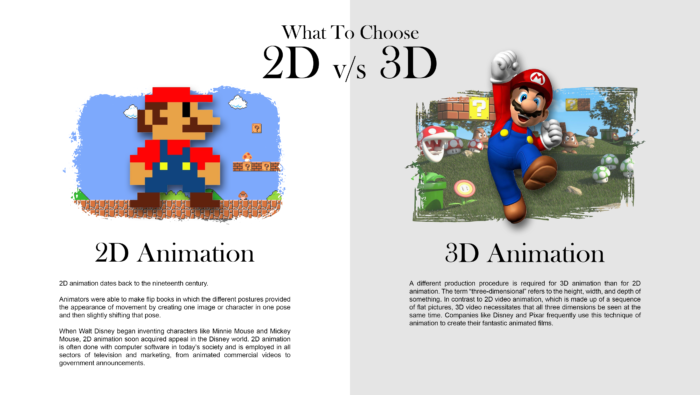
So, what should animators think about when determining whether to make a 2D or 3D animated video?
-
Target Audience
The target audience should be the first thing to think about. If animators have a topic they need to convey, a 2D explainer movie is the most digestible and enjoyable way to do so.
3D videos, on the other hand, are considerably more realistic. So, if animators want to showcase a new product, such as a smartphone, a 3D video would be an excellent choice.
-
Pricing
Pricing is another element animators should think about when deciding on the proper video animation path for them.
2D video animation is typically far more cost-effective than 3D animation. This is due to the fact that 3D animation is far more sophisticated than 2D, requiring an animator to devote significantly more time to the process. When it comes to creating video animations, time truly is money.
-
Turnaround Time
Following up on the previous point, animators can create 2D videos far more quickly than 3D animations. The average turnaround time for a 2D video is roughly six weeks.
Due to the more difficult animation process, creating a 3D video might take months or even years, depending on the length and complexity of the animation.
Color Coding
Animators must think carefully about the colors they employ in their animations and why they do so. When animators do not handle color correctly or in the right context, it might become a distraction for users, lowering their performance.
It is crucial to think about the associations people have with particular hues (e.g. red and green). On the website, animators may be able to use red to color code a subject, but it will likely have to be a darker shade that does not feel alarming.
The color red, for instance, in a US safety handbook implies “warning” or “danger.” Users with an American background will notice the red signaling cue right away and will most likely read the material.
Differentiating Information Sections Using Color
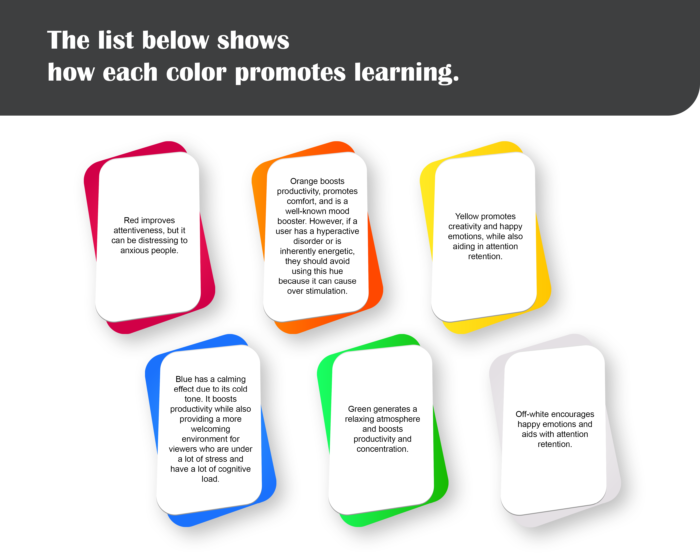
With so much information to digest, colors are able to provide the ideal environment for learning to take place.
Each hue has its own wavelength, which is thought to have various effects on our brain. This means that when it comes to learning, the colors animators choose will have an impact on the user’s feelings, behaviors, and attention.

Humans are sensitive to visual cues, and color has been demonstrated to boost the likelihood of information being encoded, retained, and retrieved when compared to black and white. As a result, viewers can process information faster with color because it visually organizes information in ways that are relevant to them.
Color should be utilized to distinguish between distinct pieces of information in a program or on a website. Color should be utilized to give each area of the website a distinct look if there are numerous pages of content that might be arranged into certain sections (subjects, chapters, sub-sections, etc.). Each part may have its own distinct look and feel.
Color-coding sections makes it easier for users to figure out where they are in the app’s navigation. As they become more familiar with the colors, they will construct a mental map of where different pieces of content are located.
Optimum Amount Of Text In Animation
When it comes to adding text to animations, animators must keep two things in mind:
a. Aesthetics
Yes, the goal is not to overpower the animation with too many words. It can be counter-intuitive to include too much text in an animation. Instead of aiding audience retention, it detracts from the aesthetics and elegance of the animated content.
The words animators add must blend in with the animation’s theme and contribute to its artistic appeal.
b. Legibility
While it is necessary to maintain the animation’s aesthetics, the primary reason for having text on it is to improve the audience’s capacity to retain the information.
Bearing this in mind, it is vital to arrange the text in a readable manner. For this purpose, animators can use proper text qualities, such as color, font, and size. The number of words on the screen at any given time has a significant impact on one’s ability to read. Some people can only read a few paragraphs at a time. Animators can employ split text online tools to easily divide big volumes of text into bite size bits, as well as other tools to make readable chunks of video text.
The animator ultimately decides how much text the video needs. It is no longer difficult to strike a nice balance between aesthetics and legibility when adding text to animations. However, animators should avoid making obvious errors when doing so. A handful of the most typical mistakes individuals make while adding text to animations are listed below.
-
Color
The text animators add to a video should have a color that contrasts nicely with the video’s subject. It is critical that the reader be able to grasp it without difficulty.
The aim is to put the text on top of something that contrasts effectively with the text color. It is also crucial to make the backdrop object slightly transparent (opacity 0.7 to 0.8) so that the animated content behind it is not obscured.
-
Size
This is a simple task. Animators must determine the significance of the text. If it is a subtitle, they may put it toward the bottom and keep the font size tiny. Animators can increase the font size of a title by 3-4 times. Unlike a subtext, the audience should never overlook it.
Many people believe that keeping text tiny will impair the animation’s output. If animators believe the message is significant, they should prominently display it in the animation.
-
Position
One can never overstate the importance of text placement. Animators should always place crucial text, such as titles, in the middle of their frame. They should have no reservations about doing so. If it is an assistance annotation, they can place it at the bottom 2/3 of the animation on the left or right side, toward the top.
-
Duration
When animating text, animators should always ensure that their audience has enough time to read and grasp the text they have added to the video. If they fail to do so, the whole point of putting text to video is moot.
It is a good idea to keep the text open for 2 seconds longer than the typical reading time. There are certain exceptions to this rule, such as when the text must appear in sync with specific sequences. Animators can ignore this regulation in certain instances.
To conclude, design is more than just a matter of aesthetics. Interaction is at the heart of design. Communication necessitates the use of animation. Animators must embrace the interactive nature of the web from the start and consider it a natural element of their work.
Image Sources: Shutterstock and Unsplash
For more information on animation techniques for effective content, visit our blog.
Create. Engage. Inspire.
The post Animation Techniques For Effective Content appeared first on Test.Evelyn.
]]>The post Technology in Education: An overview appeared first on Test.Evelyn.
]]>With the evolution of technology, new technologies for teaching started developing. From abacus to handheld calculators, from slide projectors to virtual reality tools, artificial intelligence, from books to kindle. Most of all, the effective use of these digital learning tools in eLearning has helped to facilitate personalized learning experiences which couldn’t have been possible in the past in a traditional classroom setting. This has extended learning beyond the classroom and a person can virtually reach anywhere just with the click of a button.
There are various aspects to incorporating technology in the education sector .This article will further evaluate the role and benefits of using the right technology in classrooms.
Role of technology in education
Just a couple of decades ago, finding technology in classrooms was not a very common sight. Today, technology is a fundamental part of the learning process.
According to a recent study, evidence has shown about 70% of all primary and secondary schools in the UK use tablet computers to deliver learning content.
Although technology is essential, it may not be enough to integrate technology alone in online classrooms. Undoubtedly, with lack of good teaching practices, individual tools are destined to fail in providing effective learning experiences.

Why is the use of technology in education essential?
1. Automating everyday tasks
If technology is incorporated effectively into the learning process, it can become a teacher’s best friend and a trusted teaching assistant.
For instance, a number of apps are designed to help teachers take attendance so their time is utilized in other important tasks. Students can mark their attendance through a tablet, even if the teacher is busy preparing for class. And voice assistant tools such as Alexa, Siri, Cortana can help teachers to multitask, find information to share with students, set up appointments, make phone calls, etc.
Meanwhile, as students browse information and access everything online, it eliminates the need to perform basic everyday tasks such as making notes, photocopying or stapling.
2. Greater accessibility
In the past, students and teachers had to be physically present to conduct lectures or exams. Similarly with the use of technology in eLearning, this process can be shifted online avoiding any distance barriers.
Educational technology opened doors to exciting possibilities such as distance learning, virtual field trips, gamification and many more. Established traditional schools now provide online courses, while other schools have shifted their operations online completely. This proves incredibly useful for students who like being flexible and learn at their own pace.
3. Increased collaboration
Educational technology provides endless possibilities for immersive learning practices. Not only are teachers involved with students during lectures, but, students also communicate with each other. Through online lessons and activities, students can interact among themselves to share ideas and work in a team. For example, teachers could hold extra doubt solving classes, by being available via instant messaging or video calls to help students as they go about with the day’s homework.
4. Real time feedback
Using technology for providing real-time feedback can take a great many forms. But, overall, technology can enhance assessment by providing the means to gauge a wide range of student competencies. For instance, schools may opt for an LMS software to assess the leaner’s progress and provide immediate feedback. This can help in healthy engagement of the students. In short, providing real time feedback can foster communication within the classroom.
5. Personalized learning
Technology provides 24/7 access to learning tools and resources. This, in turn, helps the learners utilize their time in a much better way. Through online videos, learners can easily comprehend difficult concepts as it is laid out in bite-sized chunks . Adopting methods such as blended learning in eLearning can also be a great tool to personalize lessons for students with different learning needs. An added benefit is students can complete a course at their own pace and time. Similarly, teachers offer their support by monitoring and assessing the students at every stage.
Technology is here to stay
It is impossible to deny that technology has become an inseparable part of our lives. Today, digital technologies make it easy to find and share information. As well as, people can reach any part of the world through just a screen. Similarly, most classrooms depend on technology to provide personalized learning experiences that results in collaboration. Tech tools give the ability to make teaching easier and eliminate challenges otherwise faced in a non-tech traditional classroom setting.
Above all, it helps to eliminate any geographical barriers, making learning more accessible. Whether you’re a student or an educator, it’s crucial to integrate the right technology by assessing the benefits it will bring in the classroom.
Image credits: Freepik
For more such content on technology and e-learning, visit our blog.
Create. Engage. Inspire
The post Technology in Education: An overview appeared first on Test.Evelyn.
]]>The post What is a Learning Management System (LMS) appeared first on Test.Evelyn.
]]>- Admin app- A trainer or instructor can construct, manage, and integrate all training programs through the admin app. The admin app typically involves adjustments and features which allow them to fully customize the training programs.
- An user interface- In the user interface, participants can take an active part and experience what the admin has compiled for them. Participants learn and access the training programs created for them through a mobile screen or a web browser.
Today, more learners are turning flexible and need their learning on-the-go. Therefore, LMSs need to adapt to the learner’s preferences and create a system where they can access courses according to their pace. Most importantly, accessibility plays a huge role in influencing the purchasing decision. The sign-on process should be simple and user-friendly. Also. the learner should be able to get all the information he needs through the homepage. Therefore, a robust LMS system should have various elements such as user access, calendars, communication, assessments, etc.
Features of Learning Management System
The definition of good LMS varies from individual to individual, but every LMS needs to have a certain set of features.
- Mobile accessibility – Any good LMS system should be compatible with mobile (tablets, smartphones). This is especially helpful for courses that require learning outside work hours or for distributed teams where learning can occur between meetings or calls.
- Advanced Security – Generally, corporate LMS solutions include advanced encryption protocols and backup options to guarantee data security
- Gamification – According to a 2018 study, almost 70 percent of students felt “gamified courses” were better than a traditional course. Additional features such as leaderboards, points, badges can be an extra motivating factor for students. Similarly, most LMS platforms are adopting this trend and including gamification elements in their software to stand out from the market.
- Calendar Catalog – Assigning dates for course-related project deadlines or upcoming tests and publishing it online.
- Collaborative Learning – A great system will help to bring everyone together to share their learning experiences. Also, engaging in group discussions, working together, sharing pictures, and so on, are just a few examples of inducing collaboration in eLearning.
- Coursework Grading – Tracking performance over time and assigning grades to students for continuous improvement.
- Ecommerce – LMS with an Ecommerce functionality will be useful for those organizations looking to sell courses. Here, it allows users to set prices for course material, as well as track revenue and manage expenses without feeling the need to integrate an e-commerce back-end.

Role and functionalities in LMS
a. Schools, universities, eLearning providers
Traditional education institutions and schools selling eLearning will be beneficiaries of an online Learning management system. Also, the system is a crucial tool to design and manage online schools and classrooms by adopting effective teaching styles in an ever-connected world.
b. Administrators
The administrator’s role is at the top of the hierarchy with the most power in relation to the entire platform. But this type of admin is different from the administrator who focuses on handling the technical issues of the server instead. On the contrary, this role is an important one which has a vision of the whole LMS.
c. Instructors
Instructors and teachers’ carries out the whole training process, from the creation of the training course, to strategy building and content delivery. In addition, the teacher will have access to everyone student’s progress and reports to provide assessment and keep track of the activities.
d. Students
It proves to be a highly effective approach for students who prefer a flexible environment of learning, unlike the traditional method. Also, it is suitable for professionals with tight work schedules that cannot choose a traditional or face-to-face program.
Types of Learning Management System
1. Open Source vs Commercial
Free, open source software is all about combining user control with affordability. This can turn out to be quite customizable for any organization. However, organizations must have a technical team and necessary infrastructure in place to support an open-source LMS.
Unlike the open source, free LMS, the commercial version comes with easy execution, promising customer service and extra features. The difference is that it is not free. Ultimately, the necessary features and capabilities required decide the cost you incur.
2. SaaS vs Licensed
This is known as one of the user-friendly models, the SaaS LMS comes with a subscription model. Here, the vendor looks after all the operations and necessary upgrades. And the cost is charged on a monthly or annual basis.
The Licensed model is considered a much safer alternative because it provides customization, customer support and reliability.
3. On-premise or Cloud-based
On-premise offers users the ability to customize and take control. This is useful when the organization has a reliable IT team in place to handle and administer the system. Whereas one disadvantage is that it tends to be more difficult to scale than a cloud-based LMS and may be more expensive.
On the other hand, a cloud-based LMS is hosted on the vendor’s server and users can access it through a web server. As a result, this requires much less maintenance because the cloud service provider carries out all the necessary upgrades or changes.
4. Integration
As the need for LMS solutions keeps increasing, one of the most exciting developments is the ability to integrate with other softwares like HRM, Talent Management System, Payroll, etc. Depending on your organization’s need, you can look for an LMS software which offers this sort of app integration.
Final Thoughts
To sum up, evaluating an LMS requires an extensive analysis of all the functions and advantages that each one offers.
There is an increase in the demand for LMS every year as more companies are adopting eLearning. LMSs are confidently, a modern generation of training systems that outperform conventional classroom training in terms of outcome. Evaluating an LMS becomes a necessity in such factors, requiring a thorough analysis of the features each one offers.
Reference: Learn Upon
Image credits: Freepik
For more such content on technology and e-learning, visit our blog.
Create. Engage. Inspire
The post What is a Learning Management System (LMS) appeared first on Test.Evelyn.
]]>The post Virtual Reality Widening the Scope of Education appeared first on Test.Evelyn.
]]>VR as a Game-changer in Education
A study conducted by National Survey showed that 90% of teachers believed that VR in education was an effective tool to provide immersive learning for students.
Tablets and lightweight computers emerged first in classrooms, but as you might guess, there was still a lack of room for interaction. This is how virtual reality is differentiated from every learning practice.
By combining advanced technology with knowledge, it has been possible to create a learning environment by projecting different versions of reality.

Application of VR in Education
-
Distance Learning
One of the best things is that virtual reality in school education helps students and teachers overcome geographical boundaries and produces natural interactions in classrooms. Similarly, one can attend any interesting event on Earth with just a press of a button. For instance, the London School of Business and Finance is a great example of combining VR with distance learning in the courses they offer to postgraduate students.
-
Virtual Field trips
The capability of VR to offer deeply immersive experiences can be useful for teaching subjects such as history, geography, and art with the help of a virtual field trip. This technology promotes students with the freedom to explore and learn at their own pace. Some of the biggest universities are already offering these trips to students, and the best part about virtual field trips is that they can be distributed on a massive scale.
What Makes VR in Education Beneficial?
1. Engaging
A great deal of time and resources are spent by teachers to engage students through interactive projects, public speaking, and a variety of other ways. Oftentimes, their efforts go in vain.
On the other hand, virtual reality makes it easier to create immersive experiences which bring lessons to life. By gaining hands-on skills, students also become prepared for the future.
2. Technology
It’s incredible how digital technology has changed the way classrooms are taught. The move from passive learners to active learners has changed the game. Especially today in the 21st century, students need to be proficient in technological skills to adapt to the world.
3. Language Roadblock
International education can be a problem for the learner, considering the differences in culture and languages. With virtual reality, every possible language can be included within the software. Therefore, language will no longer be a barrier.
4. Safe Learning Environment
Sometimes, making mistakes during learning can make the students scared of the possible outcome. Gaining skills without the fear of failure makes virtual reality a preferable tool for training to build the student’s confidence. Therefore, students can try different approaches and choose what’s best for them.
5. Practicality
Regarding the practicality of education, students often need special tools and the application of theory in real-life scenarios for learning. Difficult concepts in subjects can be hard to comprehend due to the lack of practical application. And that is how just by using VR in education, students get a chance to learn by doing rather than simply reading. By visualizing complex topics or mechanisms, the cognitive load to process the information is highly reduced.
Final Thoughts
Undoubtedly, we can say that VR is the best fit for modern education. It creates an immersive learning experience and offers a favorable environment for every student out there. Therefore, VR keeps reshaping the way we view the world. It can be said that the young learners of tomorrow are truly in good hands with technology. They will employ it to its full potential.
Reference: Immersion VR
Image credits: Freepik
For more such content on technology and e-learning, visit our blog.
Create. Engage. Inspire
The post Virtual Reality Widening the Scope of Education appeared first on Test.Evelyn.
]]>