The post Redefining Employment: The Rise of AI and Job Markets? appeared first on Test.Evelyn.
]]>Certain jobs that involve repetitive, rule-based tasks are more susceptible to automation. For example, jobs in manufacturing, data entry, customer service, and transportation are being affected by AI and automation technologies. In these cases, AI can perform tasks faster and with greater accuracy than humans.
However, Artificial Intelligence (AI) has a significant impact on employment, both in terms of job displacement and job creation. Here are some key points regarding the impact of AI on employment:
The Influence of Artificial Intelligence on Employment Patterns
Job Displacement:
AI and automation technologies have the potential to replace certain jobs that involve repetitive, rule-based tasks. Jobs in industries such as manufacturing, customer service, data entry, and transportation are being affected as AI can perform these tasks faster and with greater accuracy. This displacement can lead to short-term job losses and challenges for individuals whose skills are directly replaceable by AI.
Job Transformation:
While some jobs may be displaced, AI also leads to the transformation of job roles. Many tasks that can be automated are taken over by AI systems, freeing up human workers to focus on more complex, creative, and higher-value tasks. This shift requires workers to develop new skills and adapt to new job responsibilities.
Job Creation:
The advancement of AI technology also creates new job opportunities. Roles such as AI researchers, machine learning engineers, data scientists, and AI ethicists are in high demand as organizations seek expertise in developing, implementing, and managing AI systems. These emerging job roles require specialized skills and knowledge related to AI technologies.

AI cannot fully replace humans, but it can partially substitute them to a certain extent.
According to a BBC report, the influence of AI will differ across various sectors. It suggests that 46% of tasks in administrative roles and 44% in legal professions have the potential to be automated. However, the figures decrease significantly to only 6% in the construction sector and 4% in maintenance occupations.
New Industries and Opportunities:
AI is enabling the emergence of entirely new industries and business models. As AI technologies continue to evolve, new sectors like autonomous vehicles, healthcare informatics, personalized marketing, and smart home technologies are expanding. These industries require a skilled workforce to develop, maintain, and operate AI-based systems.

AI is transforming last-mile delivery through the use of autonomous vehicles.
Skills Shift:
The adoption of AI necessitates a shift in the required skill sets for the workforce. Skills such as creativity, critical thinking skills, complex problem-solving, emotional intelligence, and the ability to work alongside AI technologies become increasingly valuable. Lifelong learning and adaptability become essential as workers need to continuously update their skills to remain relevant in the evolving job market.
Ethical and Governance Roles:
As AI systems become more pervasive, the need for ethical considerations and responsible AI governance becomes crucial. Jobs related to AI ethics, policy development, and regulatory compliance are emerging to ensure that AI technologies are used ethically, responsibly, and with accountability. It’s important to note that AI is not solely taking away jobs but rather transforming them. While some job roles may diminish, new job opportunities are emerging as a result of AI. These opportunities often involve tasks that require human creativity, critical thinking, emotional intelligence, and complex problem solving—areas where AI currently struggles to match human capabilities.

AI, despite its capabilities, cannot fully match human performance due to its limitation in exercising judgment.
The Influence of Artificial Intelligence on Employment in Call Centers
AI is increasingly impacting the roles of employees working in call centers. AI technologies, such as chatbots and virtual assistants, are being used to automate and handle routine customer inquiries and support. This automation can reduce the need for human call center agents to handle basic queries and tasks.
AI powered chatbots can interact with customers, answer frequently asked questions, and assist with common issues, providing immediate and consistent responses. Virtual assistants can also gather customer information and provide personalized recommendations or solutions. This automation improves efficiency, reduces wait times, and enables 24/7 support.

Artificial Intelligence proving to be far more effective and efficient in customer support than humans.
As stated in a comprehensive report by the Wall Street Journal, the AI assistant handles an astounding volume of 11,400 calls per day, a task that is unachievable for any human. Additionally, the AI agent supports human employees in their daily tasks, including scheduling repair appointments, processing claims, and numerous other responsibilities.
As AI systems become more advanced, they can handle more complex interactions and even mimic human-like conversational abilities. However, there are still limitations to the capabilities of AI when it comes to handling complex or sensitive customer inquiries that require empathy, emotional intelligence, and nuanced understanding. Human call center agents are still needed to handle such interactions and provide the personalized support that AI may struggle to replicate.
Is AI Taking Over Jobs In Data Entry and Processing?
As AI technology advances, it has the potential to replace or reduce the need for manual data entry and processing jobs.
AI is revolutionizing data entry by leveraging advanced technologies to automate and streamline the process. OCR technology, powered by AI, can extract data from physical or digital documents, eliminating the need for manual data entry.
Through automation, AI algorithms can extract relevant information from various sources like invoices, forms, or receipts, thereby reducing human involvement in data entry tasks. Additionally, AI-driven NLP algorithms enable computers to understand and process human language, thereby extracting valuable data from unstructured text sources such as emails, customer feedback, or social media posts.
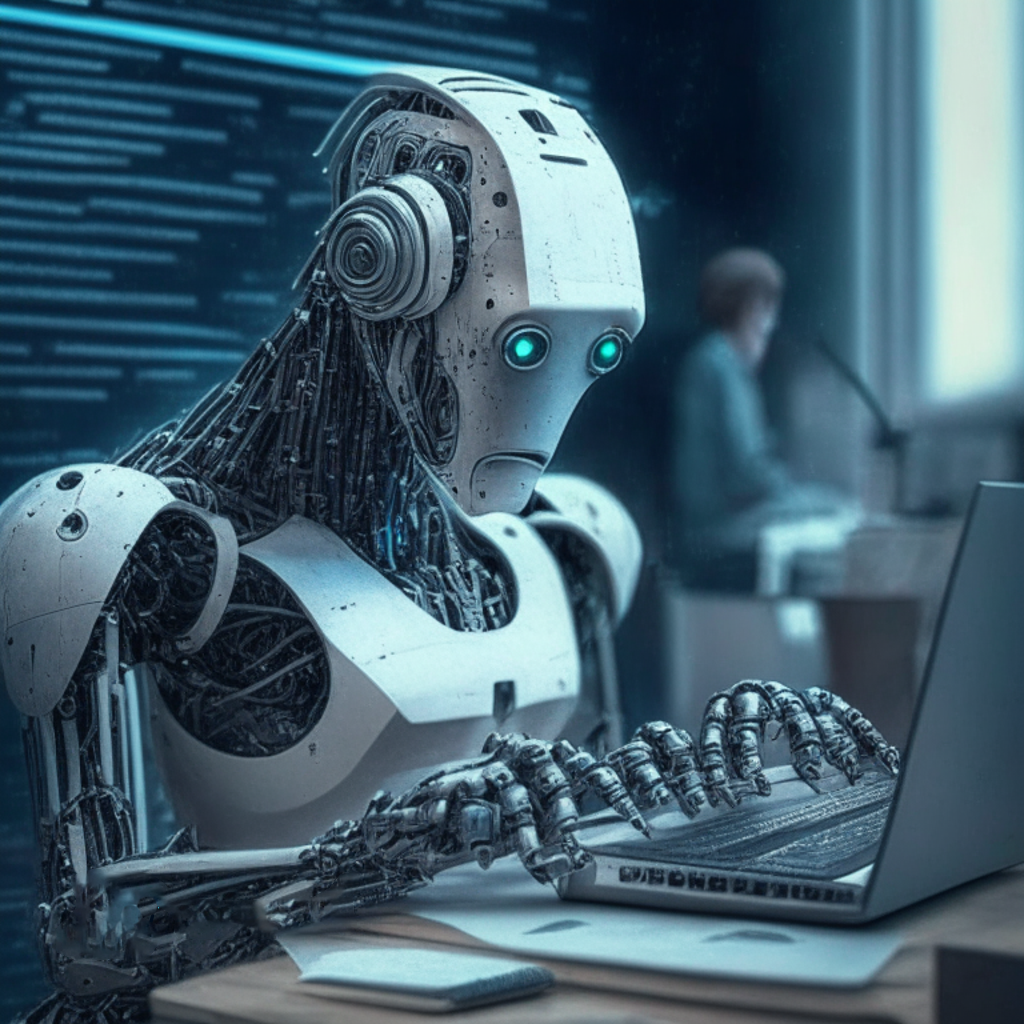
Robotic systems demonstrate superior efficiency and accuracy compared to human counterparts in the domain of data entry.
AI also plays a vital role in data validation and cleaning, automatically identifying and rectifying errors, inconsistencies, or missing values. By streamlining data transformation tasks, AI can automatically reformat, normalize, or structure data according to predefined rules, minimizing manual efforts in data manipulation. Data entry automation tools, powered by AI and machine learning, learn from human input and offer suggestions or automatically complete data entry fields based on patterns and historical data.
You may also like to read about: Emerging Technology is an Intersection of Humanity and Technology: Brad Waid on AR/VR
As a result, AI-driven data entry systems exhibit increased speed and accuracy, processing large volumes of data swiftly and precisely and, in this way, reducing human errors and enhancing overall data entry efficiency. These advancements in AI-powered data entry not only minimize manual effort but also contribute to improved productivity and data quality.
The Impact of Artificial Intelligence on the Roles of Coding Professionals
AI has made significant advancements in the field of coding and software development, leading to changes in the roles and responsibilities of professionals in this industry. While AI is increasingly being used to automate certain aspects of coding, it is important to understand the nuanced impact it has on coding jobs.
AI tools and technologies, such as automated code generation, code completion, and code analysis, have emerged to streamline the development process and improve productivity. These tools can assist developers by suggesting code snippets, identifying potential bugs, and automating repetitive coding tasks. They can also help with tasks like code refactoring, documentation generation, and software testing.

Certain coding tasks can be automated by AI, but it does not replace the need for skilled human coders. AI technologies currently lack the creativity, problem-solving, and critical thinking skills abilities that human developers possess. Coding involves more than just writing lines of code. It requires understanding complex requirements, designing systems, and making architectural decisions, which still heavily rely on human expertise.
Curriculum Development to Mitigate Job Displacement by AI
Moreover, as AI technology advances, new opportunities are emerging in the field of AI itself. Professionals can focus on developing and improving AI algorithms, designing AI systems, and addressing the ethical implications of AI. The demand for individuals with expertise in machine learning, data science, and AI engineering is growing, creating new job prospects.
To address the potential impact of AI on job automation and help individuals adapt to the changing workforce, here are some curriculum developments that can be considered:

Impact of AI on Curriculum Development
AI Literacy:
Provide foundational knowledge about artificial intelligence, its capabilities, and its impact on various industries. This includes understanding different AI technologies, terminology, and their potential applications.
Data Literacy:
Teach data analysis and interpretation skills to help individuals make informed decisions based on data. This includes understanding how data is collected, processed, and used to train AI systems.
Critical Thinking and Problem Solving:
Emphasize the development of critical thinking skills to solve complex problems that require human judgment, creativity, and strategic thinking. This involves encouraging students to approach challenges from different perspectives and think outside the box.
Will AI Replace Humans?
AI technology itself requires development, implementation, and maintenance, which creates new job roles in fields like data science, machine learning, AI engineering, and ethical AI governance.
To adapt to the changing job market, individuals need to acquire and enhance skills that are less easily automated. Skills such as creativity, adaptability, complex problem-solving, emotional intelligence, and lifelong learning will become increasingly valuable in the age of AI.
Overall, while AI is affecting the job market and may lead to job displacement, it is also creating new opportunities and holds the potential to enhance productivity, improve products and services, and drive economic growth. Society needs to focus on upskilling and reskilling the workforce to ensure that individuals can leverage the benefits of AI and remain relevant in the changing job landscape.
The post Redefining Employment: The Rise of AI and Job Markets? appeared first on Test.Evelyn.
]]>The post Why AI Ethics is Not a Choice But a Necessity appeared first on Test.Evelyn.
]]>The ongoing wave of AI innovations has been building up for quite a while. Amidst the mix of excitement and concern surrounding these developments, it is important to acknowledge that, when used ethically, these technologies hold immense potential for driving remarkable academic progress in education.
Ethical AI and Ed-Tech
AI ethics in educational institutions are crucial as they safeguard students’ privacy and well-being as well as the protection of their personal data.
It is important to regularly monitor and reassess the AI algorithms employed in education to promote fairness and avoid biases for all students.
However, educators and students should be well informed about the uses of ethical AI as it has the potential to greatly contribute to the students’ accomplishments when used thoughtfully.
How AI Be Utilized Ethically Within Educational Institutions
Generative AI for school homeworks and assignments
As AI tools like ChatGPT become increasingly powerful, professors are starting to worry about the future of education. At the same time, college students are left pondering whether AI can assist them with their school assignments, and if it does, would it be considered cheating?
In a survey conducted by BestColleges of 1000 students, including both undergraduate and graduate students, more than 51% of students agreed that taking help from ChatGPT, Google Bard, etc is considered cheating.
On the other hand, 20% disagreed for the same and the rest remained neutral.

51% of students agreed that using AI tools for school purposes is considered cheating
Most people believe that one should not entirely ban ChatGPT from their studies. While it cannot fully capture the essence of a human’s unique views and way of thinking, it can still be used for ideas and knowledge.
Generative AI itself follows ethical procedures and does not allow or motivate students to use AI tools for their schoolwork as it is considered plagiarism. We tested ChatGPT by asking it to provide us with some tips and tricks to cheat on our homework, and here are the results.

ChatGPT considered cheating and copying for school work an unethical practice
But that’s not it. When used in a manipulative or indirect manner, generative AI can produce ethically problematic responses.
It might provide a technically correct answer, but how would it know the intentions or context of the person seeking information?
This particular problem highlights the limitations of AI in replacing human judgment and perception.
AI Ethics for Educators
Teachers play a crucial role in harnessing the power of AI in the classroom, keeping in mind the ethical implications and potential biases that may come with these tools.

Things that Educators Must Know About the Use of Ethics in AI in Classrooms
- Safeguard Student Privacy
With AI’s ability to process vast amounts of student data, including sensitive information like demographics and learning disabilities, teachers must grasp how this data is collected, stored, and utilized. This knowledge empowers teachers to protect student privacy with the utmost care.
- Promote Fairness
AI systems can influence students’ outcomes, from grades to college admissions. Teachers have the ability to remain unbiased, promote fairness, and not favor or discriminate against any particular group of students.
- Nurture Digital Citizenship
In an increasingly AI-driven world, it is essential for teachers to educate students about ethical considerations surrounding AI, including bias and privacy concerns. By empowering students with this knowledge, teachers can help students make informed decisions about technology usage.
You may also like to read about: Influencing the Future of Education with AR/VR
AI Tools for Developing Critical-Thinking Skills
In our 5th episode of Ed-Insights by Evelyn Learning Systems, we got the pleasure of having an insightful discussion with Marisa Zalabak.
Marisa Zalabak is the founder of Open Channel Culture, an AI ethicist, an educational psychologist, and a TEDx keynote speaker.

Marisa Zalabak, AI ethicist, in conversation with Evelyn Learning Systems on using AI ethically
We asked her if students are getting away from doing hard work by using AI tools such as ChatGPT, Google Bard, and Microsoft Bing.
She replied with an enlightening insight. She said, “There are many professors in many prestigious universities that require students to write their articles and essays with ChatGPT. The twist is that they have to write these things three times for three different answers”.
“This will lead them to compare those three answers and write one article of their own. This process will engage the student and develop their critical thinking skills”.
We also asked Marisa Zalabak about how AI is shaping the social development of young learners. She raises an intriguing example to illustrate the social consequences of biases in AI.
She asked us to imagine a young child interacting with virtual assistants like Alexa and Siri, who respond with an adult woman’s voice. This interaction would somehow fit into a young child’s mind that women are servants.

Child Interacting with Virtual Assistants such as Alexa and Siri
This highlights the importance of being mindful and deliberate in the choices made by edtech companies regarding the voices and interactive methods used in their products.
By actively considering these factors, edtech companies can create more engaging and empowering experiences for young learners, ensuring that technology plays a positive role in shaping their perspective and values, and ethics in AI is an important step in this direction.
Additional Concerns Regarding AI in Other Fields
Mental Privacy and Cognitive Liberty
Recent studies have unveiled the extraordinary capabilities of combining neuroimaging technology with artificial intelligence. This amazing union enables the decoding of mental states, visual experiences, hidden intentions, and even dreams with accuracy.
Does this pose a threat to our “Right to Mental Privacy”? Who would guard us against unauthorized access to our brain data, ensuring that all our thoughts and dreams remain solely ours?

Does Artificial Intelligence Pose a Threat to our “Right to Privacy”?
A TedTalk by Nita Farahany uncovers the reality of brain trackers and how, without any privacy protection, they can lead to the exploitation of our thoughts and desires.
Employees are often subject to brain surveillance in the workplace to track their attention and fatigue, and governments create brain biometrics to interrogate people at borders.
We must do something to safeguard our right to privacy and cognitive liberty from the risks of getting our brains manipulated or hacked.
Healthcare
Did you know that information generated by AI can sometimes be misleading or inaccurate? This can be risky, particularly when it comes to health.
While the World Health Organization (WHO) is excited about using technologies in healthcare, they are also concerned about using these technologies in a safe and efficient manner.

Generative AI itself Suggests not Relying on Auto-Generated Tools When it Comes to Health
When you interact with an AI model, it may seem like the answers it provides are reliable. However, there’s a chance that these answers could be completely wrong or contain serious errors, especially when it comes to medicine and disease-related questions.
Also Read: How China is Trying to Outpace the World in AI
WHO suggested taking all these concerns into consideration before the widespread usage of generative AI in health and medicine.
Policies to Regulate Generative AI
From 2021 to 2023, there was a surge in proposed legislation regarding artificial intelligence. But these proposals couldn’t make it to the president’s desk. Now, there is a lot of fascination with generative AI, and it has caught the attention of policymakers in Washington.
A report from the MIT Technology Review listed some AI-related bills to keep an eye on:
- Algorithmic Accountability Act
This bill was introduced in the year 2022, before the upsurge of ChatGPT. The bill aims to tackle the real-life consequences of automated decision-making systems. There are some situations where people were harmed due to the results of these AI tools, such as the wrong medications.
The Algorithmic Accountability Act seeks to address these harms and ensure accountability for the decisions made by these algorithms.
- American Data Privacy Protection Act
This act aims to establish regulations governing the collection and processing of data by companies. In the coming years, this act would not only prohibit generative AI companies from engaging in discriminatory data collection practices but also empower users by giving them the authority to check how their data is being utilized.
The post Why AI Ethics is Not a Choice But a Necessity appeared first on Test.Evelyn.
]]>The post Top Trends And Challenges That Define EdTech Industry’s Health In 2023 appeared first on Test.Evelyn.
]]>At the end of 2022, we got a sneak peek of upcoming technologies, such as artificial intelligence, AR/VR, etc. At one point, we saw tremendous growth in the edtech industry, while at another, rising tuition fees and excessive screen time of students got us in a dilemma.
Now that we are into the first quarter of 2023, we are here to talk about the educational trends that are having a positive as well as negative impact on the edtech industry.
We will also take help from Evelyn’s industry report, “Trends and Forecasts on Learning Effectiveness in 2023”. In this report, many educational pundits, who have a rich experience of more than 15 years in the education industry, answered some questions regarding concerns affecting the e-learning industry and opportunities coming in 2023 to look forward to.
Edtech Industry Trends in 2023
During and after the pandemic, e-learning and blended learning started catching the limelight. They became more of a necessity rather than a luxury, as the pandemic refused physical contact completely.
In 2023, both these learning styles proved to have the biggest impact on the ed-tech industry.
Apart from this, AI has been in the news for the last few years. Just last November, OpenAI surprised us with ChatGPT and DALL-E 2. Let’s have a deeper look at all of these trends.
Artificial Intelligence
ChatGPT and DALL-E 2 have been in the news a lot since last year. OpenAI announced that more than a million people signed up for experimenting with this sensational chatbot. This chatbot has the potential to generate long-form content, extend longer conversations and compose, write song lyrics and educational content too.
According to Grandview Research, the real boost in the AI market was experienced after the year 2021. At that time, the size of the AI market was around $93.5 billion (USD).
During the last quarter of 2022, the AI market reached $136.65 billion, which is around a 50% increase from the previous year.
It is also estimated that by the year 2030, the market size of AI would reach $1,810 billion. A few decades ago, artificial intelligence was just a thought in progress. Now, we have robotics, machine learning, natural language processing, artificial neural networks, and whatnot.

Are robots going to replace humans as teachers?
In the next few years, it is believed that robots might have a certain level of self-awareness.
Some robots are humanized to some extent, like Sophia, the human-robot. Self-awareness means that there is no difference between a robot and human, which can also be concerning.
Sophia is a human-robot created by Hanson Robotics. Sophia uses some very advanced technologies, such as Natural Language Processing to understand human speech and Machine Learning to respond to human speech and gestures. This invention is the future of AI and one of the most advanced till date.
University and Startup Collaboration
Talking about industry-academia partnerships, in recent news, Jolly Good, a Japan-based startup has collaborated with Brigham and Women’s Hospital, which is affiliated with Harvard University. Together, they developed emergency care virtual reality content (VR).
Jolly Good medical VR solution will provide a more realistic experience than computer graphics. It will enable medical professionals to create their own live-action VR images.
Blended Learning
Coming to blended learning, this type of learning trend has not gained popularity only because of its sensationalism, but essentialism. Blended learning has become the most loved teaching method because it increases efficiency as well as student achievement by making them learn at their own pace. Apart from this, blended learning is also economical as well as time saving.
On the other hand, many people believe that hybrid learning leads to demotivation and procrastination. Also, it increases the screen time of students, making them feel lethargic all the time.
According to a report by NPR, 53% of children have their own smartphone at the age of 11.
In the year 2019, Common Sense Media found out that children aged 8-12 years spend almost 5 hours a day looking at the screen of their smartphones, tablets, and laptops. Moreover, teens aged 13-17 years spend around 7 hours a day doing the same.

Addressing the Challenges of the Education Industry in 2023
After talking about the useful trends in 2023, let’s move on to the concerns that we could be facing in the near future. The education industry has seen both bright and dull days.
“It cannot be denied that virtual technology is the future of education, but we also cannot agree that it would replace a physical presence”.
Are More Teachers Switching Professions?
During the pandemic, we saw teachers struggling with online teaching. They were feeling dejected, disrespected, and drained. The covid outbreak took a toll on most people’s mental health and online teaching did nothing, but added more mental fatigue to the already stressful life of teachers.
In the session 2022-23, many teachers stopped working. They either moved into non-teaching positions or switched schools.
School districts are unable to retain their teachers. Almost 50% of teachers transfer to new schools or worse, leave the teaching profession altogether. High school students as well as college freshmen have lost interest in teaching as a profession.

Image Credit: National Education Association
The above graph is a question from a research by Langer Research Associates asking parents if they want their children to pursue teaching as a profession. This question was first asked in 1969.
According to the U.S. Department of Education, 50 states in the United States reported a scarcity of teachers in the session 2022-23. There is a widespread shortage of special education teachers in 48 states, science teachers in 46 states, and math teachers in 44 states.
However, many education experts have also stated that the pandemic is just an excuse, and the problem of teacher shortage has been going on for more than a decade.

Teachers switching professions: The real reason
Cost of Education
Education is mandatory, but unaffordable. Many students who are willing to study opt not to continue their education because of the skyrocketing cost involved.
This concern was also highlighted in Evelyn’s industry report. Many experts highlighted this problem and agreed that the cost of education would continue to increase in the coming years too. As online learning is becoming more popular, the cost of education is also increasing.
“While we cannot deny the fact that technology has become an integral part of education, rising tuition fee is also a concern that the average American family is facing a lot”.

Cost of Education skyscraping higher than the previous sessions
The report of the College Board shows an immense increase in the average tuition fee of the private schools in the United States, such as Princeton University, Stanford University, etc.
The above graph shows the education cost, from the session 1992-93 to 2022-23. Although the tuition fee of public schools has declined slightly, keeping in mind the inflation, it is still expensive for lower-middle class families.
Reasons of Hike in Education Cost
In 2022, the cost of education was touching the sky. There are some reasons for this high cost of education . The important one is reduced state funding. In the academic year 2015-16, state funding declined by 11% compared to the last 10 years, which led to increased tuition fees.
This year, the trend has unfortunately continued and is now a big concern for students with poor pecuniary support. Students as well as parents are having second thoughts about pursuing a college degree.
According to the latest Forbes report, the number of students registering for college after high school has declined a lot. This year, college enrollment has decreased by 7% in comparison to the year 2017.
The reason is the sky touching tuition fee. Parents are thinking if taking a high debt for college education is worth it or not.
They are being skeptical regarding the value of a college degree. Students are starting to believe that colleges are overpriced and overrated.
Also Read: Should I go to college? We let our experts answer
Parental Involvement
Parental involvement is the participation of parents or guardians in a child’s education at home as well as in school.
Recently, we saw a lot of people inclining toward the idea of parental involvement in influencing school curriculums. They believed that this involvement leads to the growth and advancement of student.

Parental involvement in education is still a questionable thought.
In Evelyn’s 2023 ed-tech trends report, more than 50% of experts were in favor of the idea that parents should get involved in the decision making process regarding school curriculums.
However, other experts think that parents’ involvement leads to biased decision making. They consider that parents make decisions emotionally and not practically.
It is also believed by some pundits that educators make decisions by taking each and every student into consideration. On the other hand, a parent’s opinion might only be restricted to their child only.
Education Experts’ Opinions
In our recent Industry Discussion: Assessing New Age Curriculum Requirements with Jessica Aurilio and Alex Lochoff, we enquired if the involvement of parents in curriculum designing is valid or not. Their response to the question had some interesting points.
Jessica Aurilio is an edtech specialist at PowerSchool whereas Alex Lochoff is the director of curriculum at Edpuzzle.
Jessica said that curriculum development is not the area of parents to have a voice on. According to her, the idea should come from educators and people who are in the classroom.
On the other hand, Alex Lochoff was of the opinion that it might be okay to take suggestions from parents, but the parents should not have the decision-making power.
Watch the Full Webinar:
Conclusion
While we cherish the boost of artificial intelligence, AR/VR, and e-learning, we are also confused if this elevation is harmful for children. Students are having second thoughts about attending college, which is believed to be a foundational step towards career building. Increased screen time is not only harmful for physical health, but mental health too.
Parents must take measures to limit their children’s usage of technology. State should look into the matter of rising tuition fees. Awareness regarding scholarships and grants is required to provide education to every deserving student.
We have come a long way with technology. Many people are in support of e-learning. However, some think that traditional learning is still the most impactful way of learning. Both are correct in their own ways.
Everything has its pros and cons. Technology, if used correctly can turn out to be the best thing that ever happened to mankind. We should always look at the bright side of things.
The post Top Trends And Challenges That Define EdTech Industry’s Health In 2023 appeared first on Test.Evelyn.
]]>The post Emerging Technology is an Intersection of Humanity and Technology: Brad Waid on AR/VR appeared first on Test.Evelyn.
]]>This is how Brad Waid is encouraging everyone to utilize digital technology to its best advantage.
In recent years, virtual and augmented reality have gained popularity in education. Students have shown interest in learning because of AR/VR.
A report conducted by ResearchGate and drafted by E. Demirtas, “Reality Technologies and Use in Education” mentioned some exciting facts about virtual reality.
According to this report, the market for VR reached $5.5 billion in the year 2019. However, it is expected that, by the end of 2026, the VR market will reach approximately $18.6 billion.
Students and teachers are inclining more towards online learning than traditional ones, as tech-based learning provides students with an opportunity to understand difficult concepts in a fun and interactive way.
Since the pandemic, there has been an immense increase in the usage of technology in education. This fact has been highlighted by another research report published by Research Gate in the year 2022.
The report features a graph representing the AR/VR users in the United States. There were nearly 60 million users of AR and 35 million users of VR in the year 2018. But, during and after the pandemic hit the entire world, there was a drastic increase in the number of AR/VR users. By the end of the year 2022, AR users had crossed the mark of 95 million, while virtual reality users were more than 60 million.

Graph Representation of AR/VR Users in the United States 2018-2022
We had the pleasure of speaking with Brad Waid in our series “Ed-Insights by Evelyn.” He discussed the changes in student learning that have occurred in recent years due to the inclusion of technology in education.
Brad is an award-winning emerging technology leader, international keynote speaker, educator, and author. He is a visionary who specializes in AR/VR/XR, machine learning, and artificial intelligence.
Brad is recognized as one of the top 20 global futurists and keynote speakers by TAFFD. Furthermore, he is also recognized as the #14 influencer in augmented reality (AR) by Onalytica worldwide.

Brad Waid appeared on our 4th episode of Ed-Insights By Evelyn. Watch the Full Interview here.
The blend of technology and education has increased in recent years. Can you give us some examples of the fundamental changes in student learning due to the inclusion of AR/VR in education?
I’ve seen two radical changes in student learning. One of the changes came around 2011-12 when the iPad was introduced. The introduction of the iPad threw a wrinkle in education. We got access to tools, which have now completely changed what we are doing. The second and most important change is the expectation that students will use technology in education. They are using online learning platforms such as phones, tablets, and laptops as part of their online learning sessions. Nowadays, students don’t know a world without devices. They don’t know a world without technology.
The inclusion of AR and VR in education has made students more engaged in their learning. Traditionally, teachers used to lecture to share all the information about a particular topic. Eventually, students had to memorize that information and respond.
You may like to read about: Influencing the Future of Education with AR/VR
Now, we have a lot more integration of technology in education. The method of teaching has also changed. Teachers share an idea and then students have to research and investigate it. The change that we are seeing is a jump from simple memorization to an active approach to research and coming up with unique ideas.
Do you think it is a concern that we might replace actual books sometime in the future?
I don’t believe that AR/VR is going to replace all books because nothing can replace a classic book. But at the same time, what an ordinary book is used for might change. Reading something motivational, informative, fiction, etc., would still be done with a traditional book.
What augmented reality in education can do is add a digital representation. Imagine you’re reading about a museum in a textbook. Now, with the help of AR, instead of just reading about that museum, you can look at the artifacts in the museum, check its size for scale, and also read a little history about it. augmented reality is not going to replace a book, but it can enhance the classic books we use in education.
What is your idea about what lies beyond 2022? Are we looking forward to some exciting newer trends or better technology in 2023?
AR/VR is starting to take a foothold and it’s being used all over the world. The two big things that are coming shortly are artificial intelligence and metaverse. Both AI and metaverse will come under a blanket of Industry 4.0.
Industry 4.0 will defeat the traditional way of learning and teaching. This change would inculcate curiosity among students by shifting the responsibility of learning from teachers to them.

Inclusion of Technology in Education is Inevitable and the Key to Moving Forward
AI and metaverse are starting to cause some more wrinkles in modern education, but I’m always going to look at their benefits. Students would use AI as a tutorial that will help and assist them. Moreover, metaverse is going to have an impact on students’ learning. However, it’s not going to give them an environment where they can explore. Still, it’s also going to be a new place for students where they can meet people from all over the world.
AI and metaverse are the two big things that we will see in the future. They are already here but will be further developed for better use in education.
Would you like to give a message to our audience?
I want to encourage everyone to use technology in a way that will benefit humanity. Automobiles, airplanes, computers, etc. are built for the welfare of humankind. Teachers should be open to new technology and try to understand it more with the help of their students.
“Embrace the technology and use it. Whether you’re a teacher or a student, or you’re in the industry, try to use technologies like virtual and augmented reality in a way that will benefit humanity”.
Students can play a big role in helping us understand emerging technology and also assist us in moving forward. They are the ones who took us into this new world. We are living in a great time where modern technologies like AR/VR can help all humankind.
The post Emerging Technology is an Intersection of Humanity and Technology: Brad Waid on AR/VR appeared first on Test.Evelyn.
]]>