The post Move Over Metaverse, Eduverse is Bringing About an Education Revolution appeared first on Test.Evelyn.
]]>What is Metaverse?
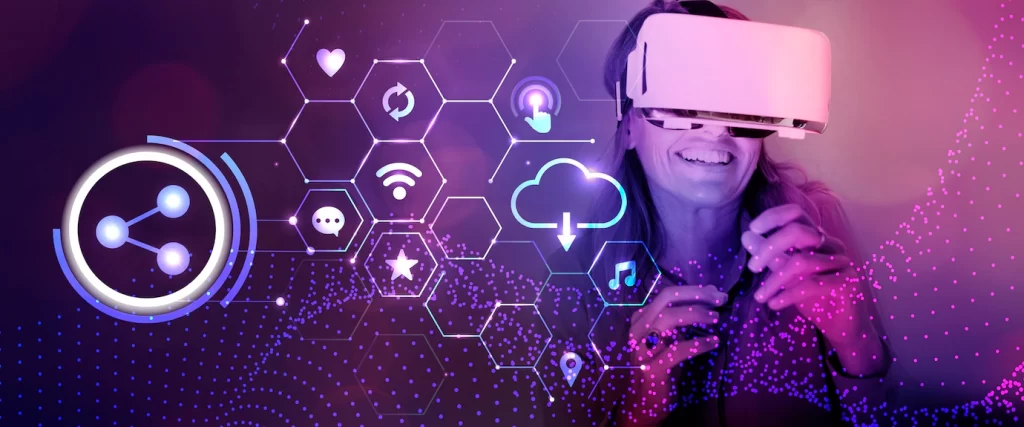
Metaverse is a concept of an alternate 3D reality that exists in a virtual world, one that can connect users across several aspects of lives and across multiple platforms. Driven through latest technologies like Artificial Intelligence, Augmented Reality, and Virtual Reality, users can access the virtual world through VR headsets or web browsers. Besides supporting gaming and social interaction, Metaverse is also expected to combine education, economies, digital identity, decentralized governance, and other applications, bringing multiple aspects of our lives together.
Why Do We Need Metaverse in the Education Sector?
All industries have been adversely affected by the Covid-19 pandemic. All organizations, including educational institutions, have turned to online communication. As online learning lacks collaboration and hands-on learning experiences, it may have a significant impact on students’ performance and motivation to study. However, metaverse allows students to immerse themselves entirely in the experience of a digital classroom environment. As a result, the students learn in an interactive environment and closely interact with instructors. Every activity, including classes, workshops, projects, experiments, and seminars, takes place in real-time, maximizing student involvement.
Using VR in education is an excellent way to deliver theoretical and practical knowledge. Through virtual reality, abstract problems are made tangible. It boosts students’ operational skills, offers an immersive learning experience, and promotes active class participation, thereby making learning more enjoyable and engaging.
How Will the Metaverse Change Online Education?
As the popularity of online learning increases, educators, instructors, and institutions are seeking correct ways to make it more engaging and interactive. Identifying how the four crucial aspects of the metaverse affect education is required to answer the central question about your priorities for this discussion. A brief description of the technological capabilities connected with every factor of the metaverse for education can give an impression of how the metaverse could impact education. Below is a brief impression of how the metaverse can assist education:
- Augmented Reality Uses in Education

AR technology makes it possible to create digital overlays over real-world objects that can create the illusion of three-dimensionality. With augmented reality in education, you can explore various educational applications of the metaverse. Using AR, for example, can help visualize invisible parts and solve problems rapidly.
- Lifelogging Uses in Education
With the help of lifelogging, one can record their daily life and thoughts productively. Most importantly, focusing on self-learning experiences can encourage the use of the metaverse in education. It is possible to review and reflect on the daily events in an individual’s life. Thus, the metaverse can serve as a valuable tool to represent and implement feedback and learning from life in the real world. Additionally, it offers the opportunity to analyze different types of information critically.
- Promoting Communication
Metaverse allows instructors to create rooms where they can organize internal meetings in order to counteract feelings and encourage interaction. Meanwhile, learners can construct study rooms where they can collaborate, study together, and socialize. All users can connect using their avatars, easily share files, interact with the same objects, or play games using the same avatar. Through these features, learners are encouraged to connect with classmates and instructors, which enhances the learning experience.
- Mirror World & Education

A mirror world is another crucial component for answering “How will the metaverse change education?” owing to the immersive nature of virtual learning spaces. Through the use of mirror worlds, education and learning would be able to overcome environmental limitations and physical limitations. For example, video conferencing tools can represent mirror worlds for performing online real-time classes.
- Virtual Reality in Education
When researching educational applications of the metaverse, you need to think about the educational implications of virtual reality. Using VR to simulate practical affirmations in digital environments can serve as a milestone in the advancement of the education industry. As an example, firefighting training can be expensive in the real world. Nonetheless, a virtual reality simulation of firefighting exercises could be a very cost-effective alternative.
Benefits of Using Metaverse in the Educational Field
Using the metaverse can transform the education sector and provide a host of benefits to students. Find out the topmost vital benefits of the metaverse in education:
- Interactive Curriculum & Practical Application of Concepts

Students having fun with VR headset at home – Virtual reality and metaverse gaming concept with people having fun on 3D videogames – Shape of technologic gears has been modified – Bright filter
Educators can offer an interactive curriculum that incorporates real-time experience by using metaverse. For example, normally, students can’t witness rocket launches or track satellite movements in space. In the metaverse, students can experience the launch room, minute-by-minute separation of each rocket stage, and the final orbit of the rocket. In addition, students can learn about the various stages of a rocket launch.
The use of technology like Eduverse in the classroom has proved beneficial to many students. Metaverse represents the next phase of this evolution. As a result, students will be able to learn concepts virtually in real-world situations and enjoy enhanced access. Besides, virtual reality/Metaverse can be used to teach practical tasks like performing advanced medical surgeries and carrying out astrophysics experiments.
- Gamification
It is possible to make learning fun with metaverse. When students are given an objective, learning automatically becomes more engaging. With gamification elements such as badges and quests, students can be encouraged to finish tasks, stay focused, and complete all their work.
As an example, students might find it beneficial to explore flora and fauna through a virtual rainforest. After the discovery of the fauna and flora in the rainforest, students can create their own forests by selecting avatars of the species discovered. This allows them to learn about the plants in greater detail.
- Enhanced Test Results
Despite the fact that metaverse facilitates students’ acquisition of knowledge and mastery of specific fields by involving them in interactive experiences, its true effectiveness can only be measured by the outcomes it produces. Students who get high grades can make this a convincing and easily acceptable argument to teachers, parents, and other members of the teaching fraternity.
It was determined through a study that immersive virtual reality learning was effective in improving test scores. Compared to the control groups, most students who participated in the VR program scored higher. In conclusion, immersive virtual reality learning has been established as a viable alternative for educational storytelling.
Regardless of how skeptical people may be, the metaverse is truly the next stage of the internet, and it has already arrived. The gaming industry has been there first in terms of exploring its capabilities. It will eventually find its way into other areas as well. As for eLearning, it will benefit significantly from the metaverse’s immersive capabilities, making virtual learning environments more lifelike and making learning itself more engaging and experiential. Through the Eduverse, students can experience the aspects of a metaverse in education with animation, storytelling, 3D design, etc. Most importantly, by using emerging technologies, EduVerse aims to tackle education industry challenges.
The post Move Over Metaverse, Eduverse is Bringing About an Education Revolution appeared first on Test.Evelyn.
]]>The post Facebook Now Wants to Rope in Education Companies in Its ‘Metaverse’ appeared first on Test.Evelyn.
]]>The decision by Facebook/Meta to change the nature of modern education is not an empty promise. Facebook Reality Labs will invest a whopping $150 million in an educational program to improve tech development and training. It will use augmentation and virtual reality tools as the primary means to achieve its goals.

What is Meta-Facebook?
For most people, the concept of a metaverse is a mere fantasy. It refers to a virtual reality space where people can embed themselves to get an all-around immersive experience. In a typical video game, you control the character. However, in a metaverse, you are the character!
Related Post: Virtual Reality as a Game-changer in Education
Metaverse and Education
Even for a company as big as Meta, achieving such a feat is tricky, due to which it will partner with Coursera and edX. Together, they will promote the Spark AR Curriculum of Meta using augmentation and virtual reality. These companies will convey more information regarding their partnership and goals in the coming weeks.
Even though the introduction of the metaverse, a concept emerging in fiction, seems like a shock, one should have expected Mark Zuckerberg to implement it. Zuckerberg has always displayed a keen interest in virtual reality. In 2014, Meta, then known as Facebook, bought the VR company Oculus for $2 billion.
Is It Realistic?
The depiction of the metaverse in Zuckerberg’s video has a combination of technologies geared towards education. At 31:00, a girl learns astrophysics by looking at the planets up close, zooming in on Saturn’s rings. Instead of reading from the screen, the girl interacts with the solar system. While the idea of such an in-person experience sounds good on paper, is it for everyone?
Virtual reality sets require a lot of space and money. The VR sets by Meta have failed to capture the market and have even discontinued one of their products called Rift. However, Meta still sells the Oculus Quest 2 and claims the sales have improved without releasing any data.
All things included, investing capital to integrate virtual reality and education during a pandemic seems like a bad idea. Officials prefer to invest their resources into something better than manufacturing expensive VR sets and materials.
Irrespective of the idea, the metaverse will not become a reality for the next decade or so. Andrew Bosworth, the VP of Facebook Reality Labs, suggests “the metaverse is not a single product that one company can build alone.” The firm has also explained that no one company will own the metaverse.
Also Read: Most Interesting Edtech Trends of 2021 That Are Here to Stay
To read other interesting posts about technology, education, and research, visit our blog.
Create. Engage. Inspire
The post Facebook Now Wants to Rope in Education Companies in Its ‘Metaverse’ appeared first on Test.Evelyn.
]]>