The post Benefits of Video Based Learning appeared first on Test.Evelyn.
]]>What are the Benefits of Video-Based Learning?
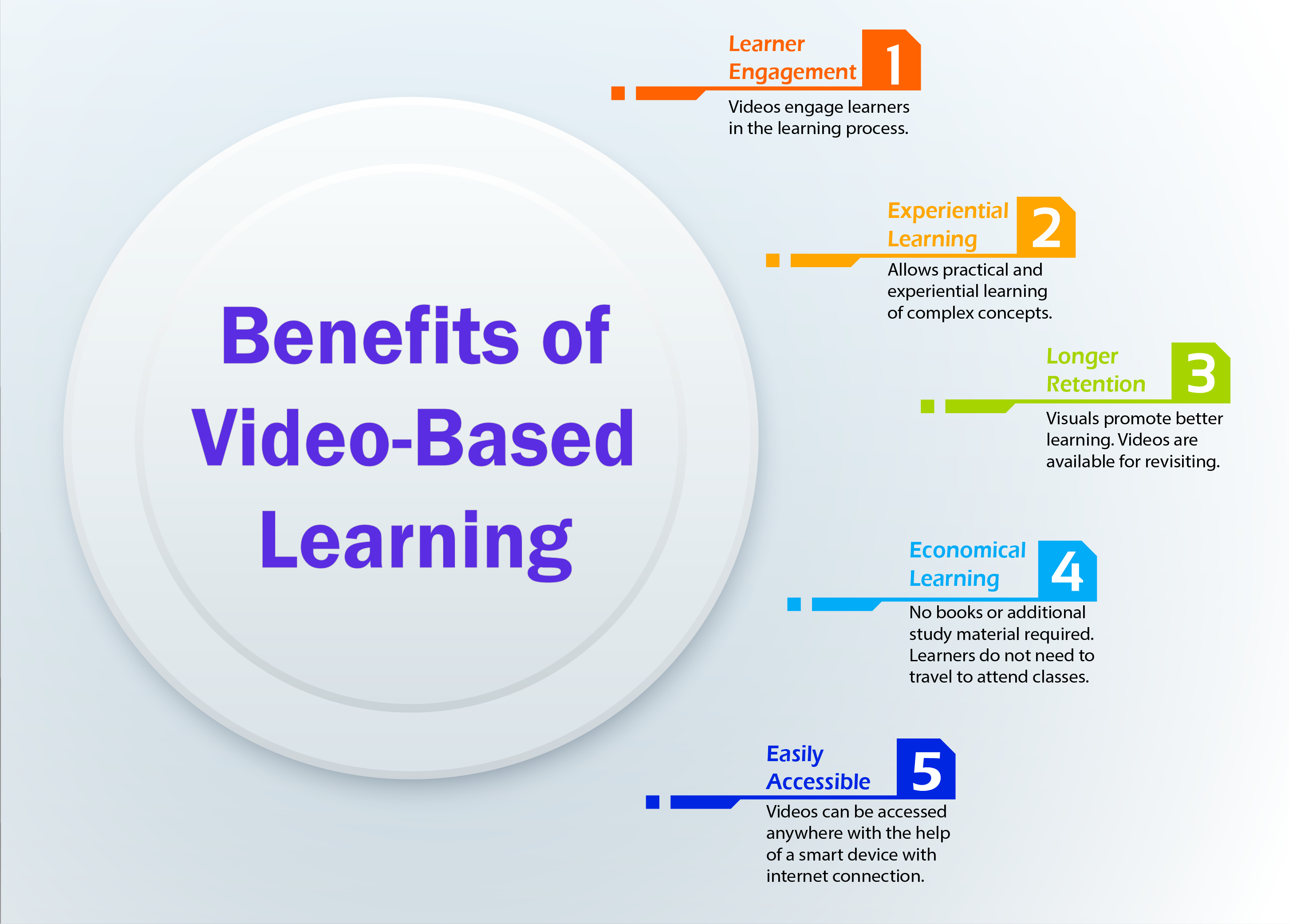
a) Learner Engagement
Videos are an interactive way of learning. Learners are likely to engage more with videos in contrast to text-only content. This is because videos include visuals that paint a clear picture of concepts. Also, educators can use non-verbal cues to their benefit in such type of courses. Non-verbal communication such as intonation when combined with questioning skills promotes engagement. This strategy is not only effective for in-class teaching but also works for video-based learning.
Moreover, videos grasp learner attention with the help of colorful and interactive visuals. As a result, learners remain constantly engaged with the visuals while learning.
b) Experiential Learning
Learning by doing is the key to achieve the best learning outcomes. The practical knowledge of a concept is necessary along with theoretical knowledge, but this practical knowledge is limited to certain subjects. For instance, learners cannot dissect a human body by themselves to study human anatomy. However, videos provide a solution for such situations that limit learning. Learners can learn about anatomy through videos that show the human body through virtual reality. In this way, the actual practical learning takes place with the help of videos.
c) Longer Retention
Videos are an amalgamation of text, visuals, and sounds. All these form the basis of learning. Studies suggest that the average adult retains 10% of what they hear, 20% of what they read, and 80% of what they see. This is because the human brain processes visual information better than verbal or written information. Consequently, when the brain receives information in a combination of text, visuals, and sounds, it becomes easier to retain.
Furthermore, videos are much more engaging than mundane classroom lectures. Learners interact with the content on the screen and are free to revisit the lessons/courses at their will. This means that they are free to practice the concepts based on their convenience. This eventually leads to better learning and retention.
d) Economical Learning
Video-based learning is an economical learning solution. Learners have access to various educational videos available on the Internet. Most of these videos are available for free or at minimum charges. Also, video-based learning does not require traveling or attending classes physically. This helps learners save time and money that would otherwise be utilized.
Moreover, there is no requirement for books and other study material. Only a good Internet connection and a smart device can serve as the tools for receiving knowledge.
e) Easily Accessible
Videos are one of the most easily accessible resources in the current era. This is thanks to technology and the Internet, which provide easy access to all online services. Learners can access any videos on the concepts they wish to learn without having to spend much time finding a teacher. Moreover, videos are always available for reviewing to recapitulate a lesson/concept.
Additionally, technology enables educators to create learning videos on their own. There are various tools available on the Internet that help create an e-learning course.
(Read our blog on Creating a Video-Based Learning Course for more information.)
Future of Video-Based Learning
Auditory learning is gradually becoming a thing of the past. The Internet presents various new learning possibilities. Consequently, eLearning is gradually becoming a go-to learning method. It serves learners with different e-learning styles with an amalgamation of various teaching/learning methods. Video-Based Learning is a great way of administering knowledge. This is because videos immediately grasp the learners’ attention.
Although videos are a part of eLearning, they also supplement in-class learning. Various forms of blended learning (including the flipped classroom) use eLearning to supplement in-class learning. This yields better learning outcomes and also promotes better retention.
Video-based learning will have more consumers in the future, which is due to its ease of usability and application in a wide gamut of industries. It is not only useful for learning but also serves various corporate training and learning needs. Additionally, with technology and resources gradually becoming available to all, creating educational videos will be much easier in the future. As a result, it has great potential to play a prominent part in the future of eLearning.
Research Website: ELearning Industry
Images: Shutterstock and Freepik
To explore more e-learning options, visit our blog.
Create. Engage. Inspire.
The post Benefits of Video Based Learning appeared first on Test.Evelyn.
]]>The post Tips for Creating Effective Assessments appeared first on Test.Evelyn.
]]>There are a variety of formal and informal methods available to assess student progress. These methods include observation, discussions, group interactions, projects, questionnaires, assignments, and so on. Moreover, Project-Based Learning is one of the most effective instructional techniques and an accurate method of assessment.
Although teachers are free to make use of any technique they find suitable for the assessment of their learners, there are certain things of note while designing these assessments.
Some Tips for Creating Effective Assessments
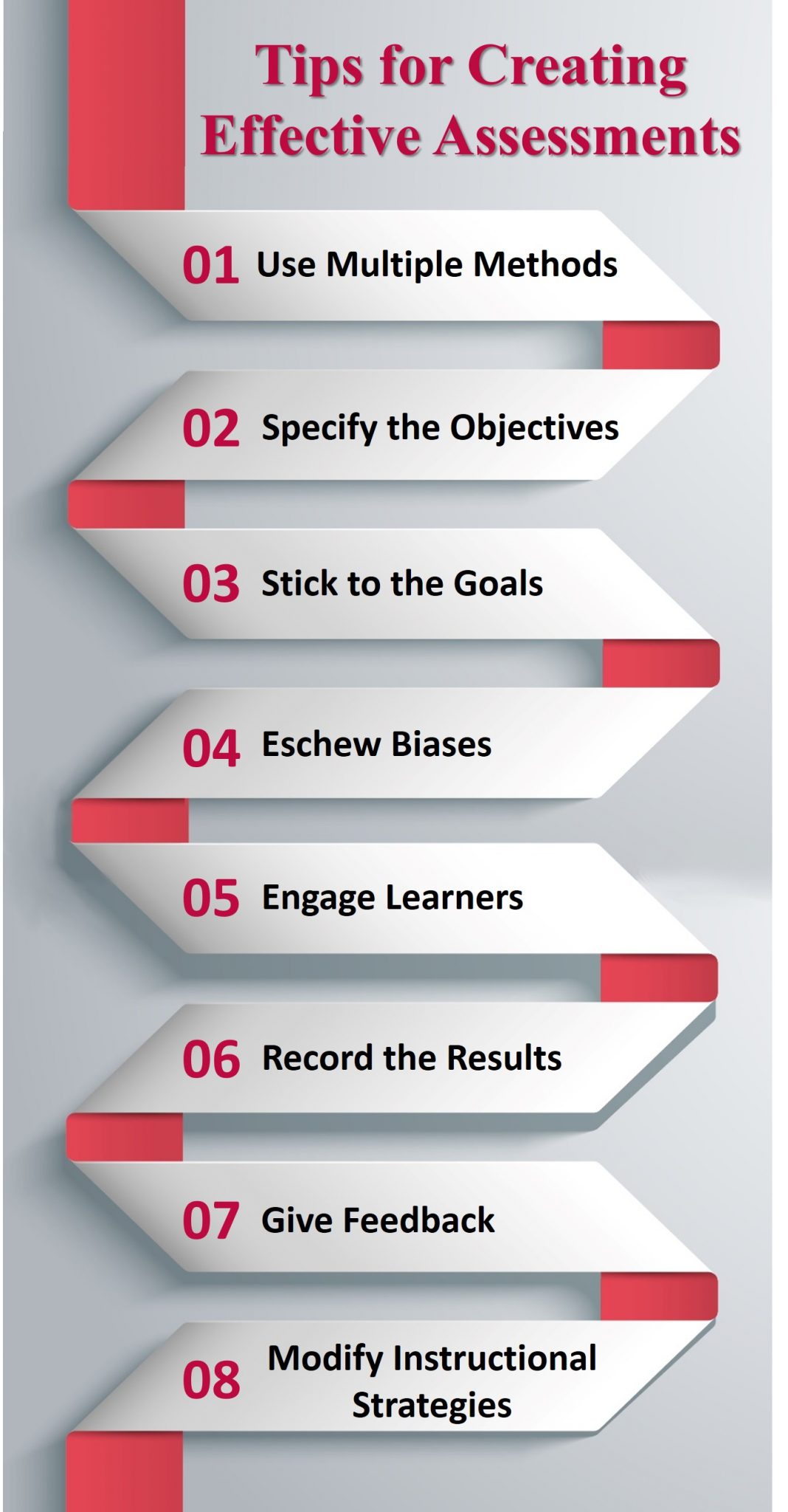
1. Use Multiple Methods
A single method is not enough to provide a complete picture of the knowledge and skills acquired by the students. Thus, a teacher must use multiple methods to assess the students for their capabilities in different fields.
Various activities such as projects, questionnaires, surveys, and others help in the assessment of different skills. These activities are conducted in the form of either formative or summative assessment.
(Refer to our blog on Formative vs Summative Assessments for more information.)
2. Specify the Objectives
Learning aims to inculcate a certain type of skill. Any form of learning has some necessary objectives for acquiring the required skills and knowledge. Moreover, these objectives determine the efforts of the learners and their contribution to the learning process as they participate in various activities. Therefore, specifying the objectives at the beginning of an assessment test helps students identify the skills they must demonstrate. Also, it motivates them to perform better as they are aware of what they are doing.
3. Stick to the Goals
An assessment is nothing without a goal. Effective assessment activities are completely goal-oriented. Thus, teacher as well as students should be aware of the goals and objectives of learning and should stick to them.
Additionally, teachers must ensure that the activities that do not fulfill the goal requirements are avoided to avoid the sheer waste of time.
4. Eschew Biases
Biases create hindrances in the process of development. They develop a sense of insecurity among the learners that often affects their performance. Therefore, teachers should work on creating a free and healthy environment where the students can display their abilities without the fear of judgment.
As a result, the students develop a sense of self-awareness and become progressive as they express themselves better. Moreover, unbiased assessments contribute to the development of their overall personality.
Additionally, the assessments that are not related to the skills/knowledge of the target group of students must be avoided.
5. Engage Learners
Learner engagement is a fundamental requirement for learning. The assessment of learning produces more accurate results when the learners actively participate in the classroom. Also, participation inculcates self-confidence in students as they learn to take initiative.
Moreover, the students learn many social skills as they collaborate with peers in group activities. Therefore, assessment activities involving more learner interaction and participation must be prioritized.
6. Record the Results
Keeping a record of the assessment results is important. It helps to assess the levels of improvement in the learners and also gives a clear picture of their potential.
Also, it helps the teachers identify areas where the learner requires assistance and practice. Accordingly, teachers can then design lessons and choose a teaching methodology that serves the purpose.
Moreover, students get to know where they stand, and a sense of healthy competition develops among them. This motivates the students to compete for better results.
7. Give Feedback
Feedback is what helps students to move further in learning. It gives them insights into their current performance and the areas they need to improve upon. Also, it helps teachers identify potential threats to learning and encourage the students to overcome their fears.
Moreover, feedback initiates an interaction between students and teachers. This creates a healthy classroom environment that leads to the development of communication skills. Also, the overall development of the students’ personality takes place within the classroom.
8. Modify Instructional Strategies
Choosing the right instructional strategy determines the effectiveness of the assessment and the overall course. Thus, the teacher must give clear instructions and should not refrain from modifying the instructional strategy.
Incorporating Gamification in assessments is a strategy that works to engage students while they have fun developing their skills. Apart from this, Blended Learning and Flipped Classroom are two other effective instructional strategies to use.
Furthermore, experimenting with instructional strategies helps to cater to the individual learning needs of the students and renders better performance results in assessments.
Creating effective assessments can be challenging sometimes. The above-mentioned tips for creating effective assessments can help the teachers to fulfill the requirements of learning and assessment to give the students an enriching learning experience.
Research Articles: Getting Smart and Brave in the Attempt
Images: Shutterstock
For more information, visit Evelyn Learning blog.

Create. Engage. Inspire
The post Tips for Creating Effective Assessments appeared first on Test.Evelyn.
]]>The post 8 Tips to Set-Up a Blended Learning Classroom appeared first on Test.Evelyn.
]]>Moreover, this method makes it easy to achieve the desired aims and objectives of learning with appropriate Blended Learning Strategies. However, the task of setting up a blended learning classroom can sometimes be challenging for a teacher. Here are 8 tips to set up a blended learning classroom that works well for most learning situations.
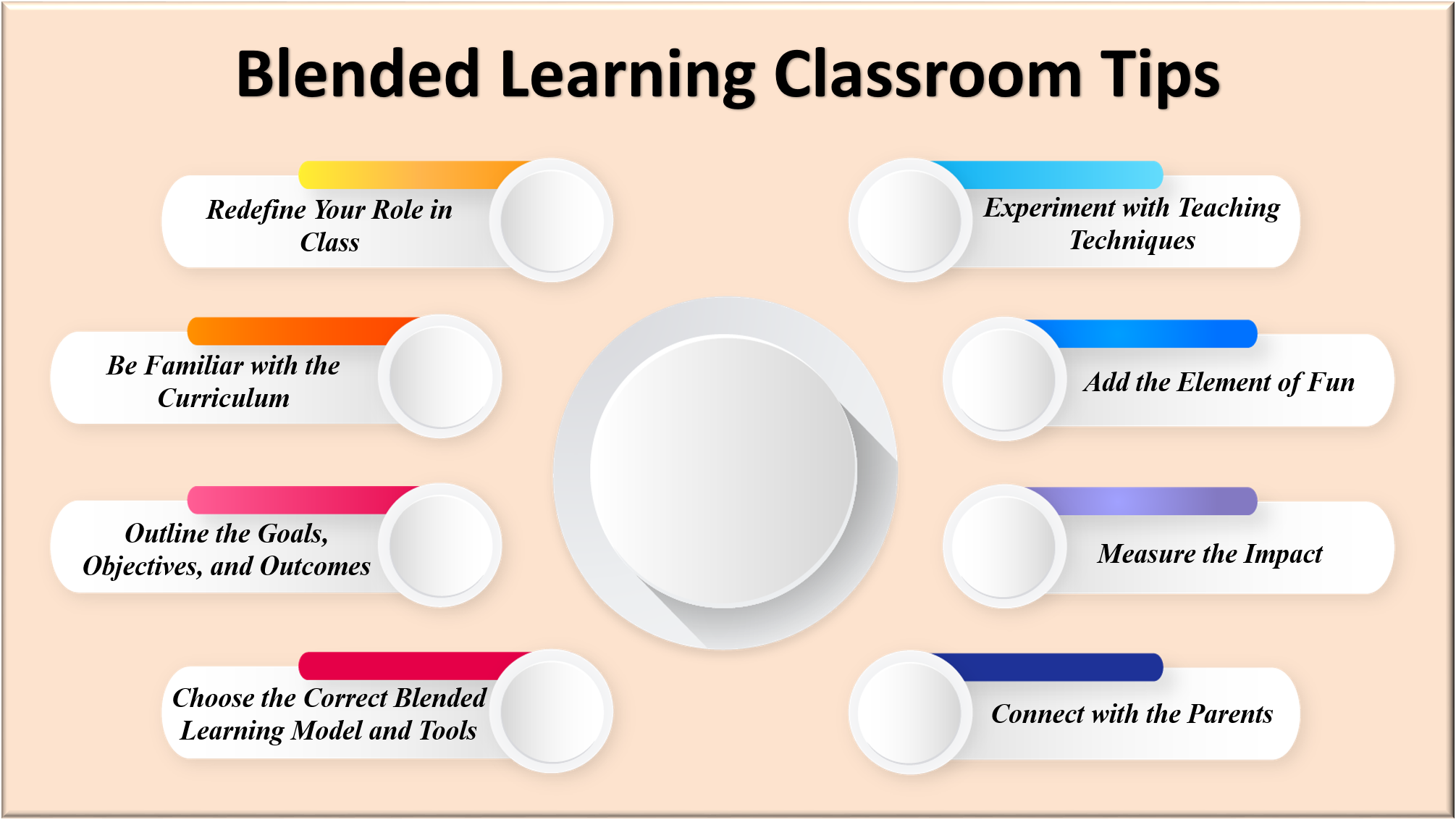
1. Redefine the Teacher’s Role
A teacher’s role in a blended learning classroom is not limited to teaching. Rather, a teacher acts as a guide who facilitates learning and assigns value to the course through various activities. Moreover, the responsibility of assessing the learners’ performance through the course also rests on the teacher’s shoulders.
Additionally, the blended learning method requires more interaction between the teacher and learners in comparison to the traditional teaching method. Therefore, teachers must create a conducive environment for the active participation of learners. To do so, the use of the right tools and technology is important. Thus, a teacher’s role expands to cover a wider range of responsibilities in a blended learning environment.
2. Familiarity with the Curriculum
The curriculum lays the foundation for learning in a classroom. It defines a set of subjects and areas of learning in the scholastic and co-scholastic realms for the holistic development of the learners. Thus, it acts as a guide for the teachers. It helps them create lessons and activities for learners which the students utilize to acquire the skills specified in the curriculum.
The proper implementation of the curriculum requires a set of pre-defined tasks that the learners must perform. Therefore, teachers must be familiar with the curriculum and choose the tools and resources that can best serve to fulfill the learning areas prescribed in the curriculum.
3. Outline the Goals, Objectives, and Outcomes
Well-defined goals and objectives are easy to achieve. They help lay a clear focus on the targets. Thus, it is important to define the goals and objectives of a lesson beforehand. Moreover, defining the objectives helps assign value to the goals and paves the way for better outcomes.
Defining the outcomes of learning along with the goals and objectives is crucial. These help teachers assess the performance of the learners. Also, defining the outcomes gives the learners an insight into how they are expected to respond to the lesson.
4. Choose the Correct Blended Learning Model and Tools
There are various models of blended learning exclusively designed to cater to different learning needs. These models work by engaging learners in different ways to achieve the desired learning outcomes. Thus, a teacher must choose the right blended learning model for the classroom that engages the learners and takes them on the right path of learning.
(Refer to this article on blended learning to know more about different models of blended learning.)
Additionally, choosing the right tools for setting up a blended learning classroom is important. The use of the right technology and tools helps a teacher deliver an effective lesson. Also, it promotes better learning and retention among learners.
5. Experiment with Different Teaching Techniques
The method of teaching impacts lesson delivery as well as the learning outcomes. The method adopted by a teacher must be in accordance with the curriculum. Thus, the teacher should use a method that works well to engage the learners and strives to achieve the aims and objectives of the course.
A blended learning classroom offers opportunities to the teachers to experiment with the teaching techniques and find what works best for their learners.
6. Add the Fun Element
Learning with fun is the ultimate formula for a better learning experience. Concepts learned while having fun induce better learning and retention. Thus, a blended learning classroom also requires the addition of an element of fun in the learning process.
Therefore, teachers must include games and activities that engage the learners and promote learning while they have fun. These practices can be introduced in the form of assessments as well. This motivates the students to perform better in the class.
(Refer to our articles on Gamification in E-Learning Part-1 and Part-2 for further reading.)
7. Measure the Impact
Learning without assessment is a waste of the collective efforts of teachers and learners. Assessments play a crucial role in the teaching-learning process. They measure the progress of the learners and determine whether the learning outcomes are achieved. Moreover, a teacher must set and clearly outline the expectations for the learners. This works as a stimulus for them and ensures that they achieve the desired learning goals and objectives. Following this, the learners must get clearly instructed assessment tasks that measure the level of learning and skills acquired by them.
8. Connect with the Parents
Parents are the first teachers. They monitor and instruct their children at home and thus can contribute to the learning process. Teachers must adopt a strategy to engage the parents in the learning process as well. Various forms of social media interactions can help initiate this process.
Additionally, parents can assist learners in certain activities and help them perform better. Informing the parents about their child’s progress also helps keep a check on the learner’s progress.
Blended learning classrooms are all about interactive and fun learning. A teacher is responsible for creating the right environment that can promote better learning. The tips mentioned in this article render a helping hand to teachers to move a step further towards setting up an effective blended learning classroom.
Reference article: Legends of Learning
Images sourced from Shutterstock and Freepik
For more such content on teaching methodologies, visit our blog.

Create. Engage. Inspire.
The post 8 Tips to Set-Up a Blended Learning Classroom appeared first on Test.Evelyn.
]]>The post Blended Learning Explained: Definition, Models, & More appeared first on Test.Evelyn.
]]>(Refer to our blog on Online Learning vs Traditional Learning: An Introduction for more information on traditional learning.)
What Is Blended Learning?
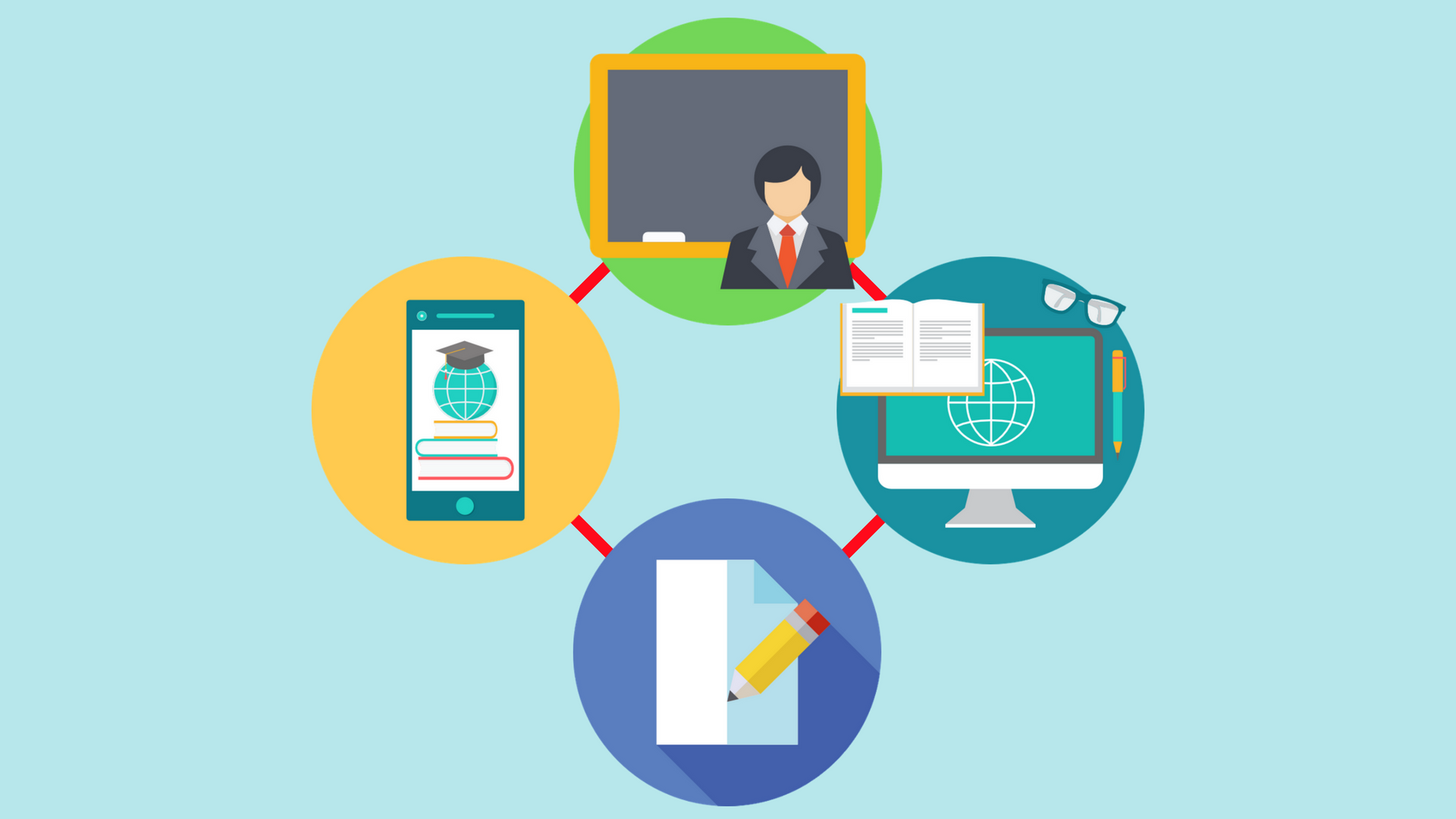
Blended Learning, as the name suggests, is an integrated form of learning in which traditional classroom learning is clubbed with eLearning to enhance learners’ experience and to engage them better. In other words, it brings technology-based learning into the brick-mortar classroom setting, where learning occurs under the supervision of an expert teacher. It is also known as Hybrid Learning.
Technology has become an inseparable part of life. Hybrid learning makes use of this technology to supplement and eventually transform the learning process. Moreover, the use of technology renders an improved learning process, promoting better learning and retention. Also, the rise of digital learning and mobile learning acts as a contributing factor in blended learning.
Taking an online course while simultaneously attending classes for the same is an instance of the blended learning process. Similarly, a student participating in a classroom discussion and preparing it in the form of a video as a home assignment is another example of hybrid learning.
Blended Learning Models
eLearning has gained a broader perspective with time. It is the culmination of various learning practices that aim to achieve different learning objectives. Blended learning is one such form. However, blended learning is an independent form of eLearning. It is categorized into various types depending upon the content, scale, technology used, and other relevant factors.
1. Station Rotation Learning
The Station Rotation Learning model allows students to rotate through stations that are a blend of traditional and online learning. The rotation occurs based on a fixed schedule. This model particularly applies to elementary schools.
2. Lab Rotation Learning
The Lab Rotation model and the Station Rotation model are alike. This model uses computer labs in schools on a rotation basis as per a fixed schedule. This model works by considering both the learning needs and the resources available.
3. Individual Rotation Learning
This is another type of rotation model where students rotate through stations at regular intervals following a schedule. But unlike other rotation models, the Individual Rotation model allows students to rotate through stations according to an individual schedule of the software algorithm or the teacher.
4. The Flipped Classroom
In a Flipped Classroom, the traditional roles of the school and home are flipped. The concept of learning occurs at home and the students practice it in the school in a supportive environment with peers and teachers.
5. Enriched Virtual Blended Learning
Enriched Virtual Blended Learning provides an enriched virtual learning experience where the students focus more on online coursework rather than attending lectures. The scheduling of lectures is occasional and depends on learners’ requirements.
6. Self-Directed Learning
The Self-Directed Learning model is a personalized learning model where the students direct their learning by switching between face-to-face learning and online learning simultaneously as per the demand of the course. Thus, the role of the teacher and online courses keep changing as per the learners’ requirements.
7. Project-Based Learning
In the Project-Based Learning model, the students make use of classroom learning as well as online learning while collaborating to design, iterate, and publish project-based learning assignments, products, and others. This type of learning is supported by various online resources that the students can use to create projects.
8. Supplemental Learning
The Supplemental Learning model provides a supplementing learning experience to the learners. The lessons achieve critical learning objectives in one place, while another platform acts as a supplement to the learning. For instance, students either attend a face-to-face learning class while online learning works as a supplement to it or vice-versa.
Advantages and Disadvantages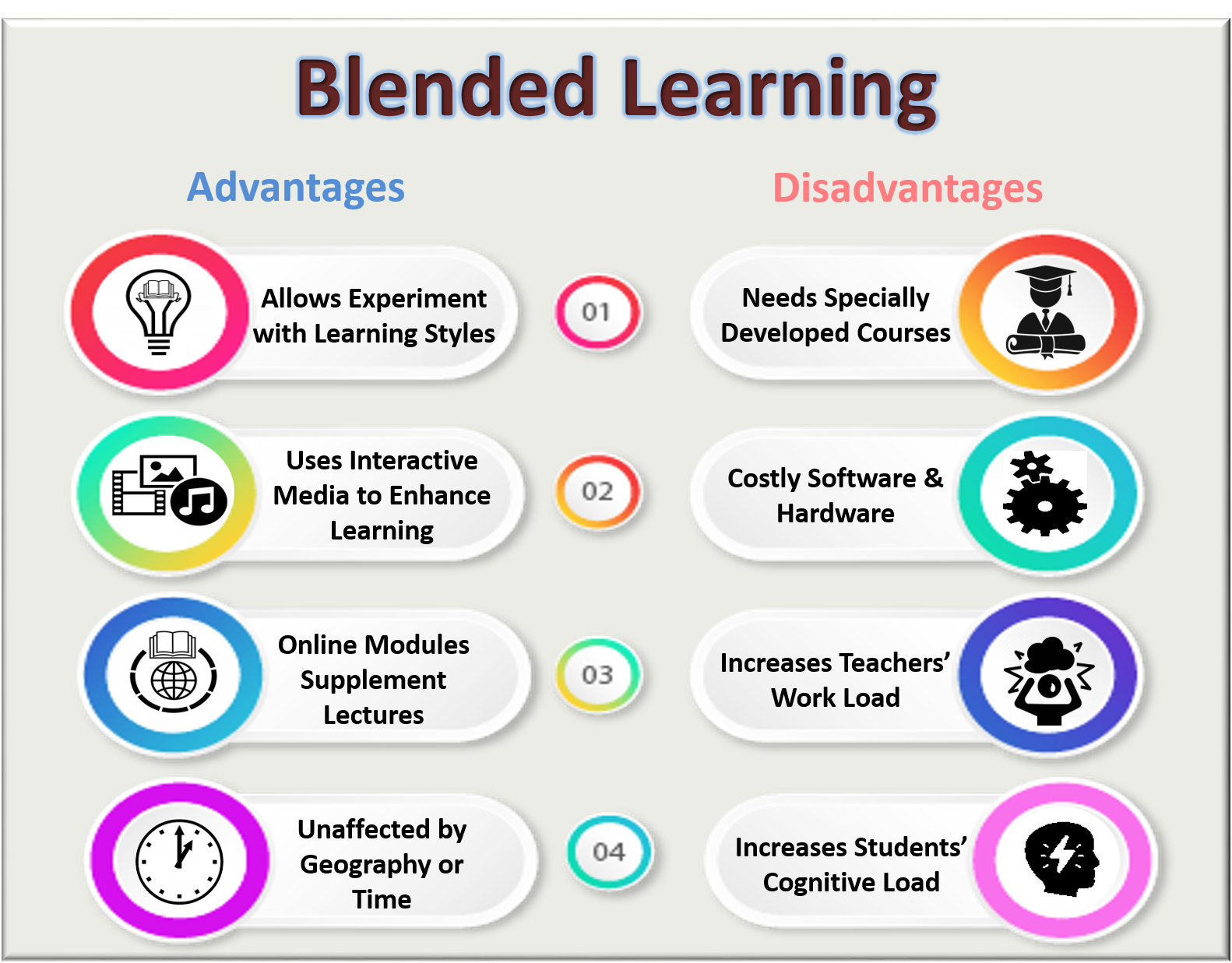
Effectiveness of Blended Learning
Blended learning is a method that engages learners by building their interests as they participate in traditional as well as online learning. Learners get a wider field of action that promotes learning and application of the knowledge gained. As a result, learners get a chance to experiment with different learning styles and produce better test scores.
Moreover, learners form stronger mental connections as they participate in two types of learning, that is, independent learning and mentored learning. Learning through a blend of traditional and online learning helps learners associate concepts with real-life situations. It also allows them to experience what they have learned, ultimately increasing the retention rate. Therefore, different pedagogical researchers have concluded that blended learning is an effective method of learning.
Read our next blog to find out about the strategies and best practices in Blended Learning.
Articles used for research: Teachthought and Lambda Solutions
Images from Shutterstock
Visit Evelyn Learning blog for more information on Blended Learning.

Create. Engage. Inspire
The post Blended Learning Explained: Definition, Models, & More appeared first on Test.Evelyn.
]]>