The post Redefining Employment: The Rise of AI and Job Markets? appeared first on Test.Evelyn.
]]>Certain jobs that involve repetitive, rule-based tasks are more susceptible to automation. For example, jobs in manufacturing, data entry, customer service, and transportation are being affected by AI and automation technologies. In these cases, AI can perform tasks faster and with greater accuracy than humans.
However, Artificial Intelligence (AI) has a significant impact on employment, both in terms of job displacement and job creation. Here are some key points regarding the impact of AI on employment:
The Influence of Artificial Intelligence on Employment Patterns
Job Displacement:
AI and automation technologies have the potential to replace certain jobs that involve repetitive, rule-based tasks. Jobs in industries such as manufacturing, customer service, data entry, and transportation are being affected as AI can perform these tasks faster and with greater accuracy. This displacement can lead to short-term job losses and challenges for individuals whose skills are directly replaceable by AI.
Job Transformation:
While some jobs may be displaced, AI also leads to the transformation of job roles. Many tasks that can be automated are taken over by AI systems, freeing up human workers to focus on more complex, creative, and higher-value tasks. This shift requires workers to develop new skills and adapt to new job responsibilities.
Job Creation:
The advancement of AI technology also creates new job opportunities. Roles such as AI researchers, machine learning engineers, data scientists, and AI ethicists are in high demand as organizations seek expertise in developing, implementing, and managing AI systems. These emerging job roles require specialized skills and knowledge related to AI technologies.

AI cannot fully replace humans, but it can partially substitute them to a certain extent.
According to a BBC report, the influence of AI will differ across various sectors. It suggests that 46% of tasks in administrative roles and 44% in legal professions have the potential to be automated. However, the figures decrease significantly to only 6% in the construction sector and 4% in maintenance occupations.
New Industries and Opportunities:
AI is enabling the emergence of entirely new industries and business models. As AI technologies continue to evolve, new sectors like autonomous vehicles, healthcare informatics, personalized marketing, and smart home technologies are expanding. These industries require a skilled workforce to develop, maintain, and operate AI-based systems.

AI is transforming last-mile delivery through the use of autonomous vehicles.
Skills Shift:
The adoption of AI necessitates a shift in the required skill sets for the workforce. Skills such as creativity, critical thinking skills, complex problem-solving, emotional intelligence, and the ability to work alongside AI technologies become increasingly valuable. Lifelong learning and adaptability become essential as workers need to continuously update their skills to remain relevant in the evolving job market.
Ethical and Governance Roles:
As AI systems become more pervasive, the need for ethical considerations and responsible AI governance becomes crucial. Jobs related to AI ethics, policy development, and regulatory compliance are emerging to ensure that AI technologies are used ethically, responsibly, and with accountability. It’s important to note that AI is not solely taking away jobs but rather transforming them. While some job roles may diminish, new job opportunities are emerging as a result of AI. These opportunities often involve tasks that require human creativity, critical thinking, emotional intelligence, and complex problem solving—areas where AI currently struggles to match human capabilities.

AI, despite its capabilities, cannot fully match human performance due to its limitation in exercising judgment.
The Influence of Artificial Intelligence on Employment in Call Centers
AI is increasingly impacting the roles of employees working in call centers. AI technologies, such as chatbots and virtual assistants, are being used to automate and handle routine customer inquiries and support. This automation can reduce the need for human call center agents to handle basic queries and tasks.
AI powered chatbots can interact with customers, answer frequently asked questions, and assist with common issues, providing immediate and consistent responses. Virtual assistants can also gather customer information and provide personalized recommendations or solutions. This automation improves efficiency, reduces wait times, and enables 24/7 support.

Artificial Intelligence proving to be far more effective and efficient in customer support than humans.
As stated in a comprehensive report by the Wall Street Journal, the AI assistant handles an astounding volume of 11,400 calls per day, a task that is unachievable for any human. Additionally, the AI agent supports human employees in their daily tasks, including scheduling repair appointments, processing claims, and numerous other responsibilities.
As AI systems become more advanced, they can handle more complex interactions and even mimic human-like conversational abilities. However, there are still limitations to the capabilities of AI when it comes to handling complex or sensitive customer inquiries that require empathy, emotional intelligence, and nuanced understanding. Human call center agents are still needed to handle such interactions and provide the personalized support that AI may struggle to replicate.
Is AI Taking Over Jobs In Data Entry and Processing?
As AI technology advances, it has the potential to replace or reduce the need for manual data entry and processing jobs.
AI is revolutionizing data entry by leveraging advanced technologies to automate and streamline the process. OCR technology, powered by AI, can extract data from physical or digital documents, eliminating the need for manual data entry.
Through automation, AI algorithms can extract relevant information from various sources like invoices, forms, or receipts, thereby reducing human involvement in data entry tasks. Additionally, AI-driven NLP algorithms enable computers to understand and process human language, thereby extracting valuable data from unstructured text sources such as emails, customer feedback, or social media posts.

Robotic systems demonstrate superior efficiency and accuracy compared to human counterparts in the domain of data entry.
AI also plays a vital role in data validation and cleaning, automatically identifying and rectifying errors, inconsistencies, or missing values. By streamlining data transformation tasks, AI can automatically reformat, normalize, or structure data according to predefined rules, minimizing manual efforts in data manipulation. Data entry automation tools, powered by AI and machine learning, learn from human input and offer suggestions or automatically complete data entry fields based on patterns and historical data.
You may also like to read about: Emerging Technology is an Intersection of Humanity and Technology: Brad Waid on AR/VR
As a result, AI-driven data entry systems exhibit increased speed and accuracy, processing large volumes of data swiftly and precisely and, in this way, reducing human errors and enhancing overall data entry efficiency. These advancements in AI-powered data entry not only minimize manual effort but also contribute to improved productivity and data quality.
The Impact of Artificial Intelligence on the Roles of Coding Professionals
AI has made significant advancements in the field of coding and software development, leading to changes in the roles and responsibilities of professionals in this industry. While AI is increasingly being used to automate certain aspects of coding, it is important to understand the nuanced impact it has on coding jobs.
AI tools and technologies, such as automated code generation, code completion, and code analysis, have emerged to streamline the development process and improve productivity. These tools can assist developers by suggesting code snippets, identifying potential bugs, and automating repetitive coding tasks. They can also help with tasks like code refactoring, documentation generation, and software testing.

Certain coding tasks can be automated by AI, but it does not replace the need for skilled human coders. AI technologies currently lack the creativity, problem-solving, and critical thinking skills abilities that human developers possess. Coding involves more than just writing lines of code. It requires understanding complex requirements, designing systems, and making architectural decisions, which still heavily rely on human expertise.
Curriculum Development to Mitigate Job Displacement by AI
Moreover, as AI technology advances, new opportunities are emerging in the field of AI itself. Professionals can focus on developing and improving AI algorithms, designing AI systems, and addressing the ethical implications of AI. The demand for individuals with expertise in machine learning, data science, and AI engineering is growing, creating new job prospects.
To address the potential impact of AI on job automation and help individuals adapt to the changing workforce, here are some curriculum developments that can be considered:

Impact of AI on Curriculum Development
AI Literacy:
Provide foundational knowledge about artificial intelligence, its capabilities, and its impact on various industries. This includes understanding different AI technologies, terminology, and their potential applications.
Data Literacy:
Teach data analysis and interpretation skills to help individuals make informed decisions based on data. This includes understanding how data is collected, processed, and used to train AI systems.
Critical Thinking and Problem Solving:
Emphasize the development of critical thinking skills to solve complex problems that require human judgment, creativity, and strategic thinking. This involves encouraging students to approach challenges from different perspectives and think outside the box.
Will AI Replace Humans?
AI technology itself requires development, implementation, and maintenance, which creates new job roles in fields like data science, machine learning, AI engineering, and ethical AI governance.
To adapt to the changing job market, individuals need to acquire and enhance skills that are less easily automated. Skills such as creativity, adaptability, complex problem-solving, emotional intelligence, and lifelong learning will become increasingly valuable in the age of AI.
Overall, while AI is affecting the job market and may lead to job displacement, it is also creating new opportunities and holds the potential to enhance productivity, improve products and services, and drive economic growth. Society needs to focus on upskilling and reskilling the workforce to ensure that individuals can leverage the benefits of AI and remain relevant in the changing job landscape.
The post Redefining Employment: The Rise of AI and Job Markets? appeared first on Test.Evelyn.
]]>The post How China is Trying to Outpace the World in AI appeared first on Test.Evelyn.
]]>And why not? World economics works that way. The more resources and technological advancement a country has, the more influential and rich it becomes.
Today, it is about AI. Artificial intelligence, in its various forms, has promised an overall cost-benefit despite the high initial investment. It is why only wealthy countries can afford to bring AI into their systems, which can potentially widen the gap between richer and poorer countries.
For instance, AI adoption in automobiles is a big bet. It won’t be long before we see the widespread commercialization of self-driving or flying cars.
Artificial Intelligence in Education
The Ed-Tech industry has agreed with artificial intelligence amiably. The use of artificial intelligence to make learning more accessible, engaging, and advanced is our personal favorite.

Students are already comfortable with technology, and they are more curious to make friends with anything more advanced that might come up.
The Ed-Tech space is so vast that it can encapsulate almost every aspect of education, including curriculum development, lesson delivery, and assessments. The VR sets, merge cubes, augmented reality mobile apps, etc., all give amazing augmented reality and learning experiences.
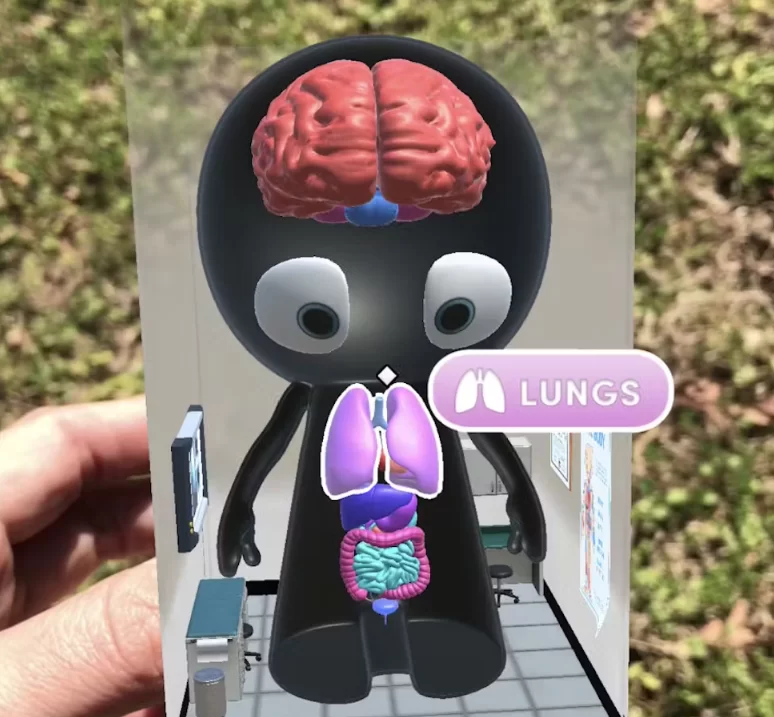
A merge cube showing parts of the human body through the Mr. Body app. Source.

Students can learn about the universe and solar system using a virtual reality set.
China, Technology, and AI
It is no news that countries have used various methods to come up as the top power in the world. Earlier it was only muscle power with higher investments in manpower, arms, and ammunition. Now, technology is the new power weapon in this new era of computers and robots. So, countries have been leveraging this soft power to make themselves global power leaders, making other countries reliant on them.
Harvard Professor of Economics, David Yang, recently enlightened us about the US ranking of the top companies with the most accurate technology in facial recognition. Out of nearly 50 companies, the top five were Chinese companies.
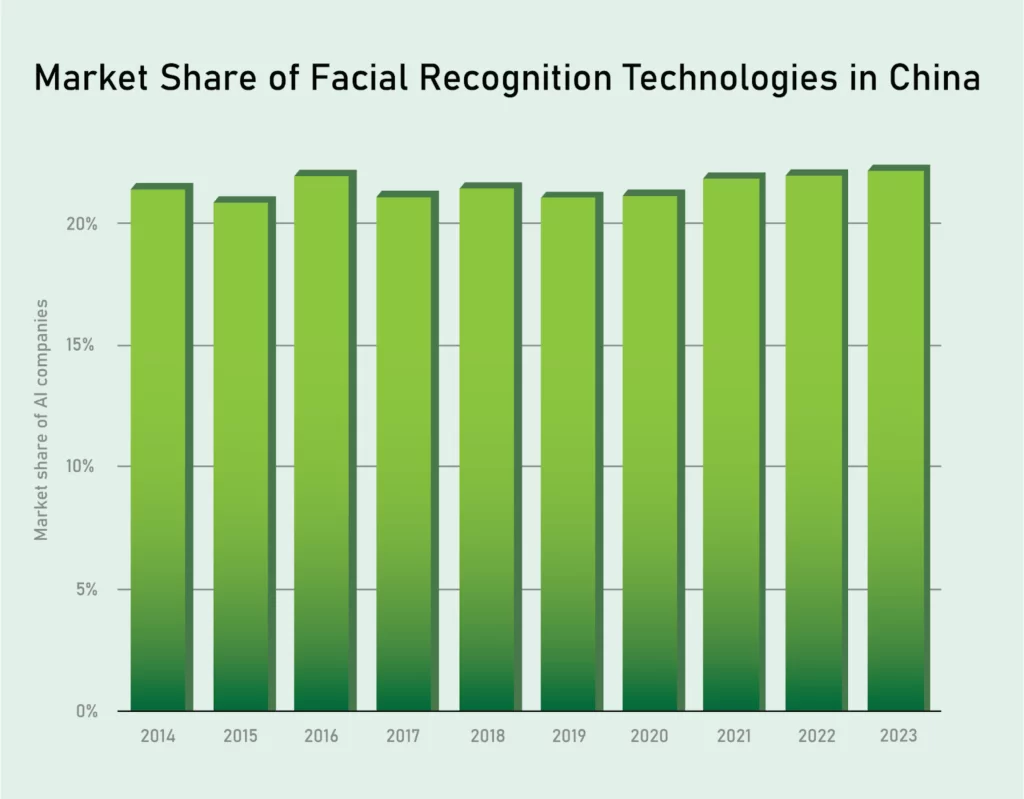
The graph demonstrates the percentage distribution of Facial Recognition Technologies in China.
China has been making tremendous and aggressive investments in digital technology, focusing on creating outstanding AI infrastructure to compete with other more significant economies like the US.
China is already ahead in many areas, which is a no-brainer. The most used app in the world is TikTok, and the Chinese are the majority of smartphone users worldwide.

China-based TikTok has been the most used application in the United States.
A renowned think tank, the Australian Strategic Policy Institute, discovered that China leads in 37 out of 44 technologies, including hypersonics and electric batteries, and also leads the US in AIgorithms, machine learning, and many more.
China and Ed-Tech Lead
Like any other sector, China also wants to lead in implementing education technology. They want to upskill their citizens with the latest and best knowledge to take a global lead in economic development.

Many recent developments point toward this thought. China’s Zhejiang has already introduced artificial intelligence into school curriculums and made it a compulsory subject. It is also learned that the city plans to create nearly a thousand AI experimental schools by 2025.
The Chinese have also been experimenting with various tech-based products in classrooms, like the brain wave tracker, which tracks distractions. In 2019, a primary school experimented with the product and faced backlash as the headband was used to track the engagement levels of students. The report was directly used to go on the computers of teachers.
The Chinese have also been experimenting with students’ engagement levels and their behaviors, like checking phones or yawning in classrooms. This has been done with parents’ consent to research the use of AI in education.

A still from the video that shows AI experimentation in Chinese classrooms.
With these research exercises, China’s way to leading into the Ed-Tech space with the advanced use of AI is clear.
Indulging in Artificial Intelligence to Improve Education
China seems ahead and determined to improve its educational space by leveraging AI, big data, and cloud computing. We have been reading about how China has set up vocational training schools that use AI to capture students’ behavior and teachers’ teaching styles. This information is later used to improve the teaching styles of educators.
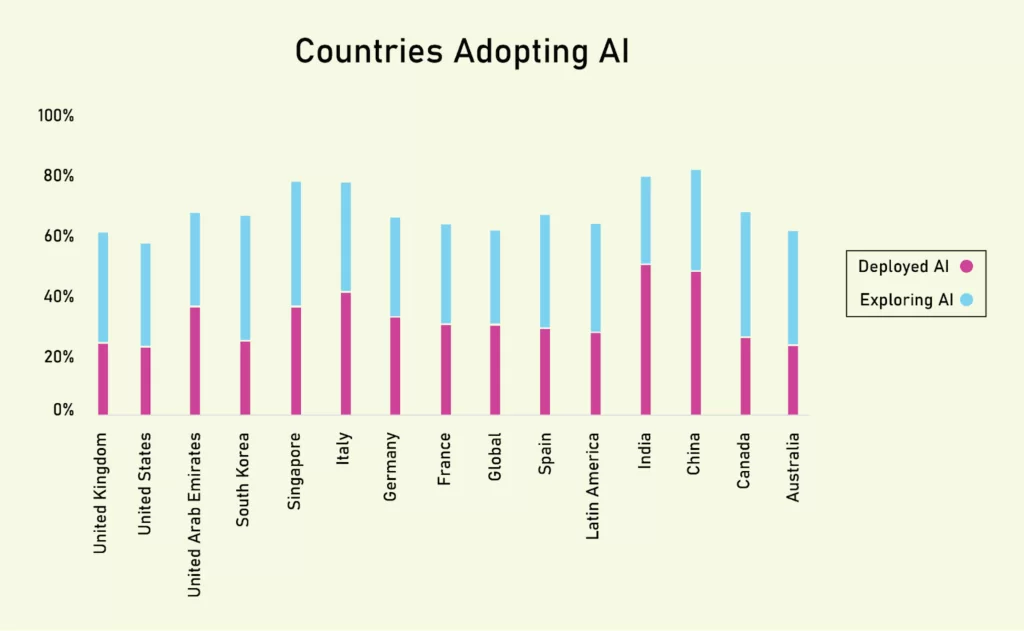
The integration of AI has occurred progressively in different countries, with China leading the way, followed by India and Singapore. Information Source: IBM
An article published last year talks about how China uses AI to reduce the educational gap within the country. It also mentions that over half the Chinese labor force needs a high school degree.
You may also like to read: Influencing the Future of Education with AR/VR

The country has boosted many AI-based technology startups to aid the education sector. The country’s major focus on building AI infrastructure, as disclosed by the Chinese State Council, is to become the world’s top AI innovation center by 2030.
Why China may lead in AI Implementation in Education
The Chinese government is authoritarian and may not think twice before using AI technology that might compromise the privacy of the citizens. So, it has been open to widely experimenting with AI products like AI-based cameras that capture student behavior in classrooms and help teachers and parents to improve student grades.

According to The Guardian, 48.49% of the world’s high-impact research papers were published in China in the past five years. Source.
The government has supported the firms bringing AI-based products that can disrupt education or promote them with financial incentives, infrastructure, research grants, resources, etc. China may lead in AI implementation in education because:
- China is a competitive economy and has made an aggressive moves in almost all sectors to assert its world dominance. China holds the manufacturing units of many high-worth companies. It has pushed its country’s sportspersons to train from a very young age and bring as many Olympic medals for the country as possible. AI would be no exception as well. The country has been leading in publishing AI-based research papers.
- The Chinese education system is organized at the centralized nature of policy-making. It is unlike free democracies, where privacy concerns and citizen discretion are given prime importance and can be questioned. Therefore, it is also about the country’s overall development rather than success in merely one sector.
All that Glitters is not Gold
Just because China has been vastly open to accepting AI implementation and experimentation in its country does not guarantee that it is leading the world. The country still faces a shortage of qualified teachers and established AI labs.
The pace of including AI in education is more straightforward in China because the country already collects a large pot of citizen data. One of the concerns shared by David Yang, Associate Professor of Economics at Harvard, is that this AI technology that might develop in China to understand people’s behavior may be exported heavily and used by other countries to accelerate their autocratic rule.
‘AI is fundamentally a technology for prediction”, he says.
Therefore, autocratic countries would always be the first ones to grab hold of these technologies that allow them to have maximum control over their citizens.
Recently, many leaders have echoed concerns about the potential unethical use of AI without proper regulations. We hope that responsible governments make conscious efforts to leverage technology, but not at the expense of citizens’ privacy or safety.
The post How China is Trying to Outpace the World in AI appeared first on Test.Evelyn.
]]>The post All the Information You Require Regarding Australian Curriculum appeared first on Test.Evelyn.
]]>Whenever needed, the curriculum is updated continuously to teach students what is valid and accurate. Moreover, the curriculum delivers education with the help of learning areas and general capabilities.
Aim of the Curriculum
The Australian Curriculum is focused on catering the needs of every student globally. It strongly advocates for inclusive education and firmly believes in the following principles:
- Every student can learn; their individual needs are equally important and hold significant value.
- Each student has the right to access knowledge as well as skills that serve as the building blocks for successful and continuous learning.
- It is important to establish high expectations for every student.
- The curriculum should be adjusted in a way that it can accommodate and recognize the diverse needs of students from different cultures.

The Australian Curriculum is designed to meet the needs of students worldwide
Three Dimensions of the Australian Curriculum
There are three dimensions in the Australian Curriculum:
- Learning Areas
- General Capabilities
- Cross-Curriculum Priorities
1. Learning Areas
The Australian Curriculum is divided into learning areas and subjects. The learning areas include humanities as well as social sciences. They include history, geography, civics, citizenship, economics, and Business. Apart from this, the arts include dance, drama, media arts, music, and visual arts. Moreover, the curriculum also includes technologies such as design and digital technologies. Lastly, you can choose from a diverse range of fifteen languages in order to enhance your knowledge and proficiency in a specific language that is different from your mother tongue.
2. General Capabilities
The Australian Curriculum contains a total of seven general capabilities, which aims to provide necessary skills and abilities to the younger generation of Australia in order to survive in the 21st century.
These general capabilities include:
- Literacy
- Critical and Creative Thinking
- Numeracy
- Personal and Social Capabilities
- Information and communication technology (ITC) capabilities
- Ethical Understanding
- Intercultural Understanding
3. Cross-Curriculum Priorities
In the Australian Curriculum, there are three priorities that are critical to Australia’s future. This specific dimension of the learning areas allows students to experience diverse contents of learning areas.
- Aboriginal and Torres Strait Islander’s Histories and Culture
- Australia’s Engagement with Asia
- Sustainability
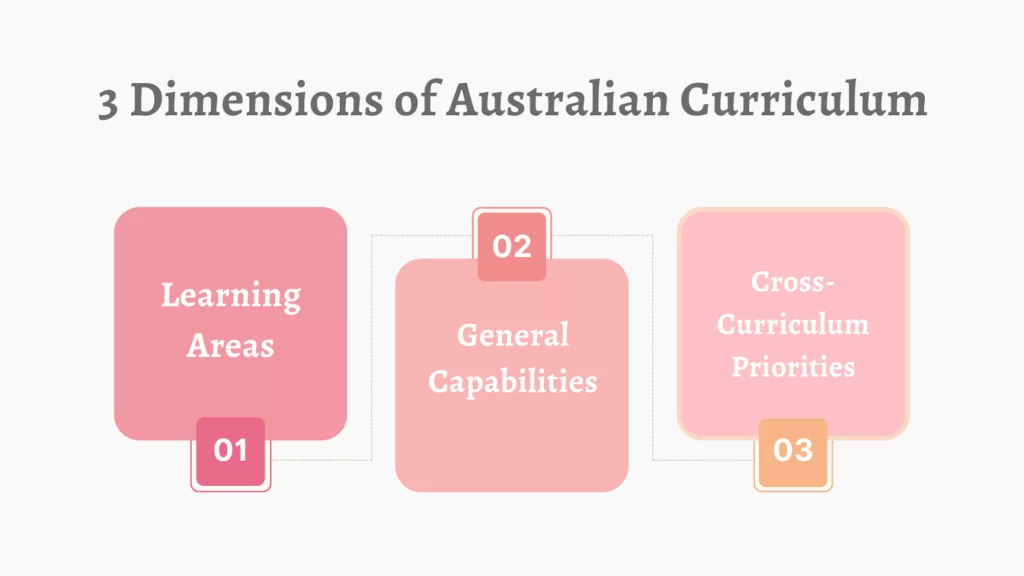
The Three dimensions offer teachers the flexibility to engage in personalized learning to meet the needs of individual students
Structure and Format
Typically, the students commence their learning journey by enrolling in kindergarten first. This marks the beginning of their 13-year educational journey that concludes with the attainment of the Higher School Certificate (HSC) upon the completion of Year 12. This prestigious certification enables students to seek admission to educational institutions worldwide.
The educational curriculum is structured around Eight Key Learning Areas (KLAs), which encompass English, mathematics, science, health and physical education, humanities, and social sciences, the arts, technologies, and languages.
1 English
English is an important language considered for young Australians. It includes subjects such as additional language or dialects, essential English, and literature.
3 Mathematics
Mathematics equips students with essential skills and knowledge for their development in their early years of education. It includes subjects such as specialist mathematics, general mathematics, mathematical methods, and essential mathematics.
3 Science
Science develops an understanding of practical concepts and processes among students and it includes subjects such as biology, chemistry, Earth and environmental science, and physics.
4 Humanity and Social Sciences
Humanity and social sciences includes 5 subjects. HASS (Australian Humanities and Social Science Curriculum), civics and citizenship, economics and business, geography, and history.
5 Arts
The arts have the ability to inspire and motivate students to think out of the box and embrace creativity . It includes dance, drama, media arts, music, and visual arts.
6 Technologies
In the Australian Curriculum, technologies play an important role in ensuring that all students benefit from understanding how technology works. It includes design and technologies and digital technologies.
7 Health and Physical Education
The curriculum of health and physical education provides certain types of learning opportunities that are contemporary, engaging, and relevant. It aims to equip students with the necessary skills, knowledge, and understanding of their physical health as well as mental health.
8 Languages
Languages are included in the Australian Curriculum to ensure that all students can actively participate in learning a language other than English. They include Arabic, German, Spanish, French, Japanese, Korean, Chinese, Hindi, and many more.
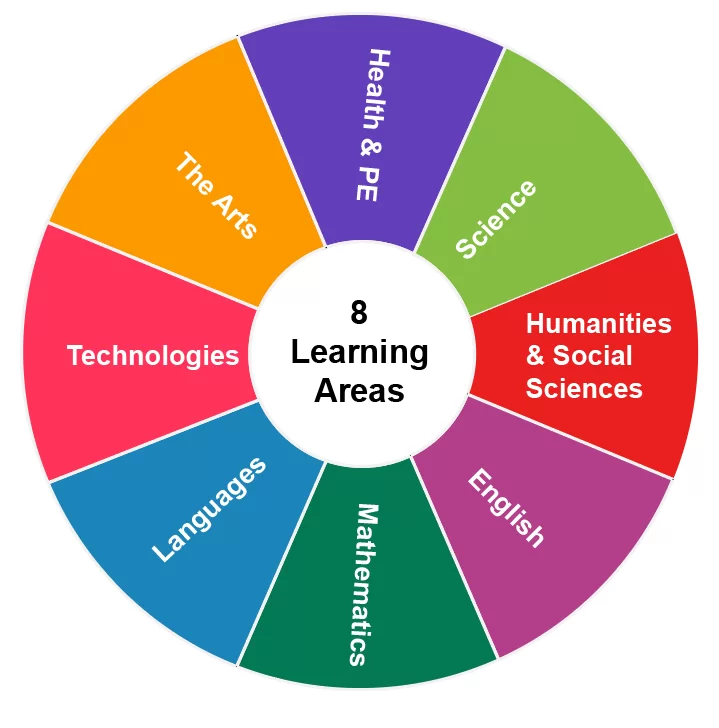
The Eight Key Learning Areas outline the specific knowledge that each student would gather in each subject area.
VCE and WACE Certifications in Australia
The Victorian Certificate of Education (VCE) and the Western Australian Certificate of Education (WACE) are certification programs in Australia that are awarded to students who complete their senior secondary education. However, these certificates are specific to the states of Victoria and Western Australia, respectively.
VCE (Victorian Certificate of Education)
The VCE is granted to the students who successfully complete their secondary education in the state of Victoria. The certificate is administered by the Victorian Curriculum and Assessment Authority (VCAA).
The VCE is undertaken over a two-year period in Years 11 and 12. When the students complete their schooling, they receive an Australian Tertiary Admission Rank (ATAR) based on their performance, which further helps them for university entrance purposes.
WACE (Western Australian Certificate of Education)
The WACE is granted to the students who successfully complete their secondary education in the states of Western Australia. This certificate is administered by the School Curriculum and Standards Authority (SCSA).
The WACE is undertaken over a period in Years 11 and 12. Unlike VCA, WACE candidates need to meet literacy and numeracy requirements and complete at least one senior secondary course examination. After their schooling, students receive ATAR based on their performance, which is used for further education and entrance in their preferred universities.
Australian Curriculum 9.0
The Australian Curriculum, Assessment and Reporting Authority (ACARA) released version 9.0 of the Australian Curriculum in May 2022. Schools have started implementing this new version in 2023 term 1.
Also read: Reassessing Curriculum Development: Top 3 Factors to Consider

States and territories in the entire country have to adopt the updated version and introduce the students to version 9.0.

Version 9.0 of the Australian Curriculum offers a more practical approach for teachers regarding crucial knowledge that students must acquire
What Modifications have been Implemented in the Updated Curriculum?
The curriculum development in the updated version are decreased content, improved coordination between achievement standards and content descriptions, enhanced connections between learning areas, general capabilities, and cross-curriculum priorities.
The changes embraced by the updated curriculum are as follows:
- The Australian Curriculum is being modified to ensure a more thorough understanding and education, with a 21% reduction in descriptions regarding the learning objectives of students and what should be taught.
- There will be a greater emphasis on phonics in English and more focus on students mastering the fundamentals of mathematics, such as its different concepts, skills, and facts.
- The importance of developing proficiency in foundational skills and the ability to perform mathematical computations without a calculator will be emphasized.
- The sequencing of content in mathematics will be revised, particularly in areas such as telling time, introduction to fractions, recalling multiplication facts, and solving equations.
- Higher standards for mathematics will be set up for Year 1 regarding addition and subtraction and include multiplication facts in Year 2.
- In Years 9 and 10, priority will be given to Australian history, including the impact and perspectives of First Nation Australians upon the arrival of British settlers and their contributions to modern Australian society.
- ACARA is also working on mental health development among Australian youth. This will be taken into account in the upcoming versions of Australian Curriculum.
The post All the Information You Require Regarding Australian Curriculum appeared first on Test.Evelyn.
]]>The post Curriculum Development Models appeared first on Test.Evelyn.
]]>This article will describe what curriculum development is and how educators can employ the main models of curriculum design to ensure the success of any course. The importance of a well-thought-out course plan in any classroom—and for any group of students—will be clear to readers.
What is Curriculum Development?
The way one thinks about and theorizes education has evolved dramatically over time. The most basic definition of the term “curriculum” nowadays is the disciplines that comprise a course of study at a school, university, or college. Course planning and development are both terms teachers often use to describe curriculum development.
It is critical to note that course design varies. A math course at one university may cover the same content as another. However, the instructor may present it differently. The basics of curriculum development, on the other hand, do not change.
Walker’s Model of Curriculum Development

Decker Walker earned his Ph.D. in 1971 as an assistant professor of education at Stanford University. His area of expertise was curriculum, and the process of curriculum development and the formulation of curriculum policy particularly sparked his interest.
What is the Naturalistic Model, and How Does it Work?
In contrast to Tyler’s classical prescriptive model, Walker’s model is a descriptive one. Communicative approach is another name for it. The communicative approach begins with the designers’, target group’s, and other stakeholders’ more subjective impressions and perspectives.
Instead of recommending how curriculum planning should be done, the word naturalistic explains how it is done. Walker believes that if people were involved in the process and came to an agreement on the end output, better curriculum planning and development would occur.
Platform, deliberation, and design are the three steps of curriculum preparation in this methodology.
Platform: At this point, the curriculum workers bring their own beliefs, knowledge, and values to the table. This is akin to the concept of pre-printing a syllabus.
Deliberation: This phase specifies which facts are required for the means and purposes, as well as the generation of alternatives and consideration of the alternatives’ effects. The analysis of different costs and repercussions and selection of the optimal option for the upcoming curriculum work also employs this.
Design: Finally, this step entails curriculum preparation, decision-making, and implementation.
The level at which the development is taking place has an impact on this curriculum development model. Educators utilize it for curriculum development at a macro level. It also emphasizes the designers’, target group’s, and other stakeholders’ subjective perceptions and perspectives.
Taba’s Model of Curriculum Development

Hilda Taba contributed to the theoretical and pedagogical foundations of concept development and critical thinking in the social studies curriculum, as well as helped to lay the groundwork for education. She also developed a multipurpose teaching paradigm that incorporates a variety of processes, such as listing, grouping, re-grouping, labeling, and synthesizing. Taba’s “Grassroots method” is a modified version of Tyler’s model.
Steps of Hilda Taba’s Curriculum Development Model
This learning paradigm was created by Hilda Taba. Taba thought that constructing a curriculum follows a logical and linear order. She advocates for the “Down-Top model”, also known as the “Grassroots method.” She advocates for teachers to play a prominent role. Following are the seven steps of Taba’s Grassroots model.
-
Learners’ Needs Diagnosis:
The teachers who are also the curriculum designers begin the process by determining the requirements of the pupils for whom they need to design the curriculum. For example, the majority of students are incapable of critical thinking.
-
Establishing Objectives:
After the instructors recognizes the learners’ needs that require attention, they determine the goals that they will use to meet those requirements.
-
Choosing the Content:
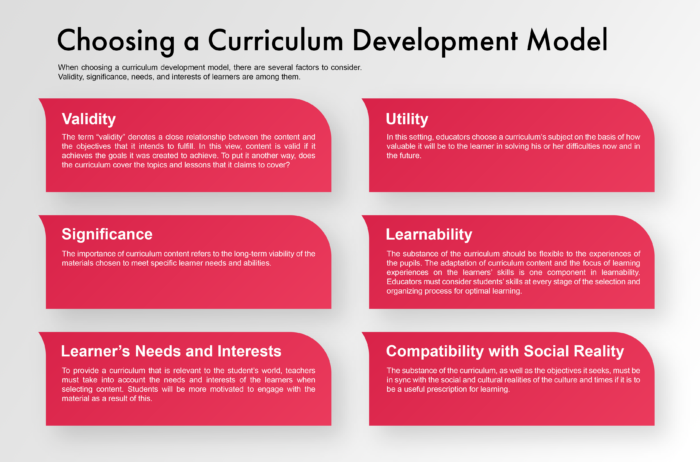
The objectives chosen or produced suggest the curriculum’s subject or substance. It is necessary to determine the validity and significance of the chosen content in addition to the aims and substance, that is, the content’s relevance and significance.
-
Organization of the Content:
A teacher must not only select content but also organize it in a particular sequence that takes into account the learners’ maturity, academic achievement, and interests.
-
Choosing Learning Experiences:
Students must be presented with content and be actively interested in it. At this point, the teacher should choose an educational style that will engage pupils in the material.
-
Organizing Learning Activities:
Learning activities should be ordered in a sequence based on both the content sequence and the characteristics of the learners. The teacher must consider the kids he or she will be instructing.
-
Evaluation:
The curriculum planner, that is, the educator, must determine whether the objectives were met. To assess the achievement of learning objectives, evaluation processes need to be created.
Tyler’s Model of Curriculum Development

The Tyler Model is the definitive prototype of curriculum development in the scientific approach, developed by Ralph Tyler in the 1940s. One might virtually argue that every licensed teacher in America, and possibly abroad, has designed a curriculum using this paradigm or one of its numerous versions, either directly or indirectly.
Tyler did not aim for his contribution to the curriculum to serve as a development model. Initially, he put his thoughts down in a book called Basic Principles of Curriculum and Instruction for his students to give them an understanding of how to make curriculum. Tyler’s model is brilliant since it was one of the earliest, and it was (and still is) a very simple model consisting of four steps.
Curriculum and Instructional Fundamentals
-
Determining the Goals of the School (AKA Objectives)
The first step is to figure out what the school’s goals are. To put it another way, what must students do in order to be successful? Each subject has its own set of natural goals that serve as signs of mastery. All objectives must be congruent with the school’s philosophy, which teachers frequently overlook in curriculum development. For instance, a school designing an English curriculum would set a goal for pupils to produce essays. This would be just one of the curriculum’s numerous goals.
-
Identifying Educational Experiences that are Relevant to the Goal
Step two is to create learning experiences that will assist students in completing step one. For instance, suppose educators require students to complete an essay. They may demonstrate how to write an essay as part of the learning experience. The pupils may then get the opportunity to practice writing essays. The experience (essay writing and demonstration) is in line with the goal (students will write an essay).
-
Organizing the Experiential Learning
The third step is to classify the experiences. Is it better for the teacher to demonstrate initially, or for the pupils to learn by writing right away? Either technique could work, and the preference is determined by the teacher’s mindset and the students’ needs. The point is that the teacher must decide on a logical order for the students’ experiences.
-
Assessing the Objectives
The fourth and last phase is to evaluate the objectives. The teacher is now evaluating the students’ abilities to compose an essay. This can be accomplished in a variety of ways. For example, the teacher could assign pupils to write an essay on their own. If they are able to do so, it indicates that the students have met the lesson’s goal.
This model has a few variations. Educators, on the other hand, still widely regard the Tyler model as the most effective paradigm for curriculum development.
Wheeler’s Model of Curriculum Development

Wheeler created a five-phased cyclical model of curriculum development, which appeared to address Tyler’s criticisms. His cyclical model resembles both linear and Taba’s interactive models in many ways. The following are the essential components of Wheeler’s model:
- Aims, goals, and objectives must be chosen.
- Educators must select learning experiences.
- Content selection which delivers specific types of experiences
- The organization and integration of learning experiences and content in relation to the teaching-learning process in the classroom and school
- Evaluation of all aspects of all other phases’ effectiveness in achieving the goals
This model depicts a cyclic and continuous process, implying that curriculum development should always be moving from one step to the next; it should never stop. The curriculum planner and the teacher are involved in a series of continual decision-making processes about a wide range of elements in Wheeler’s approach, which is considered dynamic rather than static. Because of its broad application, Wheeler advises that educators must employ this technique in all curriculum development at any level.
This model has a number of advantages. The cyclic model responds to changing needs, which necessitates continuous updating of the curricular process.
They are adaptable and relevant to students in specific scenarios. Adoptions and adaptations are conceivable due to the dynamic nature of the system, as long as there is a good objective that the activities fulfill.
The aspects of the curriculum are seen as interconnected and interdependent in this model. It allows for some interaction between the various aspects of the program.
To Sum Up
It is not easy to create, construct, and implement an education program, especially when it comes to online learning. Instructors have their work cut out for them, with educational technology playing an increasingly important part in higher education and today’s diverse student body.
Educators, on the other hand, will be setting themselves—and their students—up for long-term success if they follow the core standards and framework of curriculum development.
Image Sources: Shutterstock and Unsplash
For more information on curriculum development models, visit our blog.
Create. Engage. Inspire.
The post Curriculum Development Models appeared first on Test.Evelyn.
]]>The post Curriculum Development and Its Importance for the Educators appeared first on Test.Evelyn.
]]>In order to enhance the student learning experience, educators are continually developing new teaching techniques and strategies, such as transformative learning or blended learning. As a result, an institution must have a strategy in place for recognizing these adjustments and then incorporating them into the curriculum. We will discuss what curriculum development is and why it is crucial for educators in this blog. Aside from that, we will also go through three basic types of curricular structures.
What Is Curriculum Development?
The process of designing and constructing structures for formal education instruction is known as curriculum development. It is a step-by-step procedure for making constructive changes to a school’s, college’s, or university’s course offerings. School courses must incorporate new findings as the world continues to evolve.
Curriculum development is based on pedagogical approaches and learning goals. In addition, it covers a broad spectrum from structuring a career program to designing classroom lesson activities.
Categories Of Curriculum Design
The product category and the process category are the two broad categories of current curriculum. The product category focuses on outcomes. The main goal is to get good grades, with the emphasis on the final output rather than the learning process.
The process category, on the other hand, is more open-ended and focuses on how learning progresses over time. When developing curriculum, educators must consider these two categories.
What Is Curriculum Planning?
Curriculum planning is the process of deciding what to learn, why to learn it, and how to organize the teaching and learning process in light of existing curriculum requirements and resources. Curriculum planning frequently results in the creation of a broad curriculum framework as well as a syllabus for each subject that individual schools can use as a guide. It entails creating course and evaluation plans for several disciplines at the school level.
In addition, it entails creating more thorough plans for learning units, individual lessons, and instructional sequences in the classroom. Effective curriculum planning and assessment places students and their learning needs at the center. Teachers can use this principle to create experiences that will help students become lifelong learners and responsible citizens. This enables teachers to include appropriate formative and summative assessment tools into their teaching practices.

What Is Curriculum Design?
The intentional, deliberate, and systematic organizing of curriculum (instructional blocks) inside a class or course is referred to as curriculum design. To put it another way, it is a method for teachers to arrange their lessons. Teachers plan curriculum by determining what will be done, who will execute it, and what schedule will be followed. They create each curriculum with a specific educational goal in mind.
The main purpose of curriculum design is to promote student learning, although there are other reasons to use it. Curriculum planning and assessment should place students and their learning needs at the forefront. Teachers can use this idea to design experiences that will help students become lifelong learners and responsible citizens. This enables teachers to include appropriate formative and summative assessment tools into their classroom practice.
What Are The Different Types Of Curricula?
Curriculum development entails the use of a variety of instructional strategies and organizational methods aimed at producing the best possible student growth and learning outcomes. Each course supervisor at a (higher education) institution will have criteria, principles, and a framework that teachers must use when creating courses. Teachers are responsible for ensuring that their lesson plans match the educational needs of their pupils, the curriculum’s expected results, and that the resources utilized are current and understandable.
Subject-centered, Learner-centered, and Problem-centered designs are the three basic types of curricula.
• Subject-centered Curriculum Design
This kind of a curriculum focuses on a single subject or field, such as e-marketing, research skills, or communication. This form of curriculum design is more concerned with the subject than with the learner. The most typical sort of standardized curriculum found in higher education is this.
In comparison to other types of curriculum designs, Subject-centered curriculum design is not student-centered, and the approach is less concerned with individual learning. This can lead to issues with student involvement and motivation, as well as a drop-off in pupils who are not sensitive to this paradigm.
• Learner-centered Curriculum Design
Learner-centered curriculum is built around the needs, interests, and goals of students. It recognizes that pupils are not all the same and educators should not force them to follow a set curriculum. This strategy tries to give students more control over their education by allowing them to make decisions.

Assignments, teaching and learning experiences, and activities can all be customized with differentiated instructional plans. Students have been shown to be engaged and motivated by this type of curriculum design. This type of curriculum design has the disadvantage of putting pressure on teachers to find materials that are specific to each student’s learning needs. Due to time limits in the classroom, this can be problematic. Balancing individual student interests with the institution’s expected objectives can be difficult.
• Problem-centered Curriculum Design
Students learn how to look at an issue and construct a solution through problem-centered curriculum design. Educators consider it an authentic method of learning since students get exposure to real-life challenges. This model helps students build abilities that are transferable to the real world.
Problem-centered curriculum design improves curriculum relevance and promotes creativity, innovation, and collaboration in the classroom. However, the disadvantage of this style is that it does not always take individual learning into account.
Curriculum development and management plan facilitate the optimal utilization of the available resources by the educators. One can work towards a more promising future by adopting policies that will improve the entire system. Any academic institution’s curriculum serves as its foundation; without it, the institution cannot survive for long.
Since there will not be any specific system objectives, the syllabus would be all over the place. For the curriculum that an institution designs for its students, it needs to have a clear set of goals and objectives. Only then will the learners be able to make progress towards a much better and brighter academic future.
Image Sources: Shutterstock and Unsplash
Also Read: Tips For Creating Effective Assessments
For more information on curriculum development, visit our blog.
Create. Engage. Inspire.
The post Curriculum Development and Its Importance for the Educators appeared first on Test.Evelyn.
]]>