The post Tips for Creating Effective Assessments appeared first on Test.Evelyn.
]]>There are a variety of formal and informal methods available to assess student progress. These methods include observation, discussions, group interactions, projects, questionnaires, assignments, and so on. Moreover, Project-Based Learning is one of the most effective instructional techniques and an accurate method of assessment.
Although teachers are free to make use of any technique they find suitable for the assessment of their learners, there are certain things of note while designing these assessments.
Some Tips for Creating Effective Assessments
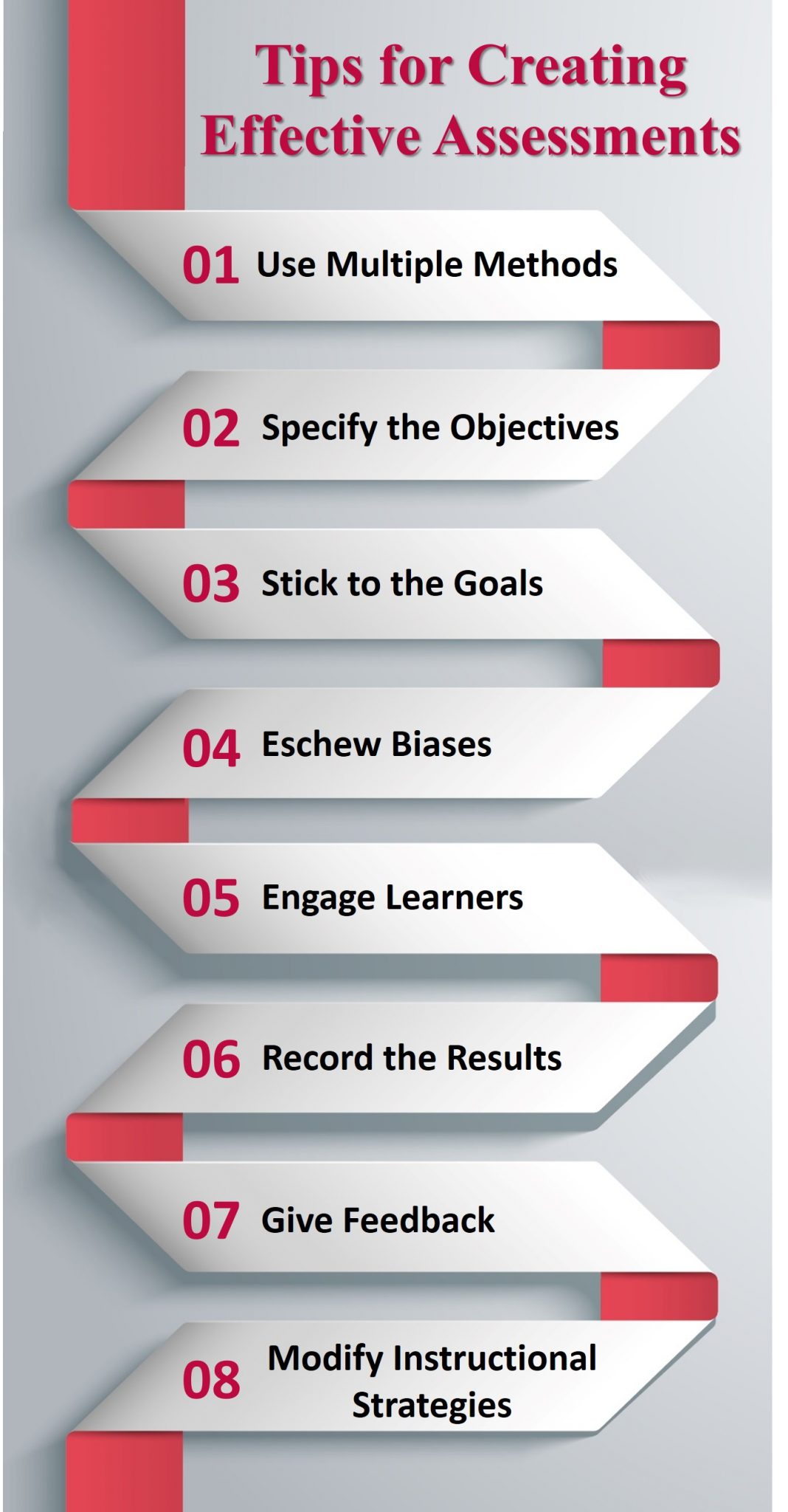
1. Use Multiple Methods
A single method is not enough to provide a complete picture of the knowledge and skills acquired by the students. Thus, a teacher must use multiple methods to assess the students for their capabilities in different fields.
Various activities such as projects, questionnaires, surveys, and others help in the assessment of different skills. These activities are conducted in the form of either formative or summative assessment.
(Refer to our blog on Formative vs Summative Assessments for more information.)
2. Specify the Objectives
Learning aims to inculcate a certain type of skill. Any form of learning has some necessary objectives for acquiring the required skills and knowledge. Moreover, these objectives determine the efforts of the learners and their contribution to the learning process as they participate in various activities. Therefore, specifying the objectives at the beginning of an assessment test helps students identify the skills they must demonstrate. Also, it motivates them to perform better as they are aware of what they are doing.
3. Stick to the Goals
An assessment is nothing without a goal. Effective assessment activities are completely goal-oriented. Thus, teacher as well as students should be aware of the goals and objectives of learning and should stick to them.
Additionally, teachers must ensure that the activities that do not fulfill the goal requirements are avoided to avoid the sheer waste of time.
4. Eschew Biases
Biases create hindrances in the process of development. They develop a sense of insecurity among the learners that often affects their performance. Therefore, teachers should work on creating a free and healthy environment where the students can display their abilities without the fear of judgment.
As a result, the students develop a sense of self-awareness and become progressive as they express themselves better. Moreover, unbiased assessments contribute to the development of their overall personality.
Additionally, the assessments that are not related to the skills/knowledge of the target group of students must be avoided.
5. Engage Learners
Learner engagement is a fundamental requirement for learning. The assessment of learning produces more accurate results when the learners actively participate in the classroom. Also, participation inculcates self-confidence in students as they learn to take initiative.
Moreover, the students learn many social skills as they collaborate with peers in group activities. Therefore, assessment activities involving more learner interaction and participation must be prioritized.
6. Record the Results
Keeping a record of the assessment results is important. It helps to assess the levels of improvement in the learners and also gives a clear picture of their potential.
Also, it helps the teachers identify areas where the learner requires assistance and practice. Accordingly, teachers can then design lessons and choose a teaching methodology that serves the purpose.
Moreover, students get to know where they stand, and a sense of healthy competition develops among them. This motivates the students to compete for better results.
7. Give Feedback
Feedback is what helps students to move further in learning. It gives them insights into their current performance and the areas they need to improve upon. Also, it helps teachers identify potential threats to learning and encourage the students to overcome their fears.
Moreover, feedback initiates an interaction between students and teachers. This creates a healthy classroom environment that leads to the development of communication skills. Also, the overall development of the students’ personality takes place within the classroom.
8. Modify Instructional Strategies
Choosing the right instructional strategy determines the effectiveness of the assessment and the overall course. Thus, the teacher must give clear instructions and should not refrain from modifying the instructional strategy.
Incorporating Gamification in assessments is a strategy that works to engage students while they have fun developing their skills. Apart from this, Blended Learning and Flipped Classroom are two other effective instructional strategies to use.
Furthermore, experimenting with instructional strategies helps to cater to the individual learning needs of the students and renders better performance results in assessments.
Creating effective assessments can be challenging sometimes. The above-mentioned tips for creating effective assessments can help the teachers to fulfill the requirements of learning and assessment to give the students an enriching learning experience.
Research Articles: Getting Smart and Brave in the Attempt
Images: Shutterstock
For more information, visit Evelyn Learning blog.

Create. Engage. Inspire
The post Tips for Creating Effective Assessments appeared first on Test.Evelyn.
]]>The post 8 Tips to Set-Up a Blended Learning Classroom appeared first on Test.Evelyn.
]]>Moreover, this method makes it easy to achieve the desired aims and objectives of learning with appropriate Blended Learning Strategies. However, the task of setting up a blended learning classroom can sometimes be challenging for a teacher. Here are 8 tips to set up a blended learning classroom that works well for most learning situations.
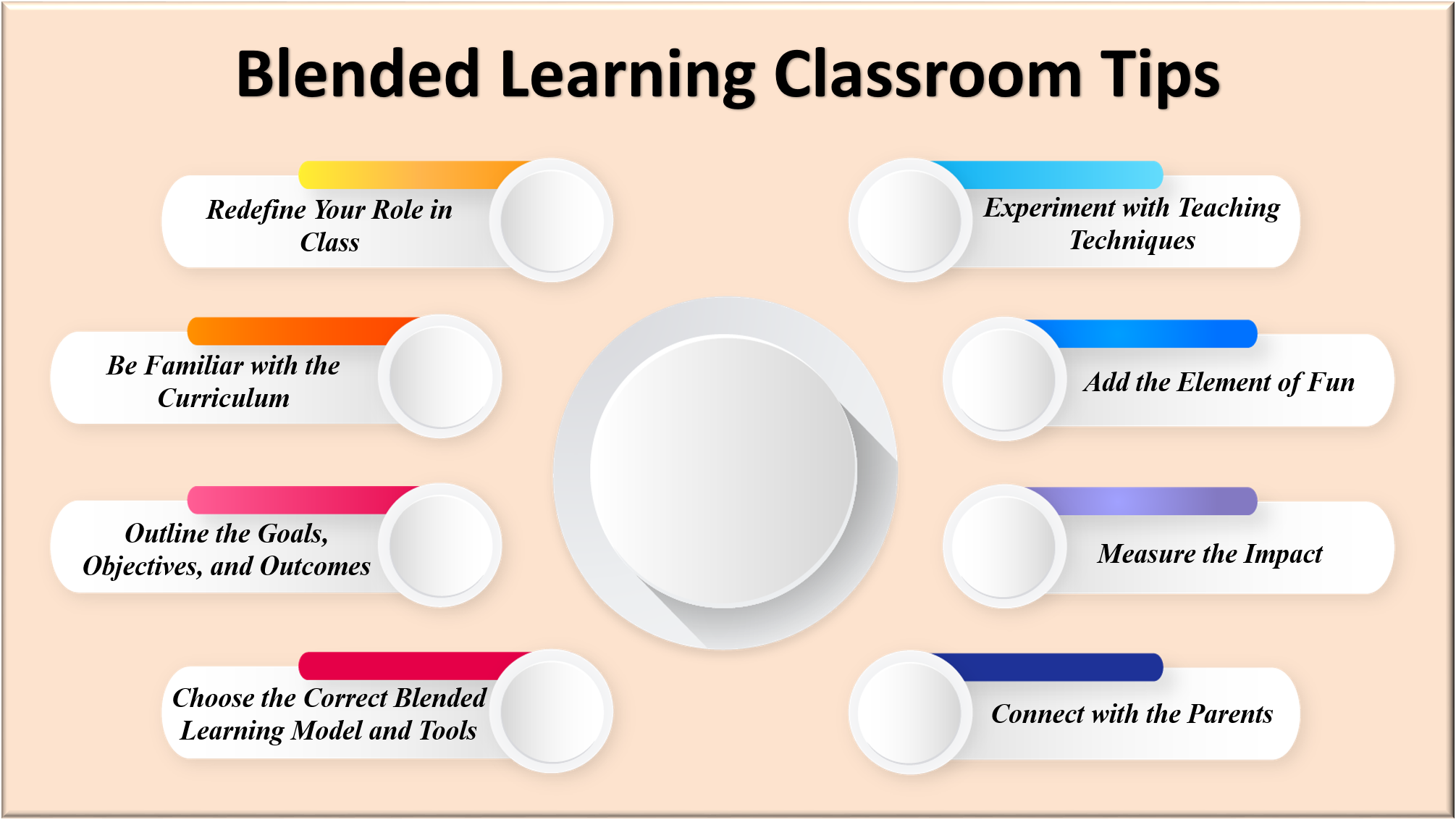
1. Redefine the Teacher’s Role
A teacher’s role in a blended learning classroom is not limited to teaching. Rather, a teacher acts as a guide who facilitates learning and assigns value to the course through various activities. Moreover, the responsibility of assessing the learners’ performance through the course also rests on the teacher’s shoulders.
Additionally, the blended learning method requires more interaction between the teacher and learners in comparison to the traditional teaching method. Therefore, teachers must create a conducive environment for the active participation of learners. To do so, the use of the right tools and technology is important. Thus, a teacher’s role expands to cover a wider range of responsibilities in a blended learning environment.
2. Familiarity with the Curriculum
The curriculum lays the foundation for learning in a classroom. It defines a set of subjects and areas of learning in the scholastic and co-scholastic realms for the holistic development of the learners. Thus, it acts as a guide for the teachers. It helps them create lessons and activities for learners which the students utilize to acquire the skills specified in the curriculum.
The proper implementation of the curriculum requires a set of pre-defined tasks that the learners must perform. Therefore, teachers must be familiar with the curriculum and choose the tools and resources that can best serve to fulfill the learning areas prescribed in the curriculum.
3. Outline the Goals, Objectives, and Outcomes
Well-defined goals and objectives are easy to achieve. They help lay a clear focus on the targets. Thus, it is important to define the goals and objectives of a lesson beforehand. Moreover, defining the objectives helps assign value to the goals and paves the way for better outcomes.
Defining the outcomes of learning along with the goals and objectives is crucial. These help teachers assess the performance of the learners. Also, defining the outcomes gives the learners an insight into how they are expected to respond to the lesson.
4. Choose the Correct Blended Learning Model and Tools
There are various models of blended learning exclusively designed to cater to different learning needs. These models work by engaging learners in different ways to achieve the desired learning outcomes. Thus, a teacher must choose the right blended learning model for the classroom that engages the learners and takes them on the right path of learning.
(Refer to this article on blended learning to know more about different models of blended learning.)
Additionally, choosing the right tools for setting up a blended learning classroom is important. The use of the right technology and tools helps a teacher deliver an effective lesson. Also, it promotes better learning and retention among learners.
5. Experiment with Different Teaching Techniques
The method of teaching impacts lesson delivery as well as the learning outcomes. The method adopted by a teacher must be in accordance with the curriculum. Thus, the teacher should use a method that works well to engage the learners and strives to achieve the aims and objectives of the course.
A blended learning classroom offers opportunities to the teachers to experiment with the teaching techniques and find what works best for their learners.
6. Add the Fun Element
Learning with fun is the ultimate formula for a better learning experience. Concepts learned while having fun induce better learning and retention. Thus, a blended learning classroom also requires the addition of an element of fun in the learning process.
Therefore, teachers must include games and activities that engage the learners and promote learning while they have fun. These practices can be introduced in the form of assessments as well. This motivates the students to perform better in the class.
(Refer to our articles on Gamification in E-Learning Part-1 and Part-2 for further reading.)
7. Measure the Impact
Learning without assessment is a waste of the collective efforts of teachers and learners. Assessments play a crucial role in the teaching-learning process. They measure the progress of the learners and determine whether the learning outcomes are achieved. Moreover, a teacher must set and clearly outline the expectations for the learners. This works as a stimulus for them and ensures that they achieve the desired learning goals and objectives. Following this, the learners must get clearly instructed assessment tasks that measure the level of learning and skills acquired by them.
8. Connect with the Parents
Parents are the first teachers. They monitor and instruct their children at home and thus can contribute to the learning process. Teachers must adopt a strategy to engage the parents in the learning process as well. Various forms of social media interactions can help initiate this process.
Additionally, parents can assist learners in certain activities and help them perform better. Informing the parents about their child’s progress also helps keep a check on the learner’s progress.
Blended learning classrooms are all about interactive and fun learning. A teacher is responsible for creating the right environment that can promote better learning. The tips mentioned in this article render a helping hand to teachers to move a step further towards setting up an effective blended learning classroom.
Reference article: Legends of Learning
Images sourced from Shutterstock and Freepik
For more such content on teaching methodologies, visit our blog.

Create. Engage. Inspire.
The post 8 Tips to Set-Up a Blended Learning Classroom appeared first on Test.Evelyn.
]]>