The post Top Trends And Challenges That Define EdTech Industry’s Health In 2023 appeared first on Test.Evelyn.
]]>At the end of 2022, we got a sneak peek of upcoming technologies, such as artificial intelligence, AR/VR, etc. At one point, we saw tremendous growth in the edtech industry, while at another, rising tuition fees and excessive screen time of students got us in a dilemma.
Now that we are into the first quarter of 2023, we are here to talk about the educational trends that are having a positive as well as negative impact on the edtech industry.
We will also take help from Evelyn’s industry report, “Trends and Forecasts on Learning Effectiveness in 2023”. In this report, many educational pundits, who have a rich experience of more than 15 years in the education industry, answered some questions regarding concerns affecting the e-learning industry and opportunities coming in 2023 to look forward to.
Edtech Industry Trends in 2023
During and after the pandemic, e-learning and blended learning started catching the limelight. They became more of a necessity rather than a luxury, as the pandemic refused physical contact completely.
In 2023, both these learning styles proved to have the biggest impact on the ed-tech industry.
Apart from this, AI has been in the news for the last few years. Just last November, OpenAI surprised us with ChatGPT and DALL-E 2. Let’s have a deeper look at all of these trends.
Artificial Intelligence
ChatGPT and DALL-E 2 have been in the news a lot since last year. OpenAI announced that more than a million people signed up for experimenting with this sensational chatbot. This chatbot has the potential to generate long-form content, extend longer conversations and compose, write song lyrics and educational content too.
According to Grandview Research, the real boost in the AI market was experienced after the year 2021. At that time, the size of the AI market was around $93.5 billion (USD).
During the last quarter of 2022, the AI market reached $136.65 billion, which is around a 50% increase from the previous year.
It is also estimated that by the year 2030, the market size of AI would reach $1,810 billion. A few decades ago, artificial intelligence was just a thought in progress. Now, we have robotics, machine learning, natural language processing, artificial neural networks, and whatnot.

Are robots going to replace humans as teachers?
In the next few years, it is believed that robots might have a certain level of self-awareness.
Some robots are humanized to some extent, like Sophia, the human-robot. Self-awareness means that there is no difference between a robot and human, which can also be concerning.
Sophia is a human-robot created by Hanson Robotics. Sophia uses some very advanced technologies, such as Natural Language Processing to understand human speech and Machine Learning to respond to human speech and gestures. This invention is the future of AI and one of the most advanced till date.
University and Startup Collaboration
Talking about industry-academia partnerships, in recent news, Jolly Good, a Japan-based startup has collaborated with Brigham and Women’s Hospital, which is affiliated with Harvard University. Together, they developed emergency care virtual reality content (VR).
Jolly Good medical VR solution will provide a more realistic experience than computer graphics. It will enable medical professionals to create their own live-action VR images.
Blended Learning
Coming to blended learning, this type of learning trend has not gained popularity only because of its sensationalism, but essentialism. Blended learning has become the most loved teaching method because it increases efficiency as well as student achievement by making them learn at their own pace. Apart from this, blended learning is also economical as well as time saving.
On the other hand, many people believe that hybrid learning leads to demotivation and procrastination. Also, it increases the screen time of students, making them feel lethargic all the time.
According to a report by NPR, 53% of children have their own smartphone at the age of 11.
In the year 2019, Common Sense Media found out that children aged 8-12 years spend almost 5 hours a day looking at the screen of their smartphones, tablets, and laptops. Moreover, teens aged 13-17 years spend around 7 hours a day doing the same.

Addressing the Challenges of the Education Industry in 2023
After talking about the useful trends in 2023, let’s move on to the concerns that we could be facing in the near future. The education industry has seen both bright and dull days.
“It cannot be denied that virtual technology is the future of education, but we also cannot agree that it would replace a physical presence”.
Are More Teachers Switching Professions?
During the pandemic, we saw teachers struggling with online teaching. They were feeling dejected, disrespected, and drained. The covid outbreak took a toll on most people’s mental health and online teaching did nothing, but added more mental fatigue to the already stressful life of teachers.
In the session 2022-23, many teachers stopped working. They either moved into non-teaching positions or switched schools.
School districts are unable to retain their teachers. Almost 50% of teachers transfer to new schools or worse, leave the teaching profession altogether. High school students as well as college freshmen have lost interest in teaching as a profession.

Image Credit: National Education Association
The above graph is a question from a research by Langer Research Associates asking parents if they want their children to pursue teaching as a profession. This question was first asked in 1969.
According to the U.S. Department of Education, 50 states in the United States reported a scarcity of teachers in the session 2022-23. There is a widespread shortage of special education teachers in 48 states, science teachers in 46 states, and math teachers in 44 states.
However, many education experts have also stated that the pandemic is just an excuse, and the problem of teacher shortage has been going on for more than a decade.

Teachers switching professions: The real reason
Cost of Education
Education is mandatory, but unaffordable. Many students who are willing to study opt not to continue their education because of the skyrocketing cost involved.
This concern was also highlighted in Evelyn’s industry report. Many experts highlighted this problem and agreed that the cost of education would continue to increase in the coming years too. As online learning is becoming more popular, the cost of education is also increasing.
“While we cannot deny the fact that technology has become an integral part of education, rising tuition fee is also a concern that the average American family is facing a lot”.

Cost of Education skyscraping higher than the previous sessions
The report of the College Board shows an immense increase in the average tuition fee of the private schools in the United States, such as Princeton University, Stanford University, etc.
The above graph shows the education cost, from the session 1992-93 to 2022-23. Although the tuition fee of public schools has declined slightly, keeping in mind the inflation, it is still expensive for lower-middle class families.
Reasons of Hike in Education Cost
In 2022, the cost of education was touching the sky. There are some reasons for this high cost of education . The important one is reduced state funding. In the academic year 2015-16, state funding declined by 11% compared to the last 10 years, which led to increased tuition fees.
This year, the trend has unfortunately continued and is now a big concern for students with poor pecuniary support. Students as well as parents are having second thoughts about pursuing a college degree.
According to the latest Forbes report, the number of students registering for college after high school has declined a lot. This year, college enrollment has decreased by 7% in comparison to the year 2017.
The reason is the sky touching tuition fee. Parents are thinking if taking a high debt for college education is worth it or not.
They are being skeptical regarding the value of a college degree. Students are starting to believe that colleges are overpriced and overrated.
Also Read: Should I go to college? We let our experts answer
Parental Involvement
Parental involvement is the participation of parents or guardians in a child’s education at home as well as in school.
Recently, we saw a lot of people inclining toward the idea of parental involvement in influencing school curriculums. They believed that this involvement leads to the growth and advancement of student.

Parental involvement in education is still a questionable thought.
In Evelyn’s 2023 ed-tech trends report, more than 50% of experts were in favor of the idea that parents should get involved in the decision making process regarding school curriculums.
However, other experts think that parents’ involvement leads to biased decision making. They consider that parents make decisions emotionally and not practically.
It is also believed by some pundits that educators make decisions by taking each and every student into consideration. On the other hand, a parent’s opinion might only be restricted to their child only.
Education Experts’ Opinions
In our recent Industry Discussion: Assessing New Age Curriculum Requirements with Jessica Aurilio and Alex Lochoff, we enquired if the involvement of parents in curriculum designing is valid or not. Their response to the question had some interesting points.
Jessica Aurilio is an edtech specialist at PowerSchool whereas Alex Lochoff is the director of curriculum at Edpuzzle.
Jessica said that curriculum development is not the area of parents to have a voice on. According to her, the idea should come from educators and people who are in the classroom.
On the other hand, Alex Lochoff was of the opinion that it might be okay to take suggestions from parents, but the parents should not have the decision-making power.
Watch the Full Webinar:
Conclusion
While we cherish the boost of artificial intelligence, AR/VR, and e-learning, we are also confused if this elevation is harmful for children. Students are having second thoughts about attending college, which is believed to be a foundational step towards career building. Increased screen time is not only harmful for physical health, but mental health too.
Parents must take measures to limit their children’s usage of technology. State should look into the matter of rising tuition fees. Awareness regarding scholarships and grants is required to provide education to every deserving student.
We have come a long way with technology. Many people are in support of e-learning. However, some think that traditional learning is still the most impactful way of learning. Both are correct in their own ways.
Everything has its pros and cons. Technology, if used correctly can turn out to be the best thing that ever happened to mankind. We should always look at the bright side of things.
The post Top Trends And Challenges That Define EdTech Industry’s Health In 2023 appeared first on Test.Evelyn.
]]>The post Influencing the Future of Education with AR/VR appeared first on Test.Evelyn.
]]>Likewise, teachers try hard to make their teaching lessons interactive, exciting, and engaging. The teachers do that so that they are well-received by their students.
Generation Y was easier. They have grown up seeing technology transitions. But, on the other hand, Generation Z has taken birth in the lap of technology, while generation alpha has been talking about technology since infancy!
This is the age of augmented reality and virtual reality. We are all over the notion of building a super Ed-Tech system that breaks the ordinary. Our parents learned from books, we learned from e-books, pdfs, and now kids learn from an environment that blends the virtual world with the real world.
What is Augmented Reality Vs. Virtual Reality
It is a phenomenon where the imagination or elements pop out to the real world and give a real-life experience to an individual.

Source: Google
Like a fish can be seen in a person’s garden through digital technology by overlaying the fish(digital world) onto the person’s garden(real world). Likewise, virtual reality can be experienced by putting a VR device on the eyes.

Virtual reality is the concept of incorporating oneself into a digital world. It is a virtual world far away from reality. Augmented reality is reality going one step further, while virtual reality is a step into a different world.
How AR/VR can affect Education
Research shows that the Ed-tech industry is growing annually by approximately 18%.
This means that people are thinking about education in ways that could only have been expected almost a decade ago.
Learning about the human body through an augmented human body structure that can be seen from all sides is way more interesting than learning from a 2-D image in a book. Every body part can be extracted, magnified, and understood precisely.
Students in a design class can see which decor piece can look good in a particular corner by superimposing different digital decor pieces in a real corner on a digital device.

Bringing computer-generated graphics into reality can give students a real yet highly immersive experience. In fact, it can break their effort to imagine how something would look.
Virtual reality can take learning to another level. It can prevent the effort to go anywhere and learn simply through an eye-wear device.
Virtual reality does not bring a fish out of the ocean into our garden like augmented reality. Instead, it takes the person into the sea to see all the fish.
You may also like Virtual Reality Widening the Scope of Education
The extent of technology can go so far; we could only imagine it as kids. AR/VR can help students in a small town see the world virtually without going anywhere.
Why AR/VR is the answer to teaching the Next-Gen
Attention span is already compromised. Students can focus less on the text and carry shorter spans on visuals. AR/VR makes learning more colorful and closer to reality. Students like to learn through experiences rather than memorization.
Also Read How to Make Content for Students with Short Attention Spans
They would love to see how a man used to walk in the early days and write perfect answers on tests. On the other hand, they would detest learning how an early man looked and then describing it in detail.
Visual memory is considered better and longer than verbal memory. So, for the students, especially the Gen alpha, AR/VR is one of the best ways to teach.
Tools for students to incorporate AR/VR in their learning
Students can choose from various tools from the digital libraries that can help them get an immersive experience in education.
Apps like Quiver help students color objects and see object animation. Tools like Arloon Chemistry help to arrange and rearrange the molecules to understand chemical reactions and formulae.
Certain apps can induce an augmented reality experience for students, like the Blippar app. This app allows students to bring an object in a picture alive digitally.
Medical students can benefit from HoloAnatomy, the application that helps to learn medical circumstances through AR simulation. It allows the students to understand the human body in depth with the visual experience.
Investment in AR/VR
There are specific free tools that students can conveniently use in their classes. However, some devices come with costs, and every student might be unable to afford these apps. However, a school might be able to invest in some of these AR applications, which enhance the learning and teaching experience. Schools can think of this as an investment. A teacher’s job would become less complicated as it would become more accessible for teachers to explain concepts to students and have all their attention.
It would only come to reason when the school districts and the administration care to unleash the power of technology and make it accessible to students to improve teaching methods.
The post Influencing the Future of Education with AR/VR appeared first on Test.Evelyn.
]]>The post What is Homeschooling and other FAQs appeared first on Test.Evelyn.
]]>Kirk Cameron is an actor, filmmaker, and the maker of the documentary. He says, ‘this movie is a deep dive into the normal lives of American homeschool families who are on the mission of putting faith, family, and freedom back into learning.’
Now that sounds serious and like an upcoming movement!
Homeschooling gained traction during the pandemic for obvious reasons. But what intrigues us is that it has still not gone back to the pre-pandemic levels. This means that parents are not backing out of homeschooling. They are still unsure about sending their children back to school. They actually like it this way!
It has been this way for quite some time, except that the reasons may differ now. For example, parents in earlier cases may have homeschooled their children for religious or pecuniary reasons. However, they prefer Homeschooling now, even when they can afford to send their children to these schools.
What is Homeschooling?
Homeschooling is not a new concept, but it is demanding the limelight now. To homeschool children is to educate them at home with tutors or parents, without sending them to public or private schools. It is an exciting notion to keep your children away from school. Parents can teach them whatever they feel is good and important for their children.
The idea of Homeschooling was put forth approximately in the 1970s by John Holt, an educational theorist. He had an ideology of teaching children at home for the first few years of their academic life. This ideology came from the traditional school system fatigue, a system where memory and stressful learning were common. He urged the parents to ditch the regular school system and homeschool their children. His ideology spelled that the automobile of education can be chosen, but the paths of schooling can be different.
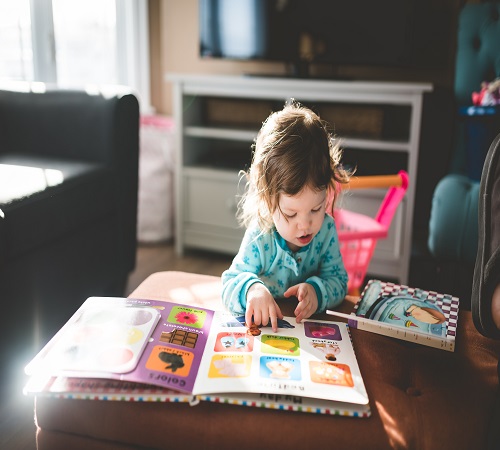
Homeschooling for children can be self-paced and stress-free.
Why do people homeschool their children?
The US Census revealed that the number of parents who homeschool their children increased by 63% in 2020-2021. Data finds that some of the parents who had homeschooled their children during the pandemic are considering continuing it even after the reopening of schools.
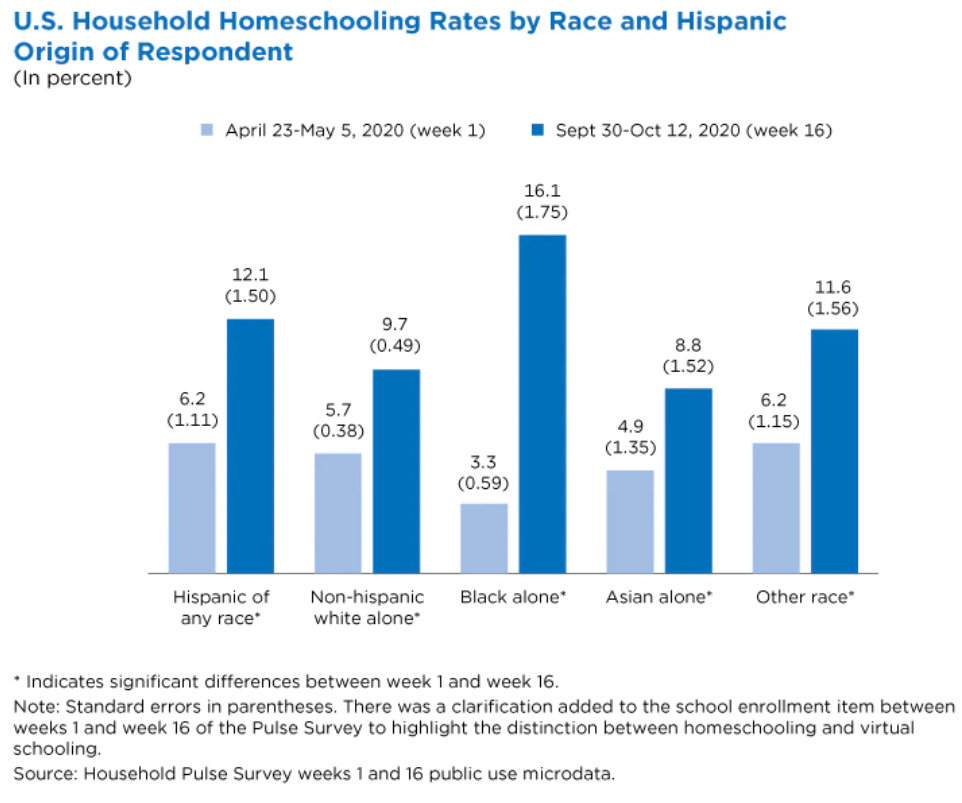
Source: US Census
The trend shows that not all parents are happy with their children’s schooling. Be it sex education, SEL education, or any other part of the general curriculum, parents want to take control of what their children learn in their lives, including knowledge about their faith and history.
Homeschooling parents keep their children out of typical school life for multiple reasons, some of which are:
- Disliking the school curriculum and teaching methods
- Financial burden of expensive schools
- A desire to spend more time with kids and get travel flexibility too
- Keeping kids away from bullying or discrimination at school
- Religious reasons
What homeschool programs can parents use to teach children?
Homeschool families consider the world to be their children’s school and life to be their curriculum.

Parents can also give social values to their children effectively
Homeschooling parents need to be aware of the state laws before they can start teaching their children at home. They can consider what kind of curriculum they want for their children. For example, biblical learning like Bob Jones homeschool curriculum or a free, online one like Easy-Peasy curriculum.
Parents can find homeschool coops to interact with families with similar homeschool interests and take help from one another.
Some parents can teach their children, and others can hire dedicated homeschool educators. Families can either purchase or create a homeschool curriculum through different resources. Some agencies and online platforms act as resource pools having the courses and curriculum for grades ranging from kindergarten to high school.
Ed-tech companies also play a pivotal role in homeschooling children from remote areas. Online Ed-tech platforms like Study.com help provide tutors, online courses, and video lessons that help in distance learning.
Are Homeschooled children less social?
Kirk Cameron, through ‘Homeschool awakening,’ advocates that homeschooling is not just reasonable but also healthy for children. He believes that there is nothing a child cannot learn at home in the presence of their family.
Pro-homeschool parents feel that their children are not learning in a restricted campus environment, as it is in everyday schools, but in a real-world environment.

Homeschool co-ops are becoming popular and help students to socialize
They interact with members of their families, neighbors, friends, and other people, and the question of becoming antisocial is practically irrelevant to them.
Learning Pods
Learning pods are like micro-schools. Homeschool families create small groups of their own to share learning experiences and cross-teach or hire a facilitator to teach their students the same subjects. It relieves the parents of the burden of teaching all subjects to their children, increases their socialization time with same-age groups, and helps kids learn from subject experts.
Is Homeschooling the Best for Our child?
When it comes to children, everyone wants to have the best school, the best food, and the best life for them. This is a natural parental desire. Parents are beginning to realize what they want their children to learn and not what the government-recommended syllabus is.
On the other hand, many parents feel that what the public schools teach is suitable for their children and their guidance. They do not have the time or the influence to take the entire school education of their children into their own hands. These parents believe that if they did well after learning in school, their children would too.
Which way of schooling should be given depends on multiple factors. As we said before, there is not just one way to education!
The post What is Homeschooling and other FAQs appeared first on Test.Evelyn.
]]>The post Content Development for Corporate Learning appeared first on Test.Evelyn.
]]>How to Develop Content for the Corporate Sector?
Despite having a content development plan in place, you may be able to find ways to enhance the process and achieve your content development objectives. If you are starting from scratch or wishing to update your existing content development strategy, take a look at the top steps to be successful.

Ensure your content development strategy includes different pieces of content for each step in the process, such as:
- General articles for those who just realize they have a problem
- Details on specific products for those who are seeking more information
- Interactive pricing calculators for those who are close to making a purchase decision
So, content development that is well thought out and strategically executed saves you not only time and money but also effort. In addition, it can assist your company in reaching its digital marketing goals and driving sales growth. Hence, creating interactive content with an end goal in mind is key to online growth, as is optimizing your content to get the most leads.
Image Sources: Digital news vector created by rawpixel.com at Freepik
The post Content Development for Corporate Learning appeared first on Test.Evelyn.
]]>The post Learning Experience Design or LXD appeared first on Test.Evelyn.
]]>What is Learning Experience Design (LXD)?

LXD is the acronym for learning experience design and best refers to the process of creating learning experiences. The focus of creating such designs is to make the approach human-specific and goals inclined so the best outcome ventures from it.
Specifying LXD, it has several design disciplines at its core with the prime objective of the field of learning. Some key design principles used in LXD are interaction design, user experience design, experience design, graphic design, and game design. Let us get a clear picture of LXD by breaking the concept into 3 parts.
Experience
Knowledge comes to us from experience and might be in multiple forms, not limited to education. Knowledge gathered from home, any outdoor areas, or work and experience obtained from any place is worthy of a shot. These experiences are what matter. Hence, LX designers need to integrate such experiences.
Design
LX design is all about the creative design discipline, the applied form of art. Research, experimentation, ideation, conceptualization, prototyping, iteration, and testing goes toward the process of LX design. Designs of the process have one objective – provide value or provide elegant solutions. Here, the design discipline denotes a design detail that teaches.
Learning
Defining LX design is about how the candidates learn, not the teaching pattern or the training schedule. The catch is to know the designs and efficient approaches of using the design that endorses learning. The end game is to curate a learning experience that works and lets the learner absorb much.
Other facets to this concept as we already know are human-centered and goal-oriented.
Elements of Learning Experience Design
The success of the eLearning courses of LXD depends on four key elements as described. Before we go through the elements, let us brush up on the basics, that is, the difference between UXD and LXD.
UXD or user experience design is used to enhance user experience and is used in the product development field. On the other end, LXD leverages the UXD principle to provide an enhanced learning experience in eLearning courses. LXD makes technology in favor of the learners.
Now, let us get started with discussing the elements.
Understanding Learners
Learners do not necessarily begin from the same origins as others do. Some learners are newbies, while others have already built up the base level and wish to go advance. The experience curve that LX designs create does not have the same origin for everyone.
LX designers, with the help of multiple tools, learn about the experience level of the candidates. Then, they get started with creating the design and add facilitation of skipping a few sections. This allows learners with some knowledge to skip past the sections they already know about.
Experiential Learning
One of the primary reasons why traditional corporate training fails is because they are inclined toward tasks and not experience. Though mainstream training seems reliable, it may not essentially be of value and fun.
LX designs leverage the traditional aspects such as functionality, usability, and convenience and add the missing parts. LX designs let learners move past the traditional offerings and engage them in a great way. The learning has the end course of action where learners find the solutions themselves.
Engagement and Motivation
Content competence apart, LX designs must indeed design a course for humans. The idea should be to create a design that learners would find entertaining, engaging, and valuable. Learners must feel they are getting a lot more in return for taking up the course and there is no compromise.
Sensory Layer
While crafting the learning course, another aspect that LX designs consider is the sensory experience of learners. Each and every aspect of the learning program must be in line with the sensory experience of learners. Designers should ensure they collect from the learner’s senses and amplify the materials and instructions accordingly.
Phases of Learning Experience Design
When you want to create a learning experience design, you need to set for a journey of uncertainty and adventure. The approaches that LX designers use often reciprocate that journey and there is a streamlined process to it. There are 6 collective steps or a rough draft of how the design phases go:
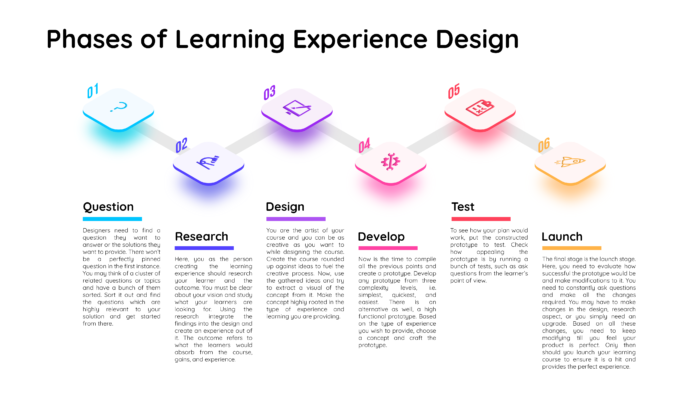
Learning Design v/s Instructional Design
Confusion between LX design and instructional design is an obvious phenomenon. The look of it might be the same, but they are entirely different concepts when you dive deep into them both. Precisely, instructional design is teacher and teaching-oriented, while learning design is learning and learning outcome-oriented.
For more information on preparing for the LSAT, visit our blog.
Create. Engage. Inspire.
The post Learning Experience Design or LXD appeared first on Test.Evelyn.
]]>The post Curriculum Development Models appeared first on Test.Evelyn.
]]>This article will describe what curriculum development is and how educators can employ the main models of curriculum design to ensure the success of any course. The importance of a well-thought-out course plan in any classroom—and for any group of students—will be clear to readers.
What is Curriculum Development?
The way one thinks about and theorizes education has evolved dramatically over time. The most basic definition of the term “curriculum” nowadays is the disciplines that comprise a course of study at a school, university, or college. Course planning and development are both terms teachers often use to describe curriculum development.
It is critical to note that course design varies. A math course at one university may cover the same content as another. However, the instructor may present it differently. The basics of curriculum development, on the other hand, do not change.
Walker’s Model of Curriculum Development
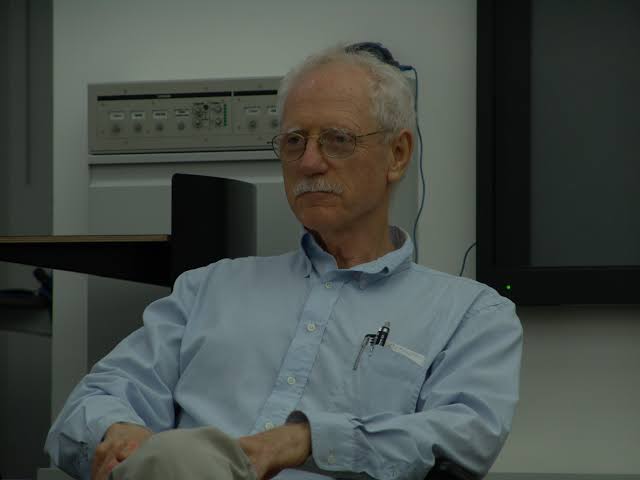
Decker Walker earned his Ph.D. in 1971 as an assistant professor of education at Stanford University. His area of expertise was curriculum, and the process of curriculum development and the formulation of curriculum policy particularly sparked his interest.
What is the Naturalistic Model, and How Does it Work?
In contrast to Tyler’s classical prescriptive model, Walker’s model is a descriptive one. Communicative approach is another name for it. The communicative approach begins with the designers’, target group’s, and other stakeholders’ more subjective impressions and perspectives.
Instead of recommending how curriculum planning should be done, the word naturalistic explains how it is done. Walker believes that if people were involved in the process and came to an agreement on the end output, better curriculum planning and development would occur.
Platform, deliberation, and design are the three steps of curriculum preparation in this methodology.
Platform: At this point, the curriculum workers bring their own beliefs, knowledge, and values to the table. This is akin to the concept of pre-printing a syllabus.
Deliberation: This phase specifies which facts are required for the means and purposes, as well as the generation of alternatives and consideration of the alternatives’ effects. The analysis of different costs and repercussions and selection of the optimal option for the upcoming curriculum work also employs this.
Design: Finally, this step entails curriculum preparation, decision-making, and implementation.
The level at which the development is taking place has an impact on this curriculum development model. Educators utilize it for curriculum development at a macro level. It also emphasizes the designers’, target group’s, and other stakeholders’ subjective perceptions and perspectives.
Taba’s Model of Curriculum Development

Hilda Taba contributed to the theoretical and pedagogical foundations of concept development and critical thinking in the social studies curriculum, as well as helped to lay the groundwork for education. She also developed a multipurpose teaching paradigm that incorporates a variety of processes, such as listing, grouping, re-grouping, labeling, and synthesizing. Taba’s “Grassroots method” is a modified version of Tyler’s model.
Steps of Hilda Taba’s Curriculum Development Model
This learning paradigm was created by Hilda Taba. Taba thought that constructing a curriculum follows a logical and linear order. She advocates for the “Down-Top model”, also known as the “Grassroots method.” She advocates for teachers to play a prominent role. Following are the seven steps of Taba’s Grassroots model.
-
Learners’ Needs Diagnosis:
The teachers who are also the curriculum designers begin the process by determining the requirements of the pupils for whom they need to design the curriculum. For example, the majority of students are incapable of critical thinking.
-
Establishing Objectives:
After the instructors recognizes the learners’ needs that require attention, they determine the goals that they will use to meet those requirements.
-
Choosing the Content:
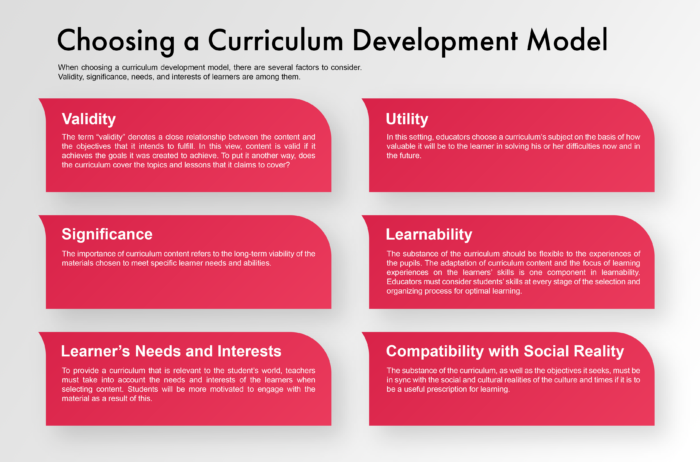
The objectives chosen or produced suggest the curriculum’s subject or substance. It is necessary to determine the validity and significance of the chosen content in addition to the aims and substance, that is, the content’s relevance and significance.
-
Organization of the Content:
A teacher must not only select content but also organize it in a particular sequence that takes into account the learners’ maturity, academic achievement, and interests.
-
Choosing Learning Experiences:
Students must be presented with content and be actively interested in it. At this point, the teacher should choose an educational style that will engage pupils in the material.
-
Organizing Learning Activities:
Learning activities should be ordered in a sequence based on both the content sequence and the characteristics of the learners. The teacher must consider the kids he or she will be instructing.
-
Evaluation:
The curriculum planner, that is, the educator, must determine whether the objectives were met. To assess the achievement of learning objectives, evaluation processes need to be created.
Tyler’s Model of Curriculum Development

The Tyler Model is the definitive prototype of curriculum development in the scientific approach, developed by Ralph Tyler in the 1940s. One might virtually argue that every licensed teacher in America, and possibly abroad, has designed a curriculum using this paradigm or one of its numerous versions, either directly or indirectly.
Tyler did not aim for his contribution to the curriculum to serve as a development model. Initially, he put his thoughts down in a book called Basic Principles of Curriculum and Instruction for his students to give them an understanding of how to make curriculum. Tyler’s model is brilliant since it was one of the earliest, and it was (and still is) a very simple model consisting of four steps.
Curriculum and Instructional Fundamentals
-
Determining the Goals of the School (AKA Objectives)
The first step is to figure out what the school’s goals are. To put it another way, what must students do in order to be successful? Each subject has its own set of natural goals that serve as signs of mastery. All objectives must be congruent with the school’s philosophy, which teachers frequently overlook in curriculum development. For instance, a school designing an English curriculum would set a goal for pupils to produce essays. This would be just one of the curriculum’s numerous goals.
-
Identifying Educational Experiences that are Relevant to the Goal
Step two is to create learning experiences that will assist students in completing step one. For instance, suppose educators require students to complete an essay. They may demonstrate how to write an essay as part of the learning experience. The pupils may then get the opportunity to practice writing essays. The experience (essay writing and demonstration) is in line with the goal (students will write an essay).
-
Organizing the Experiential Learning
The third step is to classify the experiences. Is it better for the teacher to demonstrate initially, or for the pupils to learn by writing right away? Either technique could work, and the preference is determined by the teacher’s mindset and the students’ needs. The point is that the teacher must decide on a logical order for the students’ experiences.
-
Assessing the Objectives
The fourth and last phase is to evaluate the objectives. The teacher is now evaluating the students’ abilities to compose an essay. This can be accomplished in a variety of ways. For example, the teacher could assign pupils to write an essay on their own. If they are able to do so, it indicates that the students have met the lesson’s goal.
This model has a few variations. Educators, on the other hand, still widely regard the Tyler model as the most effective paradigm for curriculum development.
Wheeler’s Model of Curriculum Development
Wheeler created a five-phased cyclical model of curriculum development, which appeared to address Tyler’s criticisms. His cyclical model resembles both linear and Taba’s interactive models in many ways. The following are the essential components of Wheeler’s model:
- Aims, goals, and objectives must be chosen.
- Educators must select learning experiences.
- Content selection which delivers specific types of experiences
- The organization and integration of learning experiences and content in relation to the teaching-learning process in the classroom and school
- Evaluation of all aspects of all other phases’ effectiveness in achieving the goals
This model depicts a cyclic and continuous process, implying that curriculum development should always be moving from one step to the next; it should never stop. The curriculum planner and the teacher are involved in a series of continual decision-making processes about a wide range of elements in Wheeler’s approach, which is considered dynamic rather than static. Because of its broad application, Wheeler advises that educators must employ this technique in all curriculum development at any level.
This model has a number of advantages. The cyclic model responds to changing needs, which necessitates continuous updating of the curricular process.
They are adaptable and relevant to students in specific scenarios. Adoptions and adaptations are conceivable due to the dynamic nature of the system, as long as there is a good objective that the activities fulfill.
The aspects of the curriculum are seen as interconnected and interdependent in this model. It allows for some interaction between the various aspects of the program.
To Sum Up
It is not easy to create, construct, and implement an education program, especially when it comes to online learning. Instructors have their work cut out for them, with educational technology playing an increasingly important part in higher education and today’s diverse student body.
Educators, on the other hand, will be setting themselves—and their students—up for long-term success if they follow the core standards and framework of curriculum development.
Image Sources: Shutterstock and Unsplash
For more information on curriculum development models, visit our blog.
Create. Engage. Inspire.
The post Curriculum Development Models appeared first on Test.Evelyn.
]]>The post Digital Learning, E-Learning, Online Learning: What’s the Difference? appeared first on Test.Evelyn.
]]>What is Digital Learning?
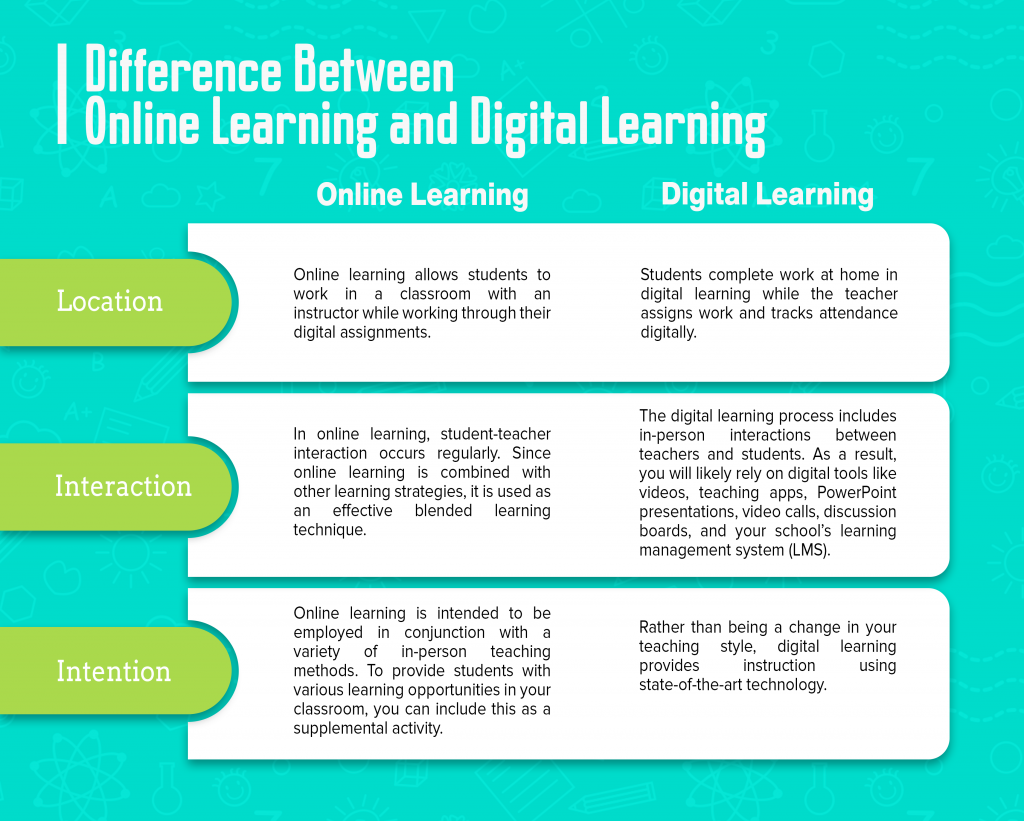
Digital learning is the most broad term. Any learning that is supported by technology or by instructional practices that fully utilize technology can be considered digital learning. An aspect of digital learning involves learning the use of technologies in an effective way, the use of features such as blended or virtual learning, etc. Besides, digital learning involves the use of technology, digital content, and instructional methods. Of course, digital learning includes online courses as well. Besides, using digital tools like interactive whiteboards and tablets in a classroom also involves students conducting Internet research or watching online videos.
What is Online Learning?
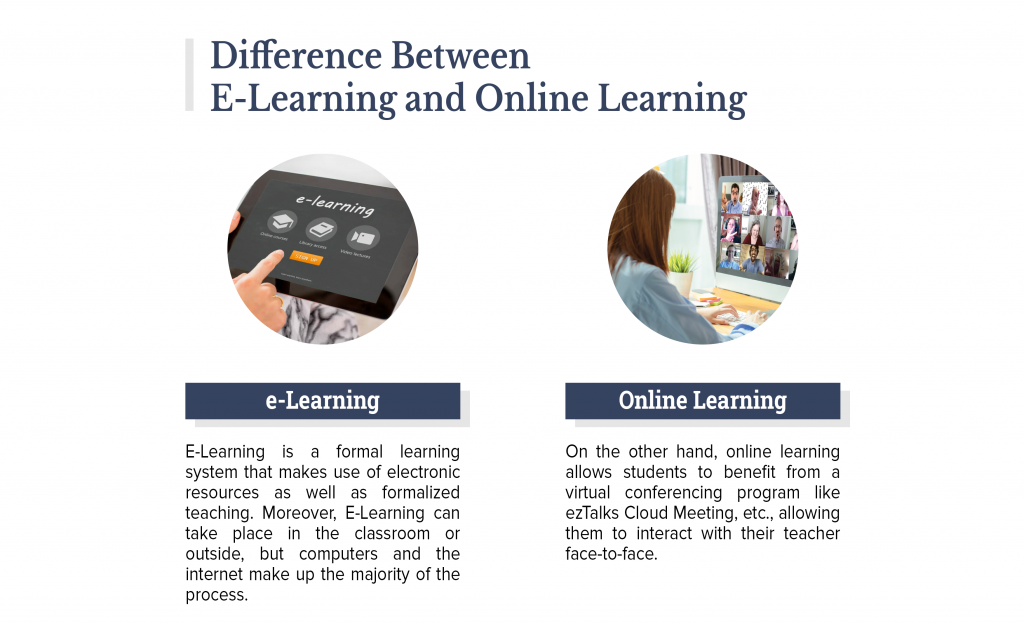
Online learning is a term that is similar to digital learning, but slightly narrower. The benefit of online learning is that it allows you to study and teach from anywhere in the world. As a result, there is no need to commute from one place to another or maintain a rigid schedule. The majority of online coursework will be conducted through forums, shared files, email, chat, etc. Nevertheless, it does not imply that a teacher and student do not interact face-to-face. As long as the primary means of communication is online, coursework can be conducted in a classroom or at a distance.
What is E-Learning?
The term ‘e–Learning‘ describes a formalized teaching system that uses electronic resources. It should be noted that, while teaching can take place in or out of the classroom, the use of computers and the Internet is one of the main components of eLearning. In some cases, neither the teacher nor the student meets in person. Furthermore, the course material and communication are handled via email, forums, chat, or video conference. Occasionally, this type, of course is referred to as a “fully online” course.
Difference Between E-Learning and Online Learning
Features of E-Learning:
- A typical e-Learning course may contain PowerPoint slides and/or Word documents as well as a pre-recorded video lecture.
- Students are expected to review a substantial amount of information independently.
- PowerPoint slides typically contain textual explanations of the theory.
- Usually, video lectures are pre-recorded by teachers and show them browsing through PowerPoint slides while lecturing or simply talking.
- Such materials do not encourage students to think while simultaneously learning.
Features of Online Learning:
- A professional online tutor or teacher is available to assist online learners.
- Instead of watching a pre-recorded video lecture, the course is conducted live.
- A tutor or teacher discusses the materials with a student during a live session (such as worksheets, test papers, homework).
- With the help of the tools and features presented on the online platform, the learning and teaching platform can help both tutor and student communicate what they want to say. A common feature of online learning platforms is an interactive whiteboard, on which tutors and students can upload materials (e.g. textbook questions, test paper questions, theory to be explained).
- The features of the platform allow tutors and students to point out the information they are looking at easily.
- Additionally, students can ask questions or state their thoughts during the live lesson with online learning. Besides, teachers or tutors can answer all of their questions and clarify their doubts on the spot.
The main difference between eLearning and online learning is the amount of interaction. Students and instructors interact more during online learning, while eLearning is more self-paced.
Difference Between Online Learning and Digital Learning
As a new social process, online learning is now replacing both distance learning and traditional face-to-face classes. With a digital learning approach, you are learning using technology such as a computer, mobile device, internet, etc., which can provide you with a wide range of solutions for enhancing your knowledge and performance in real life.
Difference Between Digital Learning and E-Learning
Despite sounding similar, there are subtle differences between them.
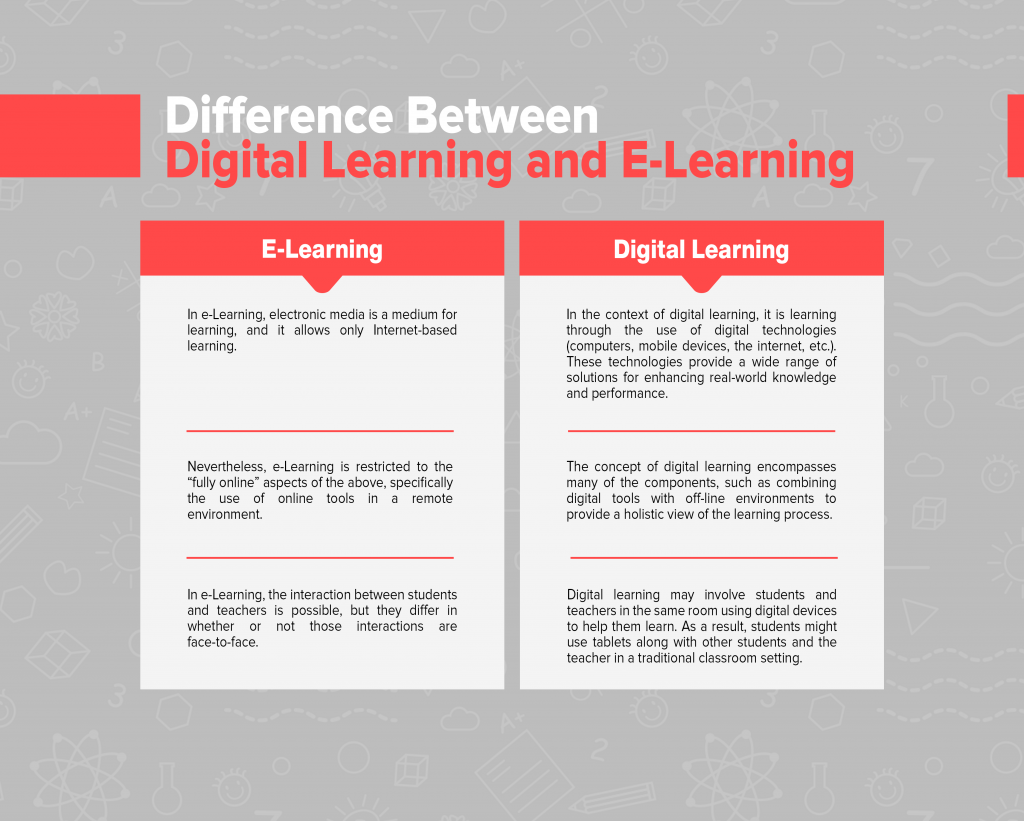
In recent years, education and the mediums of education have undergone a significant change. An individual can determine which educational method works best for him or her. Increasingly, students are becoming more independent and less hesitant to seek education on their own. Thanks to the internet and other modern advancements, students can receive education from anywhere in a variety of ways.
For more information on preparing for the LSAT, visit our blog.
Create. Engage. Inspire.
The post Digital Learning, E-Learning, Online Learning: What’s the Difference? appeared first on Test.Evelyn.
]]>The post E-Learning Video Solution Providers for Quality Video Content appeared first on Test.Evelyn.
]]>To get video based solutions, visit our page here.
What is Video-Based Learning?
Video Based solutions are the roadmap towards modern-day education. With the advancement of time and technology, the attention span of an average student is recorded to be rapidly decreasing. The solution to this is video based solutions which can not only improve the retention rate but can also make a particular topic interesting and fun to understand. With animated cartoons and engaging videos, students are more likely to be more attentive in their studies.
How to Ensure an Effective Video-Learning Solution? Step by Step Lessons Development
E-learning video service providers maintain a certain flow chart for the development of the lessons. With the help of these steps, they are catering to the very needs of the students. Here are the briefings of the steps of the process flow.
- Requirements are the key to starting. It is essentially what the students need. That is why assessing requirements is the first step to take.
- Identification is crucial. Why is that, though? Without that, the provider will not cater to the students’ needs in the long term. By identifying which are essential lessons, they can easily channelize the video.
- Assigning the SME is probably the most critical point because they are the video’s driving force anyway. With the help of an experienced SME, the video will capture attention.
- E-learning service providers now have to look for the video category. Then comes the documentation and scripting. Three of these are essential. First, every video is made for a purpose, and these steps will decide that purpose. It will also settle down the target audience of the video.
- Designing and developing alongside the screenplay is an essential step. Designing and development will give an edge to the video. A bright and precise screenplay will help the providers to engage the students for a long time.
- The shooting of the video is a great option and has a no-brainer. But, again, shooting with a quality crew and equipment is essential.
- Last but not least, QnA. Now there are debates over these issues of question and answers. But in the long run, it is important. Students will get the opportunity to interact with the teachers during this segment. That will allow them to find their doubts wash away.
How Did Video Solutions Help Model E-Learning?
In the modern world of technology, video solutions are the best way to move forward. E-learning is a platform where students can come and join instantly. Rather than providing them with text-based solutions, it is better to put up a video. The video solution revolutionized the modeled e-learning for the long term. It made it easy, simple, and authentic.
Factors to Effectuate the Learning Process with E-Learning
There are three crucial things to remember before implementing the video solutions. Firstly, are the students comfortable with it? If not, then it will be of no use. This is because the students need to learn and study simultaneously for their betterment. Secondly, the videos should not be heavy.
Now, what does that mean? That means that e-learning service providers need to produce videos that are not boring and fun to watch. Last but not least, the videos are well crafted. SME or the subject matters expert will have a huge role here. The videos should be well documented and engaging to watch.
Final Thought
So here we have listed the best practices and developments for good video solutions creation. You can use this as a checklist or integrate it in your video solutions creation services. In case you want video solutions for any curriculum, you can get in touch with us at info@evelynlearning.com or visit our page here.
The post E-Learning Video Solution Providers for Quality Video Content appeared first on Test.Evelyn.
]]>The post 5 Reasons to Integrate Social Emotional Learning in the Classroom appeared first on Test.Evelyn.
]]>Social Emotional Learning in the classroom helps and improves students at multiple levels, from better understanding their thoughts and interacting with others to making new friends, developing unique capabilities and more. In a more contemporary setup i.e. in a post pandemic world, the need for compassionate teaching is a new necessity to deal with students coming from multiple social and economic backgrounds. Social-Emotional Learning is the best remedy to address the post-pandemic situation and help bring everyone on the same footing in a multilingual and multicultural classroom.
What is Social Emotional Learning in the Classroom?
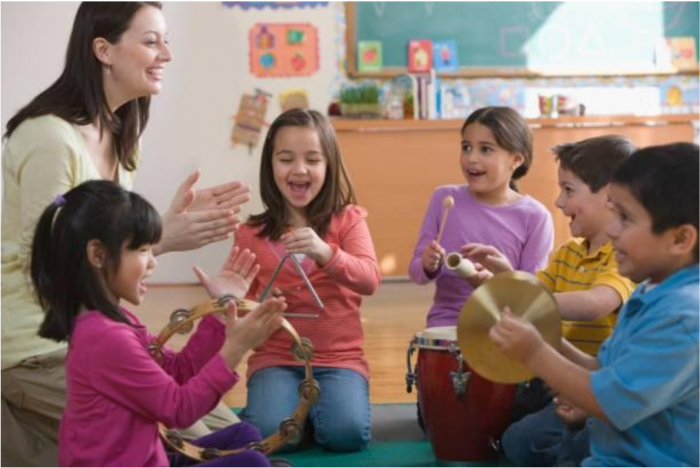
Social Emotional Learning is a scientific methodology for children and adults to develop fundamental life skills. The process is made to understand our relationship and manage work ethically & effectively. These skills can help students control anger, resolve conflicts, make new friends, and arrive at intelligent, ethical, and safer life decisions. (Collaborative for Academic, Social, and Emotional Learning)
SEL programs include developmentally and appropriate sequential instructions coordinated from pre-school children to high school students. The Group also focused on SEL for school, outdoor activities, and home. The methodology is also helpful for educators in professional development. It is comprehensive teaching involving school and parents for children’s social, emotional, and academic success.
Research establishes the importance of SEL, and it says the innovative teaching methodology enhances children’s performance by an average of 11 percentile points. In addition, it also shows impressive growth in pro-social behaviours such as sharing, kindness, attitude towards school, less depression, empathy, etc. (Durlak, 2011)
Let us continue with five reasons to integrate SEL in classrooms:
1) Boost Self-Awareness
Self-awareness is understanding your own strengths and weaknesses. SEL helps in the assessment of personal short- and long-term goals, emotions, values, etc. It improves confidence with a positive mindset and ethical decision-making, with immediate and life-long repercussions.
Finally, self-awareness helps recognize the interconnection of thoughts, emotions, and actions.
2) Management Skills
Personal and Educational objectives need discipline. And discipline requires proper management of behaviours, emotions, and habits. Social and Emotional Learning in the Classroom teaches to manage impulses, control gratification, stress management, and perseverance.
A child with the ability to manage emotions and behaviour can do wonders in education, career, and life because these are vital skills applicable at every stage of life.
3) Socially Connected
One of the negative impacts of the digital revolution is social disconnection. SEL is the perfect way to re-plug the social connection with students from diverse cultures and beliefs. It is a significant reason to integrate SEL in the Schools.
Students will develop the ability to empathize, communicate, understand, and feel compassion for classmates through Social and Emotional Learning. The impact does last only within school premises, and good habits go everywhere from school to home to the workplace. It also builds a sense of belonging with the community and society.
4) Communication Skills
People skills or communication skills include verbal, written, and non-verbal communication. Children learn these vital skills at school through SEL and develop the ability to listen, cooperate, teamwork, manage societal pressure, and open up about stress when required.
The impact of polished communication skills helps understand concepts, performance at exams, life, and the workplace.
5) Improved Decision-Making Ability
Social-Emotional Learning helps make ethical and constructive choices regarding social interactions and personal behaviour in a given situation. Research says SEL can improve understanding of safety concerns, accurate behaviour patterns, ethical decision-making, social risk factors, health consideration of self and others.
How has Covid-19 Made SEL an Essential Addition in The Classroom?

Schools and Educational Institutions are closed for around two- years. Students are learning virtually, having zero interaction with friends and teachers. Because of social distancing, virtual Learning, and prolonged study-at-home, students have had widespread stress, anxiety, and several social & behavioural disorders.
Let us explain the requirement of Social Emotional Learning in the classroom post-pandemic in a couple of pointers.
- The impact of study-at-home and school closure is long-lasting. Teachers have to manage conduct problems, physical classroom engagement difficulties, and emotional distress. SEL will help to re-engage, develop relationships and wellbeing.
- Students live with family 24X7, so there will be family stress once they come back to school. SEL is an excellent option to curate an environment for emotional safety and healthy connection with teachers and family members.
- Concentration in the classroom and understanding the concepts will take time post-pandemic. Social and Emotional Learning techniques will help teachers effectively engage children in school.
- SEL practices in everyday learning & teaching and social & emotional skills will help tutors and students transition from study-at-home to study-at-classroom.
- School administration can re-build a learning environment with emotion, empathy, and connection among students.
Concluding Thoughts
The positive impact of SEL has been documented and established by several studies and researchers in diverse backgrounds, from pre-school to high schools for children to adults. SEL utilized different prevention initiatives and national youth development programs in recent years. It is a method to address several social and emotional variables. SEL provides a common language and framework for educators to manage their activities.
Integration of SEL is an innovative approach and need-of-the-hour. It will give children holistic development and make the world a better place.
The post 5 Reasons to Integrate Social Emotional Learning in the Classroom appeared first on Test.Evelyn.
]]>The post What is SEL (Social Emotional Learning) and How Does it Help Students? appeared first on Test.Evelyn.
]]>Social emotional learning provides a foundation for good, long-term benefits on kids, adults, and communities by teaching effective problem-solving, self-discipline, impulse control, emotion regulation, and more. This is significant since people do not come into this world knowing how to regulate their emotions, solve problems, or interact with others. Pupils must acquire these talents, and schools can assist them in doing so. It is also worth noting that some pupils may require individualized support in order to properly benefit from social emotional learning.
What is Social Emotional Learning?
Social emotional learning (SEL) is a teaching strategy that teaches students of all ages how to better understand their emotions, feel them fully, and show empathy for others. These taught behaviors are then used to assist students in making positive, responsible decisions, establishing frameworks for achieving their objectives, and forming positive relationships with others.
Creating learning environments that create healthy interactions between students and teachers leads to enhanced communication skills, motivation, and exam results. SEL, on the other hand, is not just vital in the classroom. It is a lifelong practice that extends into adulthood. Effective collaboration and communication need the development of SEL skills and abilities.
Components of Social Emotional Learning
Social emotional learning involves five core components that can be applied in the classroom, at home, and in students’ communities, according to the Collaborative for Academic, Social, and Emotional Learning (CASEL). It is an organization dedicated to students and educators to help achieve positive outcomes for PreK-12 students. These are the five core competencies:
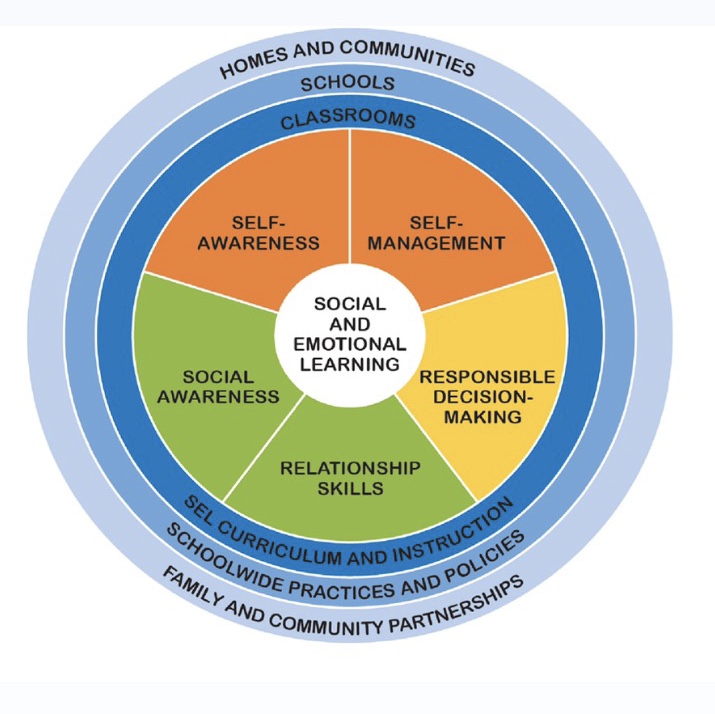
- Self-Awareness
Students learn to recognize their own strengths and limitations, as well as the impact of their actions on others. Coaching and simulation sessions are an example of this in practice, where students notice how various acts influence others so that they can learn how to perceive their own feelings as well as what other people are feeling. - Self-Management
Students learn to control their emotions and actions, which includes stress and time management, motivation, and academic/personal goal setting, all of which are critical skills for youngsters as they grow and need to manage their own schedules and businesses. Older, more experienced students can teach kids about these types of actions.By pairing students in a mentor-mentee relationship, the mentee will learn about vital academic skills as well as how to improve self-esteem and confidence, while the mentor will offer skills learned from experience. This will help the mentee navigate common challenges like imposter syndrome and insecurity. - Social Awareness
Students learn to detect other people’s emotions, grasp social behavioral norms, and empathize with people from various origins and cultures. Introduction and inclusion exercises, in which participants share their favorite interests, fascinating facts about themselves, and so on, are an example of an activity that strengthens this skill. - Relationship Skills
Students learn how to build healthy relationships and communicate clearly with one another and in groups. Participating in a range of activities, such as team sports, games, and group projects, can help them practice this. Active listening, team building, and conflict resolution are all abilities that are useful both inside and beyond the classroom. - Responsible Decision-Making
When it comes to behavior and speech, students learn how to make their own autonomous decisions, whether personal or academic. Students will be able to make polite and well-thought-out judgments by considering societal norms and differences, potential consequences, and safety issues. Students can solve qualitative problems in a number of ways to learn diverse strategies and ways of thinking. This is one way to actively practice responsible decision-making.
Social Emotional Learning Activities
Many schools have begun to teach students how to deal with emotions, make objectives, and get along with others. Parents can also assist their youngster practice these abilities at home.
Here are a few socio-emotional learning activities to assist children regulate emotions and improve social skills while also having fun. These low-tech social-emotional learning activities are really effective. And they are all made to fit into one’s regular routine.
-
Starfish and Tornadoes
The idea is to teach kids how to recognize how much energy they have inside. When they realize they have too much energy, they can either apply self-calming techniques or seek help from a trustworthy adult.
Playing Instructions: Draw a thermometer on a piece of paper. At the bottom, draw a starfish, and at the top, draw a tornado. Inquire whether the youngster is quiet and tranquil, like a starfish, or frantic and agitated, like a tornado. When a youngster is very energetic, mentors can discuss with him or her ways to make him or her feel more like a starfish. For instance, bouncing a ball can assist in the release of some of that energy.Mentors can help the mentee define their energy levels by playing this game at different times of the day.
Points to remember: Self-awareness can aid in the development of a skill called self-regulation in children. It is all about managing one’s own energy when it comes to self-regulation. It aids children in controlling their emotions and body movements in stressful situations. Moreover, it aids their ability to pay attention and learn.
-
Turtle Time
The idea is to assist children in developing their ability to see what is happening around them. Picking up on social signs allows children to get their needs satisfied while also understanding the viewpoints of others.
Playing Instructions: When the mentor and mentee arrive at the playground or other location, they must look around slowly and exaggeratedly like a turtle. They should take turns describing what they see: “All the swings have been taken.” “For the slide, there is a short line.”
The mentor must assist the child in making the connection between his or her observations and the behavior choices he or she makes.Points to remember: Mentors are not required to dress up as turtles. To aid their vision, they may use their pretend binoculars or a special pair of spectacles. A mentor could also participate in a game of “I spy with my little eye.” The mentor and the youngster can take turns observing and reporting social encounters until the other participant finds what they are looking for.
-
“Who am I right now?”
The idea is to help the child develop self-awareness and identify his or her strengths. These abilities can also aid in decision-making and understanding others’ viewpoints.
Playing instructions: The mentor can get some index cards and start playing. Draw drawings of the child doing something positive, such as being a good helper or a good teacher, with them. Consider what additional cards the youngster could create.
Mentors can comment on their child’s positive behaviors to encourage them to come up with ideas: “You just offered to teach your sister a nursery rhyme.” Let us talk about what kind of person you are right now for a second.”
Points to remember: Mentors must remember that many families attempt to teach social-emotional skills by criticizing undesirable behavior. But they must not forget to praise the youngster when he or she does something good. Praise for good behavior frequently leads to more of the same.
Mentors can also purchase these cards or they can find templates online. Children, on the other hand, could enjoy crafting their own cards.
-
Let us Make a Deal
The idea is to assist children in learning to compromise. Practicing how to perceive things from someone else’s point of view will assist the youngster consider the needs of others.
Playing instructions: When the mentor and the youngster cannot agree, the mentor can sing these words to the tune of ‘This Old Man.’ “You want this. That is something I would want. How can we both get what we want?” Then come up with a few ideas and pick the best one for now.
Points to remember: The child may have problems letting go of a notion. Mentors can combine their efforts to select the best of the runner-up ideas and place them in a unique container.
-
Take turns Taking Charge
The idea is to aid in the development of self-awareness, decision-making, and seeing things from other people’s perspectives.
Playing instructions: Mentors can start a custom where they and the child take turns preparing a fun night once a week. They might choose a topic, such as what meal to eat, what movie to watch, or what game to play. Alternatively, they can leave everything open and let the person in control choose.
Points to remember: Making a chart with categories like “Waiting my turn” and “Staying cool when doing something I do not like” might be helpful. The mentor can have everyone rate themselves after the exercise. Then they discuss what has been working well and what they would like to improve.
The Importance of SEL
In today’s ever-diversifying world, the classroom is frequently the first location where children are exposed to people from a variety of backgrounds, hold differing ideas, and possess unique abilities.
Social emotional learning aims to help students — both children and adults — better understand their thoughts and emotions, become more self-aware, and develop more empathy for others in their community and the world around them. Mentors must do this in order to account for these differences and help put all students on an equal footing to succeed.
Students can become better, more productive, self-conscious, and socially aware citizens outside the classroom if these attributes are developed in the classroom.
Image Sources: Daycare vector created by vectorjuice at Freepik
For more information on social emotional learning, visit our blog.
Create. Engage. Inspire.
The post What is SEL (Social Emotional Learning) and How Does it Help Students? appeared first on Test.Evelyn.
]]>