The post Teachers’ Role in Project-based Learning appeared first on Test.Evelyn.
]]>Projects enhance deeper learning because students must acquire and apply concepts and ideas. Additionally, PBL has the potential to improve competence in thinking (learning and metacognition). This is because students need to formulate plans, track progress, collaborate with others. They also evaluate solutions to real-world problems.
However, the drawbacks of this teaching methodology become immediately apparent to educators when they try to adopt this model in classrooms.
Challenges for Learners
1. Problems of Collaboration: PBL fosters teamwork and cooperation if done well. Problems arise when the group efforts are pooled to a few members who do most of the work while others do not get involved. Participation in the learning process becomes inequitable and disrupted. This may lead to false data while grading students who did not do much work, did not develop conceptual knowledge, and yet received high grades without true performance.
2. Lack of engagement: Students feel left out of the process when projects are designed in conventional ways and teachers instruct traditionally, rather than collaborating with the class to design projects. PBL proves fruitful when students develop the driving question and design solutions that will benefit an individual/organization.
3. Gaps in Active Learning: Students who are used to traditional classroom teaching feel that passive learning is the norm and struggle to take the lead in the learning processes of PBL.
4. Problems of Evaluation: It is difficult to evaluate a learner’s theoretical knowledge in the PBL framework.
A University of Michigan-led research in educational psychology revealed the responsibilities of teachers in PBL, and the challenges that they typically struggle with. Results of the case study indicated that the responsibilities of a teacher in PBL are the same as those in traditional learning. They are:
- To provide access to information and resources.
- Conduct the learning process by scaffolding instruction and guiding students to make tasks more manageable. (Blumenfeld, et al, 1991)
- Encourage students to use varied learning and meta-cognitive processes.
- Assess progress, detect problems, provide objective feedback, and evaluate overall results.
Challenges for Teachers
At the outset, teachers may encounter various complications while executing PBL.
- Teachers find it difficult to decide which parts of the curriculum to convert into projects. Not every academic discipline responds equally well to the PBL restructuring. For instance, it is comparatively easier to model computer science PBL than it is to model the literature PBL framework.
- Teachers might have incompetent knowledge and insufficient training. This could debar them from converting volumes of course material into the PBL model.
- A lack of conclusive learning outcomes and teaching goals often confuses and divides educators.
Solutions for Teachers’ Role in Project-Based Learning
PBL entails a paradigm shift because the teacher’s role in project-based learning is now to participate in the learning process with the students, lend insight, feedback, and guidance, while also eliciting ideas and approaches from the students. This is called Collegial Pedagogy in education.
The first step would be to re-imagine oneself as a fellow learner rather than an instructor in the classroom. Engaging in research over YouTube videos, journals, and reports just like students is the way to go.
Hitherto utilized methods, courses, and guidelines are expected to help shape only a portion of the PBL curriculum, therefore, the rest of the tasks will require creativity and deep thinking.
The second step involves getting down to basics and helping students decide on a driving question. This lies at the heart of every project, and it is a substantial question that opens up avenues for research and thorough study in accordance with academic standards.
A PBL teacher ideally encourages debates, cross-questioning, and discussions to allow students to arrive at a driving question on their own. Handing out driving questions excludes students from the process and it is discouraged. The diagram below lays down some attitudinal changes for teachers to adopt to fulfill their roles effectively.
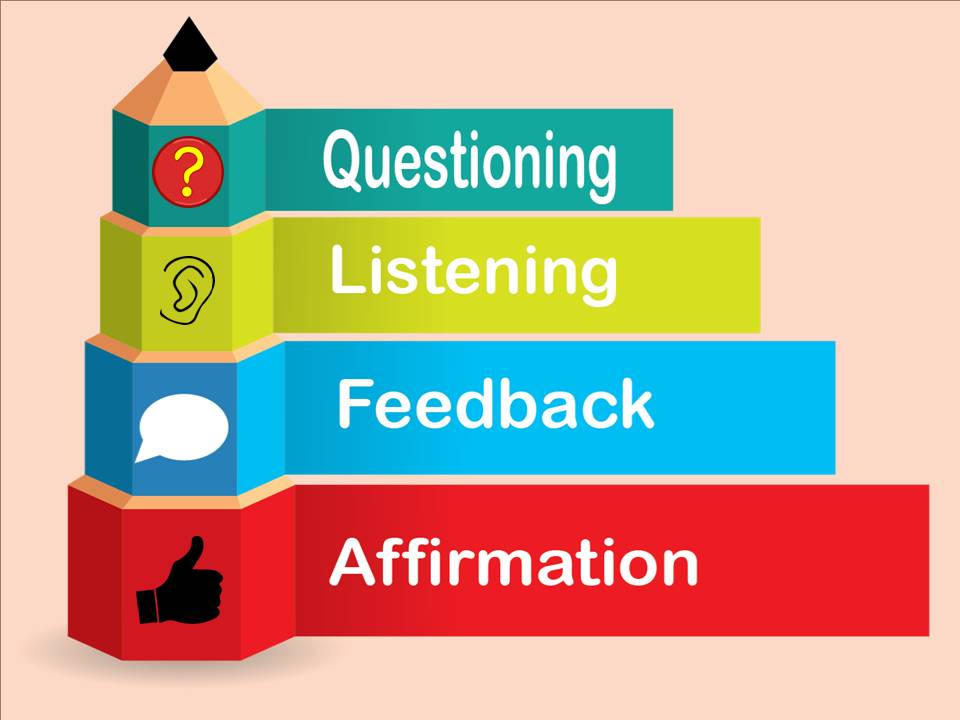
The Solution: High Quality PBL Framework
Various models and guidelines exist currently to mentor teachers in PBL. Consequently, there is a lack of agreement about learning outcomes of PBL. The solution lies in standardized core models. To ensure that institutions can provide high quality PBL experiences to learners, a standardized framework has been put together. According to the HQPBL Framework, the six criteria for standard PBL are:
- INTELLECTUAL CHALLENGE AND ACCOMPLISHMENT – to enable students to learn deeply, critically, and to strive for excellence.
- AUTHENTICITY – to enable students to work on projects relevant to their culture, lives, and future.
- PUBLIC PRODUCT – to arrange for public display and critique of students’ works.
- COLLABORATION – students collaborate with classmates and adults to receive mentoring and guidance.
- PROJECT MANAGEMENT – to engage students in a project management process.
- REFLECTION – to encourage students to reflect on their learning throughout the project.
Why Do Teachers’ Role in Project-Based Learning Need to Evolve?
The digitization of print media has brought on newer techniques of teaching, such as Blended Learning, Flipped Classrooms, and Gamified Learning. A plethora of teaching aids and tools have made the learning process experiential and interactive. Therefore, with constant innovation around, teaching cannot remain hinged on a 19th century model.
The teacher’s role as a sage, handing out wisdom, needs revision and transformation into lifelong learners who participate in project designing, execution, and evaluation processes of PBL.
The benefits of PBL far outweigh its drawbacks. As a futuristic teaching methodology, it reserves great prospects both within and beyond the classroom. The change in the teachers’ role and attitude will not arrive overnight, and the creative demands of PBL can hardly be overemphasized. However, if done well, it can ensure lifelong learning and deep interest in core concepts.
Teachers may avail themselves of vital resources, grading rubrics, and standards to follow while designing intellectually stimulating projects at pblworks.org.
Image resources: Shutterstock and Clker
For more information, visit Evelyn Learning blog.
Create. Engage. Inspire
The post Teachers’ Role in Project-based Learning appeared first on Test.Evelyn.
]]>