The post Gamification in Workplace as a Tool for Maximizing Productivity appeared first on Test.Evelyn.
]]>Read our previous blog on how Gamification in the Workplace (Part-I) has been observed to be boosting employee morale and increasing productivity. All organizations work to maximize productivity to generate larger revenue. So, employee training uses gamification to improve results and to promote team building. Moreover, it is also an essential part of HR that addresses a multitude of issues in the workplace.
Effective Use of Gamification
Gamification is an approach to learning that aims to engage employees by making work more enjoyable. It can be used effectively by keeping certain factors in mind while designing scenarios that involve employees. A gamified training must:
- have a consistent learning pattern
- motivate employees
- engage and accommodate all participants
- be relevant and relatable to real-life scenarios
- challenge employees to compete and to strive for success
- have a reward system for every accomplishment
- provide opportunities for practice and application of learning
- help in longer retention of information
Elements of Gamification in the Workplace
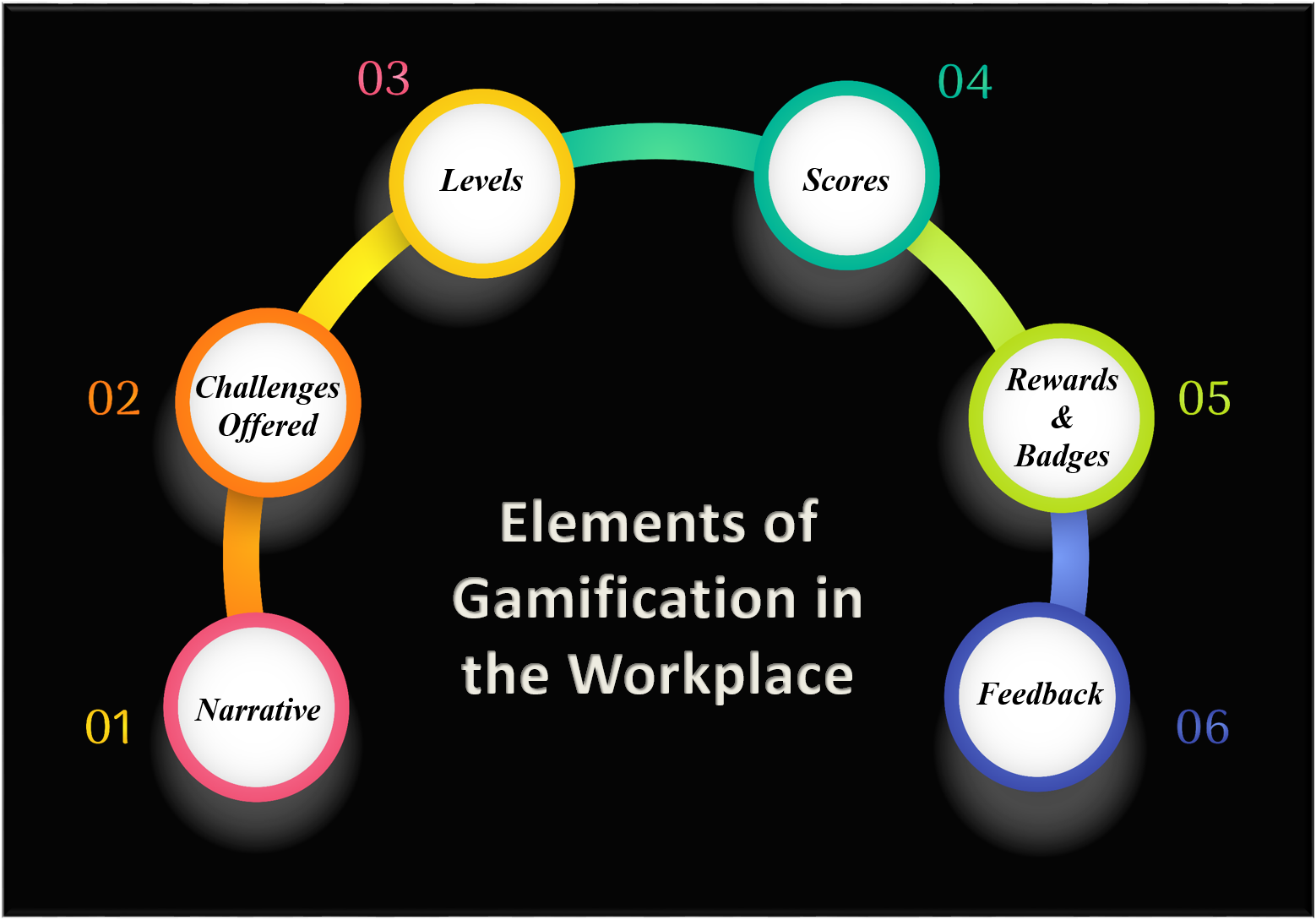
It should be noted that to ensure the effective use of gamification, certain elements must be put into play. Designing these elements requires keeping in mind the needs of the training and the objectives it aims to achieve. Moreover, these elements must also enhance the impact of the training.
1. The Narrative
Gamified training with a good narrative works best to engage employees and retain their interest.
2. Challenges Offered
Challenges are the stimulus that encourages an employee to strive for success. Thus, gamified training must include challenges that lead to the achievement of specified objectives.
3. Levels
Levels in a game induce excitement in players, which inherently involves them even deeper into the program and improves learning.
4. Scores
Scores offer an assessment of the performance of the players. Employees compete to achieve the highest score, which creates a healthy and competitive workplace environment.
5. Rewards, Badges, and Leaderboards
Rewards, badges, and leaderboards provide intrinsic motivation as they give recognition to the employees’ efforts, thereby providing job satisfaction.
6. Feedback
This is an essential element of gamification in the workplace. Feedback provides scope for improving one’s performance.
Implementing Gamification in the Workplace
The implementation of gamification in the workplace requires a well-structured approach. If not planned properly, it might not achieve the desired objectives of training. Therefore, it is necessary to follow a set of well-defined steps to create effective gamified training for employees in the workplace.
- Identify the goals to be achieved.
- Determine the behavioral and skill requirements.
- Design a user experience-oriented application.
- Make the objectives clear.
- Tailor the game elements based on the workflow.
Best Practices for Gamification in the Workplace
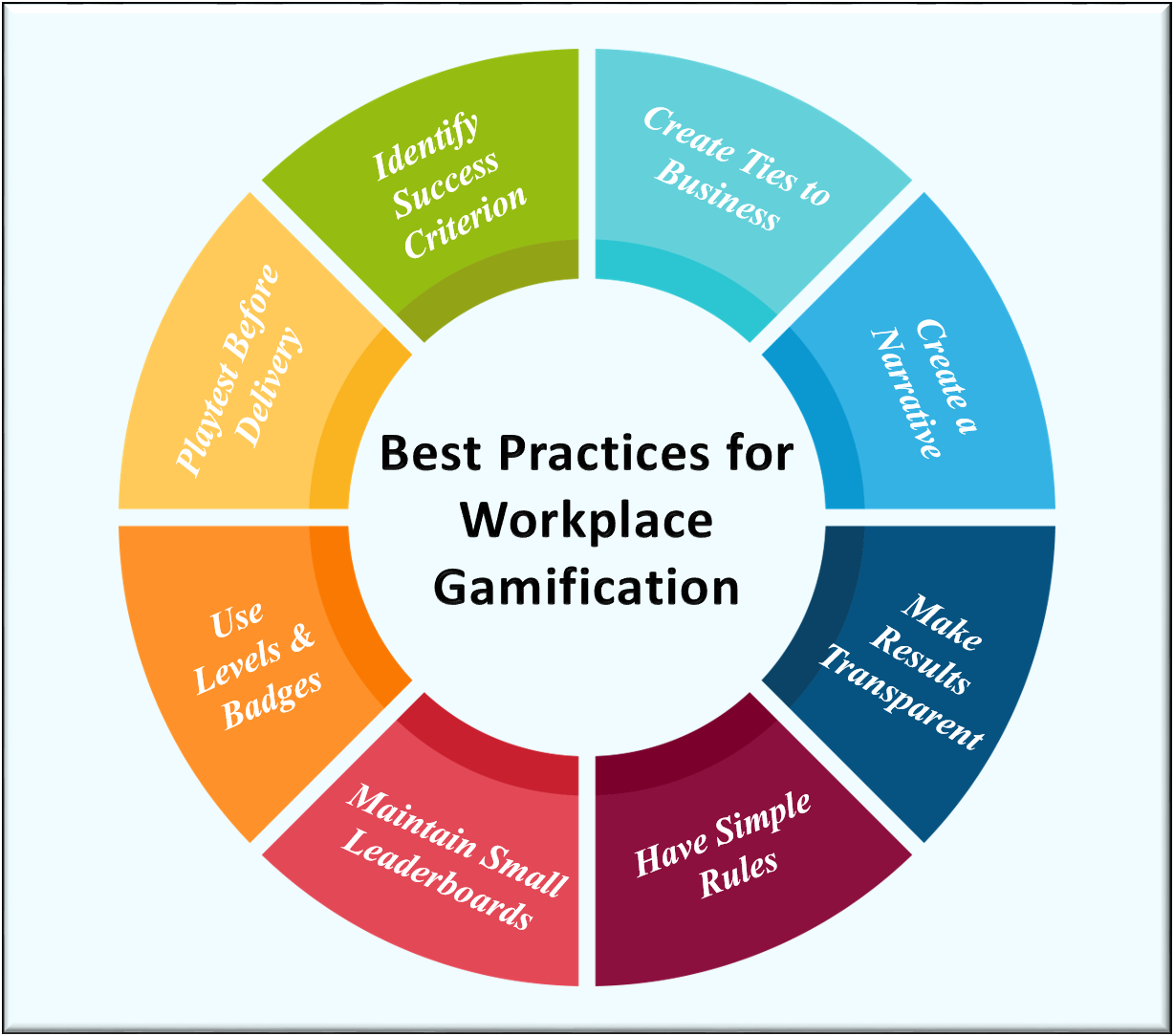
Gamification in the workplace is an effective training strategy that fulfils all training needs by adding enjoyable elements. Although gamification uses a well-planned strategy for implementation, it is equally important to keep certain points in mind while implementing gamification in a workplace.
i) Identify the success criterion
A gamified training needs a pre-determined success criterion to plan gamified training activities.
ii) Create ties to the business
Training that uses gamification must be tied to the business and must have a definite purpose. It should foremost be designed to meet business requirements.
iii) Create a narrative/story
A good narrative is vital to building engaging training. A gamified training needs an engaging narrative to evoke the interest of the employees.
iv) Make results transparent
Transparent results provide fuel to employees’ competitive spirit as they strive for success in a healthy environment.
v) Have simple rules
Having complicated rules in a game is disheartening. Gamified training must have simple rules that are easily understood by everyone and are not difficult to follow.
vi) Maintain small leader boards
Leader boards must be small as competing in small groups helps motivate employees to perform better.
vii) Use levels and badges appropriately
Using levels and badges motivates employees as their efforts are recognized. As a result, employees experience tremendous job satisfaction.
viii) Playtest before delivering
Playtest the gamified training before delivering it to the employees for final execution. This reduces any chances of error.
Final Thoughts
On the whole, gamification of a workplace is a highly effective strategy for engaging employees and inducing learning. It is a technology-based approach that is employed in a workplace to make it more fun, and it has several benefits for the employees as well as for the businesses.
Moreover, it helps ditch the monotonous routine of the workplace by introducing game elements along with learning. This boosts the overall job satisfaction and increases the employee productivity of a business.
Read more about effective teaching strategies on our blog.
Additional research: Medium
Featured image from Shutterstock and info-graphic template from Vecteezy.
Visit our blog for further reading on Gamification.

Create. Engage. Inspire.
The post Gamification in Workplace as a Tool for Maximizing Productivity appeared first on Test.Evelyn.
]]>The post Gamification in Workplace- Scope and Development appeared first on Test.Evelyn.
]]>The need to engage the employees in their work is beneficial not only for enhancing work productivity but also for the employees’ career development. The more the employee enjoys doing their work, the more efficient will be their work and the more thorough will be their mastery over their skill. The following article analyzes how gamification is employed in the workplace to achieve the desired levels of productivity.
What Is Gamification in the Workplace?
Gamification in the workplace refers to adding an element of fun into the workplace to pique the employees’ interest in the task they perform. It is rightly said that all work and no play make Jack a dull boy. Therefore, the use of gamification in the workplace also facilitates creating a balance between work and play. The greatest drive for completing a game is always the rewards received afterward. One way of gamifying work-related tasks is providing rewards to the highest achievers.
Gamification in Employee Training
Training is a requisite for flourishing in the corporate world. Tirelessly working in an office creates a monotonous environment that can affect the productivity levels of the employees. Gamification in a workplace educates, engages, and motivates employees for the end goal of optimizing the workflow and attracting talented professionals. The use of gamification can be categorized into three broad categories, which are:
a. Gamification for training
An organization can use gamification to recruit and train existing or new staff, inform them about new products, improve understanding of the company policies, introduce new software or technology, increase compliance, and upskill the employees.
b. Gamification for team building
Teamwork is the backbone of any organization. Gamification helps foster healthy relations among team members by bridging the communication gap, building mutual trust and understanding, improving relations, and encouraging collaboration.
c. Gamification for improving results
Gamification improves results and helps achieve the desired objectives of an organization by creating a sense of competition among the employees. Leaderboards, rewards, and incentives work as stimuli to motivate and engage employees to produce better results.
Gamification in HR
Gamification in HR is employed in a business process/environment to recruit, train, engage, and motivate the employees as well as to develop their skills. The gamification process kindles competitive instincts. As a result, employees engage and absorb knowledge through a game and experience a greater sense of achievement and encouragement to grow. The HR department of a company may use gamification to attract job seekers and to assess their future performance at the time of recruitment.
Some of the important applications of gamification in HR are listed below:
i) Training and learning
Change boring training content into a game to engage the employees and to get better responses.
ii) Administration
Reward points for completing a certain task on time. This works as a form of extrinsic motivation for the employees.
iii) Employee well-being
Along with work, take employee wellness into account. The HR can create a challenging system to record physical activity levels through wearable tech and maintain leaderboards to give rewards.
iv) Team building
Create a collaborative approach while introducing healthy competition in a team.
v) Assigning value
Assign a value to the employees in the form of rewards as they abide by company values.
Addressing Multiple Training Needs
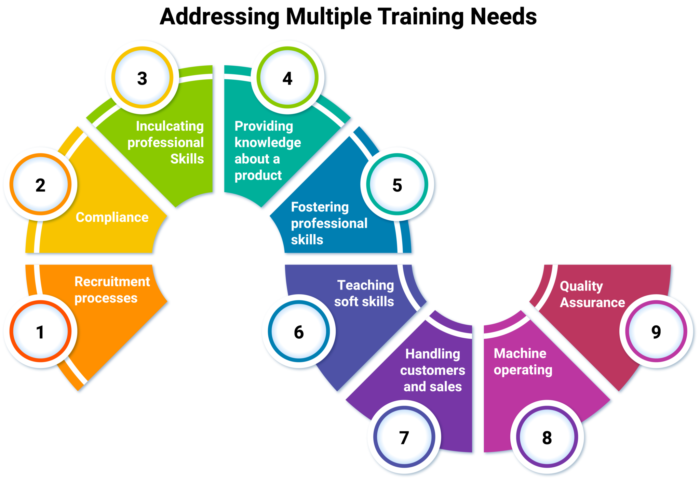
The scope of gamification in the workplace is extensive. It engages employees in all departments. What’s more, it provides an impetus for better performance in the workplace. The common spheres where gamification is employed in the workspace include:
- Recruitment processes
- Compliance
- Inculcating professional skills
- Providing knowledge about a product
- Fostering professional skills
- Teaching soft skills
- Handling customers and sales
- Machine operating
- Quality assurance
Benefits of Gamification in the Workplace
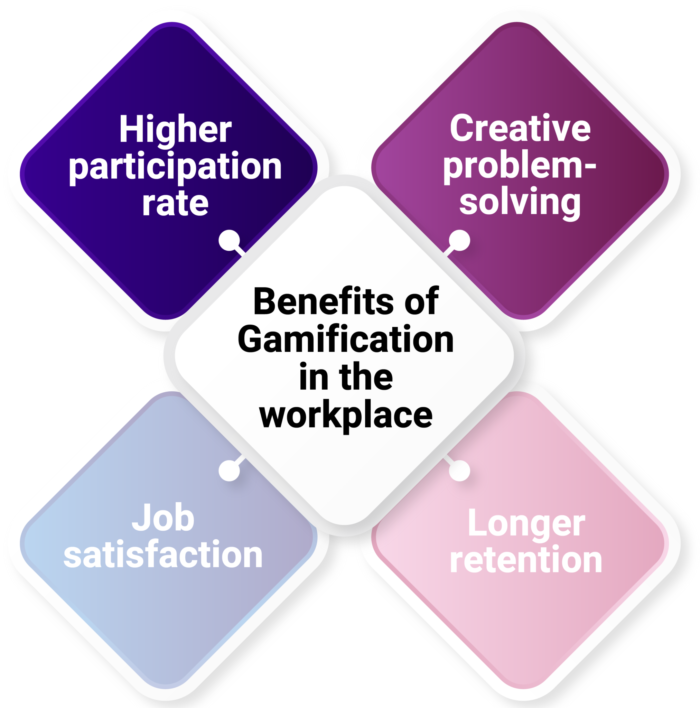
Gamification in the workplace offers countless benefits to the organization as well as the employees. Some of the important benefits of gamification in the workplace are mentioned below:
1. Higher rates of participation
A gamified activity encourages more employee participation as it is an interesting team activity that involves a reward.
2. Creative problem-solving
Gamification allows employees to apply their creative talent in their work to perform better and to get rewards. This induces creative problem-solving abilities in them.
3. Information retention
Information acquired through experiences is much easier to retain. Employees engage in various activities and learn by experiencing and performing in a game-like situation, initiating longer information retention.
4. Job satisfaction
Happiness at work makes work more enjoyable and reduces the burden on the employees. This increases job satisfaction as the employees engage in competition and get recognition for their efforts.
Final Observations
Gamification of a workplace plays a crucial role in creating a positive work environment by making work seem more like a game one can enjoy. It is an accommodating approach that works well for the various divisions of an organization. Moreover, it helps achieve unprecedented levels of employee productivity and growth for attaining the desired company goals.
However, gamification requires certain conditions to be met before an effective training solution can be implemented. Transforming gamified training into a learning tool requires certain elements. This transformation helps in achieving the desired outcomes rather than just creating a game.
For more information on Gamification in the Workplace, read Part-II of this series.
Research references: Digitalhrtech and Medium
Images sourced from Shutterstock and Vecteezy
Visit our blog for further reading on Gamification.

Create. Engage. Inspire.
The post Gamification in Workplace- Scope and Development appeared first on Test.Evelyn.
]]>