The post An Introduction to Plagiarism appeared first on Test.Evelyn.
]]>Readers may go through the web articles at the Caltech, University of Cambridge, University of California, and University of Oxford websites to develop an idea about the holistic definition of plagiarism.
Types of Plagiarism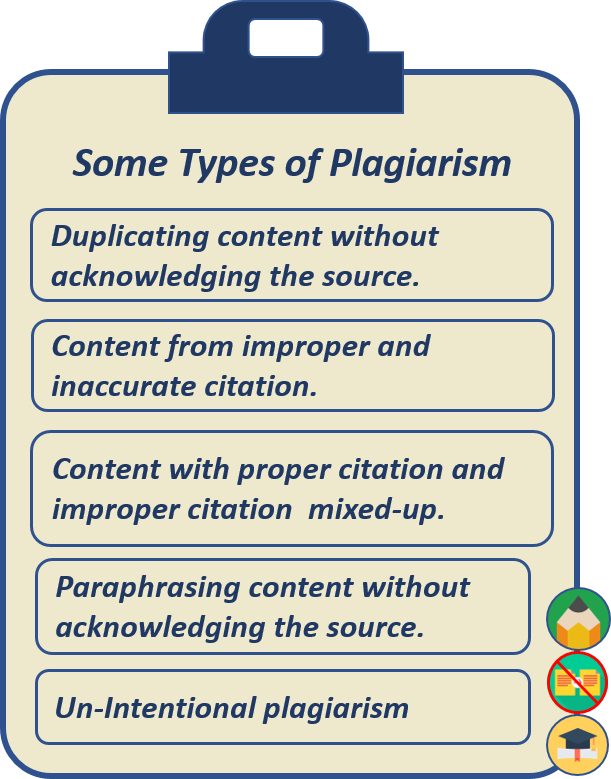
Listed below are some of the most common ways in which people plagiarize.
- Taking content “as-it-is” from a source without acknowledging and crediting the source. Commonly, the copied content is in the form of a “single large block” from one source. Otherwise, the content may be also copied in several “chunks” from one or multiple sources.
- Paraphrasing the content without acknowledging the source(s). Such a practice involves changing a few words in the content taken from single or multiple sources. The structure and flow of content remain the same.
- Besides the above two major ways, there are several cases of plagiarism. For example, the final content is a mix of content with proper citation and content with improper citation, content with improper or inaccurate citation of sources, and content borrowed from a previous work of self, thereby rendering the new work ‘unoriginal’.
- Plagiarism may be unintentional or accidental as well. This happens when one does not have the understanding of how to quote and cite sources. However, the content may seem to be the outcome of a conscious attempt at plagiarizing.
Readers may access web write-ups on plagiarism at the Bowdoin College and Turnitin websites. Additionally, an infographic at the iThenticate website offers a detailed study with case-specific examples. The content available at the suggested sites would help consolidate the readers’ understanding of the topic at hand.
Consequences of Plagiarism
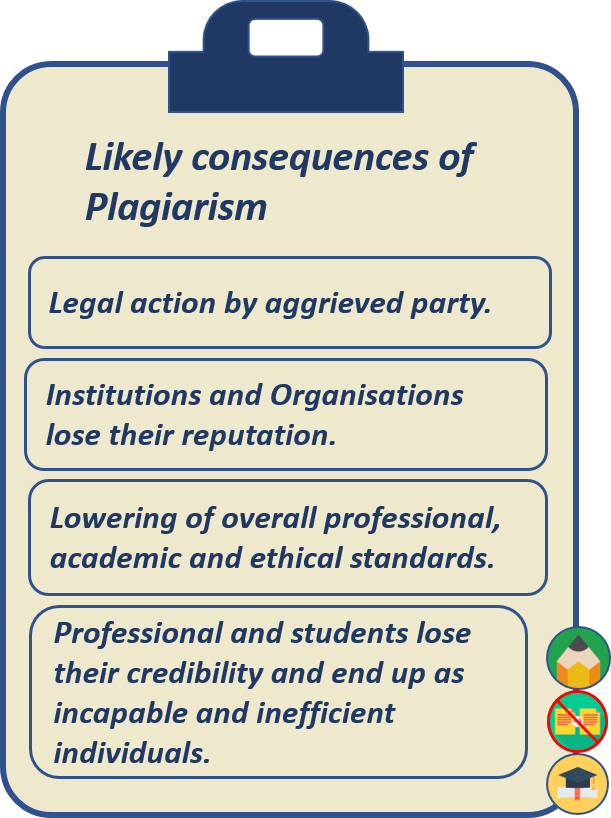
People who plagiarize are under the false impression that they stand to benefit from such a practice. From a short-term perspective, they do. They are not only able to develop “their work” quickly and conveniently but also grab credit and recognition for “their contribution”. The original creator of the work (the aggrieved party) thus loses the immediate benefits and credits that are rightfully theirs. From a long-term perspective, however, plagiarists end up as ineffective and incapable professionals. Their professional reputation is irreversibly destroyed to the point that their social image is severely dented as well. The world of academia and the knowledge industry is replete with such examples.
Academic institutions, the knowledge industry, and publishing companies (print/electronic) have now begun to take cognizance of the fact that plagiarism is a malady infecting academic integrity. Conscious efforts are hence being undertaken to avoid and curb this malady. Academic institutions and forums, for instance, have a distinct and clear set of guidelines to penalize plagiarism. Also, the degree or percentage of plagiarism is an important metric in deciding the quantum of penalty.
A dedicated FAQ page at the IEEE website gives an idea about the kind of guidelines that describe the extent of appropriate penalty for any plagiarism found.
Ways and Means to Detect and Identify Plagiarism
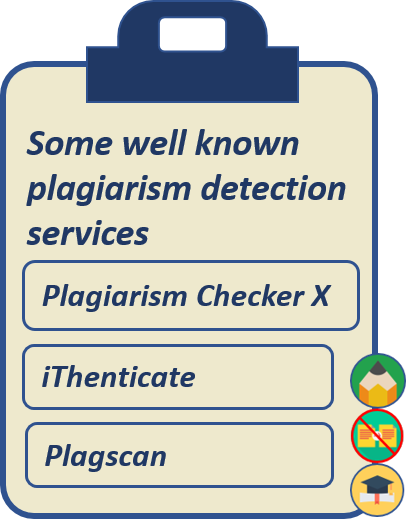
It is important to understand that to award penalties, it has to be proven that plagiarism has been committed intentionally. However, proving a case requires the identification of instances of plagiarism. This is where the ubiquitous internet and digital tools which make it easy to plagiarize make it equally easy to identify plagiarized content. A plethora of digital services, both paid and free, help identify plagiarism. Such services conduct a close and thorough examination of content and provide a detailed analysis of any plagiarism found. It is not necessary, however, to carry out the analysis of content through digital/electronic means only. A case discovered through human observation is equally well established to call for action.
The evidence of plagiarism found is duly put before a panel or board (designated to handle such cases) of the relevant organization/institution/body for formal examination and subsequent action. Penalties may range from zero credits for plagiarized scripts to outright cancellation of a candidate’s registration in a study program, depending upon the extent of plagiarism. Knowledge and learning-based organizations remove such content from their portals and sever their professional relations with knowledgeable professionals who indulge in plagiarism.
As a measure, penalizing plagiarism definitely deters people from practicing it. It is equally important that professionals adopt ethical practices during the course of their work. Therefore, institutions and organizations are advising students and professionals on ways and means to avoid plagiarism. This requires creating awareness about the issue amongst students and professionals. A dedicated “FAQ” on the website of an institution would help achieve the objective. Readers may access such FAQs through the links provided earlier in this article.
Citation and Its Purpose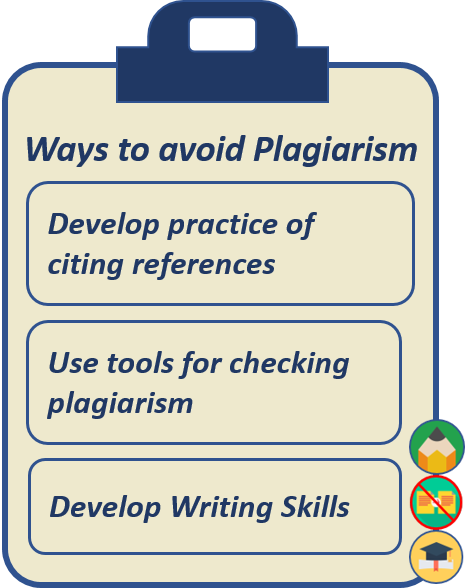
A sure approach to avoiding plagiarism is the practice of developing good writing skills. Good writing calls for the honest and effective articulation of thoughts, ideas, and facts. Honest writing calls for crediting the resources which have had an influence on the developed content. This is where the practice of including citation assumes significance.
A citation is a reference to a source referred to during the development of a work. It may also be a link/credit to a resource from where content is suitably adapted for inclusion in a work. Citation ensures that credits are rightfully given to the original creators of the cited work. It also helps the audience refer to additional sources on the subject. Readers may note that facts/thoughts that are a matter of “common knowledge” do not need a citation. However, if a thought/fact/idea is beyond the purview of common knowledge and is a unique and distinct work of a creator, a citation is necessary.
The publishing industry adopts specific formats for making citations. An improper citation, at times, is equivalent to plagiarized work. The web articles When to Cite and Referencing conventions at the University of Cambridge website offer a sound idea about the need for citations and the practiced conventions for making citations. Readers may go through similar articles on the Caltech and University of Oxford websites.
This article is part of a series of articles on Plagiarism.
Additional References:
- Promotion of Academic Integrity and Prevention of Plagiarism at the University Grants Commission, India.
- Draft Document on Plagiarism Policy at IIT Kanpur, India.
Image Credits:
Icons made by Icon Monk, Vectors Market, Smashicons from www.flaticon.com
For further reading related to pedagogy and education standards, please visit the blog at Evelyn learning.

Create.Engage.Inspire
The post An Introduction to Plagiarism appeared first on Test.Evelyn.
]]>