The post Best Practices for E-Learning Localization appeared first on Test.Evelyn.
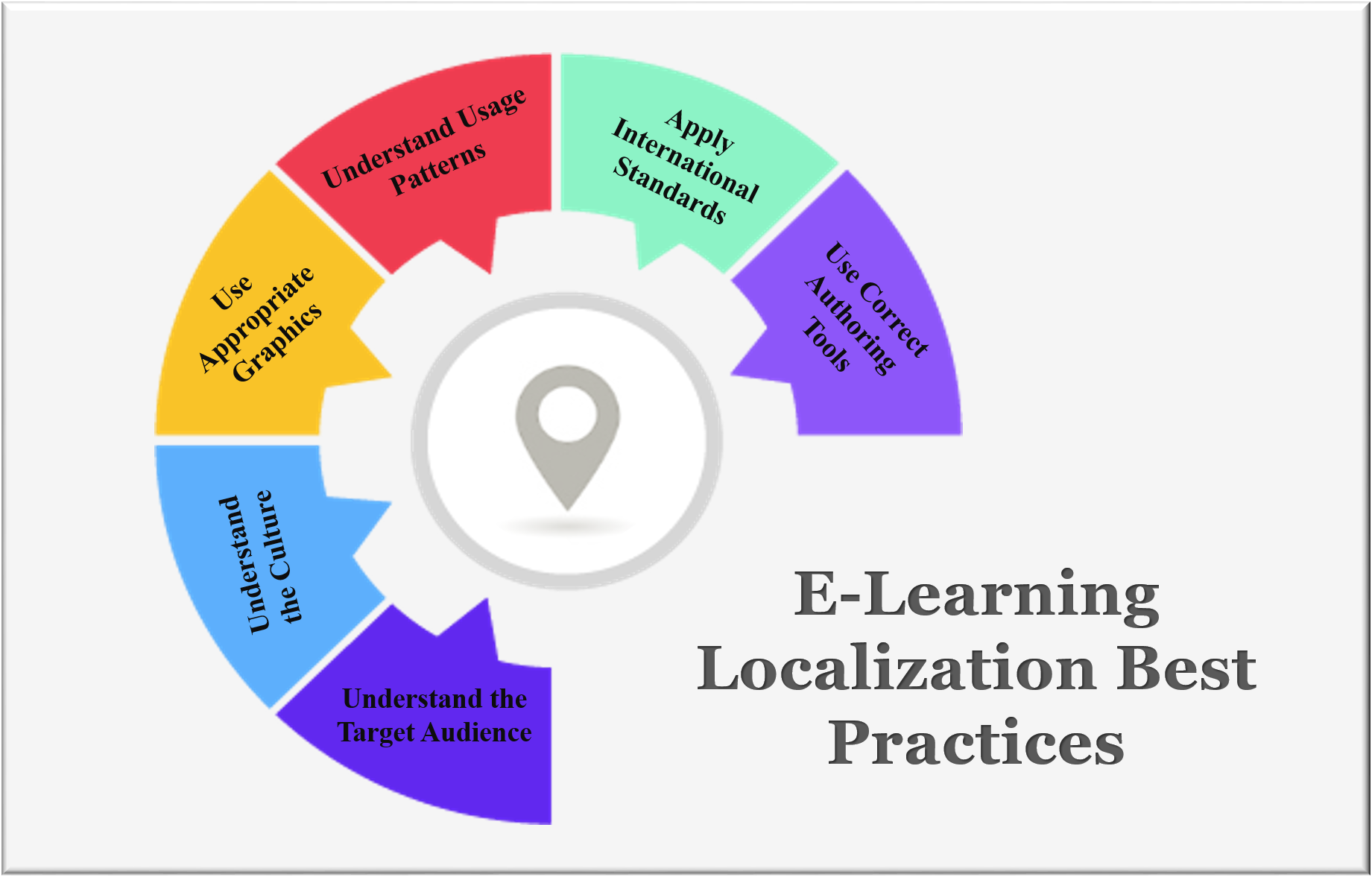
]]>a) Understanding the Target Audience
Understanding the target audience is the first and most important step in localization. An analysis of the audience based on their language, country, and culture helps identify the preferences of the learners around the world. This would give an e-learning course a wider scope in the international market. Moreover, it boosts the usability and growth of the course.
b) Understanding the Culture
Culture is the culmination of thoughts and beliefs of a community. It helps understand what shapes the people. Moreover, it is a way of identifying the needs and requirements of the community. Therefore, culture is important because it helps enhance the content of the course to promote better understanding and retention. Thus, localization provides a better learning experience with culturally enhanced content.
c) Use of Graphics
Graphics play a pivotal role when it comes to e-learning content. Graphic representations in the form of images and videos work to promote better understanding, as they allow the learners to relate the concepts with real-life situations. Learners associate the visuals with certain thoughts and beliefs. Also, images signify different meanings in different cultures. Thus, graphics must be carefully embedded in an e-learning course while localizing it.
d) Content Usage Pattern
Content usage pattern implies the format in which the learners are accustomed to learning. It includes layouts, fonts, visuals, etc. For instance, many countries follow a right-to-left text orientation. So, the learners belonging to those regions would prefer reading text in the same format. Similarly, the color preferences of people also differ in different regions. For instance, black color signifies mourning in some parts of the world, unlike other places. Similarly, yellow represents envy in Germany and happiness and good fortune in Egypt.
e) Apply Internationalization Standards
E-learning content designers should be well-informed about the international standards and adhere to them while designing a course. These standards mainly include the UI, the date format, and the currency display format. Poorly designed content may confuse the learners. Therefore, instructional designers must use the correct formats and user-friendly design to make an e-learning course easily accessible to the learners, thus promoting its use worldwide.
f) Using Correct Authoring Tools
Authoring tools determine the ease of usage of a document. They also make the content localization-friendly by providing options to change it into the desired format. For instance, Adobe Captivate allows instructional designers to create mobile-friendly e-learning courses in various formats.
Benefits of E-Learning Localization
The localization of e-learning content prepares it for global use. It provides both, the developers and the users, with many benefits. A localized e-learning course is cost-effective. The cost of setting up online training is comparatively less. Moreover, it eliminates the need to create separate content for different users as the core design of the course remains the same while localized elements are added to it.
Furthermore, a localized e-learning course gives consistent information to the global audience. Another benefit of e-learning localization is that it provides relatable content to the users, which increases understanding. Additionally, learning through a localized e-learning course promotes better retention.
Conclusion
With the ever-growing use of the Internet, e-learning has become a significant term. E-learning courses are being employed globally to learn various things. Thus, e-learning providers must focus on developing user-friendly courses that work for the users worldwide, irrespective of the language and culture they belong to.
As a result, e-Learning localization is an excellent way of promoting an e-learning course in the global market. Moreover, it has numerous benefits that work in favor of the developer as well as the user. Following the best practices mentioned above would render an excellent e-learning course that benefits one and all.
Websites used for research EI Design
Images from Shutterstock and Freepik
Visit our blog to learn more about e-learning localization.

Create. Engage. Inspire
The post Best Practices for E-Learning Localization appeared first on Test.Evelyn.
]]>