Notice: Function _load_textdomain_just_in_time was called incorrectly. Translation loading for the acf domain was triggered too early. This is usually an indicator for some code in the plugin or theme running too early. Translations should be loaded at the init action or later. Please see Debugging in WordPress for more information. (This message was added in version 6.7.0.) in /home/evelyntest/public_html/wp-includes/functions.php on line 6260
Notice: Function _load_textdomain_just_in_time was called incorrectly. Translation loading for the webp-converter-for-media domain was triggered too early. This is usually an indicator for some code in the plugin or theme running too early. Translations should be loaded at the init action or later. Please see Debugging in WordPress for more information. (This message was added in version 6.7.0.) in /home/evelyntest/public_html/wp-includes/functions.php on line 6260
Notice: Function _load_textdomain_just_in_time was called incorrectly. Translation loading for the updraftplus domain was triggered too early. This is usually an indicator for some code in the plugin or theme running too early. Translations should be loaded at the init action or later. Please see Debugging in WordPress for more information. (This message was added in version 6.7.0.) in /home/evelyntest/public_html/wp-includes/functions.php on line 6260
Notice: Function _load_textdomain_just_in_time was called incorrectly. Translation loading for the rocket domain was triggered too early. This is usually an indicator for some code in the plugin or theme running too early. Translations should be loaded at the init action or later. Please see Debugging in WordPress for more information. (This message was added in version 6.7.0.) in /home/evelyntest/public_html/wp-includes/functions.php on line 6260
Notice: Function _load_textdomain_just_in_time was called incorrectly. Translation loading for the wordpress-seo domain was triggered too early. This is usually an indicator for some code in the plugin or theme running too early. Translations should be loaded at the init action or later. Please see Debugging in WordPress for more information. (This message was added in version 6.7.0.) in /home/evelyntest/public_html/wp-includes/functions.php on line 6260
Warning: Cannot modify header information - headers already sent by (output started at /home/evelyntest/public_html/wp-includes/functions.php:6260) in /home/evelyntest/public_html/wp-includes/feed-rss2.php on line 8 Learning Styles Archives - Test.EvelynSat, 03 Jun 2023 05:53:28 +0000en-US
hourly
1 https://wordpress.org/?v=7.1.3https://test.evelynlearning.com/wp-content/uploads/2023/05/cropped-Site-logo-32x32.pngLearning Styles Archives - Test.Evelyn3232Reassessing Curriculum Development: Top 3 Factors to Consider
https://test.evelynlearning.com/reassessing-curriculum-development-top-3-factors-to-consider/
https://test.evelynlearning.com/reassessing-curriculum-development-top-3-factors-to-consider/#respondMon, 15 May 2023 05:50:07 +0000https://test.evelynlearning.com/?p=14745Curriculum Development is the process of developing a course that is taught at a school. Every school or university has a unique approach to its design. However, the basic structure of the design remains the same, which includes researching, building, execution, and judgment. This article discusses, in detail, the points that influence the decision of […]
]]>Curriculum Development is the process of developing a course that is taught at a school. Every school or university has a unique approach to its design. However, the basic structure of the design remains the same, which includes researching, building, execution, and judgment.
This article discusses, in detail, the points that influence the decision of its development, such as:
Role of technology in curriculum
Reassessing curriculum development as per new age requirements
Factors to consider when redesigning the curriculum
A curriculum is important for both teachers and students. It helps teachers adopt reasonable teaching approaches and it helps students study and learn in an organized manner.
As technology is infusing more and more into education and students are being introduced to different learning styles, there is a need to reassess the curriculum with regard to new age requirements.
It is also important to focus on making students career ready. There is indeed a new school of thought, which says that learning should be such that it can help students be job-ready right after high school graduation. It can be beneficial for those students who might not want to pursue higher education or may not have a financial background to support them.
Introducing technology in education is another trend that is on the rise. Everything is becoming tech-enabled. So, why not education?
Many institutions and schools are indeed welcoming technology with open arms, but many are still a bit skeptical about using educational technology.
Technology and Curriculum Development: Correlation
Redesigning Curriculum and Inclusion of Technology: Relationship
Technology and education go hand in hand. With the help of technology, many people have access to education. If we look back at past years, we find that there were fewer opportunities for people to learn something new. Now, thanks to edtech, we can learn an endless number of things with just a click.
In our industry discussion webinar, we had the opportunity to talk to the edtech specialist at PowerSchool, Jessica Aurilio. She shared her insightful opinions about integrating technology in education and the need to redesign the course.
According to her, “When reassessing the curriculum development, it is important to make sure to take into account that every student is not the same. I saw students who are performing great and getting good grades in online learning as well as those students who used to get straight A’s, but now, are not getting technology”.
Reevaluating the Curriculum by Incorporating Technology in Education
Increasing Importance of AI Education in Curriculum
According to Forbes, 2023 is the year of AI Education. AI has entered into K-12 education. There has been a rise in AI programs with books and courses exclusively focusing on elementary and high-school students.
As science projects, students are building robots and apps involving machine learning.
AI driven technologies are helping students develop skills and succeed in the job market. Infusion of technology in education is making sure that every student receives quality education, which would help them become career ready.
Assessing the Curriculum as per the New Age Requirements
Currently, a lot of moderation can be seen in the education sector. Educators are brainstorming on different methods and styles to be added to make teaching and learning more interactive and engaging.
The biggest change that has happened in a long time is that the focus on what to teach has now shifted to how to teach. Moreover, we can also see a push in certain schools and universities towards conducting career-related sessions for students to succeed in their future professions.
Experts’ Opinions Regarding Redesigning the Curriculum Development to Make Students Career Ready
Alex Lochoff and Jessica Aurilio during an industry panel discussion co-hosted by Evelyn Learning Founder and CEO Praveen Tyagi and Content Analyst Tavleen Kour
In our industry discussion webinar, we had another guest speaker, Alex Lochoff, director of Edpuzzle. He too shared his brilliant perspectives on developing the module according to new age requirements.
Alex said that the biggest change he has seen is not in the topics we’re teaching, but rather how it’s been taught and this is now formalized in many of the newer standards which come under the Common Core.
The Common Core used to cover content standards only. Now, it covers practice standards too. Content standards include all the topics that should be taught to students, whereas practice standards include everything other than lecturing. Practice standards include exercises such as explaining, reasoning, debating, and critiquing.
These standards help students develop skills for their prospective future profession and get them ready to seize all career opportunities.
Top Three Factors to Consider When Redesigning the Curriculum
Considering restricted and banned content as per policy standards
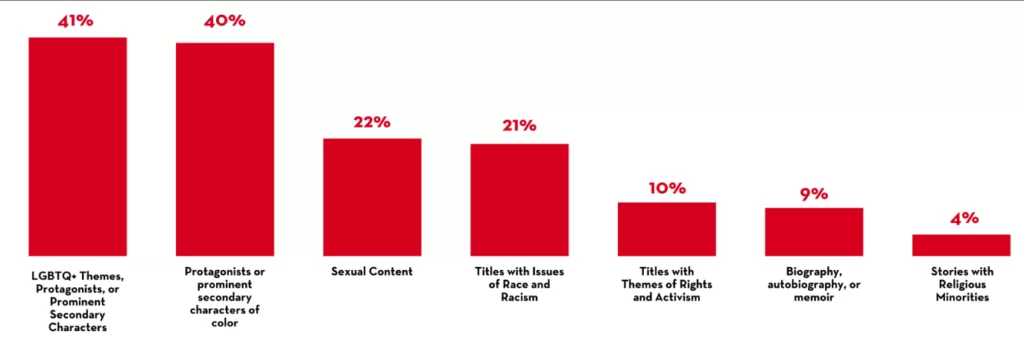
In the session 2021-22, some state and national groups protested to ban and remove some books from the school courses. The books that were targeted for removal included topics such as sex education, LGBTQ+ rights, racism in American history, and more.
According to PEN America, 674 banned books had LGBTQ based titles and protagonists who belonged to this community. Moreover, 358 banned books include the topic of sex education and 357 books address the issue of racism.
Data from PEN America
PEN America considered this movement of banning books deeply undemocratic. It is taking away rights from students who want to learn a diverse range of opinions and perspectives. Moreover, it is unfair to all those parents who want their children to gain knowledge, be more curious, and have a freedom to read.
Many teachers and parents are raising their voice against the book bans and asking to include the restricted content back into the classrooms.
Emerging Technology in Education
In one of our industry discussion webinars, Alex Lochoff said that both teachers and technology have important roles in education. However, there are some areas where edtech fits better in the curriculum. He gave a really nice example of his students.
“I asked two of my students to make a square. One draws it quickly and the other takes out his ruler and draws it perfectly. These two types of students want edtech, so they can study at their own pace”, says Alex.
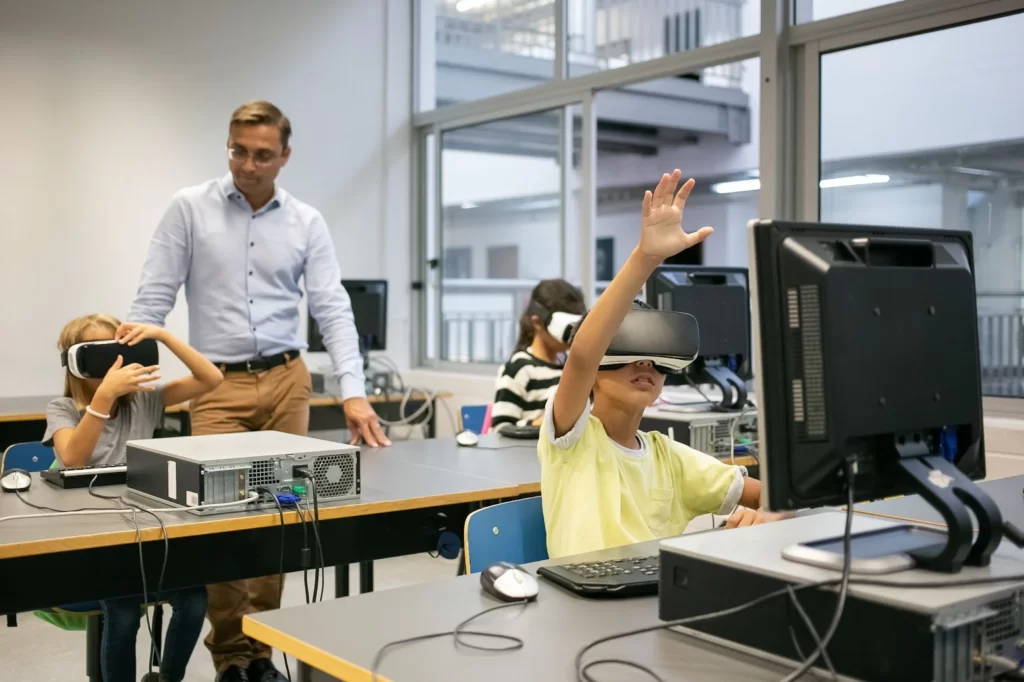
There has been an increase in the usage of AR/VR and AI in education. According to Education Week, expenditure in edtech has increased after the pandemic. Many schools are inclining more towards online learning.
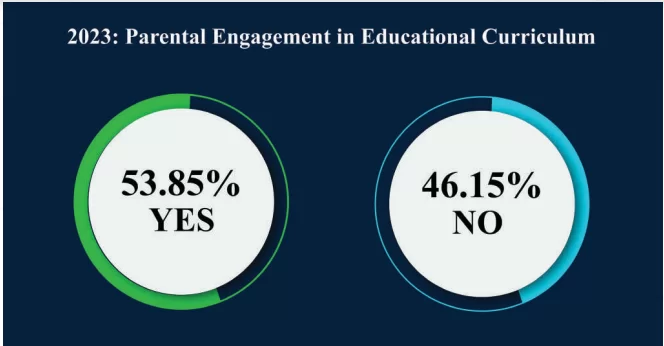
53.85% of experts agree that the role of parents is essential in classroom decisions and curriculum development. Also, 46.15% of experts believe that educators have experience and they have a deeper understanding of the wants and needs of their students.
Involvement of Parents: Different Opinions
When talking about parental involvement in the industry panel discussion, Jessica said that educators want parents to be involved in the decision-making process. Both parents and teachers are a team who want nothing, but the best for their children. However, she thinks that curriculum development is not an area where parents should have opinions.
Insights of Edtech Experts from the Industry Discussion on Curriculum Development
As edtech is placing its foot in the education industry, educators and developers must not forget that teaching and learning is a human activity. It is multifaceted and important for child development.
“Although in some ways, technology can do better than a teacher, in some ways, a teacher could do better. ” – Alex Lochoff, Curriculum Director at Edpuzzle.
Every student is different and has a different approach to learning. The task is to add different learning styles in the course to support each and every student.
“There are different learning styles for different people and nationalities. The task of developers is to hit all the different modalities of these styles to engage the students’ ‘ – Jessica Aurilio, edtech specialist at PowerSchool.
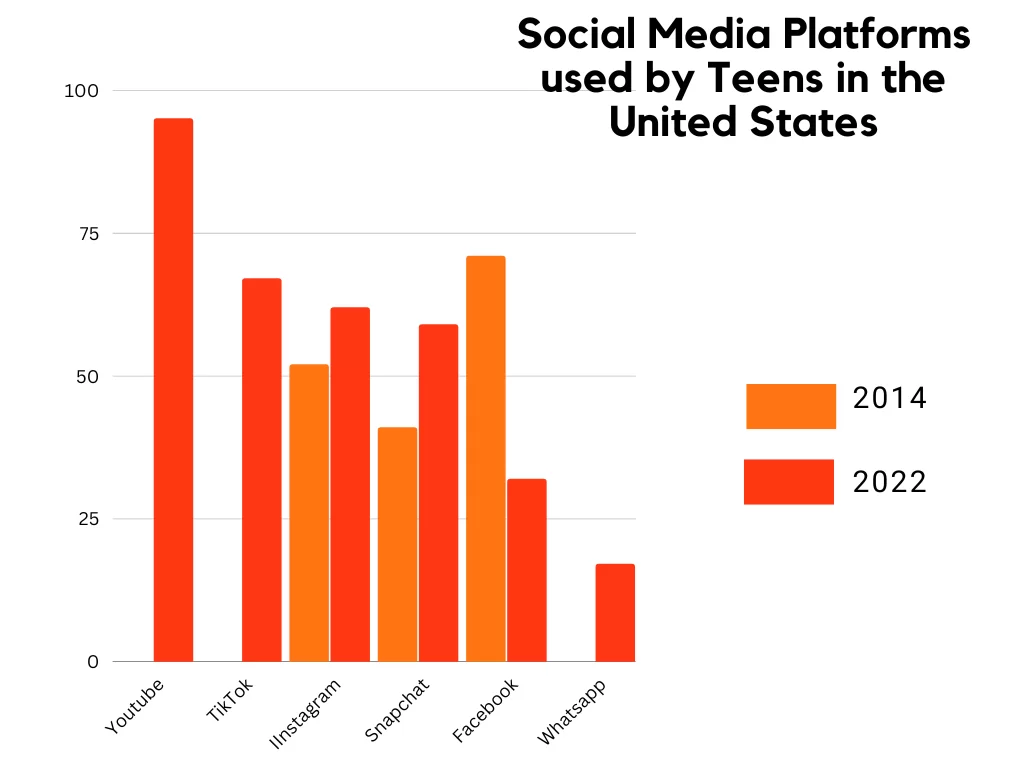
A Space to Think : Is Inclusion Of Technology in Curriculum Responsible for Distraction? Students use laptops, but not for studying entirely. According to Pew Research Center, more than half of US teens claim that they are online almost every time. Moreover, the most famous social media platforms among teens are TikTok, Instagram, and YouTube.
In this survey, many teenagers agreed that they use social media platforms too much and claimed that it would be very tough to give it up.
Apart from this, many parents and educators are concerned about their child’s excessive screen time, which is not good for their mental as well as physical health. In our previous newsletter, Edtech Industry’s Health 2023, we addressed the issue of excessive screen time among children and teenagers.
Changing Focus From ‘What To Teach’ to ‘How To Teach’
Every profession, teaching, engineering, graphic designing, etc. is a valid and valuable career path. What educators can do in creating or developing the curriculum is that they can prepare students to succeed in any of the professions they choose.
As the focus is inclining more and more towards how to teach rather than what to teach, teachers must adopt different learning styles in their teaching methods.
For visual learners, teachers must include pictures, diagrams, and educational videos in their teaching methods. For auditory learners, it is important to add educational podcasts in the classroom. They can also record their lectures for better results. Teachers must conduct question and answer sessions as a classroom activity. It is important to add different learning and teaching styles to engage students in studies and make them feel comfortable at whatever they are doing.
Reassessing curriculum is not an easy task. Developers work very hard to create a particular design that is enough to cover different topics and a wide variety of learning styles. A course needs to have a set number of goals and objectives. This will help learners make progress and achieve nothing, but success in their careers.
]]>https://test.evelynlearning.com/reassessing-curriculum-development-top-3-factors-to-consider/feed/0Importance of cross-cultural programs in schools
https://test.evelynlearning.com/importance-of-virtual-foreign-exchange-programs-in-schools/
https://test.evelynlearning.com/importance-of-virtual-foreign-exchange-programs-in-schools/#respondFri, 04 Nov 2022 14:07:00 +0000https://www.evelynlearning.com/?p=10231Learning about culture is natural to us. We realize it through our families and close communities’ beliefs and practices. We learn through what we see around us. However, we can’t find the whole world in our neighborhoods. Children attending schools might meet people from diverse backgrounds and cultures. This is another exposure to their understanding […]
]]>Learning about culture is natural to us. We realize it through our families and close communities’ beliefs and practices. We learn through what we see around us.
However, we can’t find the whole world in our neighborhoods. Children attending schools might meet people from diverse backgrounds and cultures. This is another exposure to their understanding of different cultures in their society.
On May 14, 2022, Japan Day organized the first-ever Japan Parade in New York City.
Remember, there are more international cultures than we might think, and they might not be present in our classes or neighborhoods. So it would only be good for students to learn about global cultures to help them envisage the variety of human beliefs and practices.
What are Cross-cultural Programs
Cross-cultural programs and exercises are common around the world. These programs, also called virtual international exchanges, are a part of a global understanding initiative. Students in schools interact with students from the same age group in another part of the world. Such an interaction can be in an extended course form that can be virtual, offline, or hybrid. They share their common cultural knowledge with their student counterparts and answer questions from each side.
This cross-cultural communication is essential for students to learn the fundamental differences between people from different backgrounds. It is another way of giving practical lessons to students rather than trying to read out to them. For example, an elementary school child might not understand how people from Asian countries have different accents until they talk to them through a virtual meeting.
Diversity is different from Cross-culture.
Diversity within schools is different from cross-cultural communication. We know America is a culturally diverse country. Various racial and culturally diverse groups form a large part of the American population.
American schools representing the diversity in their society.
A school might be called a diverse school when it represents the variety of demographics present in society in a good proportion.
Diversity in schools would mean an equal opportunity to students and educators from different societal backgrounds in educational institutions. On the other hand, cross-culture communication is a term that includes interaction and understanding between different cultures. It is broader because it comprises interaction with persons from different cultures within the neighborhoods and from other parts of the world.
Importance of Cross-Cultural Education
Understanding human behavior is not easy, but the awareness of different human practices can be a start. Immersing in gaining knowledge of another culture can make a student more aware as everyone might not get a chance to travel in different countries.
Knowing about different cultures helps us become sensitive to their common beliefs, traditions, and practices and generate genuine respect for them. Children who have learnt about different cultures can grow up to be more respectful and less stereotypical of others’ cultures.
It is just like learning a foreign language. It can be useful in future interactions with people who speak that language. Learning about another culture can make us more empathetic and behaviorally sensitive.
Additionally, it can open economic opportunities in other countries in the future. It can also help us work harmoniously with people from other cultures in our workplace.
Cross-cultural education, like diversity inclusion, can help students be more accepting toward others, irrespective of their backgrounds. Growing up among diverse groups and learning about different cultures can make students not only knowledgeable but also responsible as cosmopolitan citizens.
Why should cross-culture education be taught at the school level?
It is well known that young minds learn better. Schooling is when students learn about the basics because they have curious minds. They might ask relevant and irrelevant questions at this age, but they will learn and remember.
Some contrasting voices say that children are too young to learn about other cultures because they are still learning about their own. They believe that students should first understand their own culture in depth and value and then get a taste of the cultural practices of others.
Nowadays, with the help of social media and culturally-diverse programs on various channels, children can learn about cultures in different countries. While this is true, not every program is child-friendly, and often, those programs have stereotypes that can render misrepresentation.
With the help of cross-cultural interactions organized by different organizations, students can interact with other students of the same age. This can help them connect better with one another.
Conclusion
Global educators who promote equity in education also promote the idea of cross-cultural education. It is like value education, instilling values to know and accept people from other backgrounds. Global education can bring global understanding and act as a catalyst for international peace in the future. It can propel global collaboration among educators.
]]>https://test.evelynlearning.com/importance-of-virtual-foreign-exchange-programs-in-schools/feed/0What is Homeschooling and other FAQs
https://test.evelynlearning.com/what-is-homeschooling-and-other-faqs/
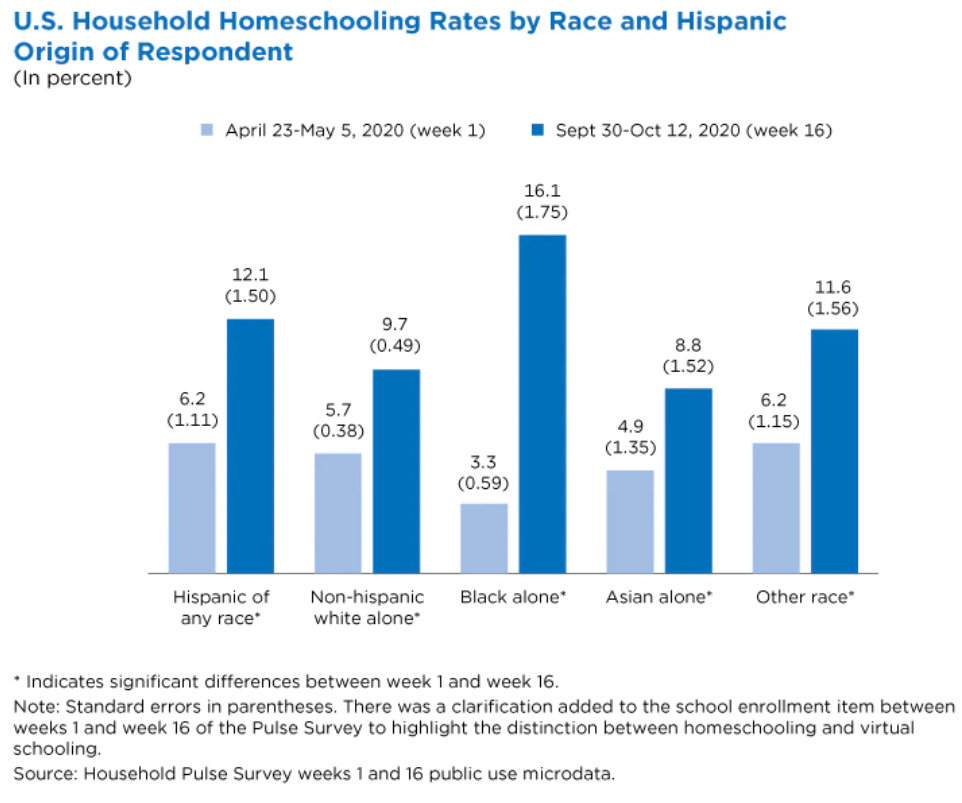
https://test.evelynlearning.com/what-is-homeschooling-and-other-faqs/#respondThu, 18 Aug 2022 12:00:31 +0000https://www.evelynlearning.com/?p=9485It was revealed that homeschooling of children increased by 63% during Covid. The article answering the most FAQ around homeschooling.
]]>This year in June, ‘Homeschool Awakening,’ a documentary, brought the topic of teaching your own children, back into the mainstream.
Kirk Cameron is an actor, filmmaker, and the maker of the documentary. He says, ‘this movie is a deep dive into the normal lives of American homeschool families who are on the mission of putting faith, family, and freedom back into learning.’
Now that sounds serious and like an upcoming movement!
Homeschooling gained traction during the pandemic for obvious reasons. But what intrigues us is that it has still not gone back to the pre-pandemic levels. This means that parents are not backing out of homeschooling. They are still unsure about sending their children back to school. They actually like it this way!
It has been this way for quite some time, except that the reasons may differ now. For example, parents in earlier cases may have homeschooled their children for religious or pecuniary reasons. However, they prefer Homeschooling now, even when they can afford to send their children to these schools.
What is Homeschooling?
Homeschooling is not a new concept, but it is demanding the limelight now. To homeschool children is to educate them at home with tutors or parents, without sending them to public or private schools. It is an exciting notion to keep your children away from school. Parents can teach them whatever they feel is good and important for their children.
The idea of Homeschooling was put forth approximately in the 1970s by John Holt, an educational theorist. He had an ideology of teaching children at home for the first few years of their academic life. This ideology came from the traditional school system fatigue, a system where memory and stressful learning were common. He urged the parents to ditch the regular school system and homeschool their children. His ideology spelled that the automobile of education can be chosen, but the paths of schooling can be different.
Homeschooling for children can be self-paced and stress-free.
Why do people homeschool their children?
The US Census revealed that the number of parents who homeschool their children increased by 63% in 2020-2021. Data finds that some of the parents who had homeschooled their children during the pandemic are considering continuing it even after the reopening of schools.
The trend shows that not all parents are happy with their children’s schooling. Be it sex education, SEL education, or any other part of the general curriculum, parents want to take control of what their children learn in their lives, including knowledge about their faith and history.
Homeschooling parents keep their children out of typical school life for multiple reasons, some of which are:
Disliking the school curriculum and teaching methods
Financial burden of expensive schools
A desire to spend more time with kids and get travel flexibility too
Keeping kids away from bullying or discrimination at school
Religious reasons
What homeschool programs can parents use to teach children?
Homeschool families consider the world to be their children’s school and life to be their curriculum.
Parents can also give social values to their children effectively
Homeschooling parents need to be aware of the state laws before they can start teaching their children at home. They can consider what kind of curriculum they want for their children. For example, biblical learning like Bob Jones homeschool curriculum or a free, online one like Easy-Peasy curriculum.
Parents can find homeschool coops to interact with families with similar homeschool interests and take help from one another.
Some parents can teach their children, and others can hire dedicated homeschool educators. Families can either purchase or create a homeschool curriculum through different resources. Some agencies and online platforms act as resource pools having the courses and curriculum for grades ranging from kindergarten to high school.
Ed-tech companies also play a pivotal role in homeschooling children from remote areas. Online Ed-tech platforms like Study.com help provide tutors, online courses, and video lessons that help in distance learning.
Are Homeschooled children less social?
Kirk Cameron, through ‘Homeschool awakening,’ advocates that homeschooling is not just reasonable but also healthy for children. He believes that there is nothing a child cannot learn at home in the presence of their family.
Pro-homeschool parents feel that their children are not learning in a restricted campus environment, as it is in everyday schools, but in a real-world environment.
Homeschool co-ops are becoming popular and help students to socialize
They interact with members of their families, neighbors, friends, and other people, and the question of becoming antisocial is practically irrelevant to them.
Learning Pods
Learning pods are like micro-schools. Homeschool families create small groups of their own to share learning experiences and cross-teach or hire a facilitator to teach their students the same subjects. It relieves the parents of the burden of teaching all subjects to their children, increases their socialization time with same-age groups, and helps kids learn from subject experts.
Is Homeschooling the Best for Our child?
When it comes to children, everyone wants to have the best school, the best food, and the best life for them. This is a natural parental desire. Parents are beginning to realize what they want their children to learn and not what the government-recommended syllabus is.
On the other hand, many parents feel that what the public schools teach is suitable for their children and their guidance. They do not have the time or the influence to take the entire school education of their children into their own hands. These parents believe that if they did well after learning in school, their children would too.
Which way of schooling should be given depends on multiple factors. As we said before, there is not just one way to education!
]]>https://test.evelynlearning.com/what-is-homeschooling-and-other-faqs/feed/0If SEL in Schools is a Product, Then it Needs a Technology and Marketing Upgrade.
https://test.evelynlearning.com/if-sel-is-a-product-it-needs-a-technology-and-marketing-upgrade/
https://test.evelynlearning.com/if-sel-is-a-product-it-needs-a-technology-and-marketing-upgrade/#respondWed, 27 Jul 2022 10:05:39 +0000https://www.evelynlearning.com/?p=9376A good SEL curriculum in schools may help in reducing incidences of violence and issues related to mental health among children
]]>There is a thin line between what divides education from literacy. Literacy is the ability to read and write but education is more about understanding the knowledge. knowledge is gained to bring perceptional and behavioral changes in our lives.
Children spend most of their time in school, where they expect to learn everything. Therefore, schools hold the responsibility for a child’s holistic development.
Frederick Douglas enlightened us with the thought that it was easier to build strong children than it was to repair broken men. Well, the time is now!
The rising mental health issues of children and violence in schools testify that we should wait no more and go full force in taking steps to nurture a child’s social and emotional well-being.
So, can a proper SEL curriculum be the answer?
What is SEL?
Social Emotional Learning is a soft-skill development. It is based on the idea that students’ EQ is as important as their IQ.
In other words, SEL helps students to manage their emotions and make calculated decisions. It is a session-based or activity-based learning where students learn how to become better social beings and handle emotions.
SEL aims to impart critical skills to students to make them better managers of their emotions and better social beings. According to CASEL, these skills include:
Awareness about the self includes understanding one’s own emotions, strengths, and weaknesses.
Social awareness encapsulates the thought of understanding others.
Self-management includes how to tackle emotions and not let them take control of you.
Relationship management includes developing relationships with others with better communication and cooperation skills.
Responsible decision-making helps us learn what consequences can arise from our actions.
Why are we talking about SEL?
Many educationists feel that schools should make it a priority to impart SEL. This comes in the wake of increased incidences of gun violence in schools. Also, these incidences are backed by the theories that the children involved in the violence bear unhealthy mental states.
And it is not only that. The unprecedented pandemic left students to the boundaries of their homes, affecting their routine activities and studying patterns. This eventually caused an increase in anxiety issues, feelings of loneliness, loss of self-confidence, etc.
A research study by Rand Corporation revealed that the use of SEL programs became more widely in school organizations after the reopening of schools post Covid closures.
A 2021 study by McGraw Hill revealed that educators (84%) and parents (62%) hold a common view that students’ SEL can help them deal with the emotional distress exacerbated by Covid-19.
The inability of students to handle their overwhelming emotions and subsequently making inappropriate decisions at that time, call for the urgent need of SEL programs.
SEL, in essence, is not a panacea for all societal problems and we should not market it as one. It is like a technology that is much in hype today, but it should not fade like a fad. SEL is like a moral education that is as good as teaching good manners in schools, such as sharing with others or helping others.
Additionally, teachers who have taught SEL in classrooms have indicated positive changes in student development.
Observations explain that SEL lessons have significantly helped students to express themselves, feel good about their being, learn to accept others, and not indulge in bullying.
It is not just the educators. The students also think that a good SEL curriculum and a well-integrated SEL program can carve mentally and socially healthy children.
So far, one can say that a majority of schools have implemented SEL programs in the US.
93% of teachers believe SEL needs a significant focus in schools. Additionally, a few others feel that the government should mandate it too. This can help SEL to make a stronger impact and get the attention it deserves.
But if most educators adopt SEL programs, then why are instances like that of gun violence, not nearing sunset?
Kevin Liou, an educational consultant, tutor, and owner at DiOrcus Designs LLC, explains why he believes SEL is not the answer.
“Emotional outbursts are far from the state of deprivation and mindset of a gun-shooter/violence perpetrator. They have gone “beyond”, to speak, the mere “emotional outburst” part of their expression. It is a denial of self, a rejection of the ability to express themselves, a denial of the ability even to feed themselves at times. Hence, it is a systemic issue with sociopolitical and heavy economic ties.”
“I don’t think it (SEL) holds priority in the US.”, one educator mentions.
“I don’t believe we (teachers) have enough time to teach SEL effectively and still teach our regular curriculum. There needs to be allotted time in the day; just like there is time in the schedule for math and reading.”.
Curriculum developer Catherine H further notes,
“Most schools have guidance counselors who are responsible for the majority of the SEL but they are also overwhelmed. In elementary school, we have one counselor for 500 students, so it’s impossible for them to get into every classroom.”
Why is there a case against SEL curriculum?
CASEL has been a lead organization that has promoted SEL in American society. No wonder SEL has its own critics parade where they drop the concept and the SEL intentions into a box of doubts.
A school of thought believes that SEL intends to take education away from the American culture and tries to connect it with spirituality, which is not what schools are for.
They believe that the idea of instilling SEL in schools can be dangerous. Afterall, a conservative mindset would not be comfortable when a teacher would tell their children that it is okay to come out of the closet and accept their sexuality as other than what it looks like from the outside, especially in a school.
Some parents are worried that under the veil of SEL, their children are being taught sex education and critical race theory.
Some SEL critics point out that SEL encourages an ‘activist’ mindset, and the curricula are far from managing the child’s emotions.
It would not be a misstatement that SEL has its critics, given the space for ambiguity in this concept. Those who do not understand the idea will doubt it as it is their child’s learning in question.
The confusion persists, and although SEL has a widespread adaption, there are still concerns about its curriculum design.
Trying to Make Things Work
Going by the definition and understanding of what SEL is and what it aims to achieve, it is a saint but not a magic pill. SEL curriculum is not uniform or verified, there is effective plan to teach it.
Parents are not entirely informed about what their children are learning and why they are learning it, which is why the scope of ambiguity increases and there are parental concerns about SEL teaching.
With the help of philanthropist organizations like the Bill and Melinda Gates Foundation, Harvard Education is trying to develop an SEL platform. The platform can help identify a framework that can enable defining and practicing SEL.
To make SEL a success, the complete participation of parents, teachers, and students is needed. Teachers should not only be educated but also trained about SEL and how it can be instilled in a child.
The curriculum should be uniform, government-verified, and promoted. As students spend most of their time in schools, making SEL a part of the curriculum can help them raise their emotional quotient, garner empathy training, and become kinder citizens.
]]>https://test.evelynlearning.com/if-sel-is-a-product-it-needs-a-technology-and-marketing-upgrade/feed/0Learning Experience Design or LXD
https://test.evelynlearning.com/learning-experience-design-or-lxd/
https://test.evelynlearning.com/learning-experience-design-or-lxd/#respondThu, 14 Apr 2022 12:02:24 +0000http://www.evelynlearning.com/?p=6783Storming through traditional methods of creating a learning experience, here is the new age LX design. When a cluster of PowerPoint presentations and webinars, or any other traditional corporate trading fails, learning experience design got your back. Fostering the human-centered and goal-specific parameters, learning experience design enhances experiences. What is Learning Experience Design (LXD)? LXD […]
]]>Storming through traditional methods of creating a learning experience, here is the new age LX design. When a cluster of PowerPoint presentations and webinars, or any other traditional corporate trading fails, learning experience design got your back. Fostering the human-centered and goal-specific parameters, learning experience design enhances experiences.
What is Learning Experience Design (LXD)?
LXD is the acronym for learning experience design and best refers to the process of creating learning experiences. The focus of creating such designs is to make the approach human-specific and goals inclined so the best outcome ventures from it.
Specifying LXD, it has several design disciplines at its core with the prime objective of the field of learning. Some key design principles used in LXD are interaction design, user experience design, experience design, graphic design, and game design. Let us get a clear picture of LXD by breaking the concept into 3 parts.
Experience
Knowledge comes to us from experience and might be in multiple forms, not limited to education. Knowledge gathered from home, any outdoor areas, or work and experience obtained from any place is worthy of a shot. These experiences are what matter. Hence, LX designers need to integrate such experiences.
Design
LX design is all about the creative design discipline, the applied form of art. Research, experimentation, ideation, conceptualization, prototyping, iteration, and testing goes toward the process of LX design. Designs of the process have one objective – provide value or provide elegant solutions. Here, the design discipline denotes a design detail that teaches.
Learning
Defining LX design is about how the candidates learn, not the teaching pattern or the training schedule. The catch is to know the designs and efficient approaches of using the design that endorses learning. The end game is to curate a learning experience that works and lets the learner absorb much.
Other facets to this concept as we already know are human-centered and goal-oriented.
Elements of Learning Experience Design
The success of the eLearning courses of LXD depends on four key elements as described. Before we go through the elements, let us brush up on the basics, that is, the difference between UXD and LXD.
UXD or user experience design is used to enhance user experience and is used in the product development field. On the other end, LXD leverages the UXD principle to provide an enhanced learning experience in eLearning courses. LXD makes technology in favor of the learners.
Now, let us get started with discussing the elements.
Understanding Learners
Learners do not necessarily begin from the same origins as others do. Some learners are newbies, while others have already built up the base level and wish to go advance. The experience curve that LX designs create does not have the same origin for everyone.
LX designers, with the help of multiple tools, learn about the experience level of the candidates. Then, they get started with creating the design and add facilitation of skipping a few sections. This allows learners with some knowledge to skip past the sections they already know about.
Experiential Learning
One of the primary reasons why traditional corporate training fails is because they are inclined toward tasks and not experience. Though mainstream training seems reliable, it may not essentially be of value and fun.
LX designs leverage the traditional aspects such as functionality, usability, and convenience and add the missing parts. LX designs let learners move past the traditional offerings and engage them in a great way. The learning has the end course of action where learners find the solutions themselves.
Engagement and Motivation
Content competence apart, LX designs must indeed design a course for humans. The idea should be to create a design that learners would find entertaining, engaging, and valuable. Learners must feel they are getting a lot more in return for taking up the course and there is no compromise.
Sensory Layer
While crafting the learning course, another aspect that LX designs consider is the sensory experience of learners. Each and every aspect of the learning program must be in line with the sensory experience of learners. Designers should ensure they collect from the learner’s senses and amplify the materials and instructions accordingly.
Phases of Learning Experience Design
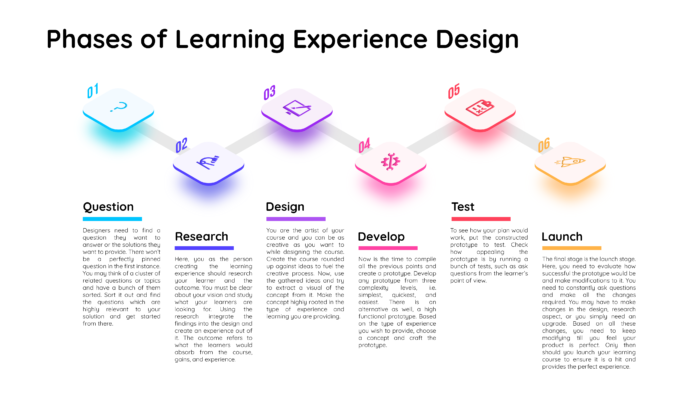
When you want to create a learning experience design, you need to set for a journey of uncertainty and adventure. The approaches that LX designers use often reciprocate that journey and there is a streamlined process to it. There are 6 collective steps or a rough draft of how the design phases go:
Learning Design v/s Instructional Design
Confusion between LX design and instructional design is an obvious phenomenon. The look of it might be the same, but they are entirely different concepts when you dive deep into them both. Precisely, instructional design is teacher and teaching-oriented, while learning design is learning and learning outcome-oriented.
For more information on preparing for the LSAT, visit our blog.
]]>https://test.evelynlearning.com/learning-experience-design-or-lxd/feed/0Mobile Learning – What All You Need To Know?
https://test.evelynlearning.com/mobile-learning/
https://test.evelynlearning.com/mobile-learning/#respondThu, 14 Apr 2022 11:45:23 +0000http://www.evelynlearning.com/?p=6821The idea of mobile learning is nothing new. Many educational institutions are implementing this technology for teaching students in a better way.
]]>Mobile learning is a boon to today’s students who do not have time to go to learning centers or study in traditional classrooms. It is a type of distant learning that lets students use educational technologies on their mobile devices however they desire.
The idea of mobile learning is nothing new. Many schools and educational institutions are attempting to implement this technology in order to better teach students using computers and mobile phones. This method is not only useful and practical but also enjoyable, which is how it encourages individuals of all ages to learn. That is why, on a daily basis, numerous educational technologies are introduced and made available to educators and trainers.
This article will discuss the definition of mobile learning, as well as its benefits and drawbacks. It will also cover a variety of mobile learning tools and creating content for mobile learning.
What is Mobile Learning?
Mobile learning (m-learning) is the process of obtaining learning materials via mobile apps, social interactions, and online educational hubs over the Internet or a network utilizing personal mobile devices such as tablets and smartphones. It is adaptable, allowing students to receive education from anywhere and at any time.
Mobile learning allows educational institutions to transmit information and educational content to students on any platform, at any time, and from anywhere. Students use mobile apps and technologies to complete and submit projects to teachers, download course materials, and collaborate on activities in online social groups.
Course creators most commonly use the term “mobile learning” to describe the technology of mobile devices and apps that educators utilize in the classroom. However, it can also refer to the use of mobile technology to facilitate always-on learning.
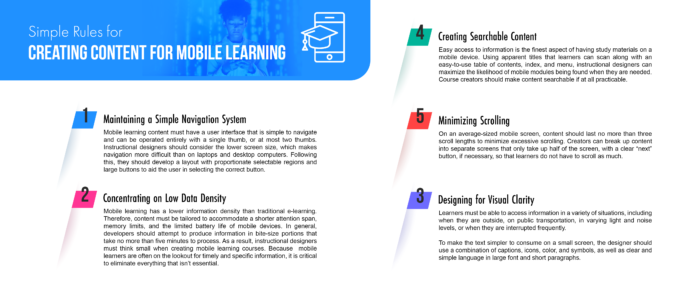
Creating Content For Mobile Learning
It is a prevalent misperception that educators can easily convert eLearning resources to mobile learning courses. During the transition, however, they must rethink the entire instructional design. To create a gratifying and a visually and cognitively rewarding user experience, mobile learning necessitates minimalism, an emphasis on granular design, and instructionally sound design.
Following these simple but important rules will allow course makers to make learning easier for students and provide them with an intuitive and engaging learning experience that matches their needs wherever they are.
To avoid both distracting learners and wasting space in the initial scrolling zone, all secondary content, such as optional navigational controls, links that are not relevant to the information being displayed, copyright notices, and other legal information, should be kept to the bottom of the screen. Every screen should direct the student to further content so he or she can catch up or dig deeper into a topic.
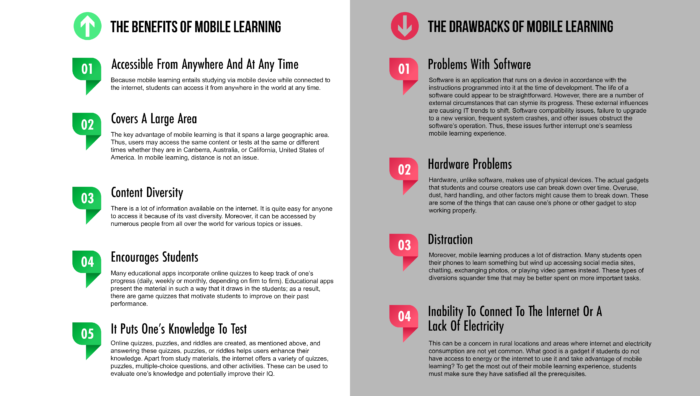
Advantages And Disadvantages
Following are a few key advantages and disadvantages of mobile learning that all course creators should be aware of.
The Applicability of Mobile Learning
Mobile learning is formal but informal, which is exactly what most students want. Mobile learning allows students to learn in the comfort of their own home without having to abandon their daily activities and plans.
Those who do not participate in online classes can still access learning resources. These include educational articles, videos, audios, pictures, and even text. This on-demand accessibility has further added to the success and renown of this learning method.
These and other advantages of mobile learning, such as eco-friendliness, cost-effectiveness, ease, and the amount of enjoyment obtained from learning, have prompted corporate behemoths and developing firms to migrate from physical to virtual training sets.
Mobile Devices Prices
The prices of mobile devices have reduced dramatically over the years. This is a result of the ongoing release of new gadgets and the variety that is now available. For those considering mobile learning, this is the icing on the cake. This means that everyone, from the young to the elderly, may easily make a one-time investment that will provide years of learning and enjoyment.
]]>https://test.evelynlearning.com/mobile-learning/feed/05 Reasons to Integrate Social Emotional Learning in the Classroom
https://test.evelynlearning.com/5-reasons-to-integrate-social-emotional-learning-in-the-classroom/
https://test.evelynlearning.com/5-reasons-to-integrate-social-emotional-learning-in-the-classroom/#respondMon, 27 Dec 2021 10:01:41 +0000http://www.evelynlearning.com/?p=7663Classroom Teaching can become increasingly difficult especially if you are an educator who is constantly dealing with students who want to know why they are learning what they are learning or if they think that a certain concept or topic is irrelevant. This is where Social Learning comes into play which is a teaching method […]
]]>Classroom Teaching can become increasingly difficult especially if you are an educator who is constantly dealing with students who want to know why they are learning what they are learning or if they think that a certain concept or topic is irrelevant. This is where Social Learning comes into play which is a teaching method that allows educators to deal with students’ frustrations in more constructive and respectful ways.
Social Emotional Learning in the classroom helps and improves students at multiple levels, from better understanding their thoughts and interacting with others to making new friends, developing unique capabilities and more. In a more contemporary setup i.e. in a post pandemic world, the need for compassionate teaching is a new necessity to deal with students coming from multiple social and economic backgrounds. Social-Emotional Learning is the best remedy to address the post-pandemic situation and help bring everyone on the same footing in a multilingual and multicultural classroom.
What is Social Emotional Learning in the Classroom?
Social Emotional Learning is a scientific methodology for children and adults to develop fundamental life skills. The process is made to understand our relationship and manage work ethically & effectively. These skills can help students control anger, resolve conflicts, make new friends, and arrive at intelligent, ethical, and safer life decisions. (Collaborative for Academic, Social, and Emotional Learning)
SEL programs include developmentally and appropriate sequential instructions coordinated from pre-school children to high school students. The Group also focused on SEL for school, outdoor activities, and home. The methodology is also helpful for educators in professional development. It is comprehensive teaching involving school and parents for children’s social, emotional, and academic success.
Research establishes the importance of SEL, and it says the innovative teaching methodology enhances children’s performance by an average of 11 percentile points. In addition, it also shows impressive growth in pro-social behaviours such as sharing, kindness, attitude towards school, less depression, empathy, etc. (Durlak, 2011)
Let us continue with five reasons to integrate SEL in classrooms:
1) Boost Self-Awareness
Self-awareness is understanding your own strengths and weaknesses. SEL helps in the assessment of personal short- and long-term goals, emotions, values, etc. It improves confidence with a positive mindset and ethical decision-making, with immediate and life-long repercussions.
Finally, self-awareness helps recognize the interconnection of thoughts, emotions, and actions.
2) Management Skills
Personal and Educational objectives need discipline. And discipline requires proper management of behaviours, emotions, and habits. Social and Emotional Learning in the Classroom teaches to manage impulses, control gratification, stress management, and perseverance.
A child with the ability to manage emotions and behaviour can do wonders in education, career, and life because these are vital skills applicable at every stage of life.
3) Socially Connected
One of the negative impacts of the digital revolution is social disconnection. SEL is the perfect way to re-plug the social connection with students from diverse cultures and beliefs. It is a significant reason to integrate SEL in the Schools.
Students will develop the ability to empathize, communicate, understand, and feel compassion for classmates through Social and Emotional Learning. The impact does last only within school premises, and good habits go everywhere from school to home to the workplace. It also builds a sense of belonging with the community and society.
4) Communication Skills
People skills or communication skills include verbal, written, and non-verbal communication. Children learn these vital skills at school through SEL and develop the ability to listen, cooperate, teamwork, manage societal pressure, and open up about stress when required.
The impact of polished communication skills helps understand concepts, performance at exams, life, and the workplace.
5) Improved Decision-Making Ability
Social-Emotional Learning helps make ethical and constructive choices regarding social interactions and personal behaviour in a given situation. Research says SEL can improve understanding of safety concerns, accurate behaviour patterns, ethical decision-making, social risk factors, health consideration of self and others.
How has Covid-19 Made SEL an Essential Addition in The Classroom?
Schools and Educational Institutions are closed for around two- years. Students are learning virtually, having zero interaction with friends and teachers. Because of social distancing, virtual Learning, and prolonged study-at-home, students have had widespread stress, anxiety, and several social & behavioural disorders.
The impact of study-at-home and school closure is long-lasting. Teachers have to manage conduct problems, physical classroom engagement difficulties, and emotional distress. SEL will help to re-engage, develop relationships and wellbeing.
Students live with family 24X7, so there will be family stress once they come back to school. SEL is an excellent option to curate an environment for emotional safety and healthy connection with teachers and family members.
Concentration in the classroom and understanding the concepts will take time post-pandemic. Social and Emotional Learning techniques will help teachers effectively engage children in school.
SEL practices in everyday learning & teaching and social & emotional skills will help tutors and students transition from study-at-home to study-at-classroom.
School administration can re-build a learning environment with emotion, empathy, and connection among students.
Concluding Thoughts
The positive impact of SEL has been documented and established by several studies and researchers in diverse backgrounds, from pre-school to high schools for children to adults. SEL utilized different prevention initiatives and national youth development programs in recent years. It is a method to address several social and emotional variables. SEL provides a common language and framework for educators to manage their activities.
Integration of SEL is an innovative approach and need-of-the-hour. It will give children holistic development and make the world a better place.
]]>https://test.evelynlearning.com/5-reasons-to-integrate-social-emotional-learning-in-the-classroom/feed/0What is SEL (Social Emotional Learning) and How Does it Help Students?
https://test.evelynlearning.com/impact-of-social-emotional-learning/
https://test.evelynlearning.com/impact-of-social-emotional-learning/#respondThu, 18 Nov 2021 10:49:49 +0000http://www.evelynlearning.com/?p=6776People with good socio-emotional abilities are better equipped to deal with daily problems and achieve academic, career, and social success. The process of acquiring self-awareness, self-control, and interpersonal skills that are necessary for school, work, and life success is known as social emotional learning (SEL). These abilities may be taught and developed at any age, […]
]]>People with good socio-emotional abilities are better equipped to deal with daily problems and achieve academic, career, and social success. The process of acquiring self-awareness, self-control, and interpersonal skills that are necessary for school, work, and life success is known as social emotional learning (SEL). These abilities may be taught and developed at any age, from preschool to adulthood.
Social emotional learning provides a foundation for good, long-term benefits on kids, adults, and communities by teaching effective problem-solving, self-discipline, impulse control, emotion regulation, and more. This is significant since people do not come into this world knowing how to regulate their emotions, solve problems, or interact with others. Pupils must acquire these talents, and schools can assist them in doing so. It is also worth noting that some pupils may require individualized support in order to properly benefit from social emotional learning.
What is Social Emotional Learning?
Social emotional learning (SEL) is a teaching strategy that teaches students of all ages how to better understand their emotions, feel them fully, and show empathy for others. These taught behaviors are then used to assist students in making positive, responsible decisions, establishing frameworks for achieving their objectives, and forming positive relationships with others.
Creating learning environments that create healthy interactions between students and teachers leads to enhanced communication skills, motivation, and exam results. SEL, on the other hand, is not just vital in the classroom. It is a lifelong practice that extends into adulthood. Effective collaboration and communication need the development of SEL skills and abilities.
Components of Social Emotional Learning
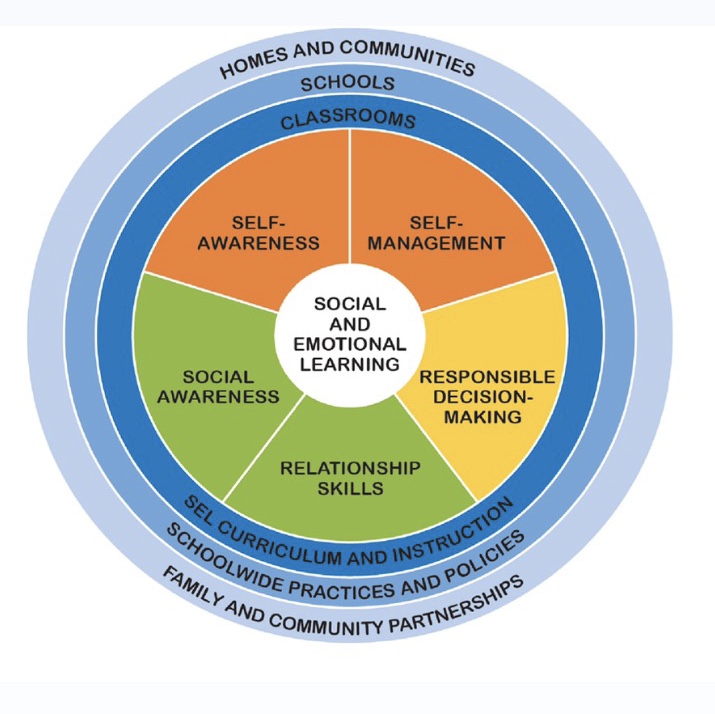
Social emotional learning involves five core components that can be applied in the classroom, at home, and in students’ communities, according to the Collaborative for Academic, Social, and Emotional Learning (CASEL). It is an organization dedicated to students and educators to help achieve positive outcomes for PreK-12 students. These are the five core competencies:
The five main components of Social Emotional Learning
Self-Awareness Students learn to recognize their own strengths and limitations, as well as the impact of their actions on others. Coaching and simulation sessions are an example of this in practice, where students notice how various acts influence others so that they can learn how to perceive their own feelings as well as what other people are feeling.
Self-Management Students learn to control their emotions and actions, which includes stress and time management, motivation, and academic/personal goal setting, all of which are critical skills for youngsters as they grow and need to manage their own schedules and businesses. Older, more experienced students can teach kids about these types of actions.By pairing students in a mentor-mentee relationship, the mentee will learn about vital academic skills as well as how to improve self-esteem and confidence, while the mentor will offer skills learned from experience. This will help the mentee navigate common challenges like imposter syndrome and insecurity.
Social Awareness Students learn to detect other people’s emotions, grasp social behavioral norms, and empathize with people from various origins and cultures. Introduction and inclusion exercises, in which participants share their favorite interests, fascinating facts about themselves, and so on, are an example of an activity that strengthens this skill.
Relationship Skills Students learn how to build healthy relationships and communicate clearly with one another and in groups. Participating in a range of activities, such as team sports, games, and group projects, can help them practice this. Active listening, team building, and conflict resolution are all abilities that are useful both inside and beyond the classroom.
Responsible Decision-Making When it comes to behavior and speech, students learn how to make their own autonomous decisions, whether personal or academic. Students will be able to make polite and well-thought-out judgments by considering societal norms and differences, potential consequences, and safety issues. Students can solve qualitative problems in a number of ways to learn diverse strategies and ways of thinking. This is one way to actively practice responsible decision-making.
Social Emotional Learning Activities
Many schools have begun to teach students how to deal with emotions, make objectives, and get along with others. Parents can also assist their youngster practice these abilities at home.
Here are a few socio-emotional learning activities to assist children regulate emotions and improve social skills while also having fun. These low-tech social-emotional learning activities are really effective. And they are all made to fit into one’s regular routine.
Starfish and Tornadoes
The idea is to teach kids how to recognize how much energy they have inside. When they realize they have too much energy, they can either apply self-calming techniques or seek help from a trustworthy adult.
Playing Instructions: Draw a thermometer on a piece of paper. At the bottom, draw a starfish, and at the top, draw a tornado. Inquire whether the youngster is quiet and tranquil, like a starfish, or frantic and agitated, like a tornado. When a youngster is very energetic, mentors can discuss with him or her ways to make him or her feel more like a starfish. For instance, bouncing a ball can assist in the release of some of that energy.
Mentors can help the mentee define their energy levels by playing this game at different times of the day.
Points to remember: Self-awareness can aid in the development of a skill called self-regulation in children. It is all about managing one’s own energy when it comes to self-regulation. It aids children in controlling their emotions and body movements in stressful situations. Moreover, it aids their ability to pay attention and learn.
Turtle Time
The idea is to assist children in developing their ability to see what is happening around them. Picking up on social signs allows children to get their needs satisfied while also understanding the viewpoints of others.
Playing Instructions: When the mentor and mentee arrive at the playground or other location, they must look around slowly and exaggeratedly like a turtle. They should take turns describing what they see: “All the swings have been taken.” “For the slide, there is a short line.” The mentor must assist the child in making the connection between his or her observations and the behavior choices he or she makes.
Points to remember: Mentors are not required to dress up as turtles. To aid their vision, they may use their pretend binoculars or a special pair of spectacles. A mentor could also participate in a game of “I spy with my little eye.” The mentor and the youngster can take turns observing and reporting social encounters until the other participant finds what they are looking for.
“Who am I right now?”
The idea is to help the child develop self-awareness and identify his or her strengths. These abilities can also aid in decision-making and understanding others’ viewpoints.
Playing instructions: The mentor can get some index cards and start playing. Draw drawings of the child doing something positive, such as being a good helper or a good teacher, with them. Consider what additional cards the youngster could create.
Mentors can comment on their child’s positive behaviors to encourage them to come up with ideas: “You just offered to teach your sister a nursery rhyme.” Let us talk about what kind of person you are right now for a second.”
Points to remember: Mentorsmust remember that many families attempt to teach social-emotional skills by criticizing undesirable behavior. But they must not forget to praise the youngster when he or she does something good. Praise for good behavior frequently leads to more of the same.
Mentors can also purchase these cards or they can find templates online. Children, on the other hand, could enjoy crafting their own cards.
Let us Make a Deal
The idea is to assist children in learning to compromise. Practicing how to perceive things from someone else’s point of view will assist the youngster consider the needs of others.
Playing instructions: When the mentor and the youngster cannot agree, the mentor can sing these words to the tune of ‘This Old Man.’ “You want this. That is something I would want. How can we both get what we want?” Then come up with a few ideas and pick the best one for now.
Points to remember: The child may have problems letting go of a notion. Mentors can combine their efforts to select the best of the runner-up ideas and place them in a unique container.
Take turns Taking Charge
The idea is to aid in the development of self-awareness, decision-making, and seeing things from other people’s perspectives.
Playing instructions: Mentors can start a custom where they and the child take turns preparing a fun night once a week. They might choose a topic, such as what meal to eat, what movie to watch, or what game to play. Alternatively, they can leave everything open and let the person in control choose.
Points to remember: Making a chart with categories like “Waiting my turn” and “Staying cool when doing something I do not like” might be helpful. The mentor can have everyone rate themselves after the exercise. Then they discuss what has been working well and what they would like to improve.
The Importance of SEL
In today’s ever-diversifying world, the classroom is frequently the first location where children are exposed to people from a variety of backgrounds, hold differing ideas, and possess unique abilities.
Social emotional learning aims to help students — both children and adults — better understand their thoughts and emotions, become more self-aware, and develop more empathy for others in their community and the world around them. Mentors must do this in order to account for these differences and help put all students on an equal footing to succeed.
Students can become better, more productive, self-conscious, and socially aware citizens outside the classroom if these attributes are developed in the classroom.
]]>https://test.evelynlearning.com/impact-of-social-emotional-learning/feed/0Project-based Learning: Its Meaning, Benefits And Impediments
https://test.evelynlearning.com/project-based-learning-benefits/
https://test.evelynlearning.com/project-based-learning-benefits/#respondThu, 05 Aug 2021 16:23:28 +0000http://www.evelynlearning.com/?p=6316Project-based learning is an alternative teaching method inside and outside the classroom that improves collaboration, autonomy and creativity. It allows the students to engage in the teaching process with much more enthusiasm. In simple terms, the project-based learning definition is that PBL is a teaching style in which students develop information and skills by investigating […]
]]>Project-based learning is an alternative teaching method inside and outside the classroom that improves collaboration, autonomy and creativity. It allows the students to engage in the teaching process with much more enthusiasm. In simple terms, the project-based learning definition is that PBL is a teaching style in which students develop information and skills by investigating and responding to an authentic, interesting, and difficult question, problem, or challenge over an extended period of time. However, like every teaching methodology, PBL also comes with its own set of benefits and challenges. This article explores the meaning and characteristics of PBL. Further, it also examines its benefits and challenges.
What Is Project-based Learning?
Talking about what is project-based learning, it is a teaching and learning approach and framework in which students acquire content knowledge and abilities in order to respond to a driving question based on a real-world issue, need, problem, or concern. Project-based learning is done in groups and cooperatively, with the use of a variety of employability skills, such as critical thinking, communication, and creativity. It encourages student participation and choice as well as inquiry. Authentic PBL requires a community partner and a publicly displayed product. A continuous process of reflection is also a part of it.
Designing an app, geocaching, student farming and bridge building are just a few great project-based learning examples. If educators are looking for more engaging project-based learning ideas, they can have students design a garden that meets specific design objectives, then plant and care for the garden, start a recycling program that addresses a problem with existing recycling programs, or assist a local business in improving environmental sustainability.
Characteristics Of Project-based Learning
The three most important characteristics of project-based learning activities that lead to deeper student comprehension are outlined below:
a) Student-centered
Here, the teacher’s role is more of a co-learner who engages in the growth and development of the student by providing them the freedom to experiment. Hence, this allows the student to demonstrate their capabilities while working independently.
b) Multi-disciplinary
Real world challenges can be difficult to solve when looked at from a single perspective. In PBL, projects require students to gather knowledge from multiple academic domains, which helps in understanding the root problem.
c) Collaborative Environment
The last characteristic of project-based learning is a collaborative atmosphere. PBL is an ideal approach to foster teamwork and collaboration. Undoubtedly, at first, students may often find it difficult to reach a common ground with cross functional teams, but eliminating these differences is one of the great outcomes that PBL can provide.
Benefits Of Project-Based Learning
The advantages of using PBL as a teaching method are numerous and varied. The following are a few of the project-based learning benefits.
1. Continuous Learning Benefits
Students can face endless problems while working on a project, but only constant practice and learning can help them solve these problems. Similar to real-life situations where uncertainty is inevitable, PBL helps in shaping the students to face reality with much more confidence.
A student can learn all the knowledge from a subject, but eventually what matters is how he or she implements this knowledge. PBL allows the students to take control of the situation, which advances them on the path to become a lifelong learner.
2. Supports Different Learning Styles
Each and every student has different skills and competences. As mentioned earlier, project-based learning gives the freedom to experiment and requires a lot of application. In addition, it allows students the flexibility to use their individual learning styles to solve a problem.
While the traditional way of checking performance is through exams, it is not always the best way. Exams can help judge the knowledge of students, but they may not alone be effective in retaining it. PBL requires students to not only retain information but also apply it and see how relevant it is in a real-life setting.
PBL allows educators to perform assessments by helping in the growth of the student. This leads to solid feedback which helps them to improve skills and, most of all, remain engaged in the classroom.
4. Develop Real Life Skills
Another significant feature of project-based learning is that it requires good communication skills. It allows a student to solve an open-ended problem in many different ways. This approach helps in building various skills, such as critical skills, communication skills, and problem solving skills. Therefore, the four walls of a classroom do not limit these abilities. In fact, learners can apply them in various school subjects and even in real-life situations to solve problems.
5. Encourage Intrinsic Rewards
Last on the list of project-based learning benefits is encouragement of intrinsic rewards. The rewards attached to project-based learning are much greater than just getting an A on the test. Students achieve self-respect and satisfaction by performing a real-world problem, such as solving a riddle, presenting a business idea, and creating innovative solutions.
Source
Problem-based Learning v/s Project-based Learning
Problem-based learning is a student-centered teaching pedagogy that dates back to the 1960s. Students learn about a topic through solving questions, and they usually collaborate in groups to solve problems when there isn’t always a single perfect answer. In a nutshell, it gives students the ability to conduct research, combine theory and practice, and use knowledge and abilities to create a feasible solution to a problem. Problem-based learning differs from project-based learning in that students who complete problem-based learning often share their results with the teacher and work together to set learning goals and outcomes.
Project-based learning, on the other hand, is a method in which the objectives are predetermined. It is also quite regimented in terms of how the lessons are delivered. Problem-based learning is more likely to be a single subject and shorter, whereas project-based learning is more likely to be multidisciplinary and longer. Problem-based learning follows particular processes while project-based learning follows generic steps. Project-based learning frequently contains realistic assignments that solve real-world problems, whereas problem-based learning employs scenarios and situations that are possibly less relevant to real life.
Challenges Of Project-based Learning
Student unpreparedness can act as a barrier in the success of PBL. Thus, it is one among the many challenges of project-based learning. Some students may struggle to grasp the concepts and identify the problem on their own, which can make them feel disengaged. However, continuous monitoring and providing additional resources can help eliminate these challenges of project-based learning.
While PBL has the ability to transform the education sector, one must keep certain limitations in mind. The amount of time consumed to plan and deliver is often a problem in PBL. Only schools and teachers with the ability to understand the deep waters of this system can do full justice to this teaching pedagogy. Therefore, in order to make PBL successful, some points need to be noted, such as monitoring tasks, the quality of those tasks, collaboration, teamwork, and benchmarks. Although this can be a time-consuming task, the outcome is sure to be fruitful in the long run.
]]>https://test.evelynlearning.com/project-based-learning-benefits/feed/0Adult Learning Theory: Its Need and Impact
https://test.evelynlearning.com/impact-of-adult-learning-theory/
https://test.evelynlearning.com/impact-of-adult-learning-theory/#respondThu, 05 Aug 2021 09:54:56 +0000http://www.evelynlearning.com/?p=6522When one hears the word “education,” what comes to mind? Children in a classroom, high schoolers passing by their lockers, or a teacher reading books to little children are all likely possibilities. Whenever one thinks about schools and learning, it is easy to neglect adult education. Adult education, on the other hand, occurs on a […]
]]>When one hears the word “education,” what comes to mind? Children in a classroom, high schoolers passing by their lockers, or a teacher reading books to little children are all likely possibilities. Whenever one thinks about schools and learning, it is easy to neglect adult education. Adult education, on the other hand, occurs on a daily basis. There are numerous compelling reasons for adults to pursue education. The Adult Learning Theory comes into play in this situation.
Adult learners are students who are over the age of 18 and do not begin postsecondary education the same year they graduate from high school. One may adapt business training programs to take advantage of attributes adult learners possess. This could include their eagerness to learn relevant material, their desire to connect with experience, and their urge to develop themselves, all by understanding how adults learn.
Adult education is very popular in the United States. Various colleges and institutions frequently refer to these students as “non-traditional students”. Most adults pursue education for a variety of reasons, including self-improvement, the necessity to learn specific skills, and the desire to better career prospects.
If an adult is ready to continue their education, they must first comprehend how they learn differently. Adult Education Theories and practices assist millions of adult students in achieving success as they continue their growth and education. In this article, readers will learn about the ideas underpinning Adult Learning Theory and how it can help one achieve their higher education goals.
What is Adult Learning Theory?
Corporate training circles frequently use the term “Adult Learning Theory”.
First, let us debunk a myth: There is no SINGLE Adult Learning Theory. There are several popular hypotheses that describe how adults learn from various perspectives. It is a concept or study of how adults learn and how it differs from how children learn. Additionally, its main goal is to discover the learning styles that are most appropriate for adults.
Andragogy, action learning, experiential learning, self-directed learning, and transformational learning are only a few examples of adult learning theories. All of these theories aim at assisting one in creating effective learning experiences for adult learners.
Components of Adult Learning Theories
Adult Learning Theory is a branch of study that focuses on figuring out how to make ‘training’ something adults desire to undertake and how to make it effective. To put it simply, if you want the finest outcomes, you must integrate four vital components in your training and development for adults.
Motivation
When creating training content, the first constituent educators must know about is motivation. Adult learners will not learn if they do not have a strong desire to do so. That’s all there is to it. There are a variety of approaches that can be used to elicit a sense of motivation. Here are a few examples:
Firstly, educators must clearly define how the learning curriculum will have a concrete and immediate impact on the learner’s job. When creating learning content, one should not leave it up to the student to figure out why the information is being offered; instead, one must explain to them why they are supposed to study the material up front.
It is necessary to establish learning chances that will allow the learner to improve personally. In a corporate setting, for instance, learners are more interested in the process if they believe it will help them get a promotion or progress their career in some way.
Extrinsic competitiveness can encourage learners. This is why learning that incorporates gamification and social aspects is becoming increasingly popular right now.
Essentially, it boils down to a simple principle: Adults will desire to learn when they believe it would benefit or add value to their life. That is what motivates people.
Reinforcement
Reinforcement can either be positive or negative. Positive reinforcement in Adult Learning Theory refers to providing something that fosters excellent conduct. For instance, one can predicate development-based learning on the premise that learning a new skill could lead to a pay raise.
Negative reinforcement, on the other hand, entails taking actions to correct negative behavior, such as safety training to reduce workplace errors.
Retention
When creating corporate learning material, one must consider not just if the learner will absorb the material at first, but also if he or she will retain it. One should create courses that are tailored to the target audience’s needs. Educators can deploy these courses utilizing the most effective approaches that encourage participation.
Interactivity, quizzes throughout the learning modules, and the opportunity to instantly put what has been learned into practice are all fantastic strategies to enhance the retention of material.
For instance, after each piece of information is provided, educators can invite participants to take a quick quiz to see how much they have retained. In many cases, simply informing learners that the instructor will be assessing them on the content is a good retention tool in and of itself. Case studies and scenarios are also quite helpful. These are all simple things to incorporate into learning, thanks to the tools available with a learning management system.
Transference
This stage of Adult Learning Theory is when the learners can put what they have learned into practice in a real-world setting.
When the learners reach this stage, the educator will know if the information was effective and how well they can interpret and apply it. Moreover, transference is frequently monitored in a corporate environment against a set of preset standards in order to coincide with overall performance and organizational objectives.
Educators can consider incorporating social elements into the process to increase transference inside the corporate learning environment.
Different Types of Learning Theories
When it comes to adult learners, there are numerous learning theories, each with its own set of applications and methodologies. Depending on their primary learning style, different ideas and practices will resonate better with adult learners. The following are some of the most popular Adult Learning Theories:
Andragogy
Andragogy, coined by Malcolm Knowles in 1968, is defined as “the art and science of assisting adults in learning”. It is opposed to pedagogy, which is defined as the “art and science of assisting children in learning”. Adult learners vary from children in numerous respects, according to Knowles and the andragogy theory.
The andragogical approach is based on four principles:
Adults learn more effectively through experience (even if they make mistakes).
They prefer a practical approach to learning and must be able to apply what they have learned to address a specific problem.
Adults are most interested in learning things that are immediately applicable to their lives.
They must participate in the design and evaluation of their own education.
Case Study:Farm Bureau, a rural service organization, employs an andragogic strategy to train volunteer leaders and Board of Director candidates. Through mutual agreement with each student, the training programme diagnoses learning needs and establishes goals. Participants must actively participate in activities, debate the practical worth of their learning. Moreover, they must apply what they have learned to their leadership roles.
Transformational Learning
Transformative learning theory, developed by Jack Mezirow in 1978, asserts that all learners make meaning of the world around them by employing a variety of assumptions, predictions, and perceptions.
Through a process of problem-solving, procedural tasks, and self-reflection, transformational learning seeks to help learners modify — or transform — their existing frames of reference.
Secondly, individuals experience learning transformations when educators confront them with a “disorienting predicament”. This causes them to question their previous beliefs and critically reflect on what has happened.
It can change an individual’s viewpoint on how to behave, interact, or solve problems. Hence, educators often regard it as one of the “stickiest” types of learning.
Case Study: Workforce Council financed a group of 12 worker-learners to attend an Australian university’s Graduate Certificate in Executive Leadership program. Three teams were formed from the group. To impact improvements in their organizational processes and systems, each team engaged in transformational learning.
Learning materials were available on the university’s website. Face-to-face consultations on the job site and regular emails were also part of the training program. All the learning lessons were designed to foster a critical and reflective thinking culture. This would help shift existing viewpoints and habits. Additionally, it allowed the students to break free from their “habits of thinking.”
Action Learning
Action learning, coined by Reg Revans in 1982, is a problem-solving strategy. It entails taking action and then reflecting on the outcomes.
It aims to improve problem-solving processes while also simplifying the solutions that follow.
This method approaches challenges by first asking questions to define the issue. Following this, they reflect and identify potential solutions, and finally take action.
Questions boost learning outcomes by fostering group dialogue and cohesion, as well as developing inventive and systematic thinking.
The ability to take action on the problem the group is working on is a necessity for action learning. The group loses its vitality, inventiveness, and passion if learners merely give recommendations.
Lastly, a coach should be there to assist the group in learning and working more efficiently.
The Deming Prize for Quality
Case Study: In 1990, Florida Power and Light (FPL), a power utility company, was the first company in the United States to receive the Deming Prize for Quality. But before that, it had faced problems with its power producing systems and could not effectively convert energy to electricity. This issue had been present for quite some time.
Eventually, they gathered a team of people from various FPL departments to rectify the problem. The team members improved their problem-solving and teamwork skills by working together. As a result, they were able to identify and resolve the cause of the problem.
Experiential Learning
Experiential learning was developed in the 1970s by David Kolb. It is based on the work of John Dewey, Kurt Lewin, and Jean Piaget. This Adult Learning Theory involves a hands-on approach that places the learner at the center of the learning process.
Active involvement is very important. However, learning occurs only when the individual reflects on what they are doing, according to the theory.
Secondly, continued participation, reflection on practice, interpretation of the experience, and application of knowledge obtained from experience are the four pillars of experiential learning.
Case Study:Capital One teamed up with the College of St. Bernard/St. John’s University to mentor students enrolled in an advanced global strategy course. Students faced real-world business difficulties and worked to address them by actively participating in the research and hands-on work processes. Mentors solely offered expert assistance and counsel.
Self-Directed Learning (SDL)
Self-Directed Learning is based on Malcolm Knowles’ Adult Learning Theory, with self-management elements added by D.R. Garrison in 1997.
Individuals evaluate learning requirements, develop learning goals, find resources, implement a learning plan, and analyze their own results using Self-Directed Learning.
Professors, mentors, resources, and peers frequently aid SDL.
It is necessary for the learner to have access to and pick relevant learning.
All learning decisions are under the control of the learner.
Case Study:Tahiya Alam, a University of Manchester Junior e-learning Support Specialist, needed to publish the findings of a scientific research study online. Ms. Alam met with e-learning colleagues and investigated her choices once she discovered her learning requirements. She upskilled herself using Self-Directed Learning principles and was able to create interesting and robust e-learning modules.
For a more effective training program, combine Science with Adult Learning Theory
When knowledge is relevant and beneficial to adults, they remember it better. As a result, it is critical to understand why one is studying about a particular theme. Adults are frequently better at generating answers to real-life problems than they are at memorizing knowledge because they have a mature attitude. Adult learning is built on the foundations of problem-solving, rapid application, and performance-based activities.
Understanding diverse adult learning theories and practices might help an adult learner be even more successful as he or she prepares to seek higher education. Recognizing one’s learning style, knowing adult learners’ strengths and limitations, and preparing for their specific strengths can all assist an adult learner succeed.