Notice: Function _load_textdomain_just_in_time was called incorrectly. Translation loading for the acf domain was triggered too early. This is usually an indicator for some code in the plugin or theme running too early. Translations should be loaded at the init action or later. Please see Debugging in WordPress for more information. (This message was added in version 6.7.0.) in /home/evelyntest/public_html/wp-includes/functions.php on line 6260
Notice: Function _load_textdomain_just_in_time was called incorrectly. Translation loading for the webp-converter-for-media domain was triggered too early. This is usually an indicator for some code in the plugin or theme running too early. Translations should be loaded at the init action or later. Please see Debugging in WordPress for more information. (This message was added in version 6.7.0.) in /home/evelyntest/public_html/wp-includes/functions.php on line 6260
Notice: Function _load_textdomain_just_in_time was called incorrectly. Translation loading for the updraftplus domain was triggered too early. This is usually an indicator for some code in the plugin or theme running too early. Translations should be loaded at the init action or later. Please see Debugging in WordPress for more information. (This message was added in version 6.7.0.) in /home/evelyntest/public_html/wp-includes/functions.php on line 6260
Notice: Function _load_textdomain_just_in_time was called incorrectly. Translation loading for the rocket domain was triggered too early. This is usually an indicator for some code in the plugin or theme running too early. Translations should be loaded at the init action or later. Please see Debugging in WordPress for more information. (This message was added in version 6.7.0.) in /home/evelyntest/public_html/wp-includes/functions.php on line 6260
Notice: Function _load_textdomain_just_in_time was called incorrectly. Translation loading for the wordpress-seo domain was triggered too early. This is usually an indicator for some code in the plugin or theme running too early. Translations should be loaded at the init action or later. Please see Debugging in WordPress for more information. (This message was added in version 6.7.0.) in /home/evelyntest/public_html/wp-includes/functions.php on line 6260
Warning: Cannot modify header information - headers already sent by (output started at /home/evelyntest/public_html/wp-includes/functions.php:6260) in /home/evelyntest/public_html/wp-includes/feed-rss2.php on line 8 Educational Standards Archives - Test.EvelynFri, 09 Jun 2023 08:54:13 +0000en-US
hourly
1 https://wordpress.org/?v=7.1.2https://test.evelynlearning.com/wp-content/uploads/2023/05/cropped-Site-logo-32x32.pngEducational Standards Archives - Test.Evelyn3232All the Information You Require Regarding Australian Curriculum
https://test.evelynlearning.com/all-the-information-you-require-regarding-australian-curriculum/
https://test.evelynlearning.com/all-the-information-you-require-regarding-australian-curriculum/#respondFri, 09 Jun 2023 06:22:47 +0000https://test.evelynlearning.com/?p=14986The Australian Curriculum is said to be the national curriculum in Australia, which is followed by all primary and secondary schools. Its main purpose is to provide the best education to the students by introducing skills, understanding, and knowledge needed to work in this modern time. Whenever needed, the curriculum is updated continuously to teach […]
]]>The Australian Curriculum is said to be the national curriculum in Australia, which is followed by all primary and secondary schools. Its main purpose is to provide the best education to the students by introducing skills, understanding, and knowledge needed to work in this modern time.
Whenever needed, the curriculum is updated continuously to teach students what is valid and accurate. Moreover, the curriculum delivers education with the help of learning areas and general capabilities.
Aim of the Curriculum
The Australian Curriculum is focused on catering the needs of every student globally. It strongly advocates for inclusive education and firmly believes in the following principles:
Every student can learn; their individual needs are equally important and hold significant value.
Each student has the right to access knowledge as well as skills that serve as the building blocks for successful and continuous learning.
It is important to establish high expectations for every student.
The curriculum should be adjusted in a way that it can accommodate and recognize the diverse needs of students from different cultures.
The Australian Curriculum is designed to meet the needs of students worldwide
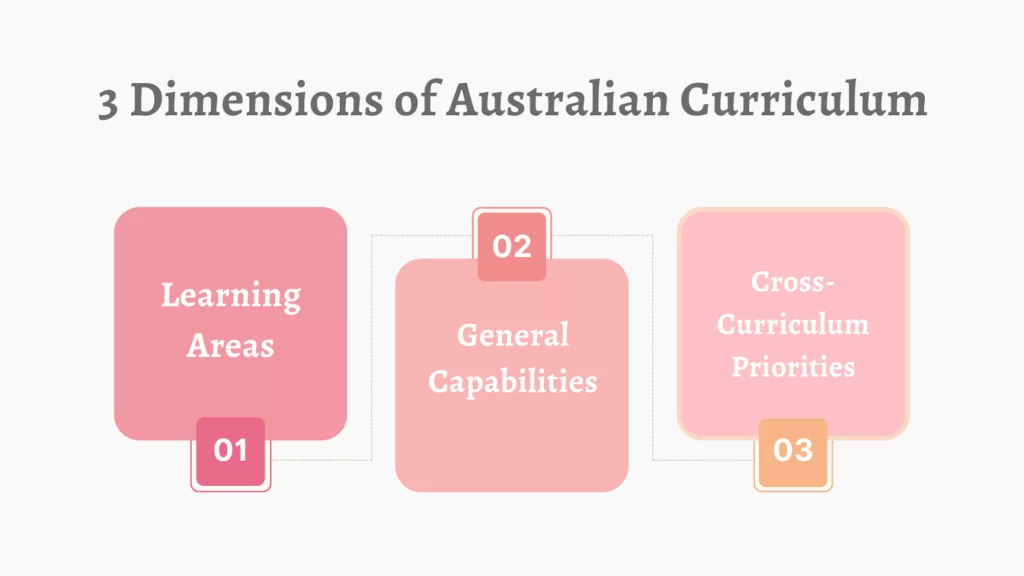
Three Dimensions of the Australian Curriculum
There are three dimensions in the Australian Curriculum:
Learning Areas
General Capabilities
Cross-Curriculum Priorities
1. Learning Areas
The Australian Curriculum is divided into learning areas and subjects. The learning areas include humanities as well as social sciences. They include history, geography, civics, citizenship, economics, and Business. Apart from this, the arts include dance, drama, media arts, music, and visual arts. Moreover, the curriculum also includes technologies such as design and digital technologies. Lastly, you can choose from a diverse range of fifteen languages in order to enhance your knowledge and proficiency in a specific language that is different from your mother tongue.
2. General Capabilities
The Australian Curriculum contains a total of seven general capabilities, which aims to provide necessary skills and abilities to the younger generation of Australia in order to survive in the 21st century.
These general capabilities include:
Literacy
Critical and Creative Thinking
Numeracy
Personal and Social Capabilities
Information and communication technology (ITC) capabilities
Ethical Understanding
Intercultural Understanding
3. Cross-Curriculum Priorities
In the Australian Curriculum, there are three priorities that are critical to Australia’s future. This specific dimension of the learning areas allows students to experience diverse contents of learning areas.
Aboriginal and Torres Strait Islander’s Histories and Culture
Australia’s Engagement with Asia
Sustainability
The Three dimensions offer teachers the flexibility to engage in personalized learning to meet the needs of individual students
Structure and Format
Typically, the students commence their learning journey by enrolling in kindergarten first. This marks the beginning of their 13-year educational journey that concludes with the attainment of the Higher School Certificate (HSC) upon the completion of Year 12. This prestigious certification enables students to seek admission to educational institutions worldwide.
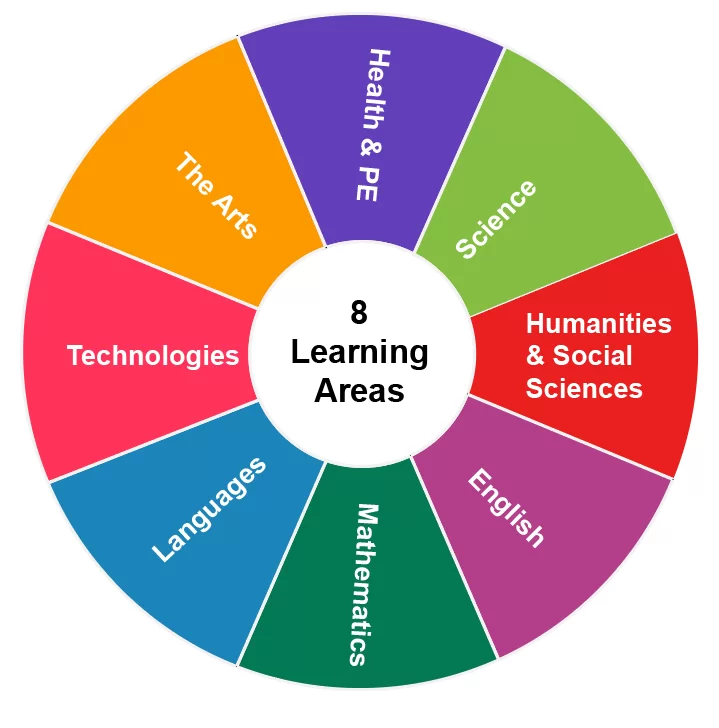
The educational curriculum is structured around Eight Key Learning Areas (KLAs), which encompass English, mathematics, science, health and physical education, humanities, and social sciences, the arts, technologies, and languages.
1 English
English is an important language considered for young Australians. It includes subjects such as additional language or dialects, essential English, and literature.
3 Mathematics
Mathematics equips students with essential skills and knowledge for their development in their early years of education. It includes subjects such as specialist mathematics, general mathematics, mathematical methods, and essential mathematics.
3 Science
Science develops an understanding of practical concepts and processes among students and it includes subjects such as biology, chemistry, Earth and environmental science, and physics.
4 Humanity and Social Sciences
Humanity and social sciences includes 5 subjects. HASS (Australian Humanities and Social Science Curriculum), civics and citizenship, economics and business, geography, and history.
5 Arts
The arts have the ability to inspire and motivate students to think out of the box and embrace creativity . It includes dance, drama, media arts, music, and visual arts.
6 Technologies
In the Australian Curriculum, technologies play an important role in ensuring that all students benefit from understanding how technology works. It includes design and technologies and digital technologies.
7 Health and Physical Education
The curriculum of health and physical education provides certain types of learning opportunities that are contemporary, engaging, and relevant. It aims to equip students with the necessary skills, knowledge, and understanding of their physical health as well as mental health.
8 Languages
Languages are included in the Australian Curriculum to ensure that all students can actively participate in learning a language other than English. They include Arabic, German, Spanish, French, Japanese, Korean, Chinese, Hindi, and many more.
The Eight Key Learning Areas outline the specific knowledge that each student would gather in each subject area.
VCE and WACE Certifications in Australia
The Victorian Certificate of Education (VCE) and the Western Australian Certificate of Education (WACE) are certification programs in Australia that are awarded to students who complete their senior secondary education. However, these certificates are specific to the states of Victoria and Western Australia, respectively.
VCE (Victorian Certificate of Education)
The VCE is granted to the students who successfully complete their secondary education in the state of Victoria. The certificate is administered by the Victorian Curriculum and Assessment Authority (VCAA).
The VCE is undertaken over a two-year period in Years 11 and 12. When the students complete their schooling, they receive an Australian Tertiary Admission Rank (ATAR) based on their performance, which further helps them for university entrance purposes.
WACE (Western Australian Certificate of Education)
The WACE is granted to the students who successfully complete their secondary education in the states of Western Australia. This certificate is administered by the School Curriculum and Standards Authority (SCSA).
The WACE is undertaken over a period in Years 11 and 12. Unlike VCA, WACE candidates need to meet literacy and numeracy requirements and complete at least one senior secondary course examination. After their schooling, students receive ATAR based on their performance, which is used for further education and entrance in their preferred universities.
Australian Curriculum 9.0
The Australian Curriculum, Assessment and Reporting Authority (ACARA) released version 9.0 of the Australian Curriculum in May 2022. Schools have started implementing this new version in 2023 term 1.
Version 9.0 of the Australian Curriculum offers a more practical approach for teachers regarding crucial knowledge that students must acquire
What Modifications have been Implemented in the Updated Curriculum?
The curriculum development in the updated version are decreased content, improved coordination between achievement standards and content descriptions, enhanced connections between learning areas, general capabilities, and cross-curriculum priorities.
The changes embraced by the updated curriculum are as follows:
The Australian Curriculum is being modified to ensure a more thorough understanding and education, with a 21% reduction in descriptions regarding the learning objectives of students and what should be taught.
There will be a greater emphasis on phonics in English and more focus on students mastering the fundamentals of mathematics, such as its different concepts, skills, and facts.
The importance of developing proficiency in foundational skills and the ability to perform mathematical computations without a calculator will be emphasized.
The sequencing of content in mathematics will be revised, particularly in areas such as telling time, introduction to fractions, recalling multiplication facts, and solving equations.
Higher standards for mathematics will be set up for Year 1 regarding addition and subtraction and include multiplication facts in Year 2.
In Years 9 and 10, priority will be given to Australian history, including the impact and perspectives of First Nation Australians upon the arrival of British settlers and their contributions to modern Australian society.
ACARA is also working on mental health development among Australian youth. This will be taken into account in the upcoming versions of Australian Curriculum.
]]>https://test.evelynlearning.com/all-the-information-you-require-regarding-australian-curriculum/feed/0Why the Education Expenses are Rising and How to Deal with it?
https://test.evelynlearning.com/why-the-education-expenses-are-rising-and-how-to-deal-with-it/
https://test.evelynlearning.com/why-the-education-expenses-are-rising-and-how-to-deal-with-it/#respondWed, 07 Jun 2023 12:35:43 +0000https://test.evelynlearning.com/?p=14919A point raised by the National Center for Education Statistics states that an average student’s decision on whether they want to attend college or not is entirely up to their family finances. The education expenses are the biggest concern for freshers, which puts them in a dilemma “Should I go to college or not”? Providing […]
]]>A point raised by the National Center for Education Statistics states that an average student’s decision on whether they want to attend college or not is entirely up to their family finances. The education expenses are the biggest concern for freshers, which puts them in a dilemma “Should I go to college or not”?
Providing college education to their children is still a utopia for many American families. College affordability is the most important yet scariest factor faced by these families when their child completes their high school graduation.
When making a decision about which college to attend, there are numerous factors to take into account, such as tuition fee, available courses, extracurricular activities, and more. However, many students find themselves stuck on the cost and perceive it as the primary determinant of their access to education.
Now, what can be done to eliminate the financial barrier to the path of acquiring an education? It appears that there may be a shortage of available resources to obtain accurate information regarding the diversity of universities, their tuition fee, and the process of applying for scholarships and grants at these universities.
Reasons for Hike in Education Expenses
According to the 2017 research report of College Board, tuition fee in colleges at four-year private and public colleges have increased by 36%.
Here are a few factors responsible for this problem of rising education costs, which are taking away the rights of students and making education a luxury.
Rising Demand
The cost of education and students enrolling into universities are two sides of the same coin.
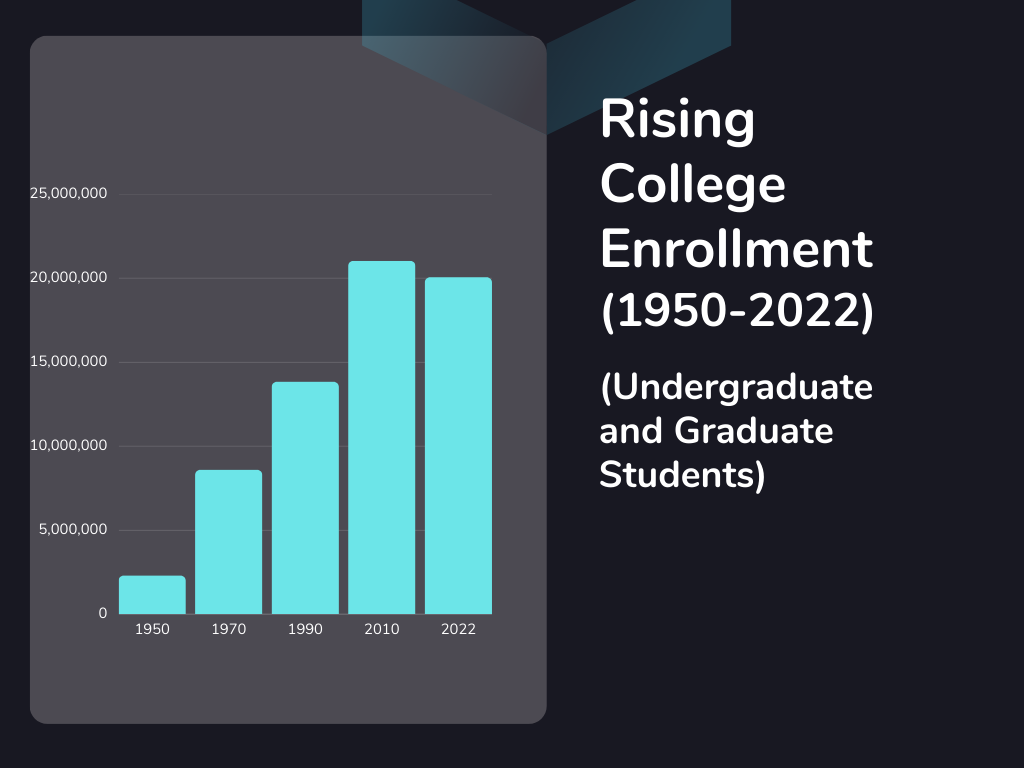
According to the Education Data Initiative, enrollment peaked in the year 2010 at 21.02 million students. Since then, education has gotten more expensive, with tuition fee increasing every year.
Rise in Education Expenses are Associated with the Cycle of Demand and Supply
In the above graph, we can see a slight decrease in enrollment numbers in the year 2022. This is because of the shift in thinking of students, who are losing trust in college education.
Is a College Degree Worth It?
Our society is divided into two parts. One believes in the education system, and the other believes that it is a waste of money and effort. We have some really great examples of billionaires and geniuses who do not have a college degree.
Bill Gates dropped out of college at the age of 20 and made a revolutionizing company, “Microsoft”. Walt Disney ended his schooling in the 8th grade and moved on to open the world’s eyes to see animation at its best.
Today’s generation is inclining more toward becoming social media influencers, stock market traders, etc. They are finding it fun and a way to make money with minimal effort.
People Losing Trust in College Degrees
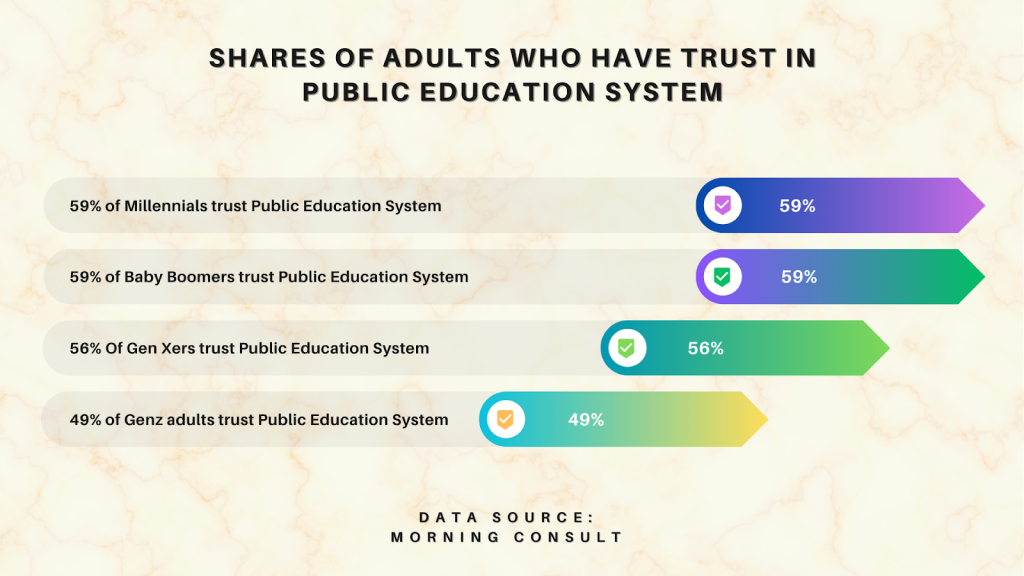
According to the data collected by Morning Consult, Gen Z has the lowest trust in the education system of public colleges or universities. They also revealed that in October 2020, 62% of adults supported the public education system, and now, as of May 2023, the numbers have decreased to 52.5%.
Lower State Funding
Another reason for increased tuition fee is the decreasing financial support from the states. According to the data from the College Board, there is a correlation between the state’s funding and education costs. In the academic year 2015-16, the state’s funding was reduced by 11% as compared to the last 10 years, which is the result of a hike in education expenses.
Lack of State Funding Means the Burden of High Education Expenses Is Shifted to Students and Their Parents
At the same time, state funding is only related to public universities, as these colleges and universities are affiliated with the government. So, a reduction in state funding would have little impact on private universities but more on public universities and scholarships for college students.
Operational Cost
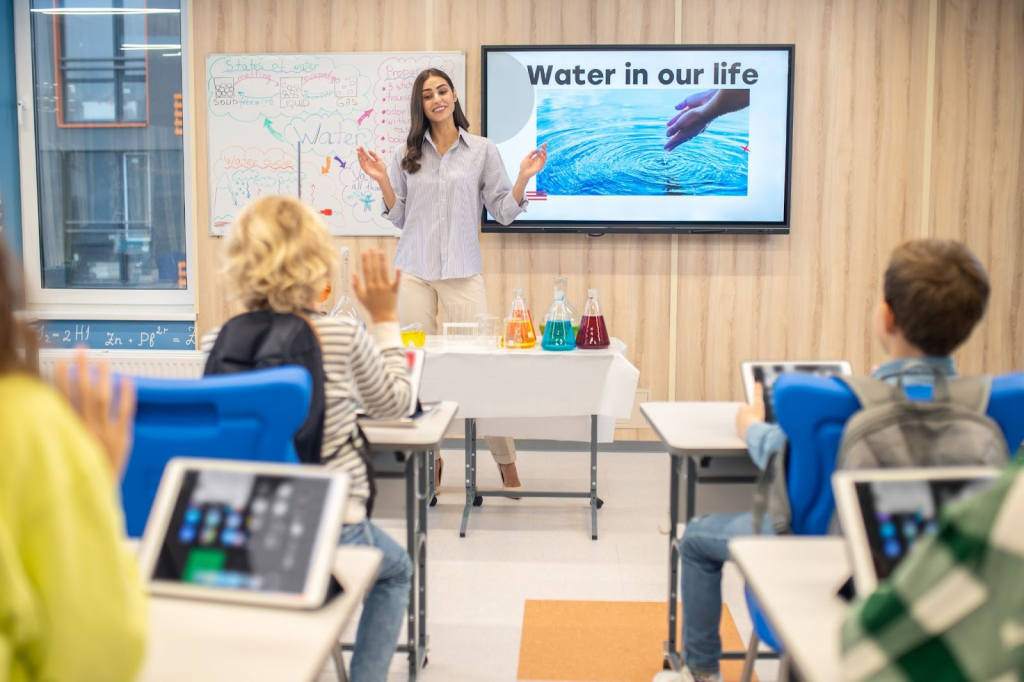
Gone are the days when the things required to impart education were just different subject books, a professor, a blackboard, chalk, desks, and students. Now, the time has changed. Universities and colleges are no longer just institutions of learning and teaching. A classroom has become an e-classroom, with tablets on each and every desk.
Online learning is now the primary focus, with learning resources readily accessible on the internet, surpassing the significance of traditional learning methods.
High-Quality Education Comes With High Education Costs
Many institutions now have full facilities and services like healthcare, technological devices, counseling, research, dormitories, and institutional support. These facilities and services take a major chunk of money from the university’s budget, which in turn leads to skyrocketing tuition fee. Moreover, universities provide quality education, so they have to hire highly educated people, which means high salaries.
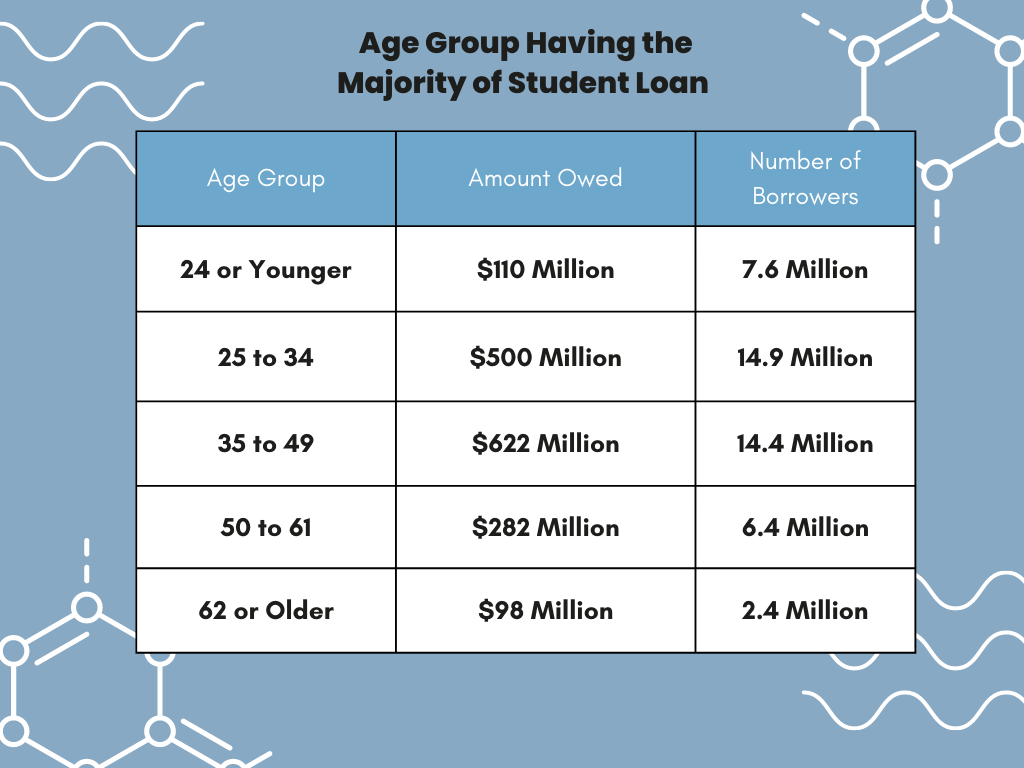
The ballooning education costs and student loans go hand in hand. According to Forbes Advisor, there is around $1.75 trillion student loan debt as of now, including federal and private loans. On average, one borrower owes $28,950. Moreover, 55% of public university students have educational debt, whereas 57% of private non-profit institution students take loans.
If we look at the statistics, student loan borrowers aged between 24 and 35 years owe around $500 billion to federal banks. Unfortunately, for some people, these loans do not leave the borrower’s side even after middle age. Not only this, people feel the pressure of repaying loans even after retirement.
Taking out a student loan is inevitable unless you have a scholarship or come from a financially strong family.
“Borrowing to pay for college used to be an exception; now it’s the rule.” – Arne Duncan, Formal United States Secretary of Education.
The Burden of Student Loan Remains With Individuals Even Beyond Their Retirement.
Federal Aid for Student Loan
In the year 2007, the Federal Government introduced the Public Service Loan Forgiveness Program (PSLF) under the act of College Cost and Reduction. Under the PSLF program, people who make 120 loan repayments while working for a non-profit organization or public service institution can get a portion of their student loans excused or forgiven.
According to the U.S. Department of Education, as of May 2023, more than 6,15,000 borrowers had successfully had their loans forgiven. PSLF has approved a total of $42 billion since October 2021.
The Public Service Loan Forgiveness Program is one of the most brilliant programs established by the government. It supports public employees, including professors, doctors, and policemen, as well as members of nonprofit organizations, by giving them relief from the headache of the installments of student loans.
How to Make Education Affordable?
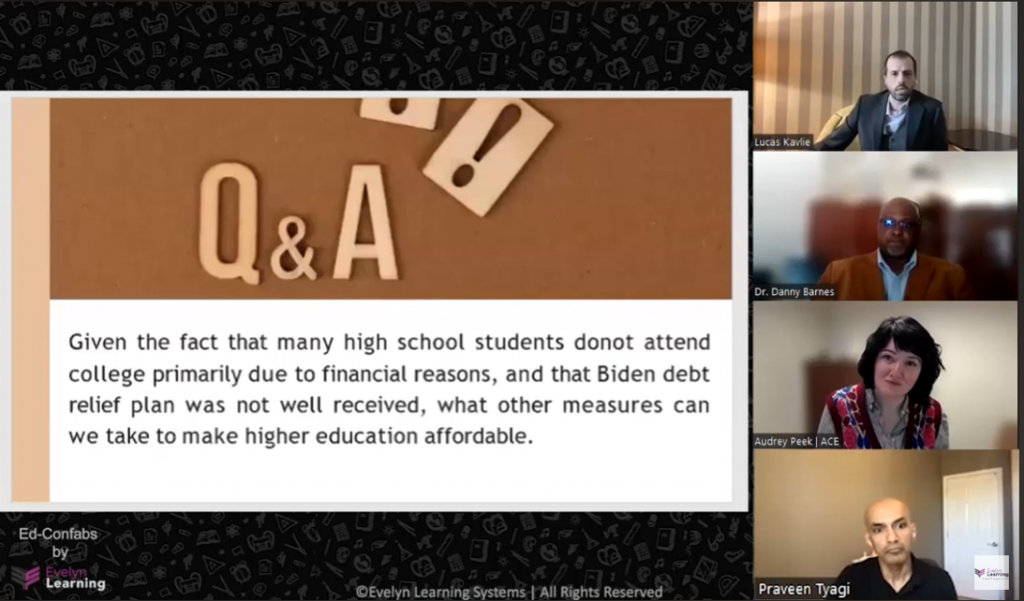
In our January’s Industry Discussion, “How to Make Education Equitable and Affordable”, we got an amazing opportunity to invite and interact with brilliant speakers, Dr. Danny Barnes, Dr. Audrey Peek, and Lucas Kavlie.
Dr. Danny Barnes is a renowned Data Scientist and Cybersecurity Professor from Augusta University. Dr. Audrey Peek is a Senior Government Policy and Data Analyst from ACE University. Last but not least, Lucas Kavlie is a Vice President of Western Governors University.
All of these speakers made some really interesting points about how to make education affordable.
Dr. Danny Barnes. Dr. Audrey Peek, and Mr. Lucas Kavlie during an industry discussion co-hosted by Evelyn Learning’s CEO and Founder Praveen Tyagi and Content Analyst Tavleen Kour
Dr. Danny Barnes gave a great idea about opening a corporate education construct in a college where students can go to work as well as to classes. So, when they graduate, they’ll have a degree as well as work experience.
“A lot of problems are going around related to social-economic aspects, historical aspects, digital divide, etc. These problems are impacting the cost of education. There are two ways to overcome this situation. Schools should focus on e-books more which will help to cut down the cost of books from the cost of tuition. We can also guide students to take their early courses or generic courses at community colleges”.
On the other hand, Dr. Audrey Peek pointed out that there is an affordable college that’s right for every student. There are colleges that put students first and make sure they have minimal debt.
“We have to help future students to avoid taking debt and struggling to repay it and that’s where we have to be innovative as well. The Federal Student Loan Program is broken and we need to fix it. There are some areas where a lot of improvement is needed like lowering student rate and improving student loan services. On the other hand, we want our states to increase funding to colleges or universities so that the education expense is reduced”.
Lucas Kavlie addressed that the problem of public relations is more than the problem with people being able to go to college, and there is always an ability to pursue tertiary or post-secondary education.
“When it comes to financial reasons, it should never be finance that eliminates somebody’s access to post secondary education. Individuals, who want money to attend colleges, there is money available but we’ve not done a good job of helping to guide them. We’ve figured out a way to reduce the tuition fee many decades ago in the United States by subsidizing primary and secondary education. But, tertiary and post secondary education are subsidized to a certain extent”.
Can We Afford Universities With Skyrocketing Education Costs?
How to Deal With the Problem of Cost of Education?
The increasing tuition costs and fees cannot be attributed to a single reason. There are a lot of factors that are responsible for this spiraling problem. Technological advancements, increasing inflation, reducing state funds, and certain economical challenges are causing this inevitable problem of the rising cost of education.
Now that we have somewhat understood the problem, it is important to find some backup plans and other options.
As said by Audrey Peek, students have to make their research game strong and find some colleges or universities providing scholarships, grants, or cheaper tuition fee. There is always an affordable college available for every student that fits right into their budget. Try finding resources online and gain as much information as you can.
According to Lucas Kavlie, there is always the ability to pursue education in a way that is either minimal or at no cost.
Also, if someone is ready enough to take a student loan, there are many schemes and programs started by the U.S. government to reduce the burden of repayment of loans. The information is out there, and you just have to grab it and seize the opportunity.
Lastly, a college degree is not the only criterion for judging whether a person will be successful in their career or not. If you’re interested in acting, singing, painting, designing, etc., you can make a career out of these fields too. You just need to be passionate about the career path that you’re choosing.
]]>https://test.evelynlearning.com/why-the-education-expenses-are-rising-and-how-to-deal-with-it/feed/0Reassessing Curriculum Development: Top 3 Factors to Consider
https://test.evelynlearning.com/reassessing-curriculum-development-top-3-factors-to-consider/
https://test.evelynlearning.com/reassessing-curriculum-development-top-3-factors-to-consider/#respondMon, 15 May 2023 05:50:07 +0000https://test.evelynlearning.com/?p=14745Curriculum Development is the process of developing a course that is taught at a school. Every school or university has a unique approach to its design. However, the basic structure of the design remains the same, which includes researching, building, execution, and judgment. This article discusses, in detail, the points that influence the decision of […]
]]>Curriculum Development is the process of developing a course that is taught at a school. Every school or university has a unique approach to its design. However, the basic structure of the design remains the same, which includes researching, building, execution, and judgment.
This article discusses, in detail, the points that influence the decision of its development, such as:
Role of technology in curriculum
Reassessing curriculum development as per new age requirements
Factors to consider when redesigning the curriculum
A curriculum is important for both teachers and students. It helps teachers adopt reasonable teaching approaches and it helps students study and learn in an organized manner.
As technology is infusing more and more into education and students are being introduced to different learning styles, there is a need to reassess the curriculum with regard to new age requirements.
It is also important to focus on making students career ready. There is indeed a new school of thought, which says that learning should be such that it can help students be job-ready right after high school graduation. It can be beneficial for those students who might not want to pursue higher education or may not have a financial background to support them.
Introducing technology in education is another trend that is on the rise. Everything is becoming tech-enabled. So, why not education?
Many institutions and schools are indeed welcoming technology with open arms, but many are still a bit skeptical about using educational technology.
Technology and Curriculum Development: Correlation
Redesigning Curriculum and Inclusion of Technology: Relationship
Technology and education go hand in hand. With the help of technology, many people have access to education. If we look back at past years, we find that there were fewer opportunities for people to learn something new. Now, thanks to edtech, we can learn an endless number of things with just a click.
In our industry discussion webinar, we had the opportunity to talk to the edtech specialist at PowerSchool, Jessica Aurilio. She shared her insightful opinions about integrating technology in education and the need to redesign the course.
According to her, “When reassessing the curriculum development, it is important to make sure to take into account that every student is not the same. I saw students who are performing great and getting good grades in online learning as well as those students who used to get straight A’s, but now, are not getting technology”.
Reevaluating the Curriculum by Incorporating Technology in Education
Increasing Importance of AI Education in Curriculum
According to Forbes, 2023 is the year of AI Education. AI has entered into K-12 education. There has been a rise in AI programs with books and courses exclusively focusing on elementary and high-school students.
As science projects, students are building robots and apps involving machine learning.
AI driven technologies are helping students develop skills and succeed in the job market. Infusion of technology in education is making sure that every student receives quality education, which would help them become career ready.
Assessing the Curriculum as per the New Age Requirements
Currently, a lot of moderation can be seen in the education sector. Educators are brainstorming on different methods and styles to be added to make teaching and learning more interactive and engaging.
The biggest change that has happened in a long time is that the focus on what to teach has now shifted to how to teach. Moreover, we can also see a push in certain schools and universities towards conducting career-related sessions for students to succeed in their future professions.
Experts’ Opinions Regarding Redesigning the Curriculum Development to Make Students Career Ready
Alex Lochoff and Jessica Aurilio during an industry panel discussion co-hosted by Evelyn Learning Founder and CEO Praveen Tyagi and Content Analyst Tavleen Kour
In our industry discussion webinar, we had another guest speaker, Alex Lochoff, director of Edpuzzle. He too shared his brilliant perspectives on developing the module according to new age requirements.
Alex said that the biggest change he has seen is not in the topics we’re teaching, but rather how it’s been taught and this is now formalized in many of the newer standards which come under the Common Core.
The Common Core used to cover content standards only. Now, it covers practice standards too. Content standards include all the topics that should be taught to students, whereas practice standards include everything other than lecturing. Practice standards include exercises such as explaining, reasoning, debating, and critiquing.
These standards help students develop skills for their prospective future profession and get them ready to seize all career opportunities.
Top Three Factors to Consider When Redesigning the Curriculum
Considering restricted and banned content as per policy standards
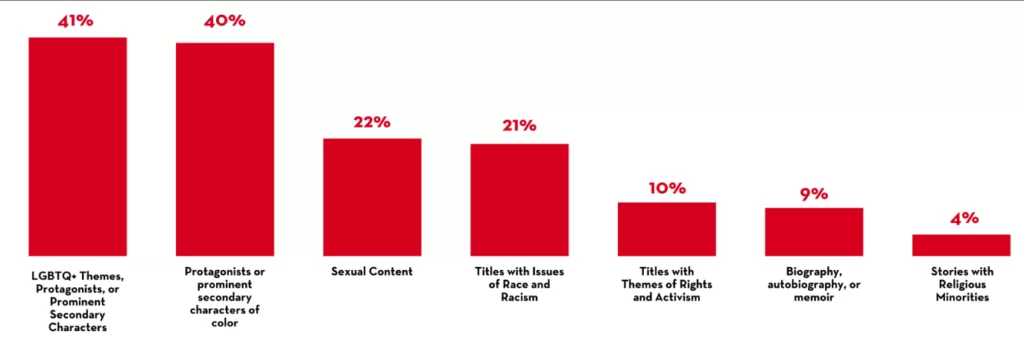
In the session 2021-22, some state and national groups protested to ban and remove some books from the school courses. The books that were targeted for removal included topics such as sex education, LGBTQ+ rights, racism in American history, and more.
According to PEN America, 674 banned books had LGBTQ based titles and protagonists who belonged to this community. Moreover, 358 banned books include the topic of sex education and 357 books address the issue of racism.
Data from PEN America
PEN America considered this movement of banning books deeply undemocratic. It is taking away rights from students who want to learn a diverse range of opinions and perspectives. Moreover, it is unfair to all those parents who want their children to gain knowledge, be more curious, and have a freedom to read.
Many teachers and parents are raising their voice against the book bans and asking to include the restricted content back into the classrooms.
Emerging Technology in Education
In one of our industry discussion webinars, Alex Lochoff said that both teachers and technology have important roles in education. However, there are some areas where edtech fits better in the curriculum. He gave a really nice example of his students.
“I asked two of my students to make a square. One draws it quickly and the other takes out his ruler and draws it perfectly. These two types of students want edtech, so they can study at their own pace”, says Alex.
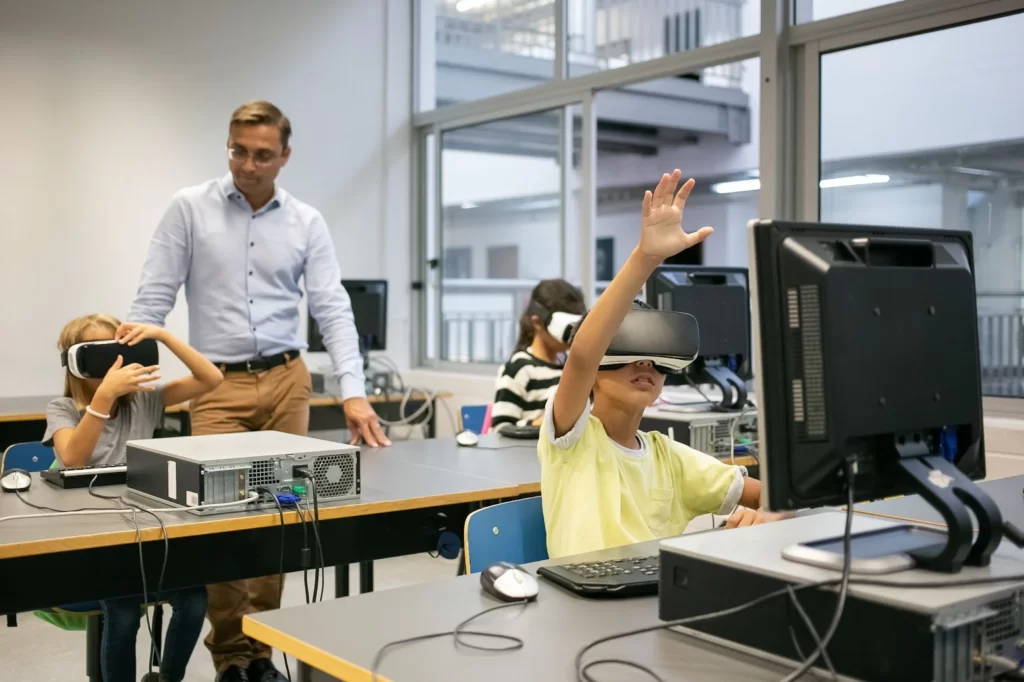
There has been an increase in the usage of AR/VR and AI in education. According to Education Week, expenditure in edtech has increased after the pandemic. Many schools are inclining more towards online learning.
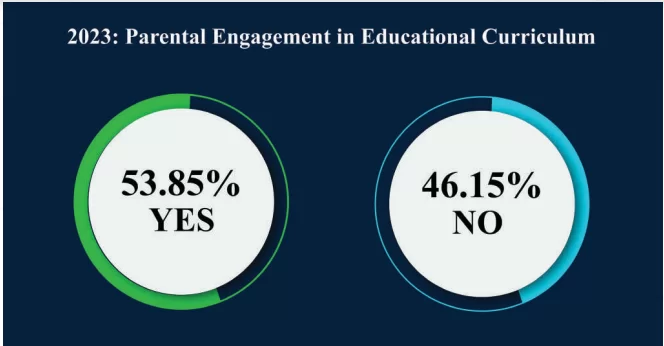
53.85% of experts agree that the role of parents is essential in classroom decisions and curriculum development. Also, 46.15% of experts believe that educators have experience and they have a deeper understanding of the wants and needs of their students.
Involvement of Parents: Different Opinions
When talking about parental involvement in the industry panel discussion, Jessica said that educators want parents to be involved in the decision-making process. Both parents and teachers are a team who want nothing, but the best for their children. However, she thinks that curriculum development is not an area where parents should have opinions.
Insights of Edtech Experts from the Industry Discussion on Curriculum Development
As edtech is placing its foot in the education industry, educators and developers must not forget that teaching and learning is a human activity. It is multifaceted and important for child development.
“Although in some ways, technology can do better than a teacher, in some ways, a teacher could do better. ” – Alex Lochoff, Curriculum Director at Edpuzzle.
Every student is different and has a different approach to learning. The task is to add different learning styles in the course to support each and every student.
“There are different learning styles for different people and nationalities. The task of developers is to hit all the different modalities of these styles to engage the students’ ‘ – Jessica Aurilio, edtech specialist at PowerSchool.
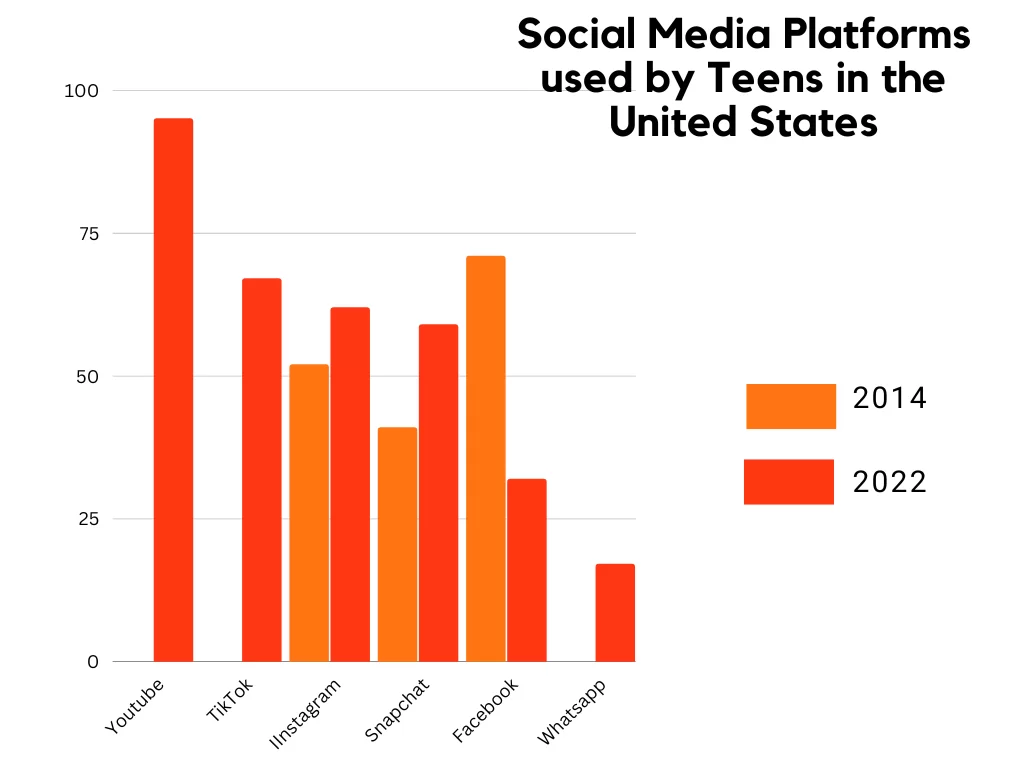
A Space to Think : Is Inclusion Of Technology in Curriculum Responsible for Distraction? Students use laptops, but not for studying entirely. According to Pew Research Center, more than half of US teens claim that they are online almost every time. Moreover, the most famous social media platforms among teens are TikTok, Instagram, and YouTube.
In this survey, many teenagers agreed that they use social media platforms too much and claimed that it would be very tough to give it up.
Apart from this, many parents and educators are concerned about their child’s excessive screen time, which is not good for their mental as well as physical health. In our previous newsletter, Edtech Industry’s Health 2023, we addressed the issue of excessive screen time among children and teenagers.
Changing Focus From ‘What To Teach’ to ‘How To Teach’
Every profession, teaching, engineering, graphic designing, etc. is a valid and valuable career path. What educators can do in creating or developing the curriculum is that they can prepare students to succeed in any of the professions they choose.
As the focus is inclining more and more towards how to teach rather than what to teach, teachers must adopt different learning styles in their teaching methods.
For visual learners, teachers must include pictures, diagrams, and educational videos in their teaching methods. For auditory learners, it is important to add educational podcasts in the classroom. They can also record their lectures for better results. Teachers must conduct question and answer sessions as a classroom activity. It is important to add different learning and teaching styles to engage students in studies and make them feel comfortable at whatever they are doing.
Reassessing curriculum is not an easy task. Developers work very hard to create a particular design that is enough to cover different topics and a wide variety of learning styles. A course needs to have a set number of goals and objectives. This will help learners make progress and achieve nothing, but success in their careers.
]]>https://test.evelynlearning.com/reassessing-curriculum-development-top-3-factors-to-consider/feed/0Challenges in Education System: PJ Caposey interview
https://test.evelynlearning.com/challenges-in-education-system-pj-caposey-interview/
https://test.evelynlearning.com/challenges-in-education-system-pj-caposey-interview/#respondThu, 05 Jan 2023 15:49:00 +0000https://www.evelynlearning.com/?p=10257PJ Caposey is a superintendent at district Meridian CUSD 223 in Illinois. He is a keynote speaker and an educational leader. PJ became a principal when he was just 28 and, within three years, PJ was able to lead a small-town/rural school that was historically achieving near the bottom of its county to multiple national […]
]]>PJ Caposey is a superintendent at district Meridian CUSD 223 in Illinois. He is a keynote speaker and an educational leader. PJ became a principal when he was just 28 and, within three years, PJ was able to lead a small-town/rural school that was historically achieving near the bottom of its county to multiple national recognitions.
An accomplished educator and motivational speaker, PJ has written around eight books, and his work has been featured in several notable spaces, including Washington Post, NPR, CBS This Morning, ASCD, Edutopia, the Huffington Post, etc.
It was enlightening and an honor speaking with PJ Caposey about the challenges in education. PJ gave us a glimpse of the ways how we can change the education system for the good of the students.
You have often talked about teachers reaching out to children for effective learning; how do recent teaching restrictions and salary concerns affect teacher morale?
The issue with teacher morale is both overstated and understated. We are in a time with a dramatic teacher shortage, particularly in the United States.
Many people point to teacher morale as both a result of that and a precursor to that, and both can be true. The issue is that this is not a new or pandemic-related issue.
The teacher shortage is a decades-old problem and not a new concern
Multiple studies show that a cliff like that happened in 2008 when teacher responses to questions like, ‘Hey, I like my job’, or ‘I’m very likely to recommend’; all of that kind of fell off a cliff in 2008. So, it’s been on this downward spiral for a while. When I say this is not a new problem, I mean, this is literally a decades-old problem.
Morale, to me, is almost always like a climate issue that’s dictated by culture. So, when someone says hey, the morale is low, my question is, so let’s define the culture. Are we recognizing, appreciating, honoring, Valuing, or collaborating with?
If you’re doing those things, even if morale is low, it’s most likely to bounce back, if you’re not doing those things, and the morale is low, then we’ve got a serious problem that we need to address.
Your book ‘Students Voice-from Invisible to Invaluable.’ discusses the importance of students’ voices in learning. Do you think post-covid, the student approach to learning has changed?
I think that people are changing. Students are reflective of society. And I think, in some ways, they are demanding a greater voice in their learning, and there are positives and negatives to that.
I believe, every school wants to create community contributors that can communicate and able to think critically. I think that’s pretty universal, whether in Country A, Country B, or whatever.
If we want to create people that will make society better and be able to think critically, there is such a thing as experts, and I believe most of our teachers and leaders have expertise.
Students’ voices in learning is important for effective learning
So, for lack of a better term, even though I don’t know if one exists like a democratic model of education, it might not be what’s best.
That doesn’t mean that students shouldn’t have some choice in how they demonstrate their knowledge or the things they may study to practice the skills we say they need to master.
One of my all-time best examples of this is- we had a foreign exchange student early in my career that came from Bosnia.
And we were discussing the antecedents and causes of war, and the teacher wanted the class to focus on the United States Civil War. This person, a foreign exchange student, came from a war-torn country that had just experienced war and wanted to practice and master all the same skills but with a different prompt.
In my view, if we don’t listen to student voices in a case like that, that’s almost educational malpractice. But, that said, those types of examples are only sometimes there, which means that if we want students to research a classic novel and they want to do it on our recent publication in a magazine, those are two different things.
So, there’s this ray spectrum between trying to maximize and emphasize students’ voices. And then also saying there’s a right and wrong way to do things.
What do you think is the biggest gap in classroom teaching today: access technology, teacher shortage, classroom environment, or any other?
The most significant gap still exists between what is being measured in terms of how schools are reported. Some countries are considered successful in terms of education and what is likely to put kids in the best position to succeed tomorrow. So, for instance, in our district, we are very fortunate to have a lot of students that go to Ivy League schools and go to the most prestigious schools.
We also have many students in our area that enter directly into the workforce, the military, or whatever. Our desire to remediate any possible gap so that our test scores would look great sometimes run counterintuitive to what we could best provide for kids.
The second gap for me is geography. To explain, we are a small rural school, which means that my students live 60 miles to the East. They would have a much, much larger variety of offerings to take both on this-the advanced academic side and the excellent education side, simply because the schools are bigger and the volume of money that flows through, and the number of classes that can be offered are dramatically different.
Correspondingly, if you go 20 miles north, we have an urban center where education is much further because the school environment is different, where, you know, we might have a fight or two a year, they might have a fight or two an hour.
These students are having these vastly different experiences, So, when I look at education holistically, the biggest concern is that there’s just inequity by geography.
Would you like to give a message to our readers?
It’s to make sure that we’re doing meaningful work. If you ever find yourself in the throes of the day, the week, or the month and you’re wondering ‘why’, don’t ever lose that question of’ why’. If we lose that question, then the status quo is just going to be pervasive.
If we keep asking ‘why’, finding better solutions, and trying to make meaningful use of every hour of every day. We can do really good work on behalf of kids and our communities.
]]>https://test.evelynlearning.com/challenges-in-education-system-pj-caposey-interview/feed/0Challenges in the Current US Education System
https://test.evelynlearning.com/challenges-in-the-current-us-education-system/
https://test.evelynlearning.com/challenges-in-the-current-us-education-system/#respondFri, 16 Dec 2022 14:07:00 +0000https://www.evelynlearning.com/?p=10234Education experts have been voluminously telling us many things that are not going right as far as the US education system is concerned. And we are seeing the signs now. A recent survey by Morning Consult showed that only 60% of baby boomers held their trust in the public education system, and only 43% of Gen Zs […]
]]>Education experts have been voluminously telling us many things that are not going right as far as the US education system is concerned. And we are seeing the signs now.
A recent survey by Morning Consult showed that only 60% of baby boomers held their trust in the public education system, and only 43% of Gen Zs parked trust in it. Now the Gen Zs are asking ‘Should I Go to College?’
Is this report trying to convey something to us? Should we not do anything about this trend of falling trust in the education system?
It looks as if the people feel let down by the US education system. The pandemic had its toll, but there are also manufactured issues that plague the American public education system.
This year 2022, saw a quake in the education world. It broke some things while it created opportunities for other things like education technology to facilitate newer instructional styles. We learned during the pandemic that education is inequitable due to geographic differences and resourcefulness.
At the beginning of 2022, it was a school and educators’ priority to recover from the loss of time and curriculum gaps that occurred during the pandemic.
We saw a rising distrust among parents for the school curriculum and educators’ teaching styles. This year, there was also a significant hue and cry about teachers’ shortage in schools and teachers leaving the profession. In addition, there were cases of gun violence in schools. Phew! 2022 was not easy!
Experts’ view on the Challenges to Education System
We asked some exceptional industry experts to give us a penny for their thoughts on what is scuttling the current US education system.
Erin Dowd, a curriculum development consultant and global education specialist, was on point when she discussed the issues with the education system:
I think there are two main challenges to education, and these are mostly global. The first one is ‘access’. Access encapsulates getting kids to schools, quality teachers, training teachers. It also includes having a quality curriculum, funding, and resources.
The second challenge is policies and government. As a former educator, this issue was always in my way. It was bothersome when people made decisions about education who are not educators. These decision-makers have no idea about what is going on in schools, rather, have an agenda to pursue.
It was bothersome when people made decisions about education who are not educators. These decision-makers have no idea about what is going on in schools, rather, have an agenda to pursue.
-Erin Dowd
I believe that the education policies of a country reflect a lot about the country. So before any decision is made, everyone should take a step back and ask themselves, ‘what is the purpose of education?’ The answer to this question can show the right behavior and reflect through our policies.
Erin’s concern about access is not just an American problem but a global issue. Access to schools, quality teachers, quality curriculum, and technology is a privilege and a fundamental right of every child on this planet.
But students also need parental involvement and guidance when it comes to making decisions about learning and education. This concern was highlighted by Brian South, Educational coach and author of ‘Demystifying College Admission.’
There is a lack of strong guidance and mentorship for students to help them flourish. If students do not get this support from their parents, they often turn to their peers who are only as good as them. This phenomenon can lead them to fall victim to a life of drugs or crime. Students need mentorship and appropriate teacher or parental guidance to help them do good in their lives.
Students need mentorship and appropriate teacher or parental guidance to help them do good in their lives.
-Brian South
Questioning the System’s efficiency?
There have been education specialists talking about various ways in which our schools sabotage a student’s creativity.
One of those education experts was Sir Ken Robinson, whose idea of manufacturing of learning process was echoed by Lucas Kavlie, VP of academic engagement and compliance accreditation at Western Governors University.
Sir Robinson was right to say that our school system is manufacturing students into a particular type of individuals, and our American education system is following that. It has coded this idea in the form of laws and regulations.
It has become so ingrained into our society that it has become difficult to go away from it. As a society, we ought to understand that every student has different learning needs, and one standard teaching method will not work for all students. Personalization of learning is essential, as we realize that even twins might need to be educated in different ways.
Personalization of learning is essential, as we realize that even twins might need to be educated in different ways.
-Lucas Kavlie
Working on Solutions is the only Solution
Discovering an issue is the first step in working on a solution.
Student counselors can help and guide school students on treading the path that is right for them. In addition, appropriate guidance from parents, teachers, and professional counselors can help prevent students from falling prey to the world of drugs and crime.
Governments, parents, and schools can work together to decide what curriculum is best for students. Curriculum designers are experts and should be able to justify to parents why teaching students a particular subject is essential.
With technology, students can now learn in newer and better ways. In addition, technology has increased student engagement and helps students learn in ways that best serve their cognitive understanding.
The sooner we listen to experts and make better decisions to improve the education system, the better our society will be.
]]>https://test.evelynlearning.com/challenges-in-the-current-us-education-system/feed/0Chegg Revenue Rise After an Abysmal Plummet of Stocks in 2021: What Could It Mean for the Education Industry?
https://test.evelynlearning.com/chegg-revenue-rise-after-an-abysmal-plummet-of-stocks-in-2021-what-could-it-mean-for-the-education-industry/
https://test.evelynlearning.com/chegg-revenue-rise-after-an-abysmal-plummet-of-stocks-in-2021-what-could-it-mean-for-the-education-industry/#respondTue, 24 May 2022 05:22:39 +0000https://www.evelynlearning.com/?p=8547Chegg is an online education company which has marked its global presence and dominance with its proprietary content that thousands of school and college students use for academic help in education industry. At the end of Dec 2021 (Quarter 4), the stocks of the company plummeted abysmally due to a temporary factor. But contradictory to […]
]]>Chegg is an online education company which has marked its global presence and dominance with its proprietary content that thousands of school and college students use for academic help in education industry. At the end of Dec 2021 (Quarter 4), the stocks of the company plummeted abysmally due to a temporary factor.
But contradictory to what everyone thought, Chegg reported new earnings and profits in the new year that surprised the market. As of May 2022, the stock price was $18.20. This blog delves into the dip and rise of Chegg’s stock, the probable reason behind it and what it could mean for the company in the longer run.
Story: What Happened in 2021?
Chegg is a well-established name in the digital education market and is based on a subscription business model which is the primary source of revenue for the company. However, the education market saw a dip in early 2021 when unexpected college enrollments dropped and the already registered students started taking easier and fewer courses. To say the least, the next quarter reported fewer earnings and the stock price dipped significantly.
Howbeit, surprisingly, the registrations rose up again in the next quarter. The return to growth gave the management confidence to issue guidance for 2022 that called for revenue of $840 million, and which would be a healthy increase from the $776 million it generated in 2021. Both of these were ahead of any analyst expectations.
Improved Earnings in Q1- 2022
In December, the company closed the Q4 with 1% Y-o-Y, which was driven by Chegg’s strong performance. CEO Dan Rosensweig attributed the success to Chegg Study Pack for all time high retention rates. He said that this ‘benefited subscriptions, average revenue per user, and margins for Chegg services overall.’ The momentum also carried on to the first quarter in 2022 that led to an eventual increase in the share price.
In the first quarter of 2022, Chegg forecasts its revenue to increase by 2% Y-o-Y, which ranges between $200 million to $205 million. The management expects company earnings to grow 8.4% over and above the earnings of 2021 with adjusted earnings before taxes, depreciation, interest, and amortization. These, however, remain little over last year- between $260 million to $270 million. These year on year growth and revenue targets imply that the sales and revenue should accelerate over the year 2022.
What Could This Mean for the Education Industry?
There are a couple of ways Chegg could show a growth in sales cycle and revenue for the next financial year. The company has already reported a rise in student enrollments to its courses and study material. Other than direct sales, revenue can be increased by cost-cutting within the company. From many other strategies that can be followed, outsourcing content to third party vendors is one.
If Chegg does resort to outsourcing, it will mean a generous rise in demand for B2B content development partners who can develop academic solutions for students and provide homework help.
Let us know what you think about this.
If you are a content development company, and you are looking for partners for content creation, reach out to our executive team.
Evelyn Learning Systems is a B2B content development company which is positioned among leading brands in educational content development across all STEM and Business subjects.
]]>https://test.evelynlearning.com/chegg-revenue-rise-after-an-abysmal-plummet-of-stocks-in-2021-what-could-it-mean-for-the-education-industry/feed/0Most Common Mistakes in Online Course Creation
https://test.evelynlearning.com/most-common-mistakes-in-online-course-creation/
https://test.evelynlearning.com/most-common-mistakes-in-online-course-creation/#respondWed, 18 May 2022 11:37:17 +0000https://www.evelynlearning.com/?p=8542Creating a digital product that sells and scales doesn’t just sound incredible, but it can really be if you put in the effort and take the proper steps at the right time. In recent years, online courses have become more accessible than ever and are a brilliant source of income, but only when appropriately handled. […]
]]>Creating a digital product that sells and scales doesn’t just sound incredible, but it can really be if you put in the effort and take the proper steps at the right time. In recent years, online courses have become more accessible than ever and are a brilliant source of income, but only when appropriately handled. As a result, most first-timers make mistakes and fail, which discourages them from attempting them again.
In this article, some of the common mistakes in online course creation are extensively outlined and discussed. Doing this will help to avoid learning from experience as to how bad they can be.
1. Not Laying a Proper Foundation
The actual process of creating an online course is the same as building a house. Building a house calls for securing its foundation against any unforeseen damages. In addition, you don’t build a roof until your foundation has dried properly.
Thus, it is critical that you validate your course idea and identify your target audience in advance of recording the course content. Moreover, you are required to select a name and a proposition for your product that best describes your course results in just one word or maximum in one sentence. If you pay attention to building a solid foundation at the start, you will be on the right path to scaling efficiently.
2. Selling Before Having A Finished Product
According to some creators, you should start marketing your course before it gets created and before it is finished. Although it can lead to more sales, momentum, and a sense of urgency, it is usually not a wise idea. First of all, online course creation is creative work, and creative projects rarely go as you had imagined them.
As your project progresses, you may realize that there is an alternative direction you can take. Besides, it’s possible for you to discover that you are incapable of creating enough content for an entire course on your chosen topic. A lot can go wrong, and your buyers won’t like it if they get a course that is different from the one they expected. Therefore, make it a rule to create first and sell later.
3. Taking Your Audience For Granted
Creating online courses is time-consuming and expensive. It is a waste of time and money to produce a course that nobody will purchase. Nevertheless, you will be amazed at how many course creators create courses just because they think they have a great idea. Additionally, they don’t pause to consider if there is an audience for their course.
So, before you begin online course creation, determine what your readers want to learn more about. A reader survey is an excellent way to understand what your direct audience wants to know and in what form. By doing so, you will learn more about what they need and find topics that will make them smile.
4. Not Defining Skills of Course Participants
When you are an expert, you tend to take things for granted and forget that your audience may not understand them. Newbie courses in some fields would be worthless to professionals seeking continuing education. Modules should be differentiated according to difficulty level so that beginners receive beneficial basics and veterans gain in-depth tips. A pre-course questionnaire like this one helps professionals determine their knowledge level so they can skip the modules they already know.
5. Thinking Negative Reviews Are Bad
The worst nightmare of any online course creator is to receive a bad review. It can be heartbreaking or even frustrating when people leave a negative review of your course after you put so much love, effort, and sweat into it.
Typically, online course creators delete these comments as trolls or refund seekers. Nevertheless, bad feedback is the most valuable feedback you can receive. Ignoring negative reviews is a major mistake associated with online course creation.
6. No Visuals Added to the Course
Since it is easier to write than to represent concepts with images, no visuals are added to the course at times. Besides, the production of video requires time and money. Therefore, some courses tend to contain abundant text and lack visual resources, apart from not mentioning multimedia. However, the reality is that students often scan instead of read. Images capture their attention, while videos hold their interest. Hence, ensure the videos and images you include are high quality and of sufficient length; anything less will not suffice.
7. Too Much Information In One Course
It is evident that most existing courses on reputable online educational sites are focused on narrow topics. You will not find these programs trying to teach you everything there is to know about a certain field of knowledge. Instead, they choose their purpose and do not deviate from it.
This will prevent two things from happening: first, you’ll end up with a course that covers everything but is an inch deep (that is, you will ignore anything that students can find in public sources); secondly, students will experience information overload. After your course, they will feel overwhelmed rather than excited about what they’ve learned. Hence, be careful when choosing your topic and make sure it’s relevant. Don’t include anything unnecessary and allow some space for future courses.
8. Putting Your Course Into Big Chunks
Typically, a modern online course consists of bite-sized content. Nowadays, technology and ever-shrinking attention spans make it impossible for 40-minute videos to explain a theory effectively. Since most people don’t have much time to devote to learning, they take their courses during short periods of time (while commuting, walking, waiting in line, etc.). As a result, you should divide your course into bite-sized modules that can be consumed anytime.
9. Requiring Too Much Commitment
In general, people can’t commit 10 weeks to learn a new skill (because they have too many responsibilities) or are in a hurry to accomplish that goal. In general, they prefer micro-courses that offer an absolute minimum of theory and a maximum of practical application. Give them an easy way to learn the skills they need without getting overwhelmed by non-essentials. Besides, those who want more profound training can always take a more advanced course.
Hopefully, these tips will be sufficient to help you avoid some of the typical first-time mistakes involved in online course creation and ensure a successful entry into the world of creating online courses. When you avoid these mistakes, you do significantly increase your chances of launching a successful eLearning course, but it does not guarantee your success. To ensure your efforts are not in vain, you should work actively with professional course creators. Creating a high-quality online course, producing fantastic content that your audience wants, and figuring out how to market it effectively, both short-term and long-term, takes effort. So, if you succeed, you’ll undoubtedly reap the rewards.
]]>https://test.evelynlearning.com/most-common-mistakes-in-online-course-creation/feed/0SMEs v/s Learning Experts: Exploring the Differences
https://test.evelynlearning.com/smes-v-s-learning-experts-exploring-the-differences/
https://test.evelynlearning.com/smes-v-s-learning-experts-exploring-the-differences/#respondWed, 18 May 2022 11:17:41 +0000https://www.evelynlearning.com/?p=8529If you are in the education space, you would often come across terminologies like ‘subject matter experts’, ‘instructional designer’, and ‘learning experts’. But have you ever understood the exact difference between the three? Bearing a close similarity in the nature of their fields, the three terms can often be confused for one. As an educator […]
]]>If you are in the education space, you would often come across terminologies like ‘subject matter experts’, ‘instructional designer’, and ‘learning experts’. But have you ever understood the exact difference between the three? Bearing a close similarity in the nature of their fields, the three terms can often be confused for one. As an educator or even someone working in the education space, we thought it was imperative you know the distinction. This blog explains the difference between SMEs and Learning Experts and explores the fine line between them. Read on to find out more.
Striking the Right Balance: SMEs v/s Learning Experts
Point 1:
Subject matter experts have a high talent and affinity for their subjects. However, learners may or may not be able to follow the guidelines or the syllabi listed by the SMEs.
To straighten out these creases, a Learning Expert who helps bridge the gap between SMEs and learners is considered.
How Does a Learning Expert Work:
They take complex and comprehensive subject matter from subject matter experts and break it down into a series of steps of easier ‘building blocks’ that learners can comprehend, understand, and learn from.
Find out case studies and real world examples to illustrate a theoretical concept better.
In some cases, they also highlight the practical benefits and personal gains for the learners, which help the learners look at the topic objectively.
Point 2:
Subject matter experts hold a far more nuanced knowledge of a subject than a regular instructor, but sometimes, there is not a requirement of in-depth explanation of topics. Other times, internal factors like time restrictions and deadlines do not permit over investing in detailed information.
This issue is also resolved with the help of instructional designers who are hired to explain the topic at hand (mostly relevant in case of school students) in an easy and quick manner. Learning experts may not have advanced mastery over a subject but they definitely know the nuances and have the skillset to illustrate key concepts.
How Does a Learning Expert Work:
Focus on the key topics and concepts while illustrating or explaining a topic.
Focus on leveraging the maximum time that is allocated, keeping in mind the organization’s goals and the learner’s interest.
Point 3:
Subject matter experts often consider their job to transmit information. However, learning experts balance the knowledge between pure information and real application. For example, a subject matter expert may explain a simple concept of physics like refraction through complex equations, theorems, and formula derivations, but a learning expert is most likely to demonstrate the same concept through real life examples and demonstrations.
After listing the above points, it is only clear that subject matter experts and learning experts work well in coherence. While SMEs provide the reasoning and information behind technical concepts, instructional designers (or learning experts) help learners relate those difficult theorems from real life, thus making it easier for them to understand hard concepts and topics.
]]>https://test.evelynlearning.com/smes-v-s-learning-experts-exploring-the-differences/feed/0SAT vs ACT: Differences
https://test.evelynlearning.com/sat-vs-act-differences/
https://test.evelynlearning.com/sat-vs-act-differences/#respondThu, 14 Apr 2022 12:06:37 +0000http://www.evelynlearning.com/?p=6365When it comes to ACT vs SAT, both exams are common admission requirements for US colleges. It is important to note that no institution would favor SAT over ACT, or vice versa. These exams are meant to evaluate the student’s general knowledge in several areas. The goal for both the exams is the same: to determine […]
]]>When it comes to ACT vs SAT, both exams are common admission requirements for US colleges.
It is important to note that no institution would favor SAT over ACT, or vice versa.
These exams are meant to evaluate the student’s general knowledge in several areas. The goal for both the exams is the same: to determine college readiness.
First, this article breaks down the differences between the SAT and the ACT. Further, it puts light on the factors to consider while choosing an exam.
SAT vs ACT: Key Differences
Vocabulary
As far as the critical reading section of SAT goes, vocab is the first requisite to excel. Generally, SAT questions are believed to be trickier and less direct compared to the ACT.
In contrast, the ACT eases out on vocab and contains a separate section for science instead. It can be said that the ACT is more curriculum based while the SAT is focused on problem solving.
Therefore, learners who struggle with vocabulary may often perform better with the ACT. However, students cannot judge a test on this single aspect.
Time per Section
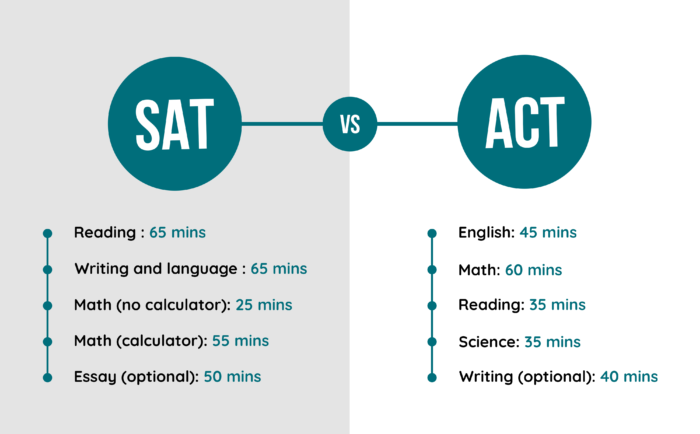
Another biggest difference is the time allocation between these two tests. The SAT offers more time for each question, whereas the ACT requires pacing quickly through the questions.
On top of that, the ACT has additional questions, but the SAT questions are quite tricky and lengthy (so they might take longer to complete).
Given below is the section-wise distribution of time:
Therefore, students who can stay focused and work under pressure will be better off with taking the ACT test.
Scoring
The scoring is also vastly different between these tests. The ACT is scored on a scale of 1-36, whereas the SAT ranges between 400-1600.
Mainly, the overall score on the ACT is an average of the four sections (that is, English, Math, Reading, Science). On the other hand, the SAT tends to weigh the score on the basis of each section individually.
Most importantly, there is no penalty for wrong answers (no minus points) on both the tests. So, test-takers have the freedom to turn to guessing when their time is running out.
Essay
The essay section is optional on both the tests, but many colleges still require the SAT or ACT essay scores to judge the student’s potential.
The SAT asks students to read a full written essay and analyze the author’s argument. Further, the student’s essay should dissect the argument using evidence and reasoning. In short, the students cannot present their own opinion.
Similarly, on the ACT, the student is supposed to analyze the different perspectives in the passage and mainly present their own opinion, unlike the SAT essay.
Science Section
The ACT has a separate science section unlike the SAT. The ACT science section provides 35 minutes to answer 40 questions. In this case, a science wizard who loves to analyze scientific data, graphs, and charts the ACT might be a better fit.
That being said, the SAT does test scientific knowledge, though not with the use of a separate science section. With the complexity in questions, the students have to interpret graphs and charts in a way similar to the ACT.
For more information on preparing for the LSAT, visit our blog.
]]>https://test.evelynlearning.com/sat-vs-act-differences/feed/0Curriculum Development Models
https://test.evelynlearning.com/curriculum-development-models/
https://test.evelynlearning.com/curriculum-development-models/#respondThu, 14 Apr 2022 11:56:39 +0000http://www.evelynlearning.com/?p=6806Curriculum development is a step-by-step procedure for making constructive changes to a school’s, college’s, or university’s course offerings. School courses must incorporate new findings as the world continues to evolve. Educators are continually developing new teaching techniques and strategies in order to improve the student learning experience. As a result, a college or university must […]
]]>Curriculum development is a step-by-step procedure for making constructive changes to a school’s, college’s, or university’s course offerings. School courses must incorporate new findings as the world continues to evolve. Educators are continually developing new teaching techniques and strategies in order to improve the student learning experience. As a result, a college or university must have a plan in place for recognizing these adjustments and then for being ready to incorporate them into the curriculum.
This article will describe what curriculum development is and how educators can employ the main models of curriculum design to ensure the success of any course. The importance of a well-thought-out course plan in any classroom—and for any group of students—will be clear to readers.
What is Curriculum Development?
The way one thinks about and theorizes education has evolved dramatically over time. The most basic definition of the term “curriculum” nowadays is the disciplines that comprise a course of study at a school, university, or college. Course planning and development are both terms teachers often use to describe curriculum development.
It is critical to note that course design varies. A math course at one university may cover the same content as another. However, the instructor may present it differently. The basics of curriculum development, on the other hand, do not change.
Walker’s Model of Curriculum Development
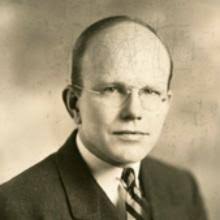
Decker Walker
Decker Walker earned his Ph.D. in 1971 as an assistant professor of education at Stanford University. His area of expertise was curriculum, and the process of curriculum development and the formulation of curriculum policy particularly sparked his interest.
What is the Naturalistic Model, and How Does it Work?
In contrast to Tyler’s classical prescriptive model, Walker’s model is a descriptive one. Communicative approach is another name for it. The communicative approach begins with the designers’, target group’s, and other stakeholders’ more subjective impressions and perspectives.
Instead of recommending how curriculum planning should be done, the word naturalistic explains how it is done. Walker believes that if people were involved in the process and came to an agreement on the end output, better curriculum planning and development would occur.
Platform, deliberation, and design are the three steps of curriculum preparation in this methodology.
Platform: At this point, the curriculum workers bring their own beliefs, knowledge, and values to the table. This is akin to the concept of pre-printing a syllabus.
Deliberation: This phase specifies which facts are required for the means and purposes, as well as the generation of alternatives and consideration of the alternatives’ effects. The analysis of different costs and repercussions and selection of the optimal option for the upcoming curriculum work also employs this.
Design: Finally, this step entails curriculum preparation, decision-making, and implementation.
The level at which the development is taking place has an impact on this curriculum development model. Educators utilize it for curriculum development at a macro level. It also emphasizes the designers’, target group’s, and other stakeholders’ subjective perceptions and perspectives.
Taba’s Model of Curriculum Development
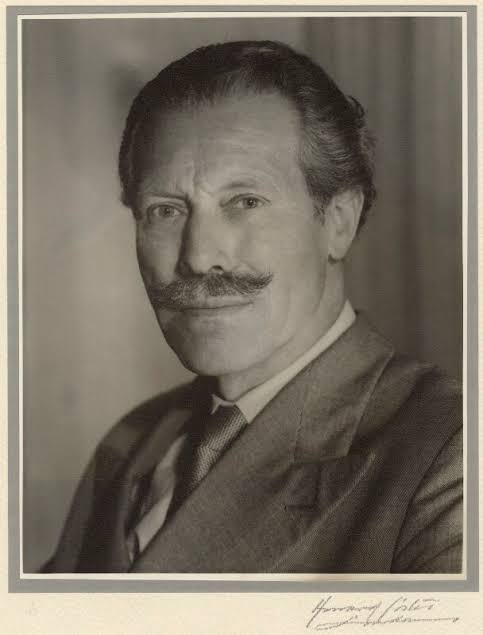
Hilda Taba
Hilda Taba contributed to the theoretical and pedagogical foundations of concept development and critical thinking in the social studies curriculum, as well as helped to lay the groundwork for education. She also developed a multipurpose teaching paradigm that incorporates a variety of processes, such as listing, grouping, re-grouping, labeling, and synthesizing. Taba’s “Grassroots method” is a modified version of Tyler’s model.
Steps of Hilda Taba’s Curriculum Development Model
This learning paradigm was created by Hilda Taba. Taba thought that constructing a curriculum follows a logical and linear order. She advocates for the “Down-Top model”, also known as the “Grassroots method.” She advocates for teachers to play a prominent role. Following are the seven steps of Taba’s Grassroots model.
Learners’ Needs Diagnosis:
The teachers who are also the curriculum designers begin the process by determining the requirements of the pupils for whom they need to design the curriculum. For example, the majority of students are incapable of critical thinking.
Establishing Objectives:
After the instructors recognizes the learners’ needs that require attention, they determine the goals that they will use to meet those requirements.
Choosing the Content:
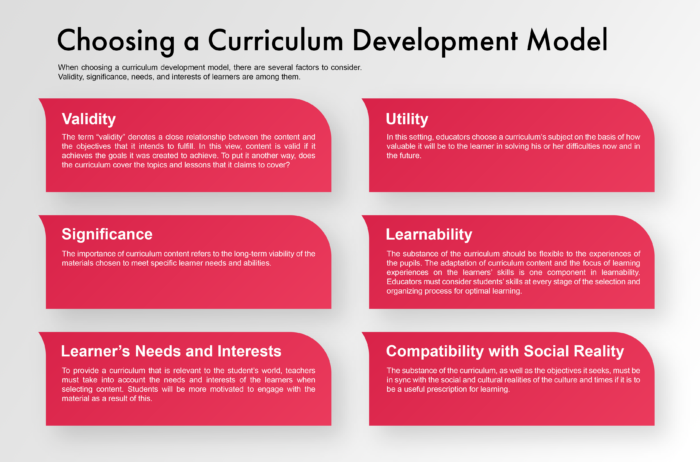
The objectives chosen or produced suggest the curriculum’s subject or substance. It is necessary to determine the validity and significance of the chosen content in addition to the aims and substance, that is, the content’s relevance and significance.
Organization of the Content:
A teacher must not only select content but also organize it in a particular sequence that takes into account the learners’ maturity, academic achievement, and interests.
Choosing Learning Experiences:
Students must be presented with content and be actively interested in it. At this point, the teacher should choose an educational style that will engage pupils in the material.
Organizing Learning Activities:
Learning activities should be ordered in a sequence based on both the content sequence and the characteristics of the learners. The teacher must consider the kids he or she will be instructing.
Evaluation:
The curriculum planner, that is, the educator, must determine whether the objectives were met. To assess the achievement of learning objectives, evaluation processes need to be created.
Tyler’s Model of Curriculum Development
Ralph Tyler
The Tyler Model is the definitive prototype of curriculum development in the scientific approach, developed by Ralph Tyler in the 1940s. One might virtually argue that every licensed teacher in America, and possibly abroad, has designed a curriculum using this paradigm or one of its numerous versions, either directly or indirectly.
Tyler did not aim for his contribution to the curriculum to serve as a development model. Initially, he put his thoughts down in a book called Basic Principles of Curriculum and Instruction for his students to give them an understanding of how to make curriculum. Tyler’s model is brilliant since it was one of the earliest, and it was (and still is) a very simple model consisting of four steps.
Curriculum and Instructional Fundamentals
Determining the Goals of the School (AKA Objectives)
The first step is to figure out what the school’s goals are. To put it another way, what must students do in order to be successful? Each subject has its own set of natural goals that serve as signs of mastery. All objectives must be congruent with the school’s philosophy, which teachers frequently overlook in curriculum development. For instance, a school designing an English curriculum would set a goal for pupils to produce essays. This would be just one of the curriculum’s numerous goals.
Identifying Educational Experiences that are Relevant to the Goal
Step two is to create learning experiences that will assist students in completing step one. For instance, suppose educators require students to complete an essay. They may demonstrate how to write an essay as part of the learning experience. The pupils may then get the opportunity to practice writing essays. The experience (essay writing and demonstration) is in line with the goal (students will write an essay).
Organizing the Experiential Learning
The third step is to classify the experiences. Is it better for the teacher to demonstrate initially, or for the pupils to learn by writing right away? Either technique could work, and the preference is determined by the teacher’s mindset and the students’ needs. The point is that the teacher must decide on a logical order for the students’ experiences.
Assessing the Objectives
The fourth and last phase is to evaluate the objectives. The teacher is now evaluating the students’ abilities to compose an essay. This can be accomplished in a variety of ways. For example, the teacher could assign pupils to write an essay on their own. If they are able to do so, it indicates that the students have met the lesson’s goal.
This model has a few variations. Educators, on the other hand, still widely regard the Tyler model as the most effective paradigm for curriculum development.
Wheeler’s Model of Curriculum Development
D. K. Wheeler
Wheeler created a five-phased cyclical model of curriculum development, which appeared to address Tyler’s criticisms. His cyclical model resembles both linear and Taba’s interactive models in many ways. The following are the essential components of Wheeler’s model:
Aims, goals, and objectives must be chosen.
Educators must select learning experiences.
Content selection which delivers specific types of experiences
The organization and integration of learning experiences and content in relation to the teaching-learning process in the classroom and school
Evaluation of all aspects of all other phases’ effectiveness in achieving the goals
This model depicts a cyclic and continuous process, implying that curriculum development should always be moving from one step to the next; it should never stop. The curriculum planner and the teacher are involved in a series of continual decision-making processes about a wide range of elements in Wheeler’s approach, which is considered dynamic rather than static. Because of its broad application, Wheeler advises that educators must employ this technique in all curriculum development at any level.
This model has a number of advantages. The cyclic model responds to changing needs, which necessitates continuous updating of the curricular process.
They are adaptable and relevant to students in specific scenarios. Adoptions and adaptations are conceivable due to the dynamic nature of the system, as long as there is a good objective that the activities fulfill.
The aspects of the curriculum are seen as interconnected and interdependent in this model. It allows for some interaction between the various aspects of the program.
To Sum Up
It is not easy to create, construct, and implement an education program, especially when it comes to online learning. Instructors have their work cut out for them, with educational technology playing an increasingly important part in higher education and today’s diverse student body.
Educators, on the other hand, will be setting themselves—and their students—up for long-term success if they follow the core standards and framework of curriculum development.